
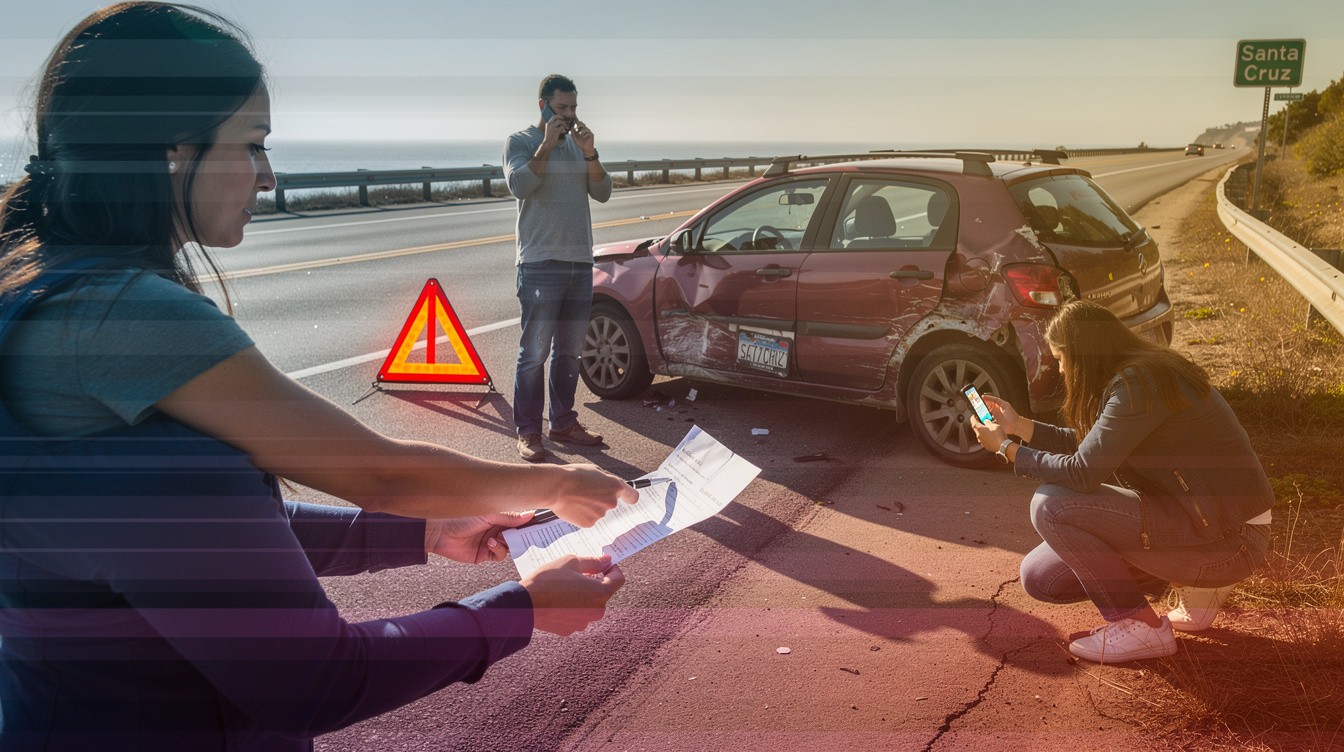
A Santa Cruz auto crash can happen in seconds, leaving you overwhelmed and unsure what comes next. The decisions you make in those first moments-from calling for help to gathering evidence-directly impact your safety, your claim, and your recovery.
We at Schaar & Silva LLP have guided countless accident victims through this process. This guide walks you through exactly what to do, step by step.
What to Do the Moment the Crash Happens
Protect Yourself and Call for Help
Your first instinct after a Santa Cruz crash should be to protect yourself and others. If anyone is injured-even slightly-call 911 immediately. The National Highway Traffic Safety Administration recommends medical assessment within 48 hours of a crash, but injuries often surface days or weeks later, so an official incident report from Santa Cruz area police or CHP at (831) 219-0200 creates a documented record that supports both insurance claims and any future legal action. Do not admit fault at the scene. Fault determinations happen later through evidence review, witness statements, and dashcam footage, not through what you say in those first moments.
Move Your Vehicle to Safety
Once you’ve called for help, move your vehicle to a safe location if possible-this protects you from oncoming traffic and preserves the crash scene. Turn on your hazard lights and stay buckled in on busy roads. If you cannot move the vehicle safely, stay inside with your seatbelt on rather than standing in traffic.
Photograph Everything at the Scene
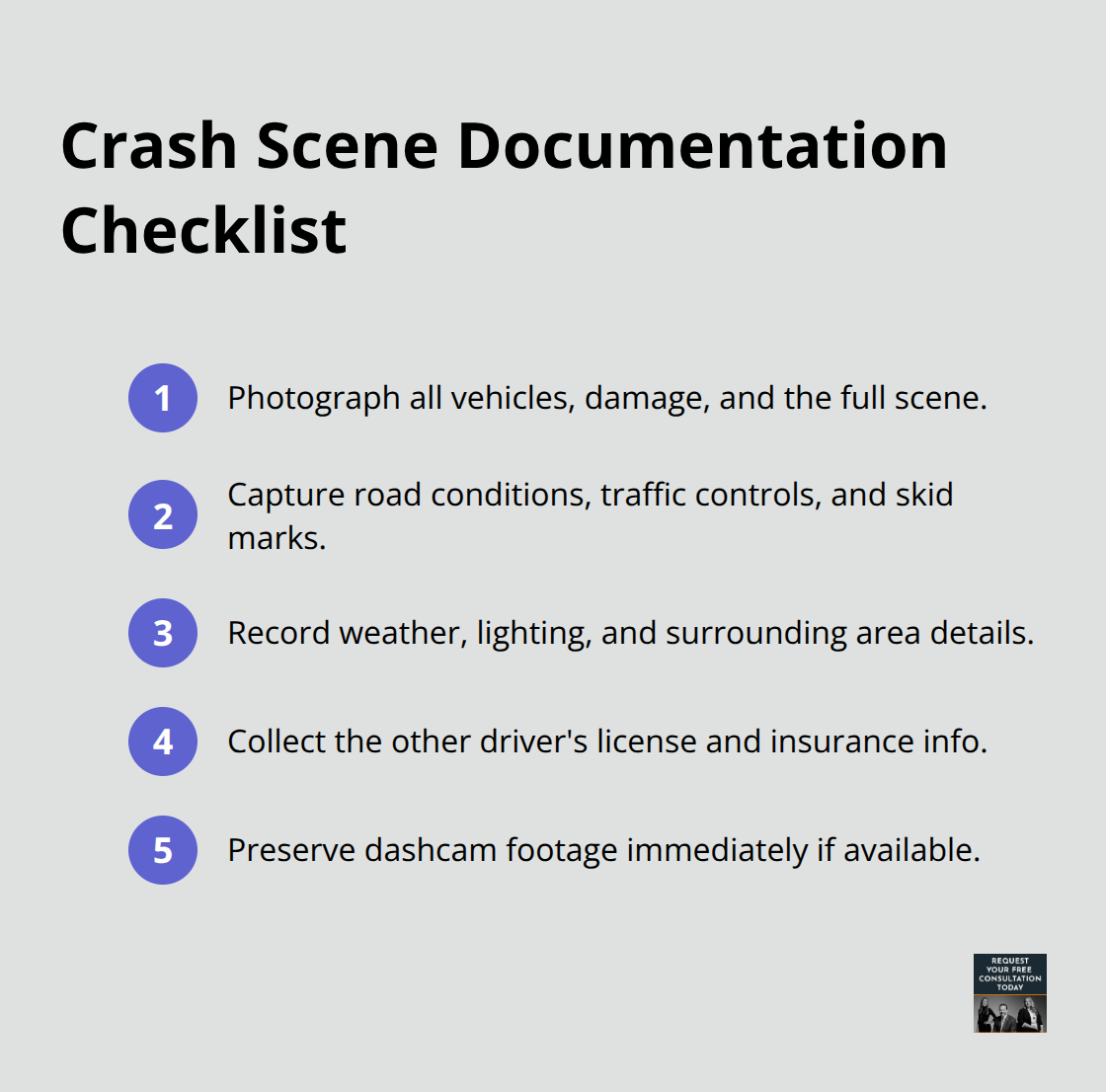
Documentation is your second priority. Take photos of all vehicle damage from multiple angles, the road conditions, traffic signals, weather, skid marks, and the surrounding area. Photograph the other driver’s license and insurance details rather than relying on memory or hastily written notes. If a truck was involved, preserve any dashcam footage immediately, as video evidence strengthens claims significantly.
Collect Information from Witnesses and Other Drivers
Collect names and phone numbers from any witnesses-their statements often matter more than what either driver remembers. Gather your driver’s license or identification, your vehicle’s license plate number or VIN, and your insurance information before you leave the scene. Get the other party’s vehicle information and insurance details (this prevents delays when you contact your insurer within 24 hours). This documentation becomes the foundation for everything that follows-your insurance claim, any property damage assessment, and potential legal recovery. With the scene documented and information secured, your next step is to contact emergency services and obtain an official police report.
What Information You Need to Collect From the Other Driver
Get the Other Driver’s Contact and License Details
The moments after a Santa Cruz crash are chaotic, but the information you collect determines whether your claim moves forward smoothly or stalls. Get the other driver’s full name, phone number, and home address before anything else. Many drivers provide incomplete contact information hoping to leave quickly, so verify their phone number by calling it immediately while you’re still at the scene. Request their driver’s license and photograph both sides, capturing the license number, expiration date, and any restrictions. Obtain their vehicle’s license plate number and photograph it from multiple angles. Ask for their vehicle identification number (VIN) and write it down separately from the photo.
Photograph Insurance Information and Refuse Incomplete Details
Request their insurance company name, policy number, and the agent’s contact information. Do not rely on verbal information alone, even if the other driver seems honest. Photograph their insurance card directly.
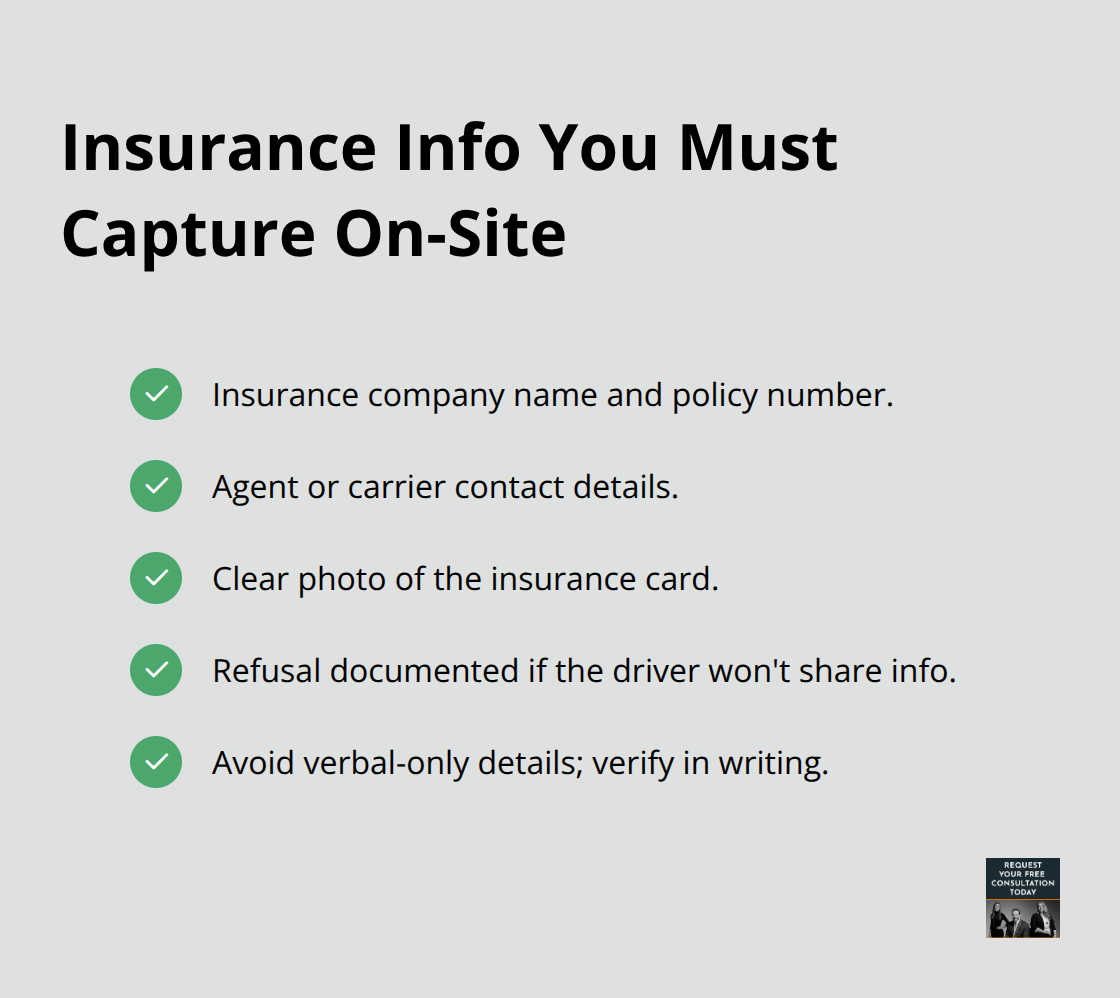
If the other driver refuses to provide information or becomes hostile, do not escalate the situation. Instead, document their refusal and move to the next step.
Collect Witness Statements That Strengthen Your Claim
Witness statements often carry more weight than either driver’s account because witnesses have no stake in the outcome. Ask anyone who saw the crash for their full name, phone number, email address, and what they observed. Write down their account immediately, including what they saw before the collision, during impact, and after. Ask specific questions: Was the traffic light red or green? How fast was each vehicle traveling? Did either driver brake before impact? Get their driver’s license information if they’re willing to share it, as this adds credibility to their statement. Try to collect at least two witness statements if possible, as insurance adjusters weight multiple corroborating accounts heavily. If witnesses are reluctant to stay, photograph their license plates so you can request police follow up with them.
File an Official Police Report With the Santa Cruz Police Department
Call the Santa Cruz Police Department or CHP at (831) 219-0200 to report the accident and request an official incident report. Provide them with your documentation and witness information. The police report creates an independent record that protects you if the other driver later disputes what happened. Request the report number and file it with your insurance company within 24 hours along with all photos, witness contact information, and the other driver’s details. With this documentation complete, you now have the foundation to address the medical and financial aspects of your recovery.
Medical Care After Your Santa Cruz Crash
Seek Medical Evaluation Within 48 Hours
Medical evaluation within 48 hours of your crash matters, even if you feel fine right now. The National Highway Traffic Safety Administration found that many injuries-whiplash, internal injuries, concussions-appear days or weeks after impact, not immediately. Adrenaline masks pain in the first hours, so waiting to see if symptoms develop costs you later. Call your doctor or visit an urgent care facility and describe exactly what happened and where your body made contact with the vehicle or interior. Request written documentation of your visit, including the provider’s clinical notes and any imaging or test results. This medical record becomes evidence that your injuries are real and connected to the crash, not pre-existing conditions. Insurance companies routinely deny claims when victims delay treatment, arguing the injuries weren’t serious enough to warrant immediate care. That argument disappears when your medical timeline starts within 48 hours.
Document Every Medical Expense and Lost Income
Keep every medical receipt, bill, and explanation of benefits document in a dedicated folder-physical or digital. Track lost wages if injuries prevent you from working, including emails from your employer confirming dates missed and hourly rate or salary. Photograph medical equipment you purchase (neck braces, pain relief devices) and save those receipts too.
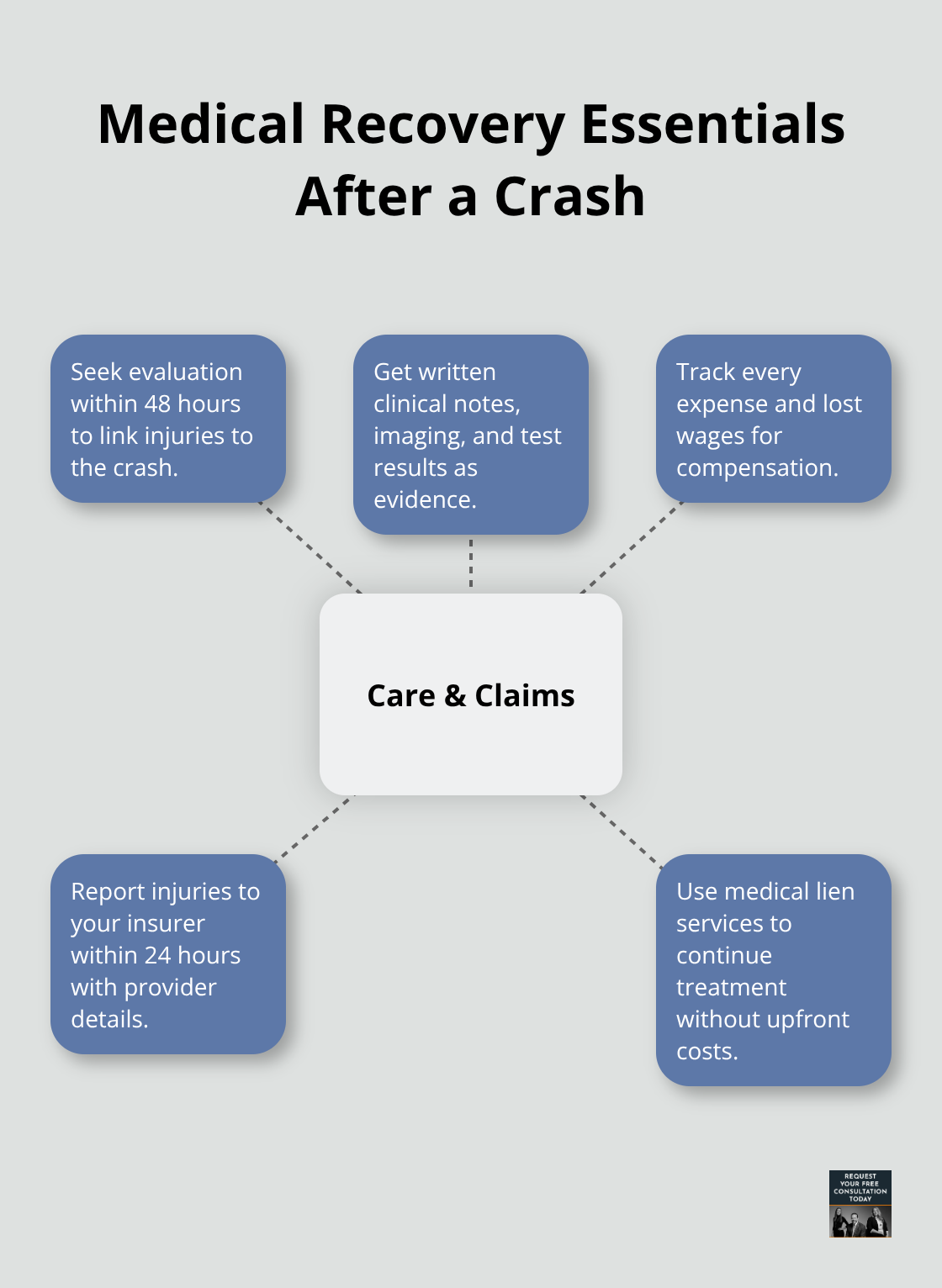
Report your injuries to your insurance company within 24 hours and provide the name of your treating physician. Do not minimize your injuries in that conversation; state exactly what happened and what treatment you are receiving. Document every expense related to your injuries-transportation to appointments, prescription costs, home care assistance-because these are recoverable damages that many victims overlook when negotiating settlements.
Use Medical Lien Services to Continue Treatment
If medical bills mount faster than your settlement progresses, medical lien services allow healthcare providers to place liens on your eventual settlement, enabling continued treatment without upfront payment. This approach keeps your recovery on track while your case moves forward. You can access these services through local resources in Santa Cruz County that connect accident victims with providers who understand the claims process.
Final Thoughts
Insurance companies process claims systematically, but they prioritize their bottom line over your recovery. When you file your claim, provide all documentation at once: the police report, photos, medical records, witness statements, and repair estimates. Track every communication with your insurer in writing, whether by email or certified mail, and request claim status updates every two weeks.
If the insurer denies coverage or offers a settlement that doesn’t match your documented damages, you have the right to challenge it. A Santa Cruz auto crash often leaves victims uncertain about what fair compensation looks like, and insurers count on that uncertainty. An attorney reviews your claim, identifies damages you might have overlooked, and negotiates with insurers on your behalf.
We at Schaar & Silva LLP work with accident victims throughout Santa Cruz County to handle property damage claims, coordinate medical bills through lien services, and connect you with psychological support for trauma recovery. Our team manages the legal details while you focus on healing.
