
A road collision in Santa Cruz can turn your life upside down in seconds. Medical bills pile up, your car needs repairs, and you’re left wondering what happens next.
We at Schaar & Silva LLP know that most people don’t understand their legal rights after an accident. This guide walks you through your options and shows you how to protect yourself.
What You Can Actually Recover After an Accident in Santa Cruz
Economic and Non-Economic Damages
California law grants you the right to recover money for losses caused by someone else’s negligence on the road. This isn’t theoretical-it’s concrete financial protection. You can claim economic damages like medical bills, vehicle repair costs, and lost wages. You can also claim non-economic damages for pain and suffering, though these are harder to quantify.
Settlement vs. Trial: The Numbers Tell the Story
About 94% of claims in California settle within 90 days, meaning most people never see a courtroom. However, the stakes matter significantly. According to Farmers Insurance data for Santa Cruz County, settled cases averaged around $78,000 in 2023, while cases that went to trial averaged $127,000-a substantial difference. This gap exists because insurance companies often undervalue claims in settlement offers.
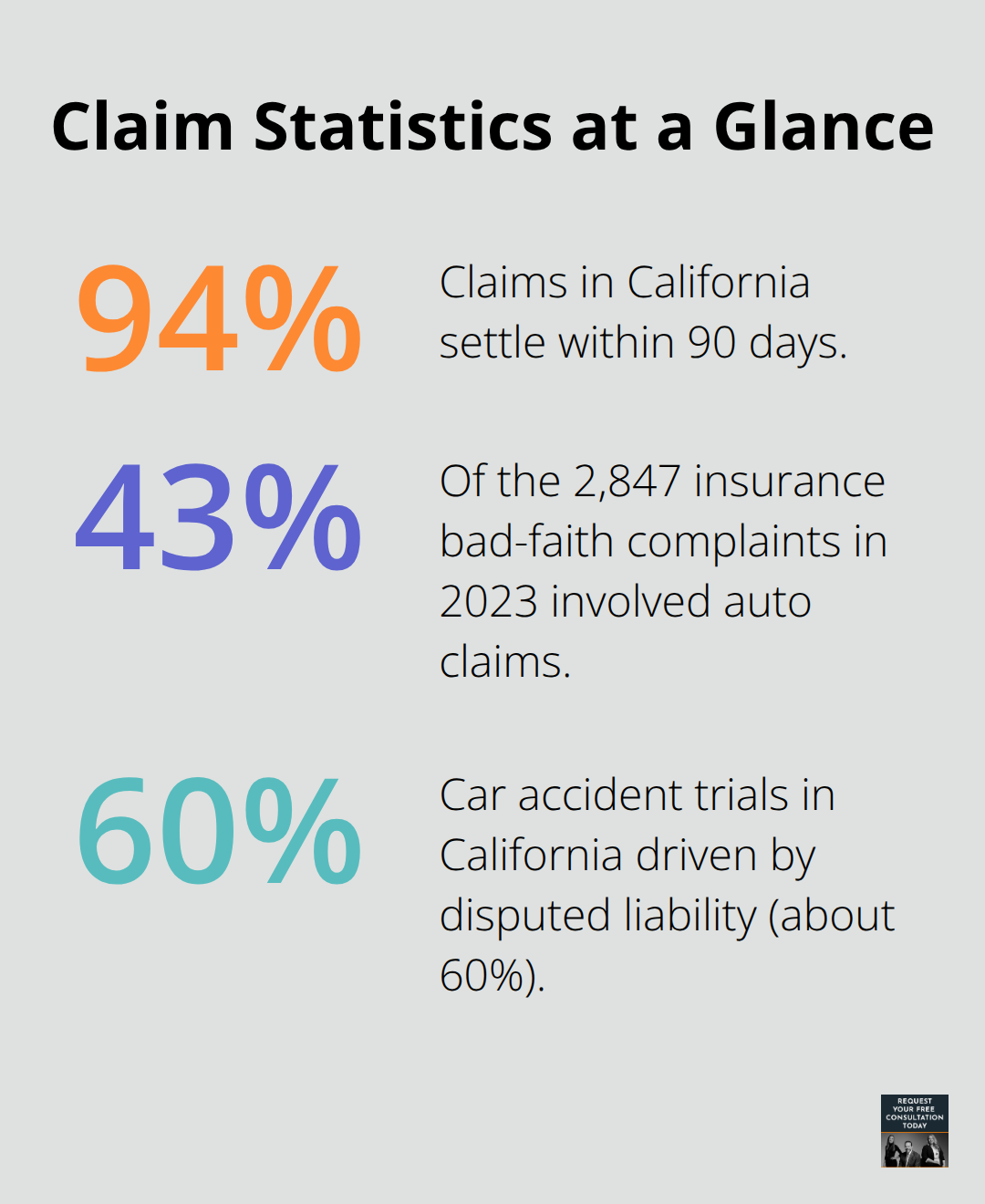
The California Department of Insurance received 2,847 bad-faith complaints in 2023, with auto claims making up 43% of those complaints. Bad faith occurs when an insurer refuses reasonable settlement offers or delays payment without justification. Cases that settle within 120 days of filing save insurers about $15,000 per case in legal costs-and those savings typically come from lower payouts to victims.
Santa Cruz’s Most Dangerous Intersections
Santa Cruz intersection crashes present particular challenges because liability disputes drive about 60% of car accident trials in California. The ten most dangerous Santa Cruz intersections include Highway 1 and Highway 9 (11 crashes in five years) and Pacific Avenue and Beach Street (8 crashes). At these locations, serious injuries occur in 14.7% of Santa Cruz intersection crashes-59.78% higher than the state average.
When accidents happen at these known problem spots, you hold stronger grounds for claims because the documented crash history shows systemic danger. If you were injured at one of these locations, the pattern of crashes strengthens your argument that the intersection itself created unreasonable risk.
Acting Quickly Protects Your Position
You have a strict deadline to act. California gives you two years from the accident date to file a personal injury claim, but waiting costs you money. The sooner you document your case and notify the at-fault party’s insurance, the stronger your position becomes.
Traumatic brain injuries and chronic pain cases go to trial roughly 18% of the time, according to the American Bar Association, because these injuries produce ongoing costs that settlements often underestimate. Medical bills and lost income represent only part of your recovery. An attorney can help direct you to medical lien services that handle your bills until your case resolves, reducing immediate financial pressure while building a stronger claim. Your window to act is narrow, and insurance companies count on confusion and delay to minimize what they pay you. Understanding what steps to take immediately after your accident determines whether you maximize your recovery or leave money on the table.
What to Do Right After Your Accident
Move to Safety and Call Police Immediately
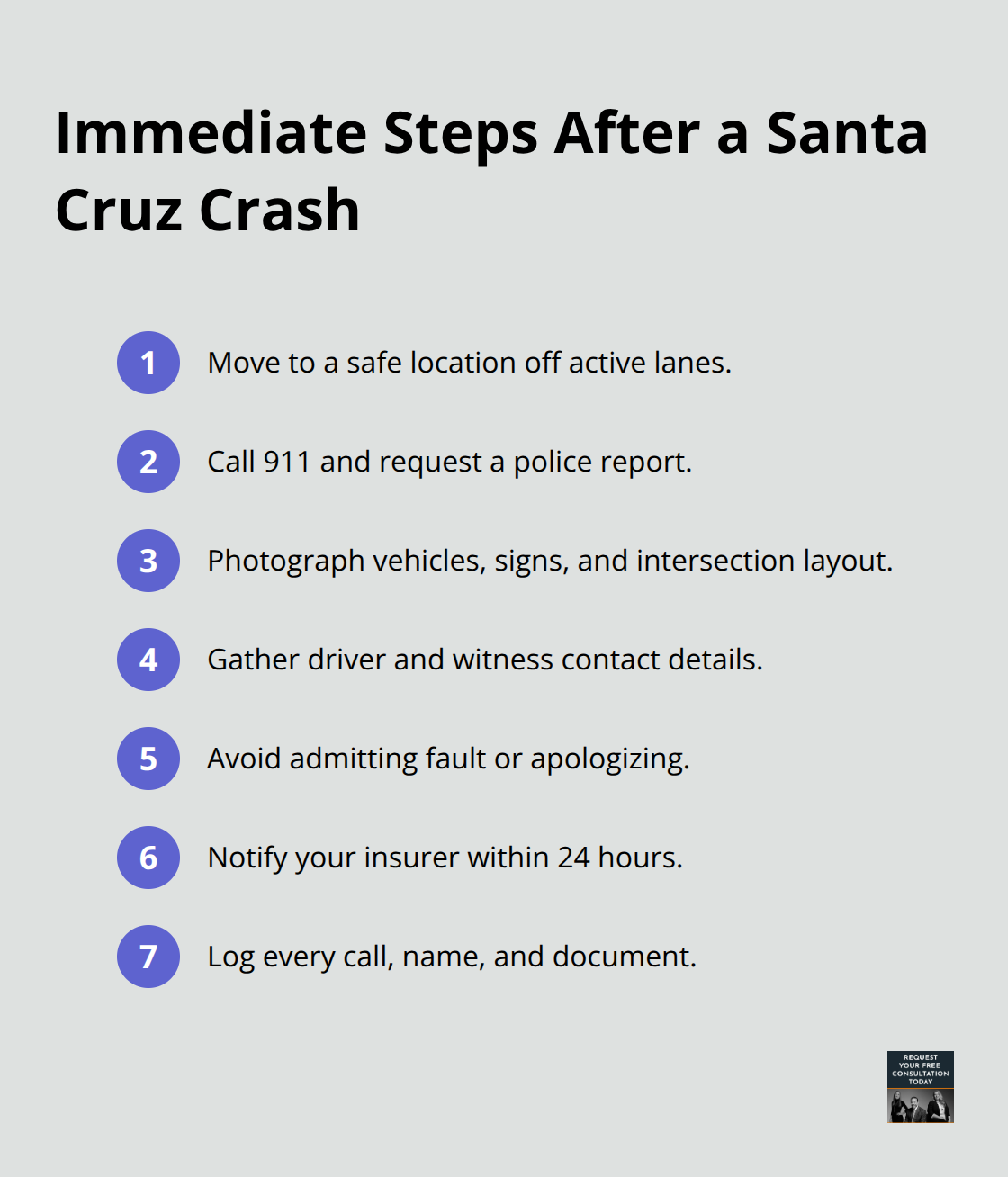
The first hours after a collision determine whether you build a strong claim or hand money back to the insurance company. Your actions create the foundation for recovery, so precision matters more than speed. Move to safety if possible-if vehicles are operational and traffic allows, drive to the shoulder or a nearby parking lot away from active lanes. Call 911 immediately if anyone is injured, even if injuries seem minor. Police reports create official documentation that insurance companies and courts rely on, and waiting to file a report weakens your position. California Highway Patrol data shows that disputed liability cases drive about 60% of car accident trials, often because early evidence disappeared or memories faded.
Document the Scene With Photographs and Witness Information
Photograph everything at the scene: vehicle damage from multiple angles, road conditions, traffic signals, street signs, and the overall intersection layout. Capture license plates, vehicle colors, and positioning before anything moves. Get the other driver’s name, phone number, address, insurance company, policy number, and vehicle identification number. Request contact information from all witnesses-their statements become critical if liability is contested. Do not discuss fault or apologize to anyone at the scene, as insurers scrutinize these statements. Report the accident to your insurance company within 24 hours, even if you believe the other driver was at fault. Delays give insurers grounds to deny claims later. Keep detailed records of every conversation: dates, times, names of adjusters, and what was discussed.
Seek Medical Attention Without Delay
Medical attention must happen immediately, not days later. Insurance companies argue that delayed treatment means injuries weren’t serious, reducing settlement value substantially. Visit an emergency room or urgent care clinic even if you feel fine-adrenaline masks injuries that emerge hours or days afterward. Traumatic brain injuries and chronic pain cases go to trial roughly 18% of the time according to the American Bar Association, partly because delayed diagnosis weakens medical evidence. Request copies of all medical records, test results, and provider notes. Document every treatment: physical therapy sessions, medication costs, specialist visits. Keep receipts for prescriptions, medical equipment, and transportation to appointments. Insurance adjusters calculate damages based on medical records, so incomplete documentation directly reduces what they offer.
Build Your Financial Documentation
If medical bills pile up while your case resolves, services exist that handle your bills until settlement arrives, eliminating the pressure to accept inadequate offers just to cover immediate expenses. Track lost wages by obtaining written statements from your employer showing hours missed and income lost. Insurance companies pay only what documentation supports, so your paper trail becomes your negotiating leverage. The sooner you organize these records and notify the at-fault party’s insurance, the stronger your position becomes. California gives you two years from the accident date to file a personal injury claim, but waiting costs you money. Your window to act is narrow, and insurance companies count on confusion and delay to minimize what they pay you.
Prepare for What Comes Next
Your documentation now positions you to negotiate effectively with the insurance company or pursue legal action if settlement offers fall short of your actual losses. The records you gather in these critical first days determine whether you recover fairly or accept less than you deserve.
How Legal Representation Protects Your Claim
Insurance Adjusters Work Against Your Interests
Insurance adjusters are trained negotiators who work to minimize payouts, and you face them alone without legal guidance. The gap between settlement offers and trial verdicts tells the real story: Santa Cruz County cases that settled averaged $78,000 in 2023, while verdicts reached $127,000, according to Farmers Insurance data.
That $49,000 difference represents money you leave on the table without proper representation. Insurance companies know most people don’t understand their rights, and they exploit that knowledge relentlessly.
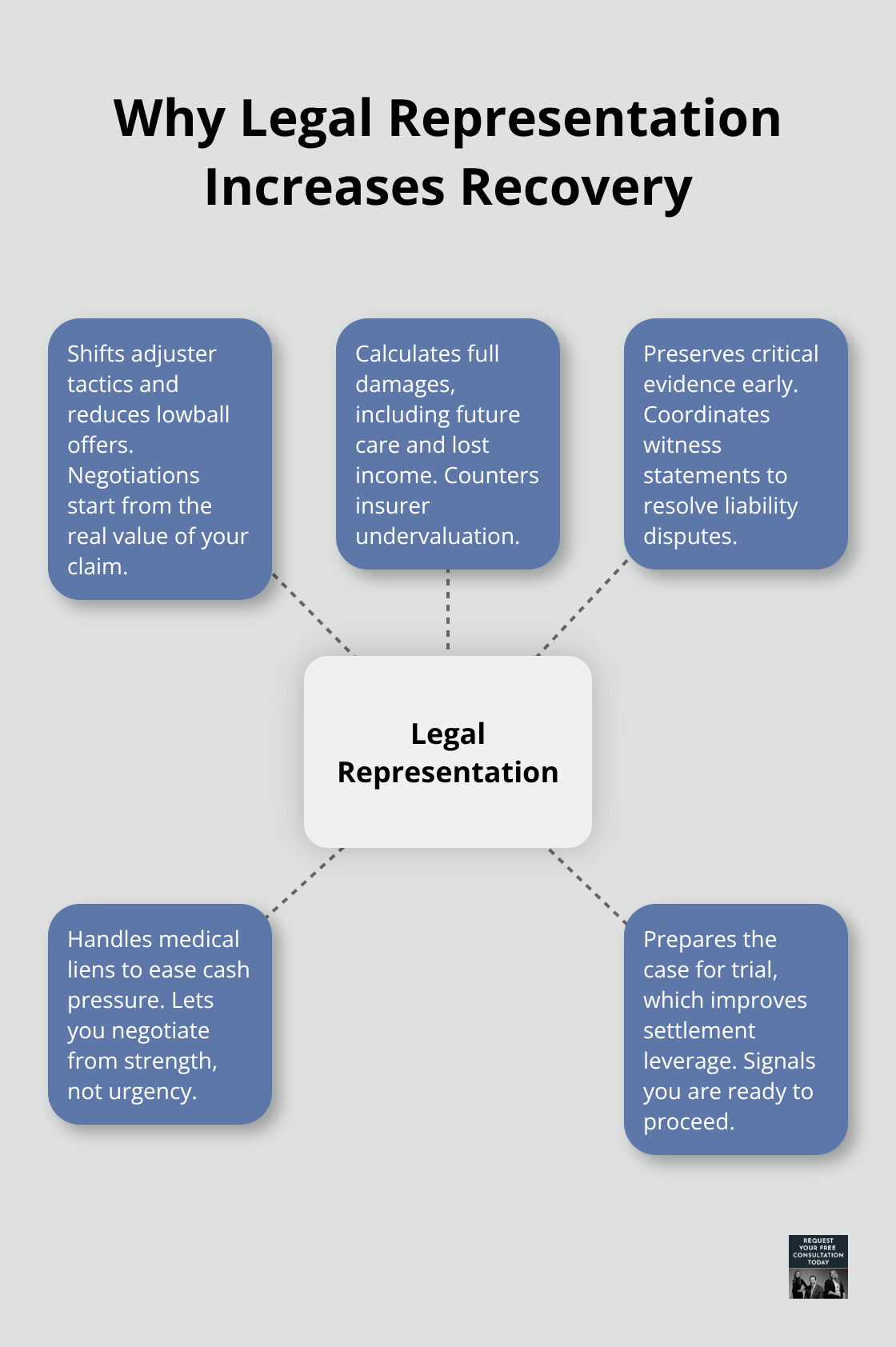
Adjusters often delay responses, request unnecessary documentation, or offer lowball settlements counting on your desperation to cover medical bills. When you have legal representation, adjusters change their approach immediately because they know you understand the value of your claim. A legal team accelerates this process and prevents you from accepting inadequate offers out of financial pressure.
How Strong Documentation Builds Negotiating Power
Building a strong case means organizing your documentation strategically and understanding which evidence carries the most weight in negotiations. Insurance companies calculate damages from medical records, so incomplete or delayed treatment records directly reduce settlement value. Cases involving traumatic brain injuries or chronic pain go to trial roughly 18% of the time according to the American Bar Association, partly because these injuries require sustained medical documentation that proves ongoing costs.
Medical lien services can handle your bills until your case resolves, eliminating the pressure to accept inadequate offers just to cover immediate expenses. This financial relief allows you to negotiate from strength rather than desperation.
Location Matters in Santa Cruz Accident Claims
If your accident occurred at one of Santa Cruz’s ten most dangerous intersections-Highway 1 and Highway 9, Pacific Avenue and Beach Street, or other high-crash locations-the documented crash history strengthens your claim significantly. Serious injuries occur in 14.7% of Santa Cruz intersection crashes, which is 59.78% higher than the state average. This data supports your argument that the location itself created unreasonable risk.
Disputed liability cases drive about 60% of car accident trials in California, often involving unclear fault in multi-vehicle crashes where witness credibility matters enormously. Santa Cruz intersection crashes average 3.2 witnesses per side, according to California Highway Patrol data, meaning credibility battles determine outcomes.
Evidence Strategy Determines Trial Readiness
Legal representation presents evidence strategically, coordinates witness statements, and counters the insurance company’s liability arguments with documented facts. When liability disputes emerge, you need someone who understands how courts evaluate evidence and how to build a case that withstands challenge. The sooner you establish legal representation, the sooner evidence preservation begins, witness statements are secured, and your case positions itself for maximum recovery before memories fade and documentation disappears.
Final Thoughts
A road collision in Santa Cruz disrupts your life immediately, but your recovery depends on decisions you make in the days and weeks that follow. The gap between what insurance companies offer and what courts award tells you everything: settlements averaged $78,000 in Santa Cruz County in 2023, while verdicts reached $127,000. That $49,000 difference exists because most people negotiate alone against trained adjusters who minimize payouts systematically.
You now understand your rights under California law, the types of damages you can recover, and the critical steps that protect your claim from the moment the accident happens. Documentation, medical attention, and swift notification to insurance companies form the foundation of fair compensation. If your accident occurred at one of Santa Cruz’s ten most dangerous intersections, the documented crash history strengthens your position significantly because serious injuries occur 59.78% higher than the state average at these locations.
Legal representation changes how insurance companies treat your claim. Adjusters recognize immediately that you understand your case’s value and that you’re prepared to pursue trial if settlement offers fall short. Contact us at Schaar & Silva LLP to protect your rights and maximize your recovery.
