
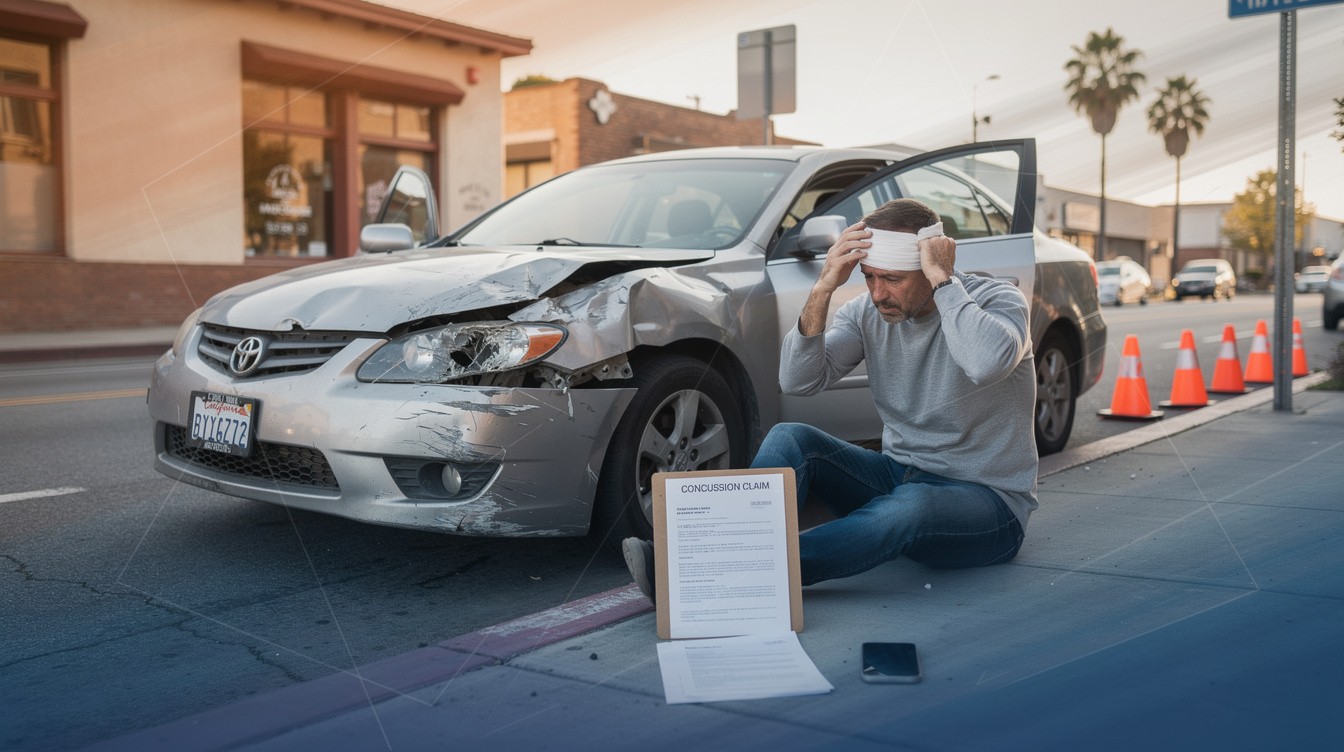
A concussion claim in California after a vehicle crash requires understanding your injury and knowing how to build a strong case. The impact from a collision can cause brain injuries that develop symptoms hours or even days later, making documentation critical.
We at Schaar & Silva LLP help accident victims in Santa Cruz County, Sacramento, and Oakland pursue the compensation they deserve for concussion injuries and related damages. This guide walks you through the process of documenting your injury, calculating what your claim is worth, and moving forward with legal representation.
What Happens to Your Brain in a Vehicle Crash
The Mechanics of Concussion in a Collision
A concussion occurs when the force of a vehicle collision causes your brain to move rapidly inside your skull, creating a functional disturbance that disrupts normal brain activity. The impact does not need to be severe or cause a loss of consciousness for a concussion to happen. In fact, many people who suffer concussions after car crashes never lose consciousness at all. The CDC and American Academy of Neurology note that symptoms often appear hours or even days after the accident, which is why you might feel fine at the scene but develop problems later.
Recognizing Early Warning Signs
Headaches, dizziness, confusion, memory problems, and difficulty concentrating are common early signs that follow a vehicle crash. Some people experience nausea, sensitivity to light or noise, sleep disturbances, or mood changes. The severity of your symptoms does not always match the severity of the crash itself. A low-speed rear-end collision can cause significant brain injury, while a high-speed frontal impact might result in mild symptoms. This unpredictability makes medical evaluation essential even after accidents that seem minor.
When Concussions Become Long-Term Problems
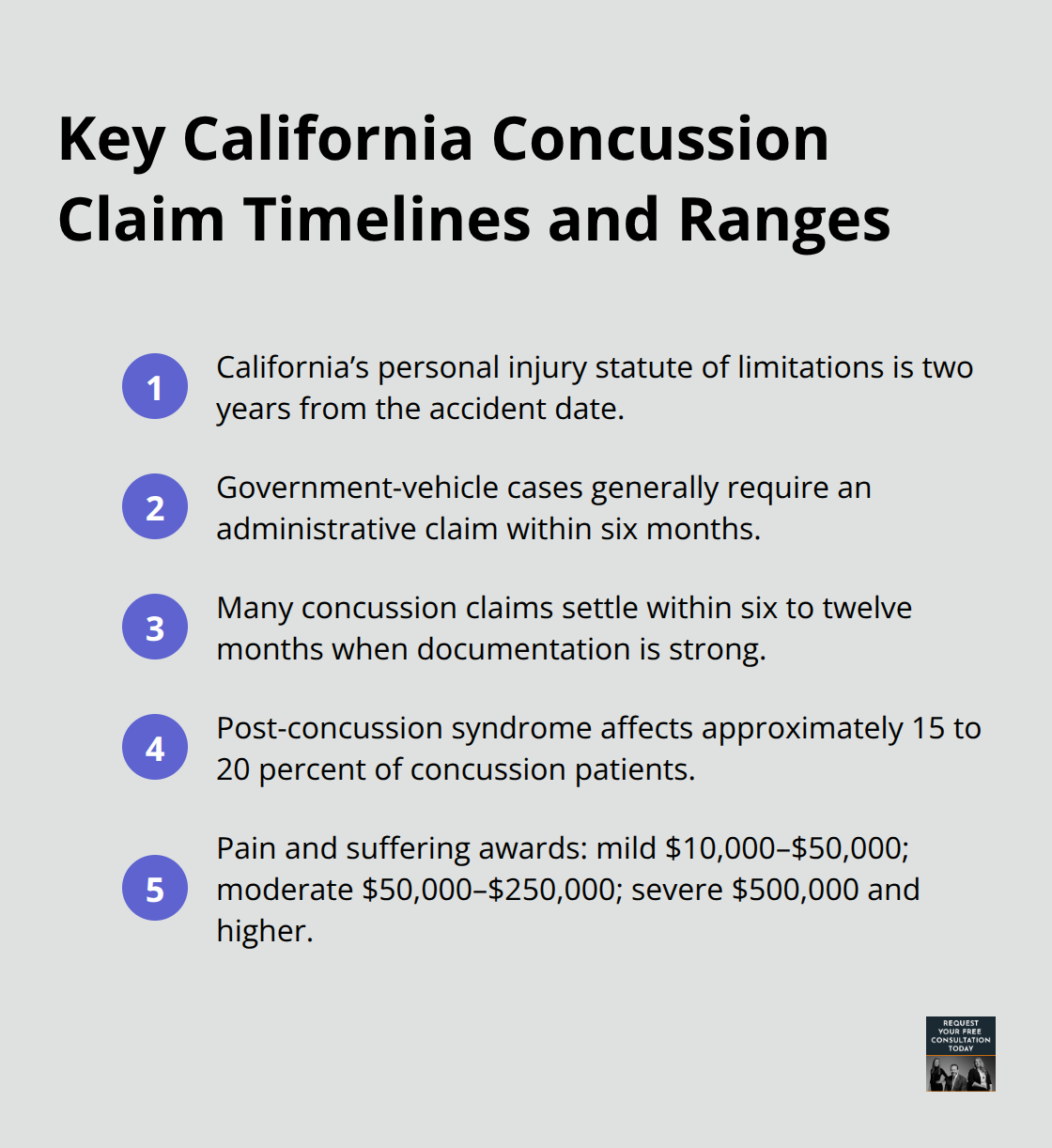
The danger escalates when concussions develop into post-concussion syndrome, a condition affecting approximately 15 to 20 percent of concussion patients according to Mayo Clinic research. In PCS cases, symptoms persist for weeks or months, sometimes longer, creating lasting cognitive, physical, and emotional challenges. Victims report persistent headaches, memory loss, concentration difficulties, mood swings, and fatigue that interferes with work and daily functioning.
Settlement Values Reflect Injury Severity
In California vehicle accident cases, settlements for post-concussion syndrome range from roughly $10,000 for mild, short-term cases up to more than $1,000,000 for severe cases with long-term disability. The variation reflects how profoundly these injuries impact earning capacity and quality of life. Proving your concussion requires strong medical evidence from neurologists or neuropsychologists, along with cognitive and balance testing.
Building Your Evidence Beyond Medical Records
Real-world documentation matters significantly-employer notes about performance changes, school records showing academic decline, or family observations about behavioral shifts strengthen your claim considerably. The invisible nature of brain injuries means you cannot rely on visible injuries to demonstrate your suffering to insurers or courts. This combination of medical proof and real-world evidence creates the foundation you need to move forward with documenting your injury properly.
Building Your Medical Record After a Crash
Act Immediately After Your Accident
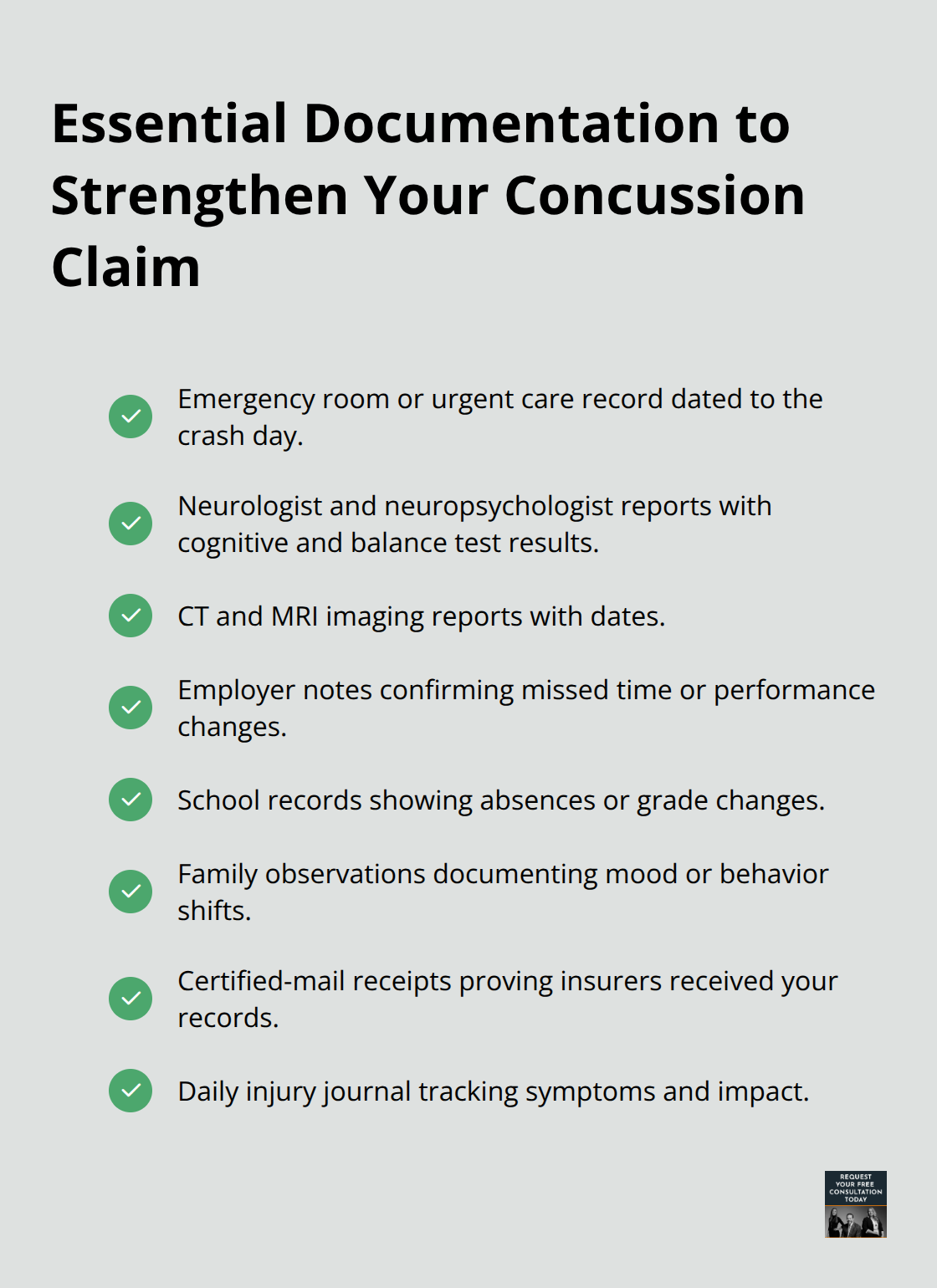
Call 911 if you experience any injury symptoms at the accident scene, and visit an emergency room or urgent care facility even if you feel relatively fine. The California Department of Insurance recommends this step because concussion symptoms often emerge hours or days later, and an initial medical record dated to the day of your accident creates a clear timeline linking your injury to the crash. During your first evaluation, inform the medical team about any head impact, dizziness, confusion, or memory problems you experienced, no matter how minor they seem. This initial report becomes foundational evidence that insurers and courts review when determining claim value.
Obtain Professional Testing and Medical Records
Neurologists and neuropsychologists provide the testing that builds credible concussion claims. These professionals administer cognitive and balance testing that objectively measures brain function changes caused by your injury. Collect all medical records, imaging results (CT scans, MRI reports), test scores, and physician notes into an organized file and send copies to your insurance company via certified mail to confirm receipt and create a paper trail.
Document Your Real-World Impact
Beyond clinical records, document how your concussion affects your actual life. Track missed work days with dates, note school absences or grade changes if applicable, record conversations with your employer about performance concerns, and keep notes about family observations regarding mood or behavior shifts. A 2023 Los Angeles County verdict awarded $40,000 in a car crash case with $10,000 allocated specifically for future medical costs, illustrating how settlements reward thorough documentation of ongoing treatment needs.
Maintain a Detailed Injury Journal
Create a detailed injury journal separate from medical records where you describe daily symptoms, their timing, and their impact on work and personal activities. This real-world evidence combined with medical proof creates the foundation insurers cannot easily dismiss. Organize your accident binder carefully and maintain consistent documentation throughout your recovery period, as this material directly influences how insurers evaluate your claim’s strength and value.
What Your Concussion Claim Is Actually Worth
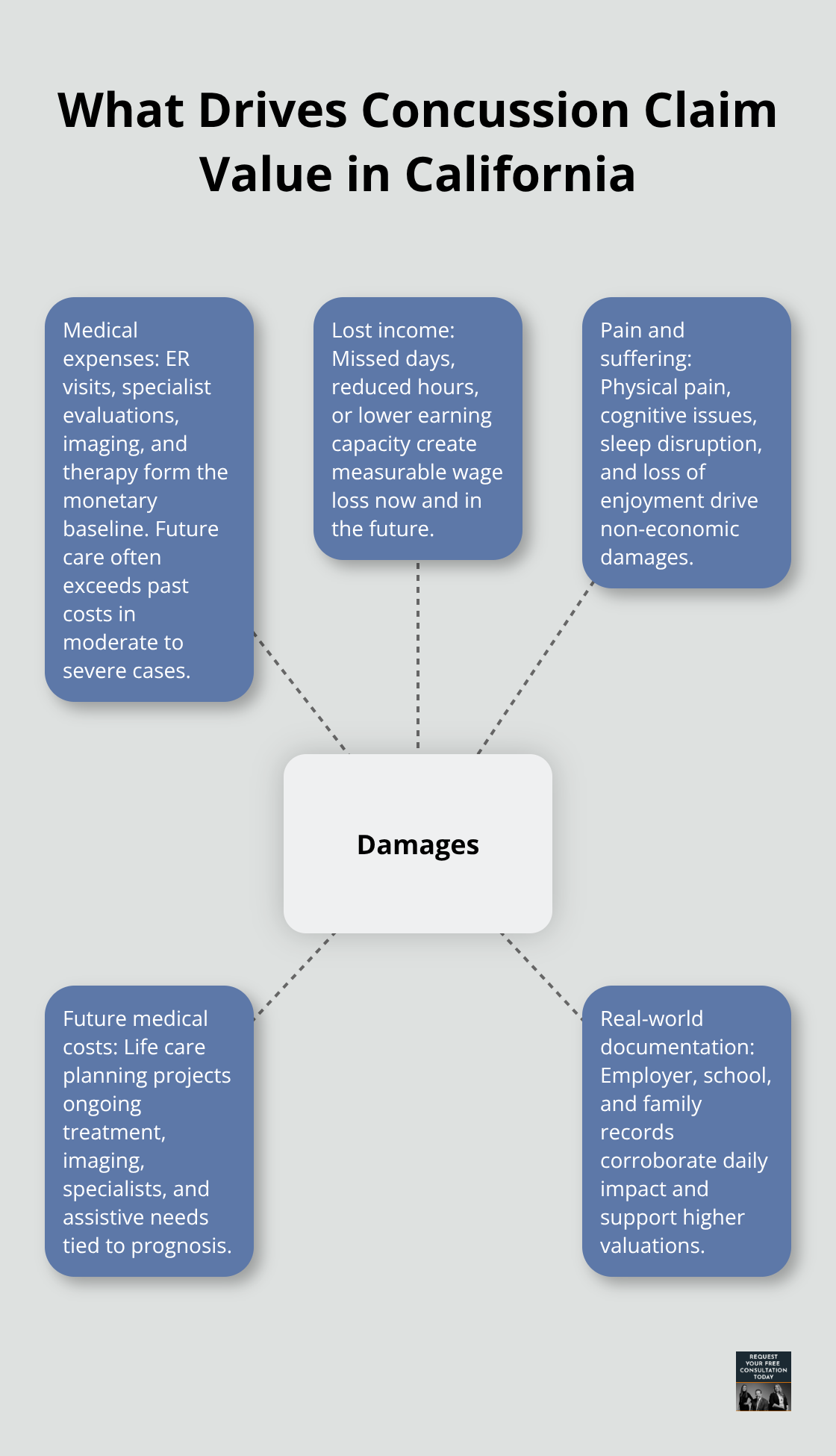
Calculating damages in a concussion claim requires understanding three distinct categories that insurers and courts evaluate separately. Medical expenses form the foundation, but lost income and pain and suffering often represent the largest portions of your recovery. In California vehicle accident cases, settlements for post-concussion syndrome range from roughly $10,000 for mild, short-term cases up to more than $1,000,000 for severe cases with long-term disability. The variation reflects how profoundly these injuries impact your ability to work and your quality of life.
Medical Costs Present the Clearest Dollar Amount
Your medical expenses include all past treatment: emergency room visits, neurologist consultations, neuropsychological testing, CT scans, MRI imaging, prescription medications, and physical therapy sessions. Gather invoices and receipts for every medical service and medication related to your concussion. Future medical costs often exceed past expenses significantly, especially in moderate to severe cases.
A 2023 Los Angeles County verdict allocated $10,000 specifically for future medical costs in a car crash case, demonstrating how courts quantify ongoing treatment needs. Life care planners work with your attorney to project future medical expenses based on your specific injury, recovery timeline, and long-term prognosis. This forward-looking calculation addresses rehabilitation, specialist appointments, imaging studies, and any assistive devices or home modifications your recovery requires. Collect detailed medical reports from your treating neurologist or neuropsychologist that specifically describe what future care you need and why.
Lost Income Represents Your Actual Economic Loss
Document every day you missed work due to your concussion with specific dates and hourly rates or salary information. If your employer provides written confirmation of missed time or reduced hours, include that documentation. Lost wages extend beyond days you completely missed work; if your concussion reduced your productivity or forced you into a lower-paying position, that reduction counts as damages.
An economist hired by your attorney calculates the present value of future lost earnings based on your age, work history, earning trajectory, and how your concussion permanently affects your capacity to work. Someone earning $60,000 annually who cannot return to their previous role due to persistent cognitive problems may have future lost earnings valued at $500,000 or more over a career span. If your concussion prevents you from working entirely, Social Security Disability benefits may apply, though pursuing this avenue requires medical evidence that your condition prevents substantial gainful activity.
Pain and Suffering Compensation Addresses Your Non-Economic Losses
Pain and suffering damages compensate for physical pain, emotional distress, sleep disruption, mood changes, and the loss of enjoyment in activities you previously enjoyed. California follows pure comparative negligence, meaning your recovery gets reduced by your percentage of fault for the crash, but this reduction does not apply to pain and suffering calculations in the same way it affects economic damages.
Mild post-concussion syndrome typically generates $10,000 to $50,000 in pain and suffering awards, moderate cases range from $50,000 to $250,000, and severe cases with long-term disability reach $500,000 and higher. The strength of your real-world documentation directly influences pain and suffering awards. Employer notes about performance decline, school records showing academic struggles, and family observations about personality changes all demonstrate concrete impact that justifies higher compensation. Your injury journal becomes critical evidence here; detailed descriptions of daily suffering, frustration, and lost opportunities resonate with juries far more effectively than general statements about pain.
Final Thoughts on Your Concussion Claim in California
A concussion claim in California demands coordinated legal strategy, timely action, and representation that understands how insurers evaluate brain injuries. We at Schaar & Silva LLP handle these cases by gathering comprehensive medical evidence, collecting real-world documentation of your injury’s impact, and calculating damages that reflect your actual losses. Our approach coordinates with neurologists, economists, and life care planners to build claims that insurers cannot dismiss. California law gives you two years from the accident date to file a personal injury claim, but acting quickly protects your rights and preserves evidence.
The timeline for your case depends on whether settlement negotiations succeed or litigation becomes necessary. Most concussion claims settle within six to twelve months when documentation is strong and liability is clear. If the at-fault insurer undervalues your claim, we prepare for trial. If a government vehicle caused your crash, an administrative claim must be filed within six months, making immediate legal consultation critical.
Santa Cruz County, Sacramento, and Oakland accident victims benefit from local representation that understands regional courts and insurance practices. We connect you with medical bill assistance through lien services so you can receive treatment without bearing upfront costs, and we evaluate property damage claims separately from your injury claim to recover fully for vehicle losses. Contact Schaar & Silva LLP for a no-obligation consultation to discuss your case and learn how we can help you move forward.
