

A vehicle accident can turn your life upside down in seconds. Beyond the immediate shock, you’re suddenly facing medical bills, insurance claims, and questions about your legal rights.
We at Schaar & Silva LLP understand how overwhelming this feels. That’s why we’ve put together this guide to vehicle accident injury resources available right here in Santa Cruz County-covering medical care, legal compensation, and mental health support to help you move forward.
Getting Medical Care and Managing Bills After a Crash
After a vehicle accident, your first priority is medical treatment, and Santa Cruz County has solid options. Watsonville Hospital and Dominican Hospital in Santa Cruz both operate 24/7 emergency care and serve as primary trauma centers for serious injuries. Seek medical evaluation within 48 hours of your crash, even if you feel fine-some injuries like whiplash or internal damage show symptoms days later.
Understanding the True Cost of Medical Care
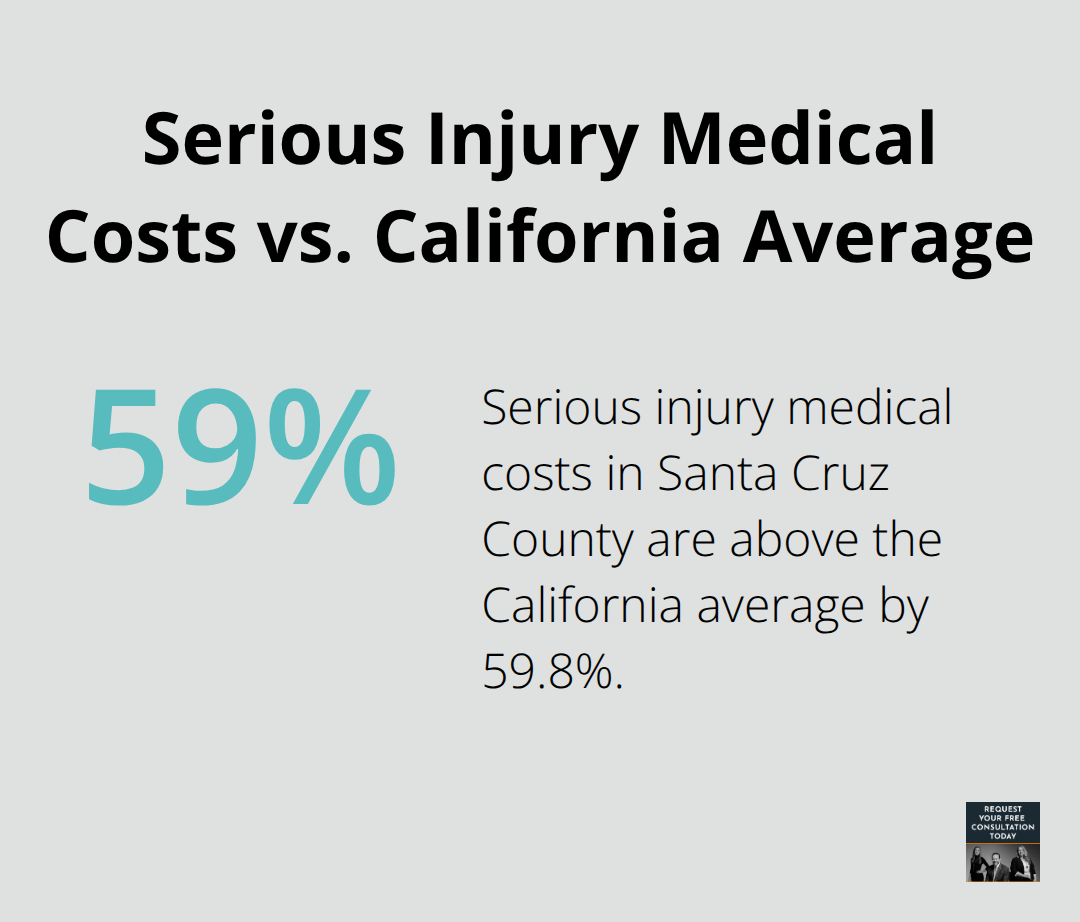
According to the California Office of Traffic Safety, serious injuries in Santa Cruz County cost 59.8% above the California average, with medical expenses ranging from 57,000 to 123,000 for serious injuries. Spinal surgeries alone run 100,000 to 200,000, ambulance transport costs about 1,200, and emergency department visits average 3,300.
These figures underscore why you must document every medical expense meticulously from day one. Create a detailed log of treatments, diagnoses, prescriptions, and costs immediately after your crash. Include lost wages and any job restrictions your doctor imposes. This documentation becomes critical when you file insurance claims or pursue legal recovery.
How Medical Liens Protect Your Recovery
Medical lien services exist specifically to solve the timing problem you’ll face after a crash. Your medical providers can place liens on your settlement proceeds, which means they agree to wait for payment until your case resolves. This arrangement lets you receive treatment now without paying out of pocket, then the medical bills come directly from your settlement funds later.
The key advantage is that liens keep you from depleting savings during recovery-families often deplete savings within three months according to the California Office of Traffic Safety. Without medical liens, you’d face impossible choices between paying medical bills and covering rent or living expenses. Request information about lien options from your healthcare provider’s billing department. Schaar & Silva LLP can also help direct you to medical lien services that coordinate with insurance companies and defense attorneys in Santa Cruz County.
Moving Forward With Your Recovery Plan
With medical care secured and bills managed through liens, you can focus on healing rather than financial stress. Your next step involves understanding what compensation you can claim and how property damage evaluations work-both critical pieces of rebuilding your life after a crash.
What Compensation Can You Recover After a Crash
After a vehicle accident, you’re entitled to recover damages that cover both your immediate losses and long-term impacts. California law recognizes three main categories: medical expenses, property damage, and lost wages or reduced earning capacity. Medical damages include every treatment you documented during recovery-emergency care, therapy sessions, surgeries, prescriptions, and transportation costs. Property damage covers the cost to repair or replace your vehicle, calculated as the lesser of repair costs or your vehicle’s actual cash value at the time of the crash according to California insurance standards. Lost wages include income you missed during recovery and any reduced earning ability if injuries limit your work capacity long-term. California courts also award damages for pain and suffering, though these are harder to quantify and depend heavily on documentation. The California Office of Traffic Safety reports that serious injury cases in Santa Cruz County average 57,000 to 123,000 in medical costs alone, which illustrates why thorough documentation matters-your medical file directly supports the compensation you claim.
How Insurers Evaluate Your Property Damage Claim
Property damage claims follow a specific process that often favors the insurance company unless you push back. Your insurer will order an appraisal of your vehicle’s condition and assign an actual cash value, which is typically lower than what you might expect. You have the right to challenge this valuation through a formal appraisal process involving two independent appraisers and an umpire who settles disagreements. Repair estimates should itemize parts as original equipment manufacturer (OEM), aftermarket, or reconditioned-OEM parts cost more but preserve your vehicle’s integrity and resale value. You also have the right to choose your own auto body shop rather than the insurer’s preferred vendor, and the insurer must pay reasonable repair costs. Ocean Honda Santa Cruz at 831-296-1570 understands insurance-coordinated repairs and can guide you through the process.
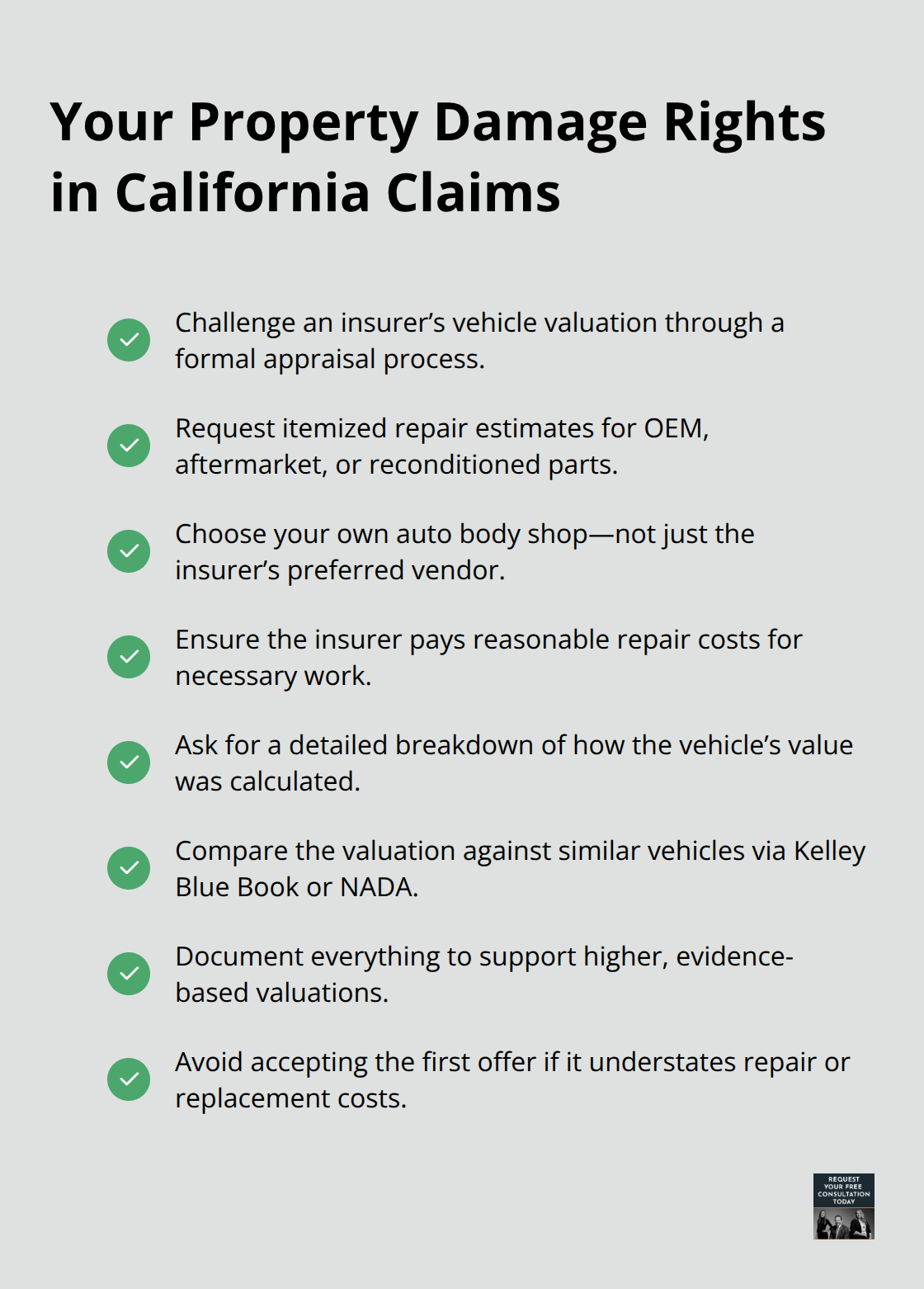
Many families accept the first valuation without question, but early offers frequently understate the true replacement or repair cost. Request a detailed breakdown of how the insurer calculated your vehicle’s value and compare it against similar vehicles in your area using resources like Kelley Blue Book or NADA Guides.
Why Insurance Alone Often Falls Short
Insurance settlements often undercompensate because they focus narrowly on documented losses and exclude future impacts. A settlement offer in the weeks after your crash typically does not account for ongoing therapy costs-the California Office of Traffic Safety reports that about 39 percent of survivors develop post-traumatic stress disorder within six months, with therapy sessions costing 200 to 300 each for 12 to 18 months. Early offers also miss reduced earning potential if your injuries prevent you from returning to your previous job or working full hours. Insurance companies have financial incentives to settle quickly and cheaply, which means their initial offer almost never reflects your actual recovery costs. Request the responding officer’s name and badge number after your crash and obtain the crash report number, as the official police report strengthens your position during negotiations and supports higher valuations of both property and personal injury damages.
Understanding the Full Picture of Your Damages
The gap between what insurers offer and what you actually need grows wider when you factor in long-term consequences. Families often deplete savings within three months according to the California Office of Traffic Safety, which means you cannot afford to accept an inadequate settlement. Vehicle replacement costs around 35,000, rental cars run 40 to 60 per day, and home modifications (if your injuries require accessibility changes) range from 15,000 to 50,000. These expenses compound quickly, and insurance companies rarely volunteer to cover them without strong documentation and negotiation. The legal team at Schaar & Silva LLP can help you evaluate the extent of property damage and connect you with resources to document everything properly, ensuring your claim reflects reality rather than an insurer’s bottom line. Understanding what you can claim positions you to move forward with confidence into the next phase of your recovery-addressing the emotional and psychological impacts that often accompany physical injuries.
Emotional and Psychological Support Resources
How Your Body Responds to a Crash
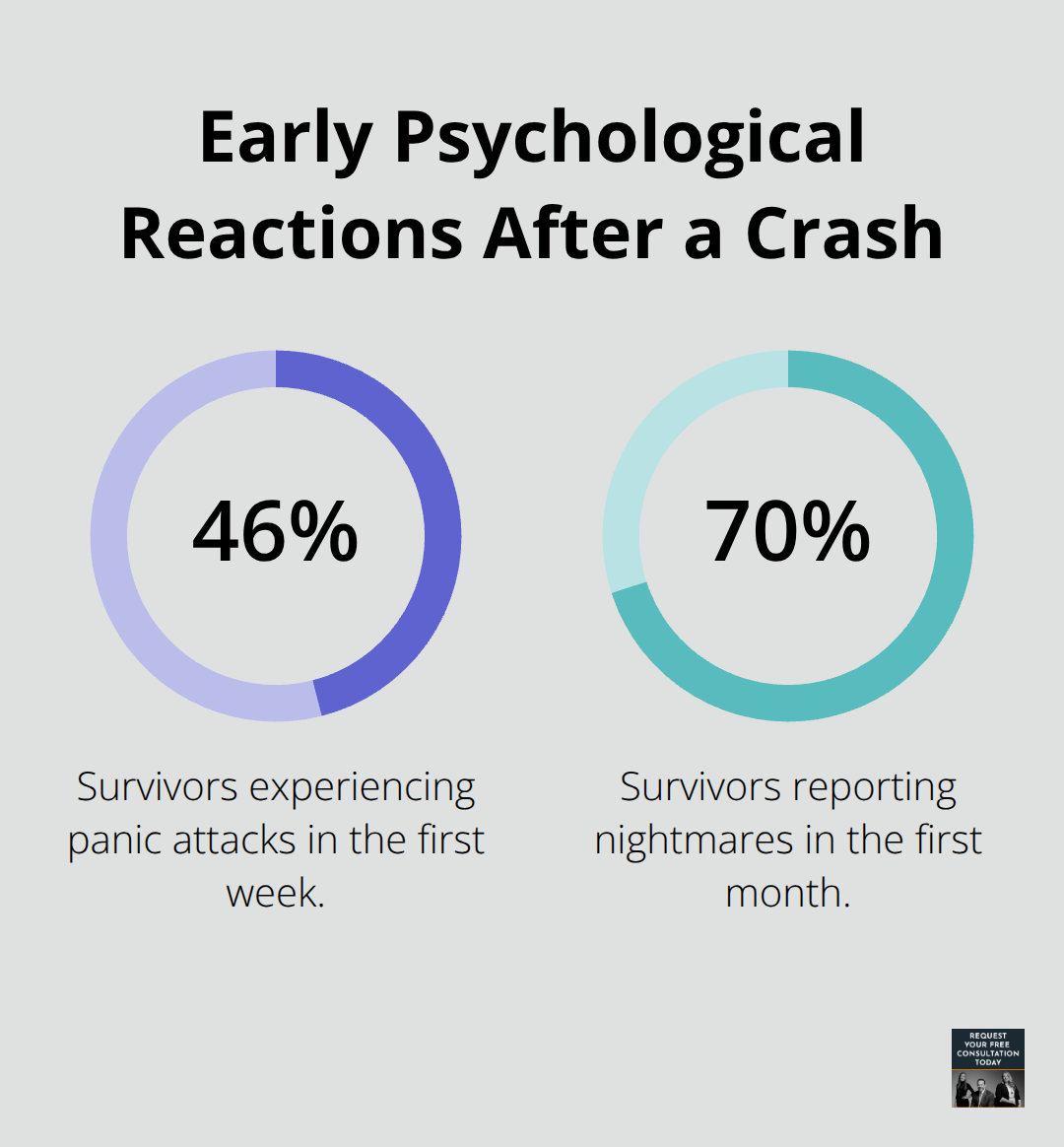
After a crash, your nervous system enters overdrive. The American Psychological Association and National Institute of Mental Health document that about 46 percent of survivors experience panic attacks in the first week, and roughly 70 percent report nightmares in the first month. These reactions aren’t weakness-they’re your body’s stress response flooding with adrenaline and cortisol.
Within six months, about 32.3 percent of crash survivors develop post-traumatic stress disorder, with women facing roughly 2.5 times higher risk than men. Anxiety affects 39.2 percent of survivors, depression strikes 17.4 percent, and about 70 percent of those experiencing depression struggle with concentration problems.
You may also notice intrusive memories replaying the crash or avoidance behaviors like refusing to drive certain routes. Persistent pain six to eight weeks after your accident strongly predicts depression severity at two months, which means physical healing and mental health recovery are deeply connected. Early intervention within the first few weeks after your crash substantially reduces long-term PTSD risk compared with delayed treatment.
Finding Qualified Mental Health Support in Santa Cruz County
Locate trauma-informed therapists through Psychology Today’s therapist finder by filtering for PTSD and motor vehicle accident experience in Santa Cruz County, then verify credentials such as LMFT, PsyD, PhD, or LCSW. Cognitive behavioral therapy with gradual exposure produces approximately 85 percent improvement for travel-related phobias over 12 to 16 sessions, while EMDR reduces PTSD symptoms by roughly 77 percent after 6 to 12 sessions according to the American Psychological Association. Group cognitive behavioral therapy shows even stronger results-one clinical trial found about 88 percent of participants PTSD-free after treatment versus only 31 percent in a control group.
Many practices accept major insurers including Aetna, Cigna, Anthem, UnitedHealthcare, Blue Shield, and Medi-Cal, and many offer sliding-scale fees if cost is a barrier. Try contacting your insurance provider directly to locate in-network trauma therapists in your area.
Support Groups and Community Resources
Hospital-backed support groups open to the public without doctor referral provide structured emotional support. Kaiser Permanente, Sutter VNA Hospice, Mercy San Juan Hospital Chaplaincy, and UC Davis Hospice all host groups with varying schedules. Contact your local hospital to confirm current meeting times. Building a personal recovery network with family and friends reduces isolation and significantly improves treatment engagement. Talk openly with people you trust about panic, sleep problems, or fear of driving.
If you feel overwhelmed at any point, call the 988 Suicide & Crisis Lifeline for immediate 24/7 support. Coordinating your therapy with medical bill management and property damage assistance removes financial stress that can sabotage emotional recovery. The legal team at Schaar & Silva LLP can help direct you to mental health resources while handling the legal and financial complexities of your case, allowing you to focus entirely on healing.
Final Thoughts
Recovery after a vehicle accident involves three interconnected paths: medical care, legal compensation, and emotional healing. Santa Cruz County offers solid vehicle accident injury resources across all three areas, but navigating them alone often leads to missed opportunities and inadequate settlements. Medical lien services remove the financial barrier to treatment, trauma-informed mental health providers address psychological impacts that affect roughly one-third of crash survivors, and property damage specialists challenge low insurance valuations through formal appraisal processes.
Your next step depends on where you are in recovery. If you’re still in the acute phase, prioritize medical evaluation within 48 hours and document every expense, treatment, and lost wage immediately. If you’re further along, focus on connecting with a trauma-informed therapist and exploring support groups in your area while simultaneously addressing property damage claims and medical bill coordination. The gap between what insurance companies initially offer and what you actually need to recover is substantial-early settlements rarely account for ongoing therapy costs, reduced earning capacity, or long-term impacts on your quality of life.
We at Schaar & Silva LLP can help bridge that gap by handling medical bill navigation, property damage evaluation, and connection to mental health resources while managing the legal complexities of your case. Contact us at 408-721-1111 or visit our office to discuss your situation and explore what compensation you may be entitled to recover.
