
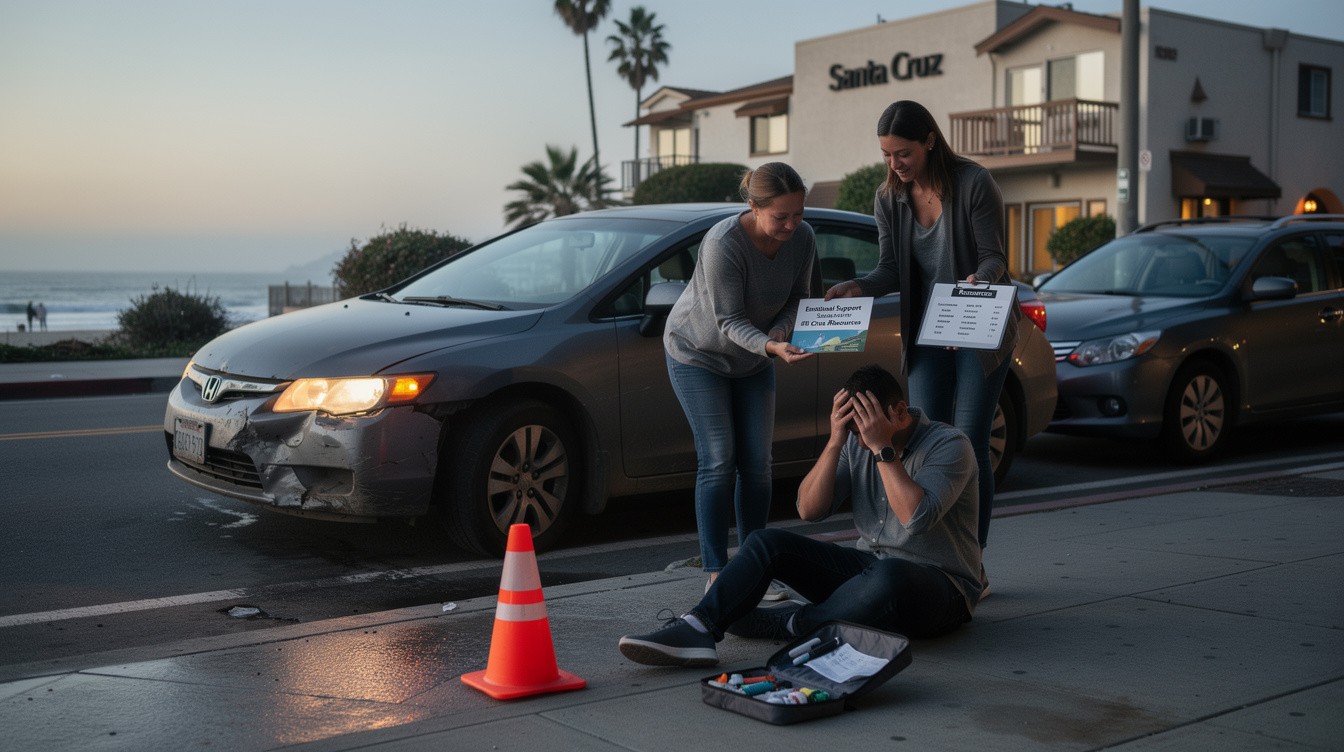
A car accident changes more than just your vehicle. The psychological aftermath-anxiety, depression, and trauma-affects countless people in Santa Cruz County every year.
We at Schaar & Silva LLP know that emotional support Santa Cruz residents need often gets pushed aside while dealing with insurance claims and injuries. Your mental health matters just as much as your physical recovery, and real resources exist to help you heal.
What Happens to Your Mind After a Car Crash
Your nervous system floods with adrenaline and cortisol within seconds of a collision, according to the National Institute of Mental Health. This survival response is normal, but what happens next matters enormously. Within the first week, roughly 46% of crash survivors experience panic attacks, according to the American Psychological Association. Up to 70% report nightmares or sleep problems in the first month. These aren’t signs of weakness-they’re predictable neurological responses to trauma. Yet most people treat these symptoms as minor inconveniences rather than serious injuries requiring professional attention.
The Real Timeline of Psychological Injury
Many people assume emotional symptoms fade quickly, but research tells a different story. At six months post-crash, roughly 39.2% develop anxiety disorders, 17.4% develop depression, and 32.3% develop PTSD, according to the Journal of Clinical Medicine. Women face approximately 2.5 times higher risk of PTSD than men after crashes. The longer trauma goes untreated, the deeper it becomes. Within six months, about 39.2% show avoidance behaviors-refusing to drive certain routes or avoiding driving altogether-which directly impacts work and daily functioning. About 70% of people experiencing depression report concentration problems, making it nearly impossible to handle claims, medical appointments, or job responsibilities.
Why Insurance Companies Miss the Mental Health Picture
Insurance companies rarely ask about your mental state after a crash. No one sends you to a therapist automatically like they might refer you to a physical therapist. The visible injuries-broken bones, cuts, whiplash-receive immediate attention while panic attacks and insomnia are dismissed as temporary stress. This oversight costs you substantially. Therapy costs, prescribed medications for anxiety or depression, and documented lost wages due to emotional symptoms can be recovered as damages when supported by mental health records. The problem is most people never create those records because they never sought treatment.
How Documentation Transforms Your Recovery
Starting therapy immediately after a crash and documenting every session transforms emotional recovery from a personal struggle into a legitimate claim component. When you tell your therapist you were in a car crash during your first appointment, that documentation becomes important evidence of trauma onset. Your medical records from the initial ER visit-including vital signs and physician observations about your emotional state-establish that trauma occurred promptly after the collision. A symptom diary (panic attacks, sleep disruption, avoidance, concentration problems) supports both your care and your claim. These records demonstrate the severity and timeline of your psychological injuries to insurers and strengthen your path to fair compensation.
The connection between your emotional recovery and your legal claim runs deeper than most accident survivors realize. Understanding how to access mental health resources in Santa Cruz County-and how those resources connect to your case-determines whether you heal fully or carry untreated trauma forward.
Where to Find Trauma-Informed Care in Santa Cruz County
Finding the right therapist after a car crash matters more than most people realize, and Santa Cruz County has concrete resources available right now. Psychology Today’s therapist finder lists over 500 trauma and PTSD counselors in the area, and you can filter by credentials like LMFT, PsyD, PhD, or LCSW to find someone trained in accident recovery. Major insurers including Aetna, Cigna, Anthem, UnitedHealthcare, Blue Shield, and Medi-Cal cover trauma-focused therapy, often with copays between $20 and $50 per session. Before starting treatment, contact your insurance company directly and request coverage details in writing, since the California Department of Insurance reported over 41,000 consumer complaints in 2021 related to coverage denials. If cost remains a barrier, Santa Cruz County community mental health centers offer sliding-scale fees based on income, making therapy accessible regardless of your financial situation. When you schedule your first appointment, tell your therapist immediately that you were in a car crash so the trauma onset gets documented in your clinical notes from day one.
Treatment Methods That Actually Work
Cognitive behavioral therapy with gradual exposure produces about 85% improvement for travel-related fears within 12 to 16 sessions, according to peer-reviewed trauma treatment literature. EMDR therapy reduces PTSD symptoms by roughly 77% in 6 to 12 sessions, making it one of the most efficient approaches for accident survivors. Group cognitive behavioral therapy for accident-related PTSD shows even stronger results, with 88% of participants becoming PTSD-free compared to just 31% in control groups receiving supportive counseling. Starting treatment within weeks of your crash significantly reduces your risk of developing chronic PTSD, so delaying care directly increases the likelihood that trauma becomes permanent. Hospital-backed groups through Kaiser Permanente and UC Davis Hospice’s six-week grief and trauma programs provide structured support alongside individual therapy, strengthening your overall recovery. Mothers Against Drunk Driving chapters throughout Santa Cruz County offer peer support specifically for accident survivors, improving both treatment compliance and social functioning during recovery.
How Medical Liens Remove Financial Barriers
Medical lien services pay your therapy bills directly to providers, eliminating the need for upfront payments while you wait for your settlement. This removes a major barrier that stops many accident survivors from accessing care they desperately need. Schaar & Silva LLP can direct you to medical lien services that facilitate payment of your bills until your case resolves, allowing you to focus on healing rather than financial stress. If you experience suicidal thoughts or overwhelming panic, call 988 for the Suicide and Crisis Lifeline, available 24/7 with trained counselors ready to help immediately.
Connecting Mental Health Treatment to Your Claim
Coordinating your mental health treatment with legal representation ensures therapy costs, prescribed medications for anxiety or depression, and documented lost wages become part of your compensation claim rather than personal expenses you absorb alone. Your attorney can help you understand how psychological treatment strengthens your case and what documentation insurers need to see. The path forward requires both professional mental health care and strategic legal support working in tandem, which brings us to how your legal team can actively assist your emotional recovery process.
How Legal Support Connects You to Emotional Care
Your attorney does far more than handle paperwork and negotiate with insurance companies. At Schaar & Silva LLP, we connect you with trauma-informed therapists and manage the financial barriers that prevent most accident survivors from accessing care. When you work with us, we direct you to medical lien services that pay your therapy bills directly to providers, eliminating the upfront costs that stop many people from seeking treatment. This matters because delaying care increases your risk of developing chronic PTSD significantly. The Journal of Clinical Medicine shows that 32.3% of accident survivors develop PTSD within six months when treatment is delayed or absent. Starting therapy immediately and having your legal team coordinate payment through medical liens removes the financial excuse that keeps you trapped between mounting medical debt and untreated trauma. We document every therapy session, medication prescribed for anxiety or depression, and lost wages due to emotional symptoms so these costs become part of your compensation claim rather than personal expenses you absorb alone.
Building Your Documentation Timeline
Your documentation strategy starts the moment you schedule your first therapy appointment. Tell your therapist immediately that you were in a car crash so the trauma onset gets recorded in your clinical notes from day one, creating a clear timeline that insurers cannot dispute. Request copies of your clinical notes after each session and keep them organized with dates and provider credentials clearly marked. Your initial ER records matter equally, as the National Institute of Mental Health confirms that adrenaline and cortisol surge within seconds of a collision, and those vital signs plus physician observations about your emotional state establish that trauma occurred promptly.
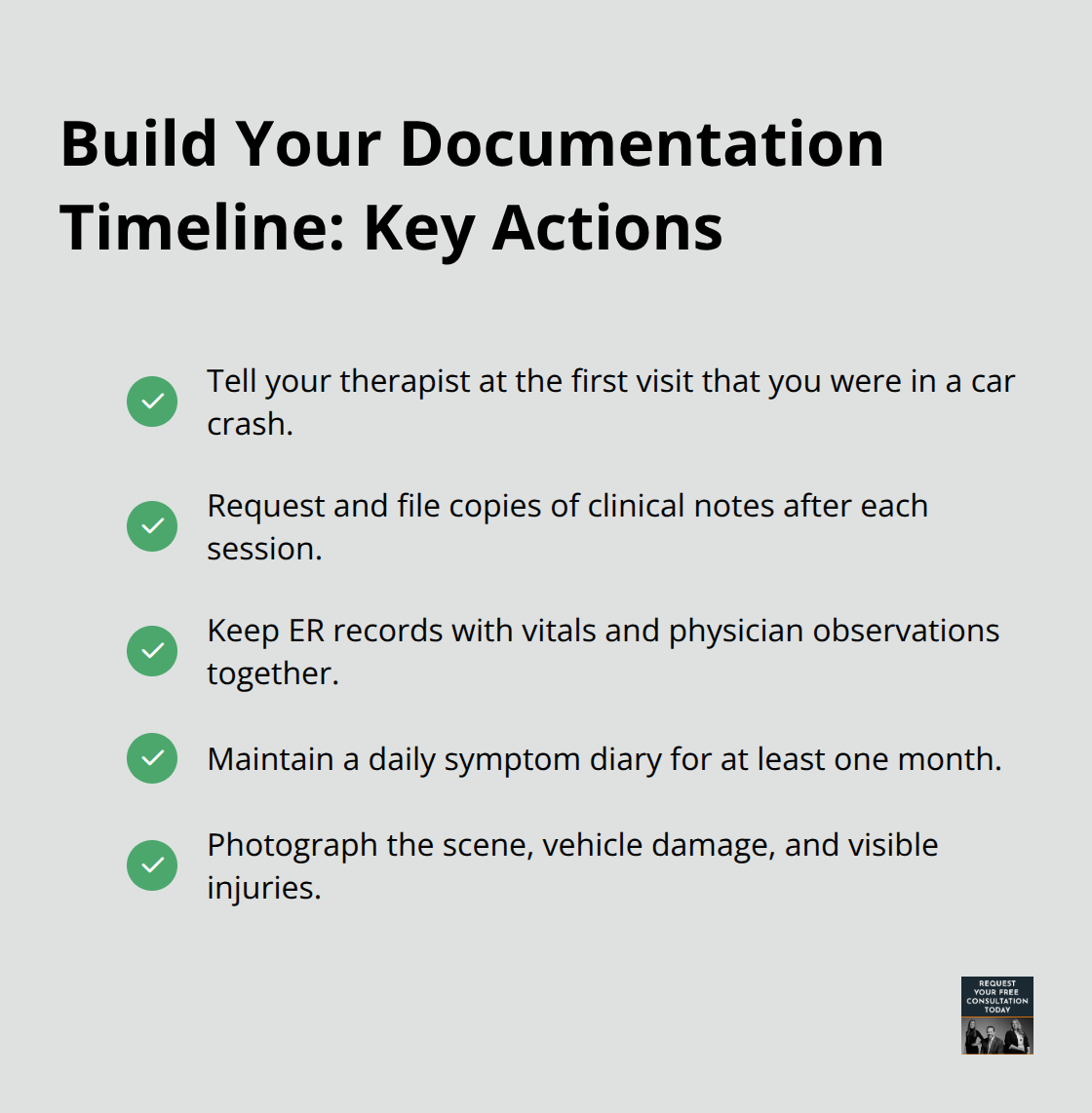
Create a personal symptom diary for at least the first month, logging panic attack dates, triggers, duration, sleep disruption, avoidance behaviors, and how each symptom affects your work and driving ability. Photographs of accident scenes, vehicle damage, and visible injuries establish collision severity and support psychological injury claims when combined with therapy records. This documentation transforms vague emotional suffering into measurable, compensable harm that strengthens your position with insurers considerably.
What Insurance Companies Actually Pay For
Therapy costs, prescribed medications for anxiety or depression, and documented lost wages become legitimate damages when supported by consistent mental health records. The California Department of Insurance reported over 41,000 consumer complaints in 2021 related to coverage denials, meaning insurers routinely challenge mental health claims that lack proper documentation. Your attorney ensures your records meet the standards insurers demand and presents them strategically to maximize compensation. Women face approximately 2.5 times higher risk of PTSD after auto accidents than men according to the Journal of Clinical Medicine, and this gender-specific data influences how insurers evaluate your claim when properly presented. The connection between consistent therapy attendance, documented symptoms, and compensation is direct and measurable, not theoretical or negotiable.
Final Thoughts
Emotional trauma after a car accident is real, measurable, and treatable. Without professional support, your risk of developing anxiety, depression, or PTSD within six months climbs significantly, yet accessing emotional support Santa Cruz residents need requires more than willingness to heal. It demands a coordinated strategy that combines therapy, documentation, and legal representation working together.
Your recovery depends on starting treatment immediately and building a support network that addresses both your mental health and your financial stability. Trauma-informed therapists in Santa Cruz County guide you through evidence-based treatments like EMDR or cognitive behavioral therapy, which produce measurable improvements within weeks, while support groups through Mothers Against Drunk Driving or hospital-based programs connect you with others navigating identical challenges. Regular physical movement, consistent sleep, and documented symptom tracking strengthen your healing while creating the records insurers need to see.
Medical lien services eliminate upfront costs, allowing therapy to begin immediately while your case progresses, and we at Schaar & Silva LLP coordinate this support to ensure therapy expenses, medications, and lost wages become part of your compensation claim rather than personal debt you carry alone. Contact Schaar & Silva LLP at 408.721.1111 or visit our Santa Cruz office at 518 Ocean Street, Suite A, Santa Cruz, CA 95060 for a free consultation about your rights and access to the emotional support and compensation you deserve.
