

Every year, Santa Cruz County experiences thousands of vehicle accidents that reshape lives in an instant. The accident statistics Santa Cruz residents face reveal patterns worth understanding-from the most common crash types to the injuries that follow.
At Schaar & Silva LLP, we’ve seen firsthand how these numbers translate into real consequences for families and individuals. This post breaks down what the data shows and what you can actually do about it.
What’s Really Happening on Santa Cruz Roads
Santa Cruz County recorded 147 fatal and injury crashes in 2021 according to the California Office of Traffic Safety, and the breakdown reveals patterns that matter if you’ve been in an accident. Bicyclists accounted for 49 of those crashes, ranking the county third highest statewide for bicycle collisions, while pedestrians were involved in 24 crashes. These numbers aren’t random-they point to specific road conditions and driver behaviors that cause real harm.
Distracted driving stands out as the leading cause in Santa Cruz County. Texting and other tasks pull eyes off the road for about five seconds at 55 mph, equivalent to traveling a football field blind. Alcohol-involved crashes totaled 18 in 2021, with six involving drivers aged 21 to 34. Speed-related collisions numbered 19, and 16 crashes occurred between 9 pm and 3 am when visibility drops and impairment peaks.
Hit-and-run incidents totaled 13, highlighting a dangerous pattern of drivers fleeing scenes.
Hotspots and Intersection Danger
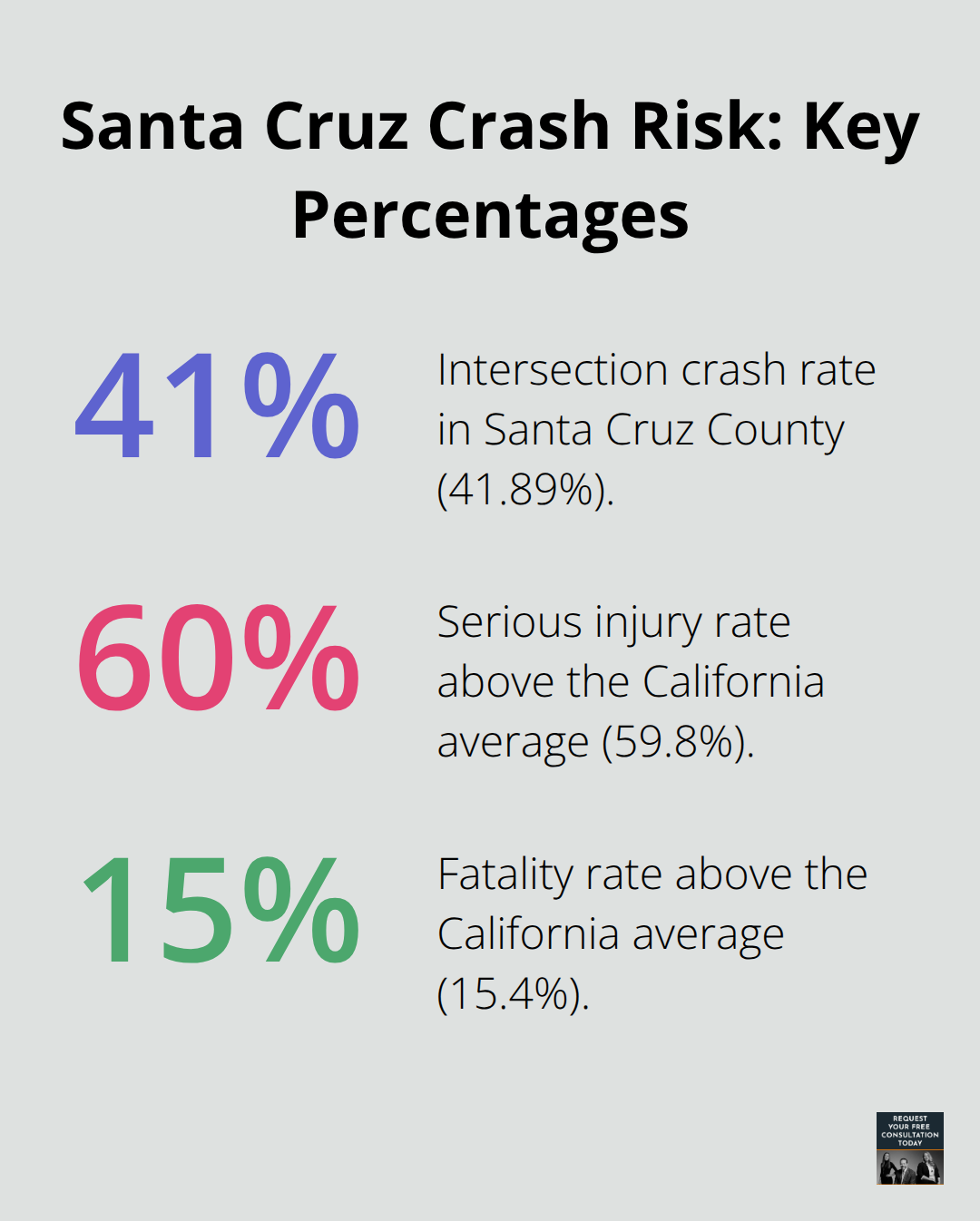
The intersection crash rate in Santa Cruz County sits at 41.89%, roughly 12.73% higher than the California city average. Highway 1 and Highway 9 form the most dangerous intersection, recording 11 crashes from 2020 to 2024, followed by Pacific Avenue and Beach Street with 8 incidents. These locations demand extra caution and heightened awareness from drivers.
The True Cost of These Crashes
Serious injuries from vehicle accidents in Santa Cruz County run 59.8% higher than the California average, and the financial impact extends far beyond the initial emergency room visit. Serious injuries typically cost between $57,000 and $123,000, with spinal surgeries alone running $100,000 to $200,000. An ambulance ride costs around $1,200, and therapy can stretch 12 to 18 months at $200 to $300 per session.
Lost income compounds the burden significantly. Minor injuries sideline victims for about 11 days off work, while severe injuries can extend to six months or longer. The fatality rate in Santa Cruz County runs 15.4% above the California average, and each death carries an economic cost around $1.75 million according to the National Safety Council. Families often deplete savings within three months of a serious crash and may face bankruptcy or asset sales.
Beyond medical bills and lost wages, hidden costs mount quickly: vehicle replacement around $35,000, rental cars at $40 to $60 daily, home modifications reaching $15,000 to $50,000, and potential legal fees that many accident victims cannot afford upfront.
Three Preventable Factors Dominate Local Crashes
The data shows distracted driving, speeding, and impaired driving cause most Santa Cruz accidents. Try maintaining a three-second follow distance behind other vehicles-at 55 mph that equals about 242 feet. In rain or fog, extend that to five seconds to prevent rear-end collisions entirely. Place your phone in the glove compartment before you drive and adjust GPS controls while parked. Before long trips, check tire pressure, tread depth, brakes, headlights, wipers, and steering, then verify your vehicle has no active recalls on the NHTSA website.
If your vehicle was recently serviced, keep documentation proving repairs were completed correctly to avoid liability for faulty maintenance. When crashes happen despite precautions, photograph the scene from multiple angles and document all injuries. Collect the other driver’s license and insurance information, note the location and time, and gather witness contact details. Request the responding officer’s name and badge number, and obtain the crash report number to retrieve the full report for insurance and legal purposes.
Building Your Documentation File
A strong medical documentation file protects you against claim denials and strengthens your position with insurers. Seek prompt medical attention and keep all receipts and invoices. Document lost wages and preserve vehicle maintenance records, as these can influence liability and insurance claims. This thorough approach matters because insurers scrutinize every detail, and gaps in your documentation can cost you thousands in denied benefits.
The financial and physical toll of these crashes reveals why what happens next-understanding your legal options and recovery path-becomes so important for your future.
What Vehicle Accidents Actually Cost You
A serious vehicle accident in Santa Cruz County drains your finances faster than most people realize. Medical costs for serious injuries run between $57,000 and $123,000 according to data tracked by the National Safety Council, and that’s before you factor in the hidden expenses that pile up afterward. An ambulance ride costs around $1,200, an emergency room visit averages $3,300, and spinal surgeries alone range from $100,000 to $200,000. If you need therapy-which 39% of crash survivors do within six months-expect $200 to $300 per session for 12 to 18 months.
The Financial Assault Extends Far Beyond Medical Bills
Lost income compounds the damage significantly. Minor injuries sideline you for roughly 11 days of work, while severe injuries can extend six months or longer. At California’s average weekly wage of around $1,400, a six-month recovery costs approximately $36,400 in lost income alone. Vehicle replacement runs about $35,000 for a total loss, rental cars cost $40 to $60 daily while yours is repaired, and home modifications for mobility issues can reach $15,000 to $50,000.
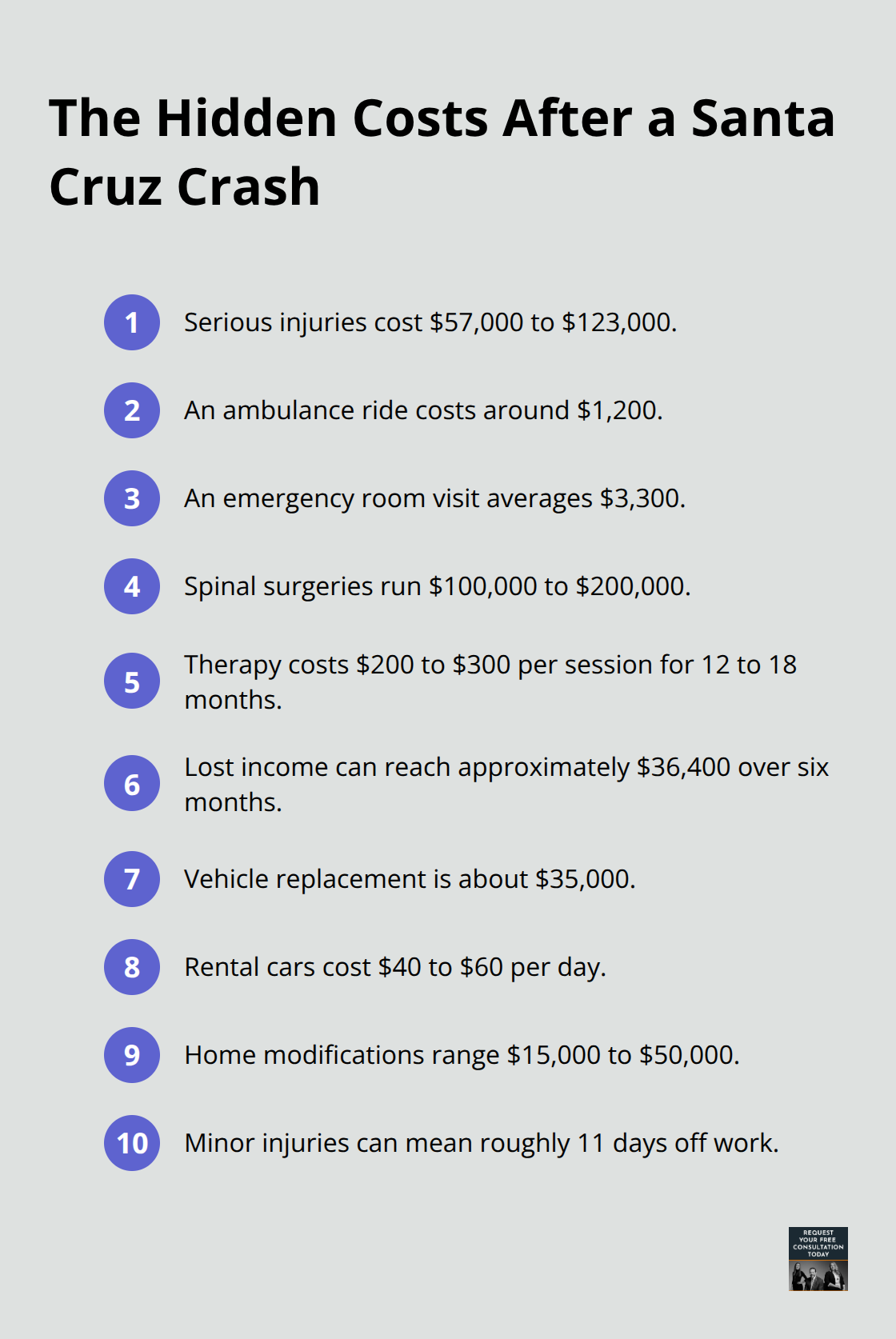
The fatality rate in Santa Cruz County sits 15.4% above the California average, and each death carries an economic cost around $1.75 million. Families deplete savings within three months of a serious crash and often face bankruptcy or asset sales to cover gaps that insurance won’t cover.
Psychological Trauma Outlasts Physical Injuries
The aftermath of a crash often outlasts the physical injuries. About 39% of survivors develop PTSD within six months, and untreated trauma can derail your ability to work and function normally. Therapy costs $200 to $300 per session, typically running 12 to 18 months, with medications and counseling for children adding thousands more.
Your nervous system stays hypervigilant around traffic, making simple drives feel dangerous. Sleep disruption, anxiety about returning to work, and relationship strain with family members create hidden costs that no insurance calculator captures. Children who witness or experience crashes often develop behavioral problems requiring their own counseling.
Documentation Strengthens Your Recovery Path
These psychological impacts reduce your earning capacity and quality of life long after the physical scars fade. Comprehensive documentation of your mental health treatment strengthens your claim and helps you recover damages for this very real harm. The legal team at Schaar & Silva LLP can connect you with specialists who offer the psychological support you may require and help you document these costs properly. Understanding what you’ve lost financially and emotionally positions you to pursue the full compensation you deserve.
How to Actually Reduce Your Accident Risk
The data from Santa Cruz County makes one thing clear: most crashes stem from preventable behaviors, not bad luck. Distracted driving, speeding, and impaired driving caused the majority of the 147 fatal and injury crashes recorded in 2021, which means your choices behind the wheel matter far more than you might think.
Master Follow Distance and Visibility
Start with follow distance. Maintain at least three seconds of space between your vehicle and the one ahead-at 55 mph that translates to roughly 242 feet. In rain or fog, extend that to five seconds because Santa Cruz’s coastal weather creates sudden visibility drops that catch drivers off guard.
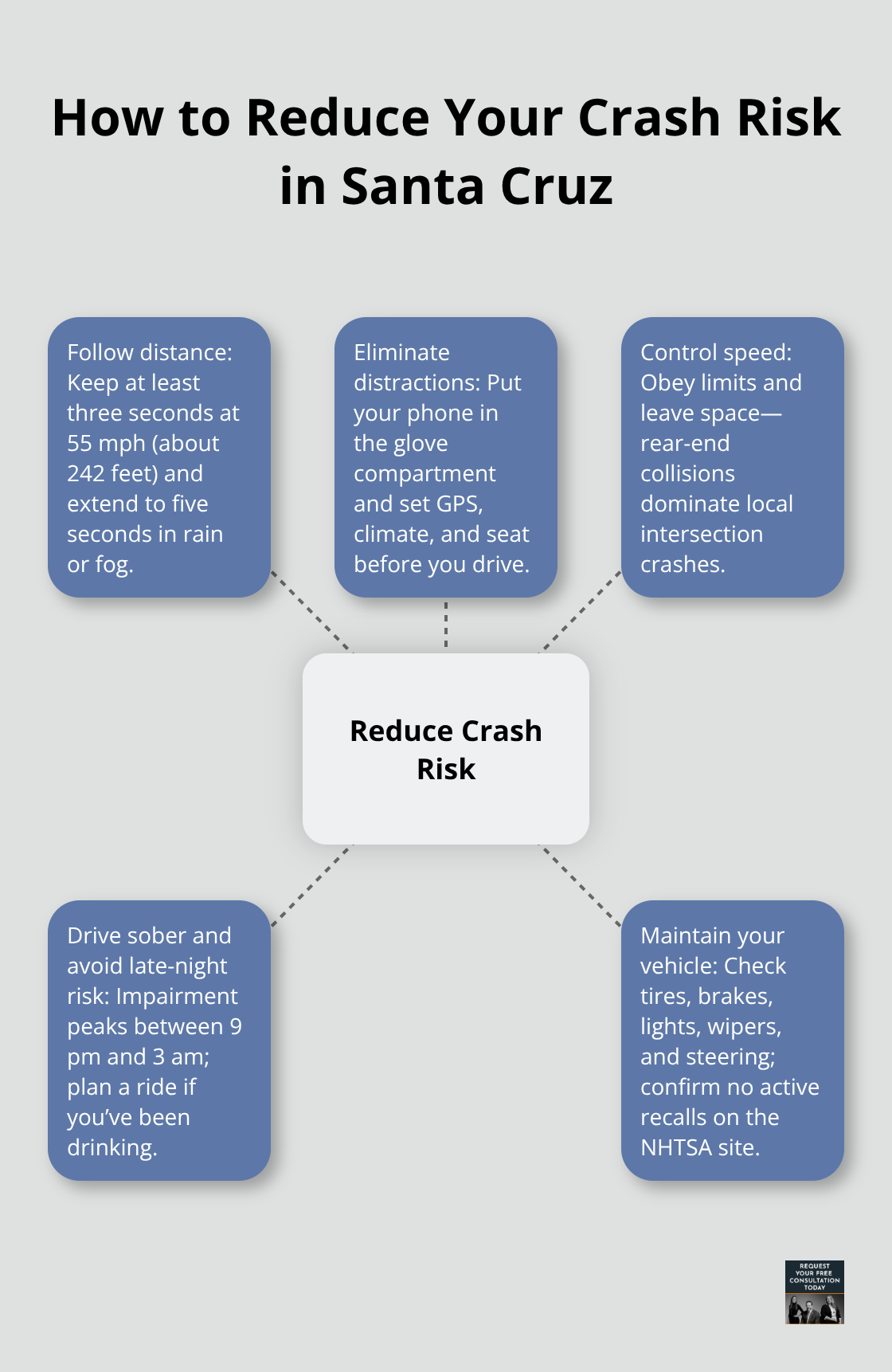
Rear-end collisions dominate intersection crashes in the county, and follow distance eliminates most of them entirely.
Eliminate Distractions Before You Drive
Before you drive, eliminate distractions completely. Place your phone in the glove compartment, not the cup holder or passenger seat where you’ll reach for it. Adjust your GPS, climate controls, and seat position while parked. The five seconds your eyes leave the road at highway speed equals traveling blind past an entire football field-that’s how quickly texting or checking notifications becomes deadly.
Maintain Your Vehicle to Prevent Mechanical Failures
Vehicle maintenance prevents failures that cause crashes. Before long trips, check tire pressure and tread depth, test your brakes and headlights, verify your wipers function, and inspect your steering responsiveness. Run your vehicle’s identification number through the NHTSA website to confirm no active recalls exist. If your vehicle was recently serviced, keep documentation proving repairs were completed correctly because faulty maintenance can shift liability in a crash.
Document Everything After a Crash Occurs
Preparation matters immediately after impact. Photograph the scene from multiple angles, document visible injuries with photos, and collect the other driver’s license, insurance card, and vehicle registration. Note the exact location, date, time, and weather conditions. Gather contact information from any witnesses who saw the crash. Request the responding officer’s name and badge number, then obtain the crash report number so you can retrieve the full report for insurance and potential legal action.
Build a Medical File That Protects Your Claim
A strong medical file protects against claim denials and strengthens your position with insurers. Seek medical attention promptly-some injuries don’t manifest immediately-and keep every receipt, invoice, and medical record. Document lost wages by obtaining statements from your employer showing dates you missed work. Preserve vehicle maintenance records because they influence liability determinations. Psychological trauma reduces earning capacity long after physical injuries heal, and comprehensive documentation of mental health treatment helps you recover damages for that very real harm. The legal team at Schaar & Silva LLP can connect you with specialists who offer the psychological support you may require and help you document these costs properly, ensuring nothing gets overlooked in your recovery.
Final Thoughts
The accident statistics Santa Cruz County reveals show that most crashes stem from choices you control. Distracted driving, speeding, and impaired driving caused the majority of the 147 fatal and injury crashes in 2021, which means your behavior behind the wheel matters far more than chance. Serious injuries in Santa Cruz run 59.8% higher than the California average, and the financial fallout extends well beyond medical bills into lost wages, vehicle replacement, and psychological recovery that stretches years.
Prevention works when you maintain a three-second follow distance, eliminate distractions before you drive, and keep your vehicle properly maintained. These actions eliminate most common crash causes and protect both your safety and your finances. When accidents happen despite your precautions, thorough documentation of the scene, injuries, and medical treatment protects you against claim denials and strengthens your position with insurers.
If you’ve already been in a crash, the path forward requires both medical care and legal guidance. We at Schaar & Silva LLP understand the full scope of what you’re facing, from immediate medical bills to the long-term psychological impact that reduces your earning capacity. Contact Schaar & Silva LLP to discuss your case and learn what compensation you actually deserve.
