
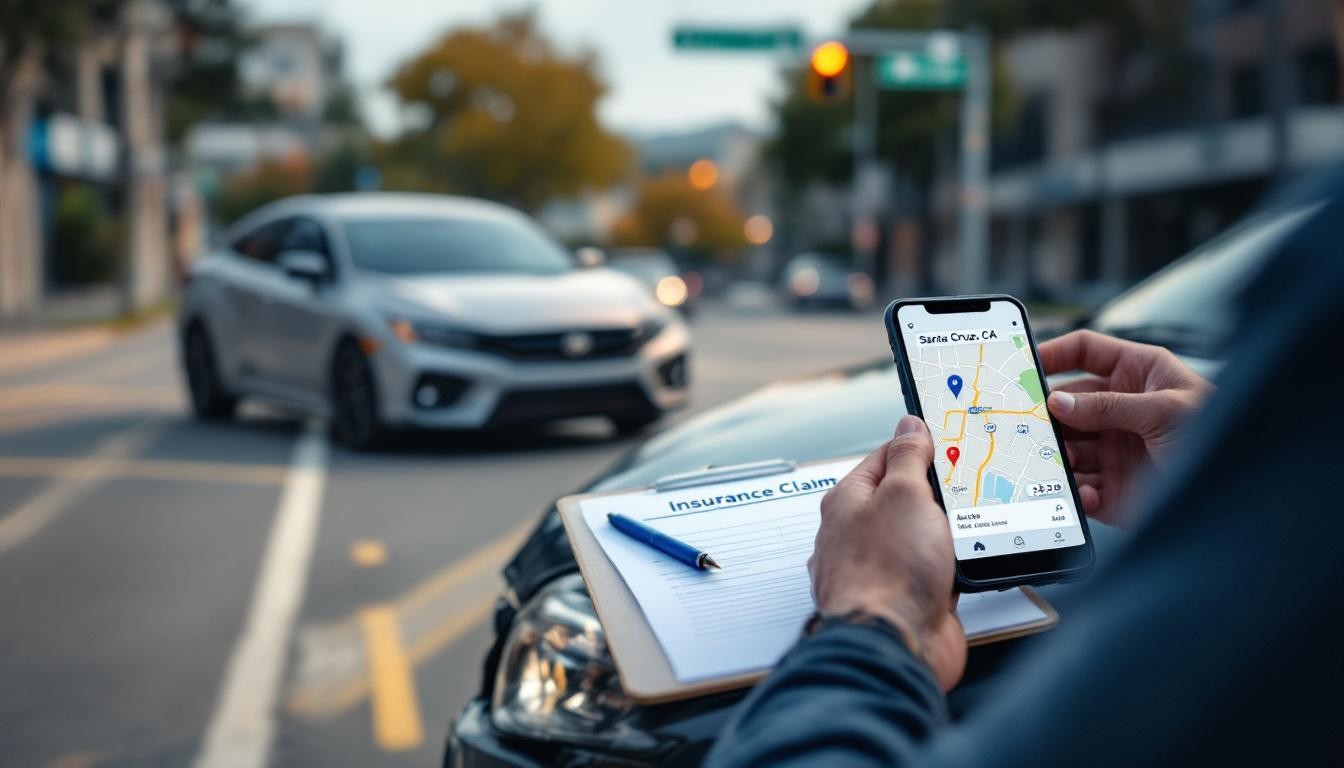
A Santa Cruz car accident can turn your life upside down in seconds. Medical bills pile up, insurance companies push back, and you’re left wondering what your claim is actually worth.
We at Schaar & Silva LLP have helped hundreds of people in Santa Cruz County navigate this exact situation. This guide walks you through the steps that matter most-from what to do at the scene to how to protect your recovery.
What to Do Right After Your Santa Cruz Accident
Act Immediately at the Scene
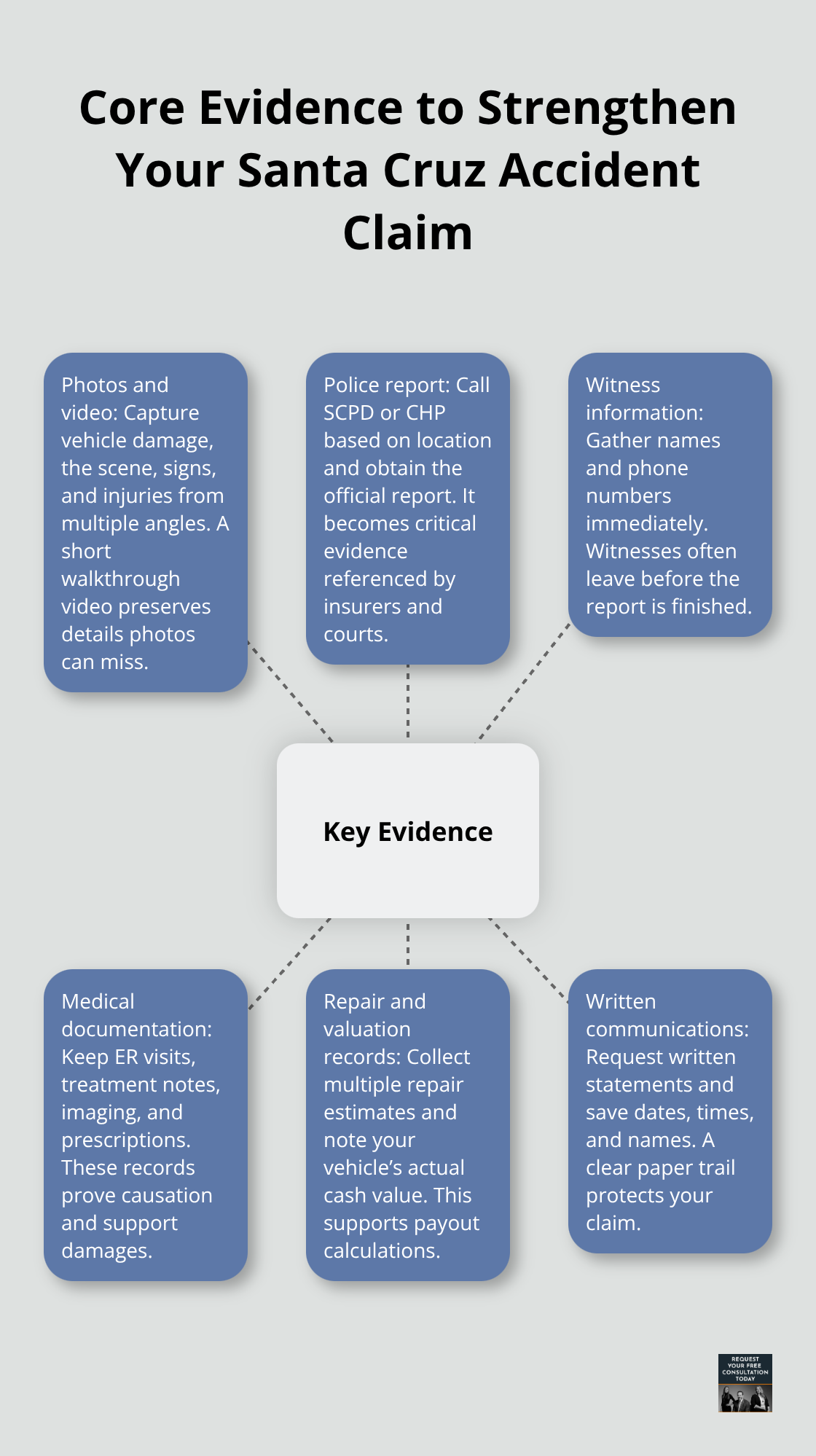
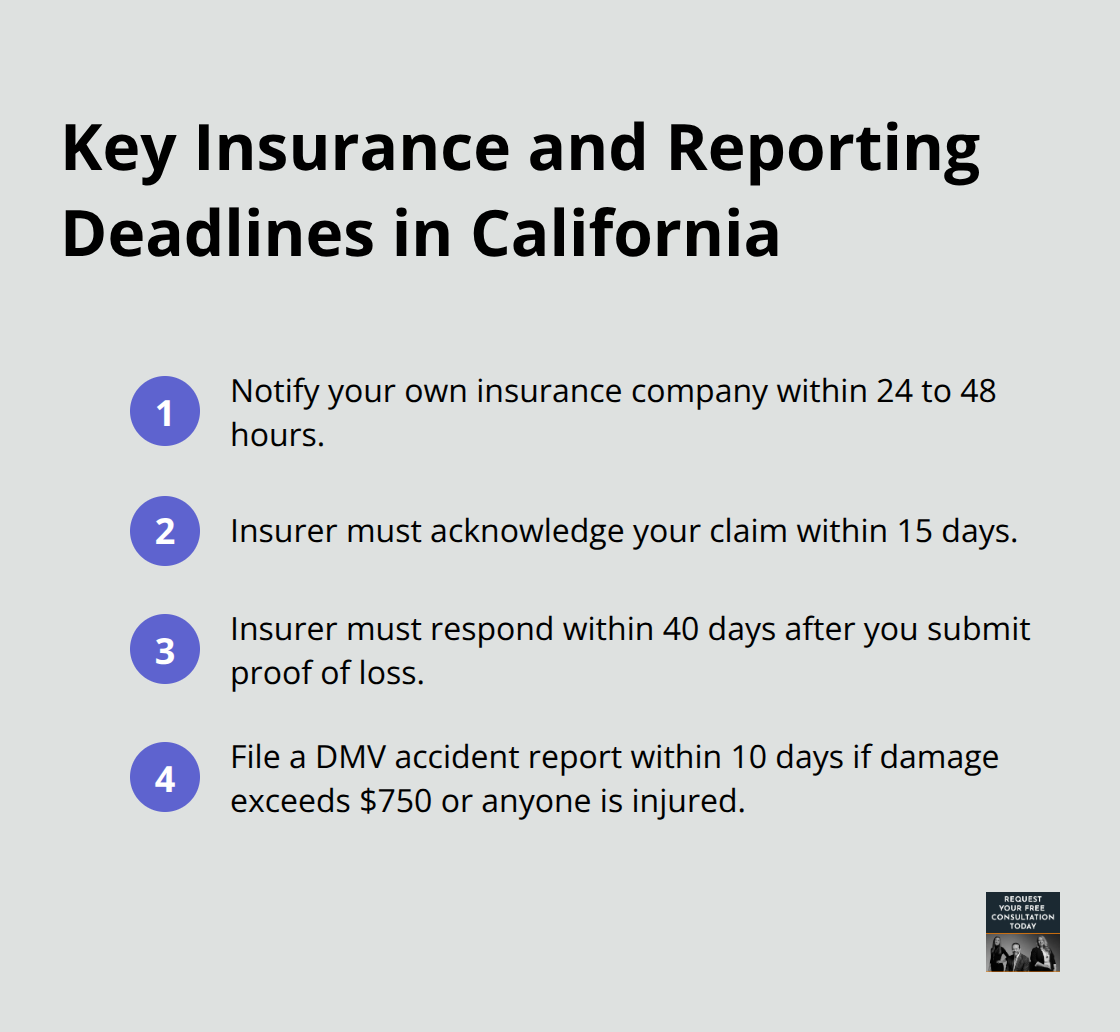
The first minutes after a car accident determine whether your claim succeeds or fails. Police reports, photos, and witness statements create the foundation that insurers and courts rely on, so act with purpose. Call 911 immediately if anyone is injured. If vehicles are drivable and safe to move, get them out of traffic, then call the Santa Cruz Police Department or the California Highway Patrol depending on location. The official report becomes critical evidence that insurers must acknowledge within 15 days of your claim submission, according to California Department of Insurance rules. Do not leave the scene before police arrive and document everything.
Capture Visual Evidence
Take photos of all vehicle damage from multiple angles, the accident site, road conditions, traffic signs, and any visible injuries. Video footage captures details photos miss, so record a brief walkthrough of the scene if you can do so safely. These images matter because insurance companies calculate settlements based on damage severity, and your documentation prevents them from undervaluing your case.
Collect Critical Information
Exchange information directly with the other driver: full names, addresses, phone numbers, driver’s license numbers, vehicle identification numbers, and insurance details. If a truck is involved, record the trucking company name and the vehicle’s DOT and MC numbers to identify the carrier. Do not admit fault or apologize at the scene, as anything you say can be used against you in negotiations or court. Collect contact information from anyone who witnessed the accident, including their full names and phone numbers, because witnesses often leave before police finish their report. If witnesses depart, leave a note on their vehicle with your contact information.
Report to Your Insurance Company
Notify your insurance company within 24 to 48 hours and provide your policy number, accident date and location, and a factual description of what happened. Avoid statements to the other driver’s insurer, as recorded statements can be used to minimize your payout. The California Department of Insurance permits written statements instead, so request that option. Document everything in writing and keep organized records of all communications, including dates, times, and names of people you spoke with.
These immediate actions protect your position, but understanding how fault works in California and what damages you can actually recover requires knowledge of state law and local court practices.
What Your Claim Is Actually Worth
How California Determines Fault and Your Recovery
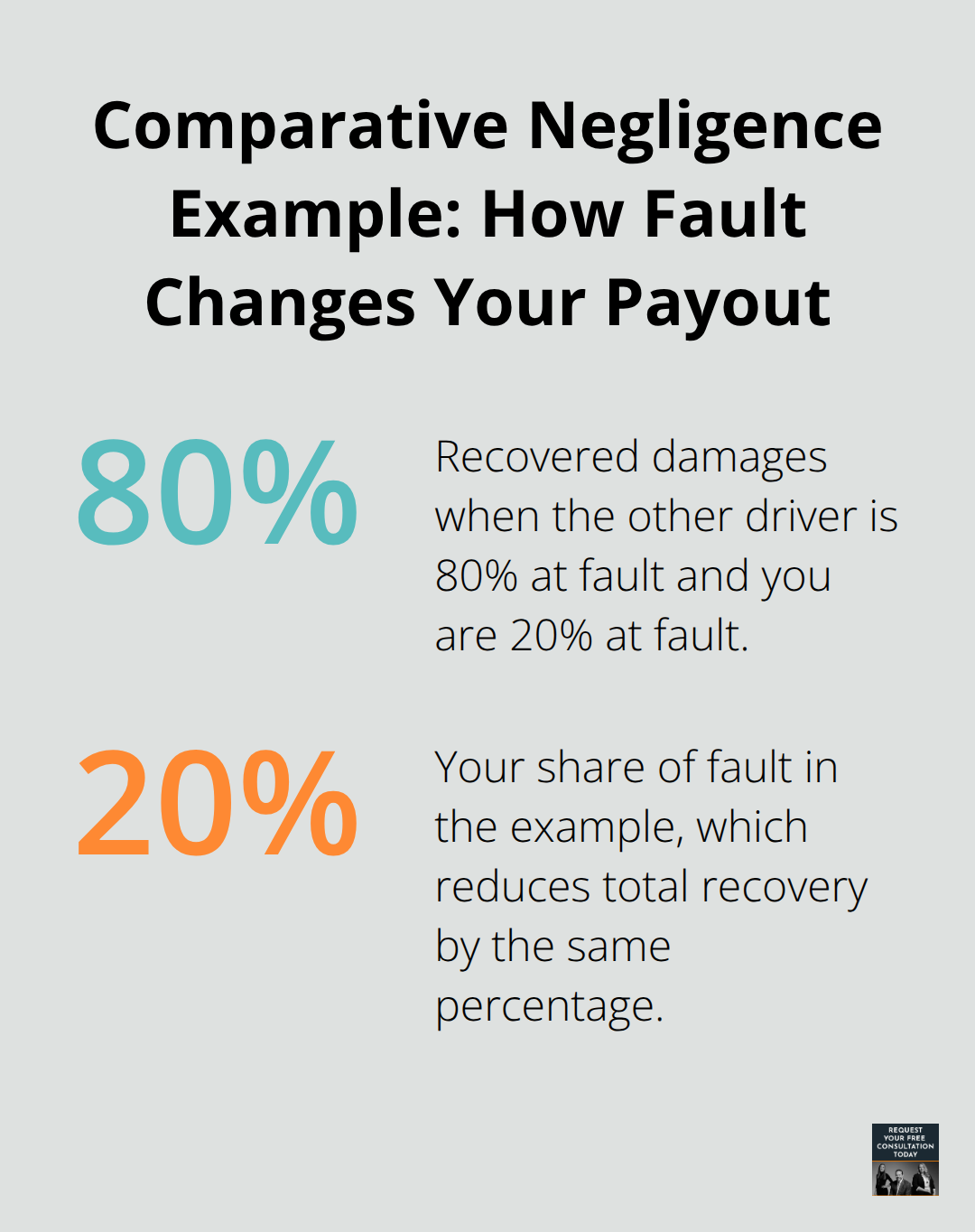
California uses comparative negligence, which divides fault based on each party’s percentage of responsibility for the accident. This directly affects your payout. If you were 20 percent at fault and the other driver 80 percent, you recover 80 percent of your damages under California law.
Insurance companies fight to inflate your percentage of fault because every percentage point reduces what they owe you. Document everything at the scene and obtain a police report because these establish the factual foundation that protects your percentage. The DMV requires accident reports within 10 days if vehicle damage exceeds $750 or anyone is injured, so file that report immediately and keep a copy for your records.
Economic and Non-Economic Damages
Your damages fall into two distinct categories that most people overlook. Economic damages cover medical expenses, rehabilitation costs, lost wages, and property damage-straightforward to calculate with receipts and medical records. Non-economic damages cover pain and suffering, emotional distress, and loss of enjoyment of life, which require documentation showing how the accident disrupted your daily activities. Many accident victims leave significant money on the table by not tracking these impacts thoroughly.
Organize your medical records now, including emergency room visits, ongoing treatment, doctor notes, imaging results, prescriptions, physical therapy sessions, and receipts for medical equipment or medications. Collect wage-loss letters from your employer showing income you missed while recovering. Keep detailed notes about how injuries affected your ability to work, exercise, sleep, or participate in hobbies because these details strengthen your non-economic damages claim. Commercial truck insurance carries higher minimum coverage than passenger vehicles (ranging from about $300,000 to $5 million depending on cargo type and hazard level), which can significantly improve your compensation potential if a truck caused the accident.
Insurance Timelines and Settlement Rules
Insurance companies follow strict timelines set by California law. The California Department of Insurance requires insurers to acknowledge your claim within 15 days and respond within 40 days after you submit proof of loss. Track these deadlines carefully and document every communication with names, dates, and times. Insurance payout rules typically pay the lesser of repair costs or your vehicle’s actual cash value, so obtain multiple repair estimates to support your claim value.
If your loan balance exceeds the settlement, consider gap insurance coverage to protect yourself.
Avoid early recorded statements with insurers because these can minimize your payout. Request written statements instead, which gives you time to provide complete and accurate information without pressure. When multiple defendants are involved (trucking company, cargo loader, maintenance provider, vehicle manufacturer, or driver), liability may be shared and evidence matters for attribution. Understanding these complexities and navigating them correctly determines whether you recover what you actually deserve.
Mistakes That Destroy Your Claim Before It Starts
The moment after your Santa Cruz accident, you face pressure to explain what happened, reassure the other driver, and move forward. This pressure creates the exact conditions where accident victims sabotage their own claims.
Never Admit Fault at the Scene
The first critical mistake is saying anything that sounds like fault at the scene. Phrases like “I’m sorry,” “I didn’t see you,” or “I should have been paying attention” get quoted back to you months later when the insurance company argues you caused the accident. California law treats comparative negligence seriously, and insurers weaponize your own words to reduce your percentage of recovery.
You might apologize out of politeness or shock, but the other driver and witnesses remember those words. Police reports document what people say at the scene, and recorded statements become part of the official record. The solution is straightforward: stick to facts only. Tell police what happened without interpretation or blame. Exchange information with the other driver without commentary. Do not sign anything at the scene except for the police report itself.
Seek Medical Attention Immediately
The second mistake compounds the first: waiting to seek medical attention. You feel fine after the accident, so you skip the emergency room and schedule a doctor’s appointment for next week. Then pain develops over the next few days, and you finally get treatment. Insurance companies argue the delay proves your injuries weren’t serious, which reduces your damages significantly.
Medical records create the timeline that proves causation between the accident and your injuries. If you wait days or weeks, insurers claim something else caused your pain. Seek medical attention immediately, even if you feel minor pain or just soreness. Emergency room visits create official documentation that courts and insurers cannot dismiss.
Never Contact the Other Driver’s Insurance Company
The third mistake is contacting the other driver’s insurance company directly. You think you’re being helpful by explaining your side of the story, but recorded statements give insurers ammunition to minimize your payout. The California Department of Insurance permits written statements instead, which gives you time to provide accurate information without pressure or misquotes.
Never call the other driver’s insurer. Contact only your own insurance company within 24 to 48 hours, provide factual information, and request that all future communication occur in writing. If a truck caused the accident, the trucking company’s insurer will contact you aggressively because commercial truck insurance carries higher minimum coverage (ranging from about $300,000 to $5 million depending on cargo type). These aggressive tactics work because accident victims feel obligated to cooperate. You have no obligation to speak with their representatives. Your insurance company protects your interests; theirs protects theirs.
Final Thoughts
You now understand what happens at the scene, how fault and damages work in California, and which mistakes destroy your case before it starts. Insurance companies negotiate differently when they know you have legal representation, and they stop pushing aggressive tactics once they calculate what a jury might award. A Santa Cruz car accident attorney changes this equation because we understand local court procedures, judge tendencies, and how Santa Cruz juries evaluate accident claims.
We at Schaar & Silva LLP work with accident victims throughout Santa Cruz County to handle the parts that matter most. We connect you with medical lien services so you can receive treatment without worrying about bills piling up during your recovery, and we preserve critical evidence like electronic logging device data, driver logs, maintenance records, and dashcam footage before trucking companies destroy it. We organize your medical records, wage-loss documentation, and injury impact statements into a compelling case file that strengthens your position in settlement negotiations.
The goal is straightforward: you recover what you deserve while focusing on healing. Contact us to discuss your Santa Cruz car accident case and understand your options.
