
After a vehicle accident, getting fair compensation for damage requires understanding how insurers evaluate your vehicle. The valuation process involves multiple steps, documentation requirements, and negotiation tactics that directly impact what you receive.
At Schaar & Silva LLP, we’ve seen countless claims where vehicle damage valuations fell short of actual repair costs. This guide walks you through the assessment process, shows you how to gather strong evidence, and explains your options when settlements seem unfair.
How Adjusters Value Your Vehicle Damage
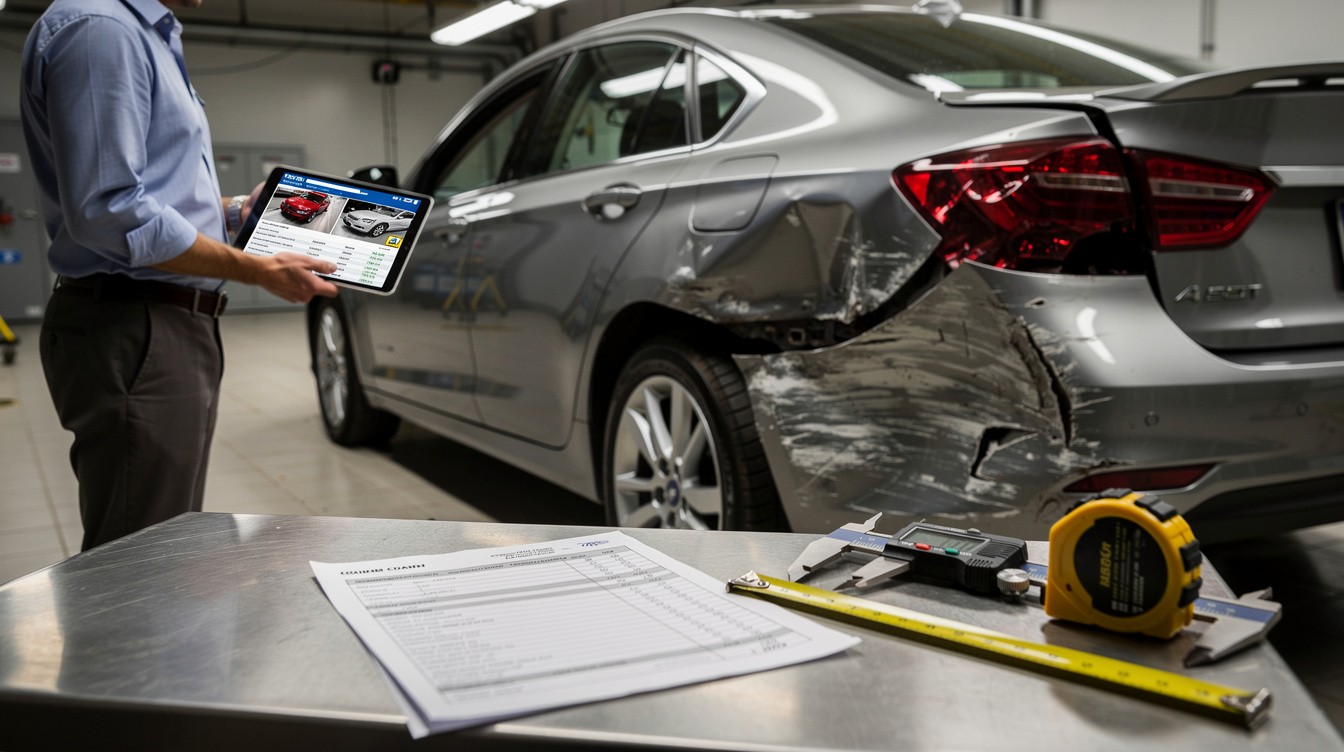
Insurance adjusters follow a standardized inspection process that determines your vehicle’s damage value, but understanding what they actually do matters for your claim. When an adjuster arrives at the scene or inspects your vehicle, they photograph damage from multiple angles, measure the extent of harm, and cross-reference repair estimates against their internal databases. The adjuster’s primary goal is to establish a defensible valuation figure, not to maximize what you receive. This is why their estimate often comes in lower than what independent repair shops quote.
The Adjuster’s Inspection and Valuation Process
The adjuster works from a damage assessment report that documents everything from paint damage to structural issues, then inputs this data into valuation software that calculates repair costs based on regional labor rates and parts pricing. In California, the repair standard follows the principle of restoring your vehicle to its pre-loss condition under what’s called the like kind and quality standard. This means the insurer should pay for repairs that bring your car back to how it was before the accident, but adjusters frequently interpret this standard narrowly, particularly when aftermarket parts or used components could technically achieve the same result.
Documenting Damage at the Scene
Photographs taken immediately after an accident carry significant weight in damage valuation because they show the accident’s impact without bias or interpretation. Take photos from multiple angles, including wide shots that show the accident location and close-ups of specific damage areas. Describe the damage plainly in your notes using directional terms like driver’s side, front bumper, or roof rather than technical repair language. Request the accident report from law enforcement once it’s filed, as this official document strengthens your claim by establishing how the accident occurred.
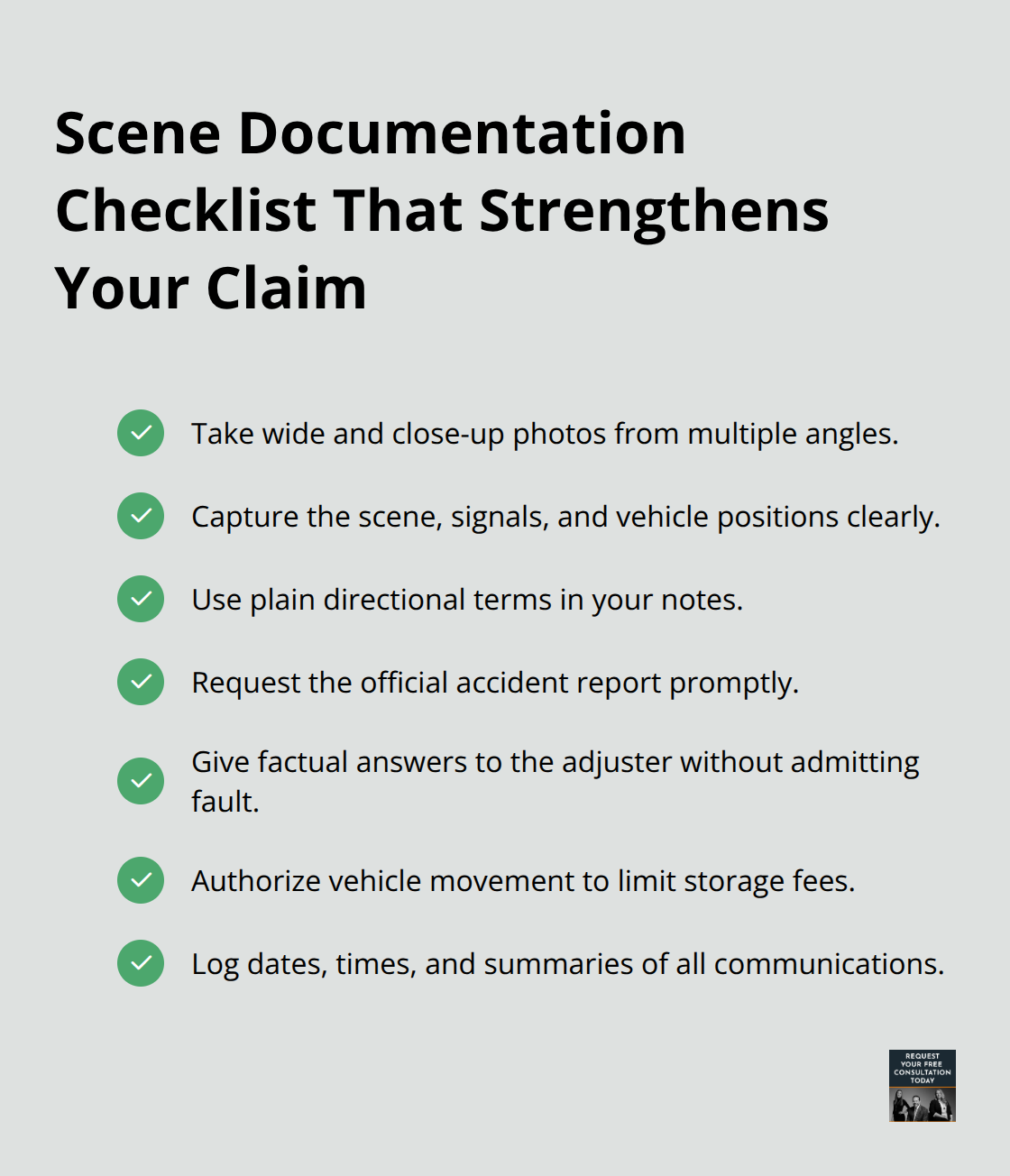
When the insurance adjuster contacts you, provide clear answers about the vehicle’s location, whether it’s drivable, and what happened, but avoid admitting fault or downplaying injuries. If your vehicle sits in a tow yard or storage facility, authorize the insurer to move it promptly because storage charges accumulate quickly and reduce your settlement. Document all communications with the adjuster, including dates, times, and what was discussed, since these records support your claim if disputes arise later.
Repair Estimates and Negotiating Parts Coverage
The repair estimate you obtain from an independent shop becomes your strongest negotiating tool because it provides a concrete figure based on actual local labor rates and parts availability. Don’t use your insurer’s preferred repair shops exclusively; instead, get estimates from shops you trust in your area, as quality and pricing vary significantly. The adjuster will negotiate a price with your chosen shop, and whatever price you both agree on is what the insurer pays, with you responsible only for your deductible.
For high-end vehicles or when original equipment manufacturer parts are required by the vehicle’s design, demand OEM coverage rather than accepting aftermarket alternatives. Used OEM parts from auto recyclers can work well if they’re in good condition and fit properly, offering a middle ground between cost and quality. The difference between an aftermarket part estimate and an OEM parts estimate can easily reach several hundred dollars, so clarify this with your shop before the adjuster reviews the estimate.
Rental Coverage During Repairs
If your vehicle undergoes repairs, you’re typically entitled to a rental vehicle during the repair period, usually covered at twenty to twenty-five dollars per day, though you pay any costs above that limit. Shop around for rental rates rather than accepting your insurer’s preferred vendor, as independent rental companies often offer better daily rates or longer-term discounts. You are not obliged to use the insurer’s rental vendor, so comparing options protects your wallet and gives you flexibility during an already stressful time.
Understanding how adjusters value damage and what documentation strengthens your position sets the stage for the next critical phase: recognizing when valuations fall short and knowing what steps you can take to challenge them.
How to Build a Stronger Property Damage Claim
The moment after an accident is when your claim’s foundation gets built or weakened. What you do in the first hours matters far more than most people realize. Move to a safe location if the vehicles are drivable, then call 911 if anyone is injured. Take photographs from multiple angles before anything gets moved, and photograph the accident scene itself to show road conditions, traffic signals, and vehicle positions. These photos become evidence that adjusters cannot dispute later. Exchange information with the other driver, including name, phone number, address, insurance company, and policy number. Get the accident report number from law enforcement and follow up to obtain the full report within days, not weeks, since this official document establishes liability and strengthens your valuation claim. Many people skip this step and regret it later when memory gaps emerge during settlement negotiations.
What to Tell the Insurance Adjuster
When the insurance adjuster calls, your tone and information matter significantly. Provide factual answers about what happened, where the vehicle is located, and whether anyone was injured, but do not admit fault or minimize injuries even if you feel partially responsible. If your vehicle sits in a tow yard, authorize the insurer to move it immediately because storage fees accumulate at rates between fifty and one hundred dollars daily and eat into your settlement. Document every conversation with dates, times, and summaries of what was discussed, since these records protect you if disputes escalate.
Getting Repair Estimates That Support Your Claim
Get repair estimates from at least two independent shops you trust, not just the insurer’s preferred vendor, because estimates for the same vehicle can vary by five hundred to two thousand dollars depending on the shop’s labor rates and parts sourcing. When you receive an estimate, verify whether it specifies OEM parts or aftermarket parts, as this difference directly impacts your valuation. Present your strongest estimate to the adjuster along with photographs and the accident report, then stand firm on the figure rather than accepting the first offer.
Negotiating with the Adjuster
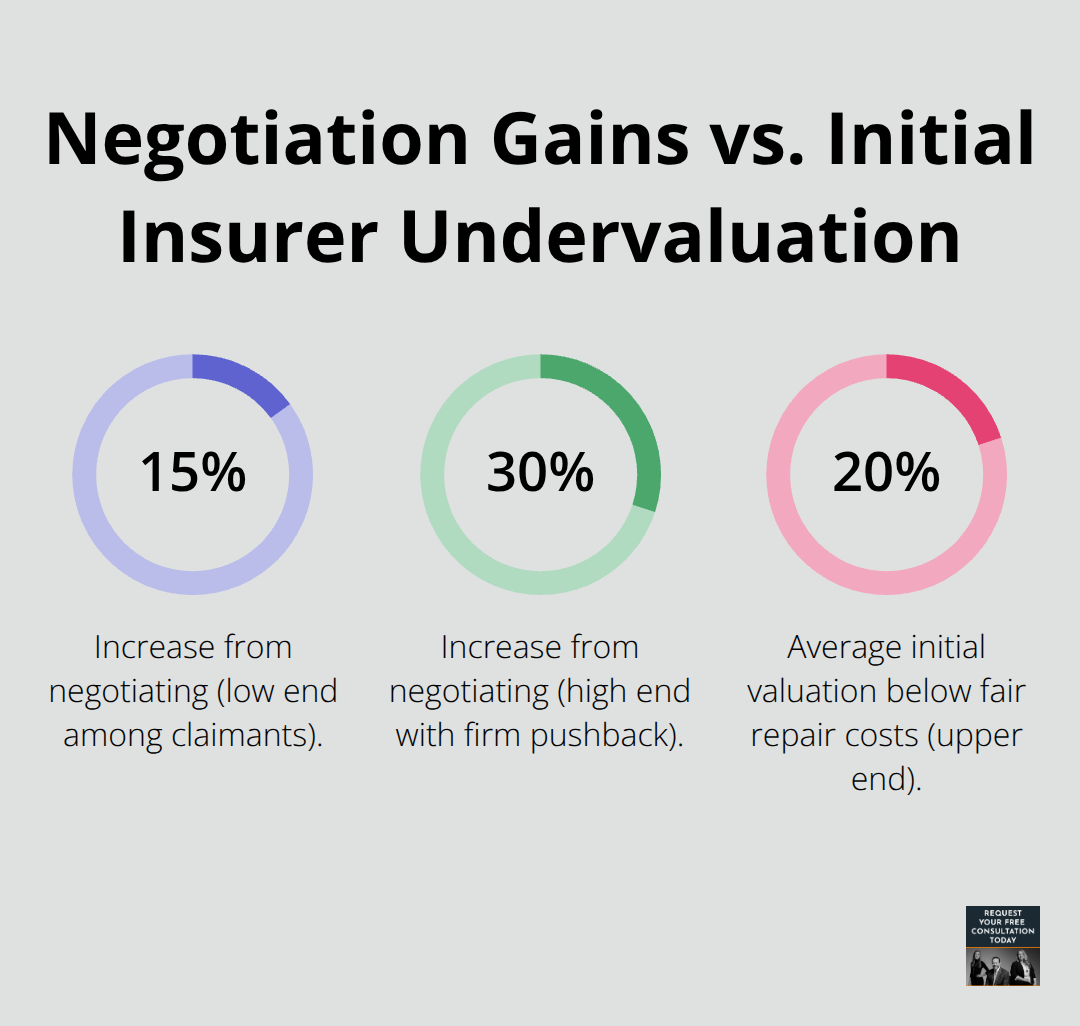
The adjuster’s initial valuation is almost never their final position, and research shows that claimants who negotiate receive settlements that are fifteen to thirty percent higher than those who accept initial offers without pushback. Push back on low figures by referencing your independent repair estimates and explaining why the adjuster’s assessment undervalues the damage. If the adjuster’s valuation remains significantly below your repair estimates and you believe the assessment is unfair, that disagreement signals the need for outside perspective (whether from an independent appraiser or legal counsel who can review your case).
When Valuations Fall Short of Repair Costs
Insurance adjusters frequently undervalue damage because their software relies on regional averages that don’t account for your specific vehicle’s condition, the accident’s severity, or local repair shop pricing. When an adjuster’s estimate comes in significantly below what independent shops quote, this gap signals a problem worth investigating. Research from the National Association of Insurance Commissioners found that initial insurer valuations average fifteen to twenty percent lower than fair market repair costs, meaning the gap you’re seeing likely reflects a systematic undervaluation rather than an honest difference of opinion.
Understanding the Valuation Gap
If your vehicle sustained three thousand dollars in damage and the adjuster offers twenty-five hundred dollars, that five-hundred-dollar shortfall comes directly from your pocket. The adjuster knows most people accept the first offer without question, which is why pushing back matters so much. Get a second and third estimate from independent repair shops in your area, then present these estimates alongside photographs and the accident report to show the adjuster their valuation misses critical damage or underestimates local labor rates.
Challenging Low Estimates with Evidence
If the adjuster refuses to budge after you’ve provided concrete evidence, that resistance indicates they’re defending an indefensible position rather than seeking accuracy. Present your strongest estimate to the adjuster along with photographs and the accident report, then stand firm on the figure rather than accepting the first offer without pushback. Research shows that claimants who negotiate receive settlements that are fifteen to thirty percent higher than those who accept initial offers without question.
When to Hire an Independent Appraiser
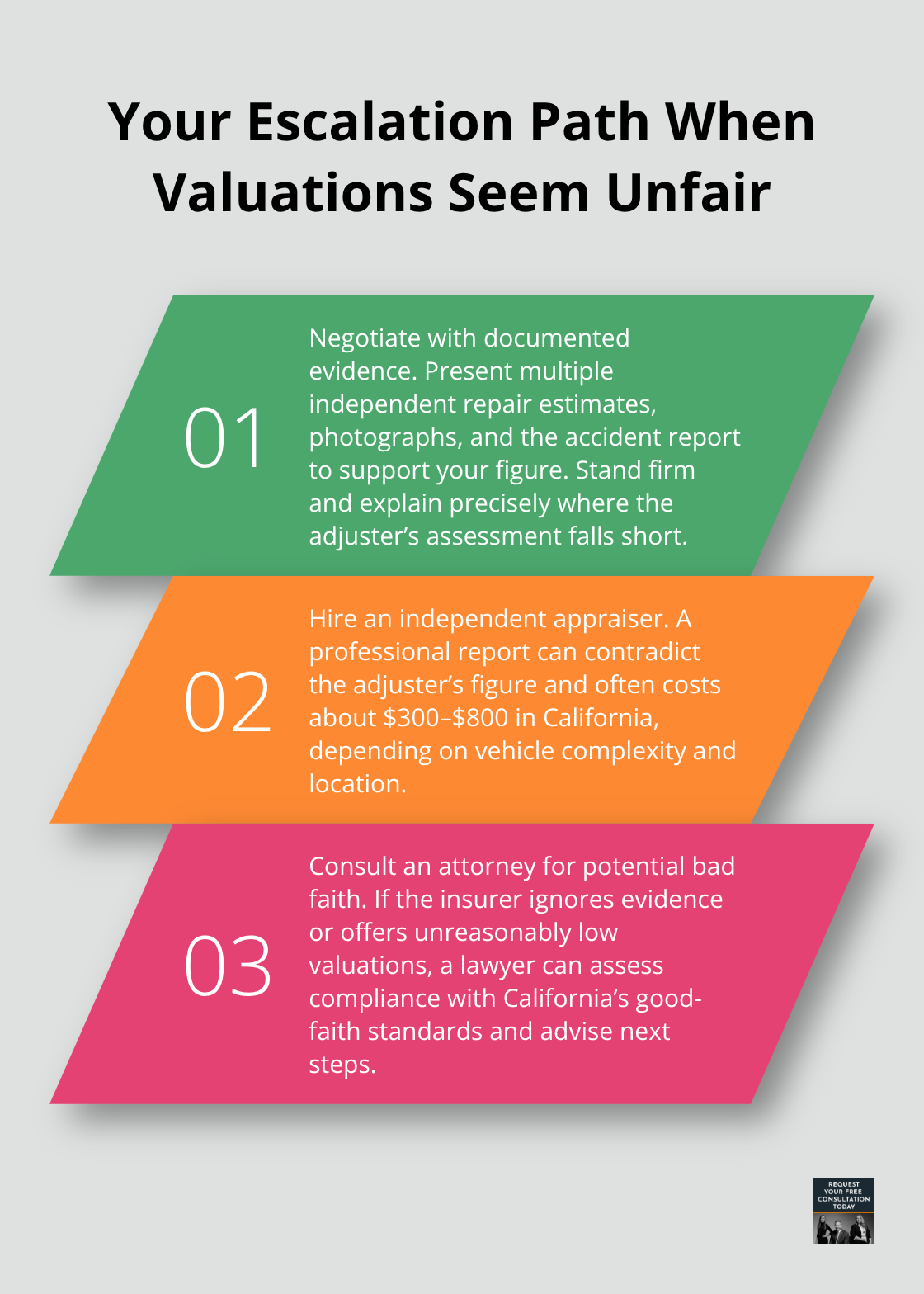
When an insurer’s valuation genuinely seems unfair after you’ve negotiated directly, you have two meaningful options. First, hire an independent appraiser who assesses vehicle damage to provide a detailed report that contradicts the adjuster’s figure, though this costs between three hundred and eight hundred dollars depending on your vehicle’s complexity and your location within California. An appraiser’s professional report carries significant weight because it comes from someone without financial interest in the outcome.
Legal Options for Bad Faith Claims
Second, consult with an attorney who can review your case and determine whether the valuation dispute warrants legal action or whether the insurer’s position is so unreasonable that it violates California’s standards for handling claims in good faith. California law requires insurers to handle claims fairly and in good faith, meaning they cannot systematically low-ball valuations to pressure you into accepting less than you deserve. If an adjuster refuses reasonable repair estimates, ignores documentation you’ve provided, or offers valuations that fall significantly below what multiple independent shops quote, that conduct may constitute bad faith, which exposes the insurer to penalties beyond the original valuation amount.
We at Schaar & Silva LLP assist in evaluating the extent of property damage and ensure you receive a fair valuation for your loss, reviewing whether an insurer’s position crosses from tough negotiating into illegal conduct that warrants legal intervention.
Final Thoughts
Vehicle damage valuation disputes require action, not acceptance of unfair settlements that cost you money permanently. You now understand how adjusters assess damage, what documentation strengthens your position, and when valuations fall short of actual repair costs. Claimants who gather evidence, obtain independent estimates, and push back on low offers receive significantly higher settlements than those who accept initial figures without question.
If you haven’t filed yet, start by photographing everything from the accident scene forward and gathering repair estimates from shops you trust. If you’ve already received a valuation that seems unfair, compare it against independent repair estimates and present that evidence to the adjuster with a clear explanation of why their figure misses the mark. Many adjusters will increase their offer when faced with concrete documentation they cannot dispute (such as multiple independent estimates that contradict their assessment).
When negotiations stall and the gap between the insurer’s valuation and fair repair costs remains significant, an independent appraiser can provide professional documentation that contradicts a low estimate, or an attorney can evaluate whether the insurer’s conduct crosses into bad faith territory. At Schaar & Silva LLP, we review vehicle damage valuation disputes and determine whether an insurer’s position reflects legitimate negotiating or illegal conduct that exposes them to penalties. If you’re in Santa Cruz County, Sacramento, or Oakland and facing a valuation dispute, contact us to discuss your situation and learn what your claim is actually worth.
