

Vehicle accident litigation in California can feel overwhelming when you’re facing court for the first time. The process involves multiple stages, from filing your initial complaint through jury verdict, and understanding each step helps you prepare mentally and strategically.
At Schaar & Silva LLP, we’ve guided countless clients through California courtrooms, and we know the system inside and out. This guide walks you through exactly what happens at each phase so you know what to expect when you step into that courtroom.
From Filing to Settlement
Initial Complaint and Service Requirements
When you file a vehicle accident lawsuit in California, you initiate a formal process that typically starts with a complaint detailing negligence, liability, and damages. This document names the defendant and outlines why they’re responsible for your injuries. Once filed, the court assigns a case number and the defendant must receive the complaint within 60 days. Service can happen through a process server, certified mail, or other approved methods. The defendant then has 30 days to respond, either admitting or denying the allegations. This initial phase sets the tone for everything that follows, and filing errors or missed deadlines can damage your case before it truly begins.
Discovery: Where Evidence Determines Outcomes
Discovery comes next, and this is where your case either strengthens or weakens. Both sides exchange evidence through interrogatories (written questions requiring answers within 30 days), document requests (also 30-day responses), and depositions where witnesses and parties answer questions under oath. California’s discovery rules typically cap interrogatories at 35 per set unless parties agree otherwise. During depositions, the other side’s attorney questions you, your doctors, and any witnesses, and you do the same to them.
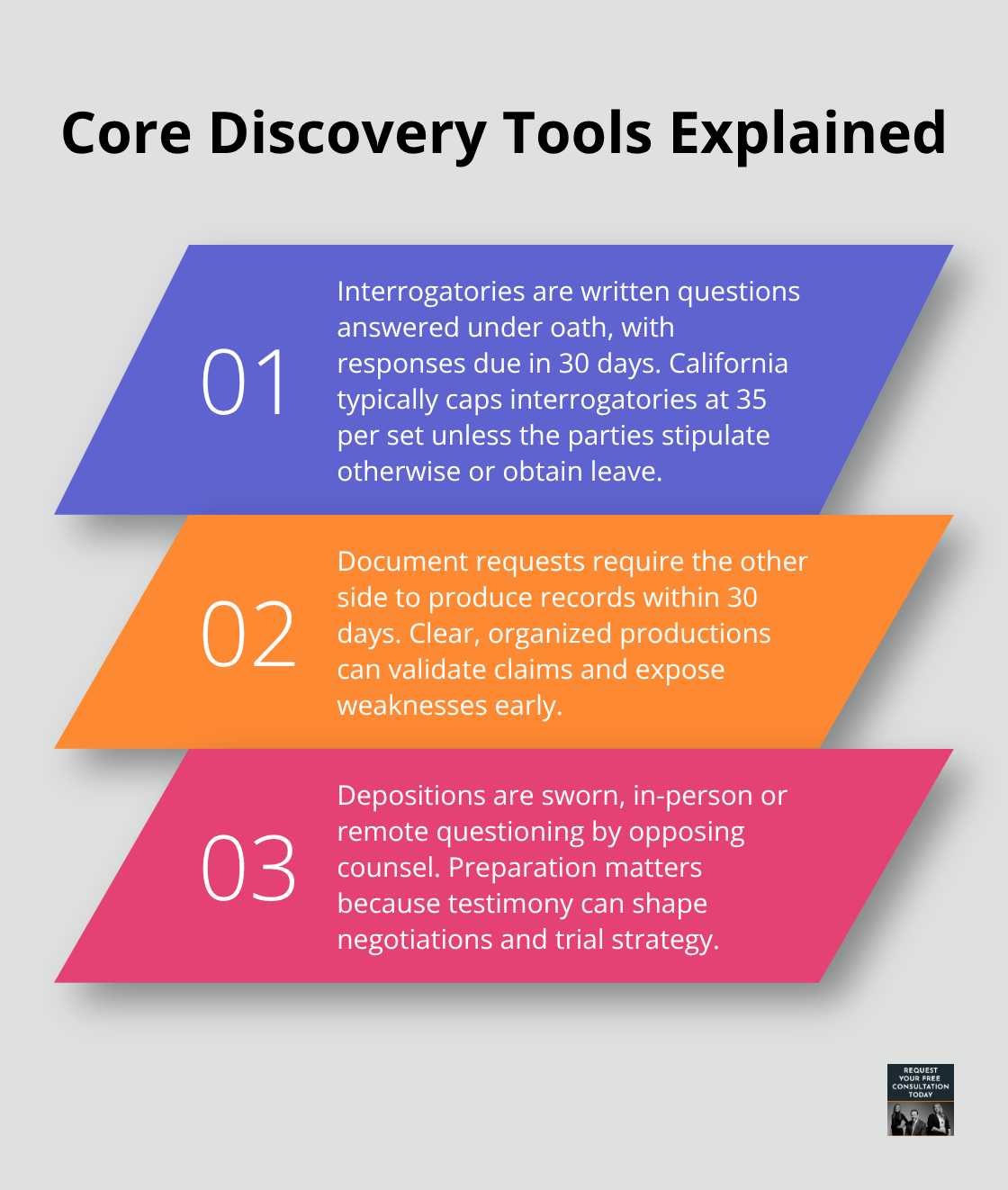
This phase can last 6 to 12 months depending on case complexity.
Settlement Opportunities During Discovery
Many cases settle during or immediately after discovery because both sides finally understand the evidence’s strength. Pre-trial motions often run parallel to discovery, with the defense filing motions to dismiss weak claims or exclude certain evidence. Mandatory settlement conferences are required before trial under California Rule of Court 3.1380, and most cases resolve at this stage rather than proceeding to court.
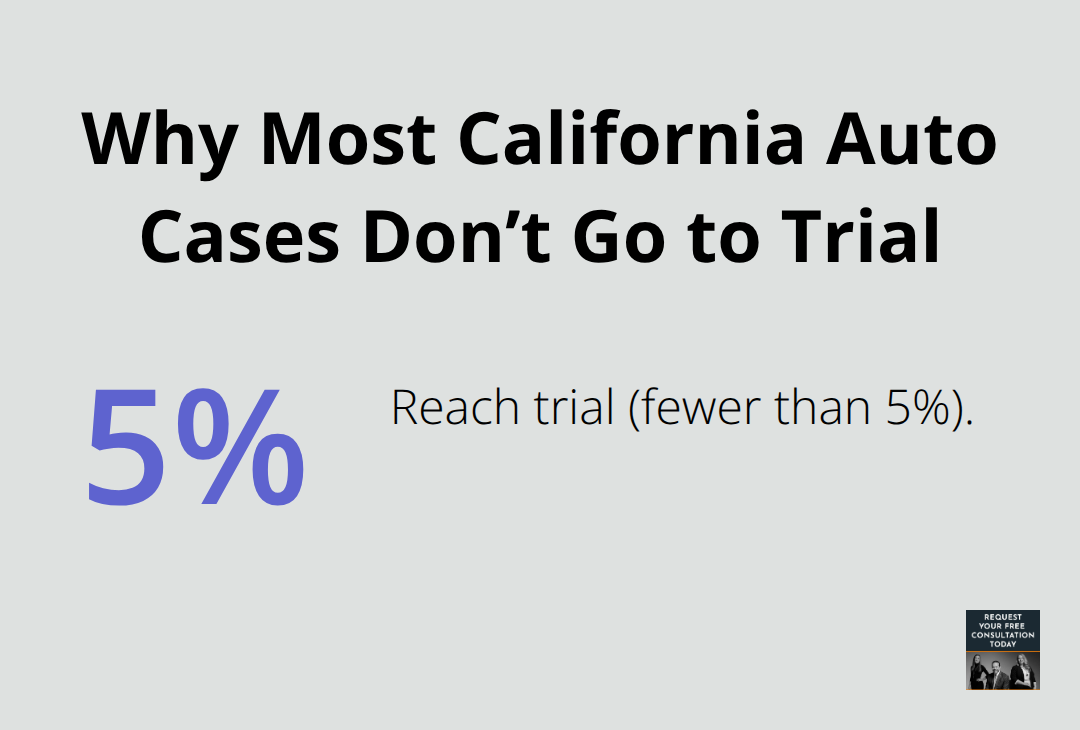
The Judicial Council of California’s 2024 Court Statistics Report shows that fewer than 5% of motor vehicle injury claims actually reach trial, meaning settlement negotiations during this phase determine outcomes for the vast majority of plaintiffs.
As discovery winds down and settlement discussions intensify, understanding what happens if your case doesn’t settle becomes essential-which brings us to the pre-trial motions and strategic decisions that shape whether your case moves toward trial.
Preparing Evidence That Wins Cases
Police Reports and Physical Documentation
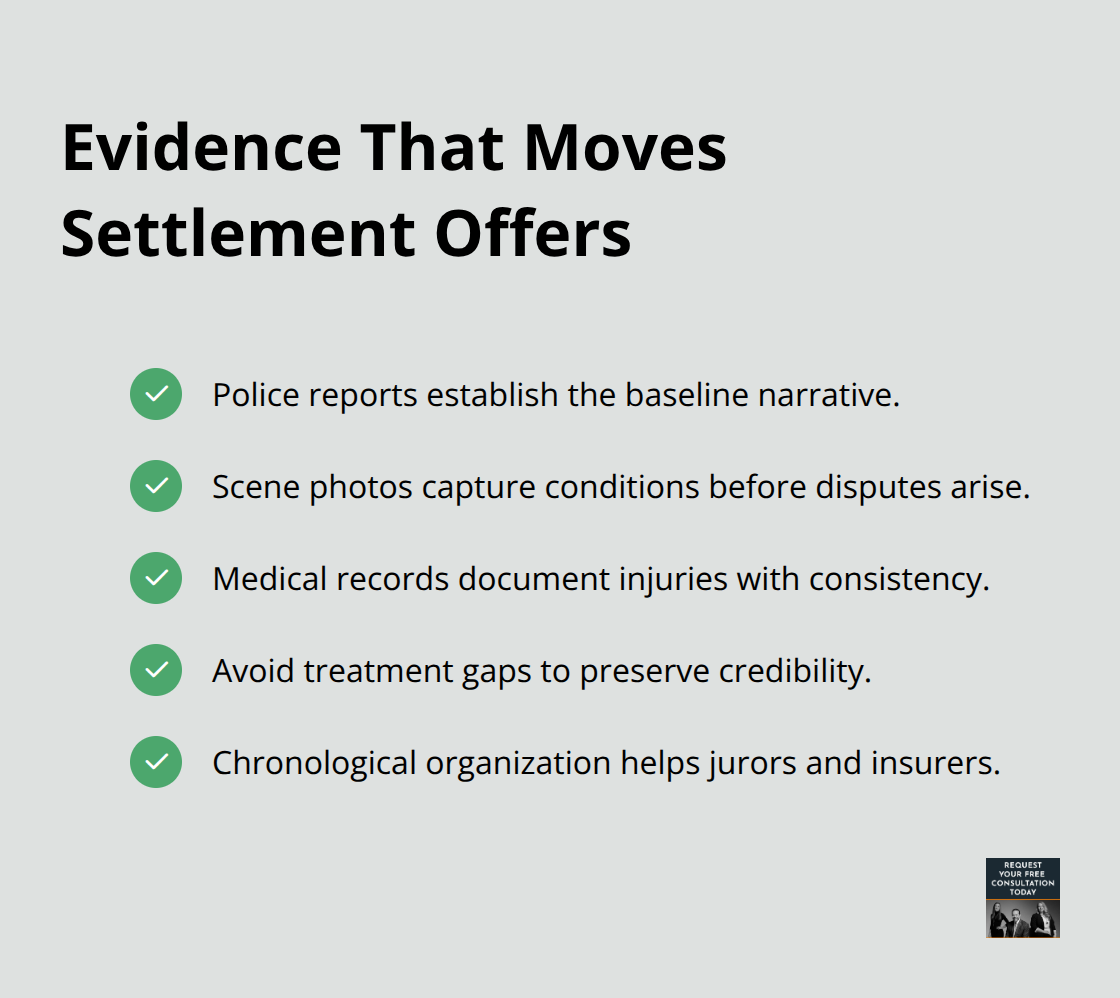
Evidence quality determines trial outcomes far more than courtroom eloquence. Police reports form your foundation, but they represent just the start. Photographs of vehicle damage, road conditions, and accident scenes taken immediately after the collision carry enormous weight because they show facts before anyone has time to dispute them. Medical records must be comprehensive and consistent, with no gaps between the accident and treatment. A six-month gap in care after a crash signals to jurors that your injuries weren’t serious, even if you were simply waiting for an appointment.
Medical Imaging and Objective Evidence
Objective medical imaging like MRIs and CT scans outweighs subjective complaints every time. Insurance companies will argue that soft tissue injuries are exaggerated, but a herniated disc visible on an MRI becomes nearly impossible to minimize. Witness statements matter significantly, but credible, independent witnesses carry far more weight than family members. If surveillance footage exists from nearby businesses, securing it immediately is critical because most establishments delete video after 30 days.
Documentation for Damages Calculations
Medical bills and wage loss documentation should be organized chronologically and verified through tax returns and employer letters rather than estimates. The Howell v. Hamilton Meats ruling limits past medical expenses to amounts actually paid or incurred, so every receipt and invoice matters for damages calculations. This meticulous approach to financial documentation transforms abstract injury claims into concrete, defensible numbers that jurors understand and respect.
Expert Witnesses and Specialized Testimony
Expert witnesses become your voice when facts require specialized interpretation. Accident reconstructionists analyze vehicle damage, road conditions, and physics to determine fault and impact speed, giving jurors concrete data rather than competing narratives. Treating physicians testify about causation, medical necessity, and prognosis based on their direct care of you, making them credible and persuasive. Life care planners quantify future medical needs for serious injuries, translating ongoing treatment into dollars jurors understand.
Designating experts requires strict adherence to California Code of Civil Procedure deadlines, typically weeks before trial, and failing to meet these deadlines forfeits your expert entirely. Defense counsel will depose your experts to test their opinions and find vulnerabilities, so preparing them thoroughly is non-negotiable. Strong liability evidence combined with documented damages creates settlement leverage that insurers cannot ignore.
How Evidence Shapes Settlement Offers
When you present clear proof that the defendant caused your injury and quantifiable losses follow directly from that injury, settlement offers rise substantially. Initial offers often underestimate case value, then increase dramatically once complete evidence is presented. Insurers monitor whether your attorney is genuinely trial-ready, and demonstrating that readiness through meticulous evidence preparation pushes them toward fair settlements rather than betting on trial outcomes they cannot predict. This evidence foundation also determines what happens next-how your case performs when it enters the courtroom itself.
What Happens During the Trial
Opening Statements Set the Narrative
Trial starts with opening statements, where your attorney frames the narrative of what happened and why the defendant bears responsibility. Your attorney presents first, typically lasting 20 to 45 minutes depending on case complexity, and lays out the evidence that will follow and the legal standard jurors must apply. The defendant’s attorney responds with their version, often attacking your credibility or shifting blame. Jurors form initial impressions during these statements, so a clear, organized presentation that connects evidence to liability matters far more than emotional appeals.
Direct Examination and Witness Testimony
Once opening statements conclude, your attorney calls witnesses. Direct examination allows your attorney to ask open-ended questions that let witnesses tell their story. Treating physicians explain causation, accident reconstructionists describe impact dynamics, and you testify about your injuries and how they affect your daily life. Witness statements carry significant weight in establishing what occurred, making thorough preparation essential. Testimony typically runs 2 to 4 hours per major witness in moderate cases, with complex cases sometimes extending to full days.
Cross-Examination Tests Witness Credibility
The defendant’s attorney then cross-examines each witness, asking pointed questions designed to create doubt, expose inconsistencies, or suggest alternative explanations. Cross-examination is aggressive by design, and your attorney’s trial experience directly determines how well witnesses withstand this pressure. Medical experts face particularly intense questioning about their methodology, fees, and potential bias, so selecting witnesses with unshakeable credentials and thorough deposition preparation is non-negotiable.
Jury Instructions and Deliberation
After all evidence is presented, the judge instructs jurors on applicable law, explaining negligence elements, comparative fault rules, and how to calculate damages. California Civil Jury Instructions provide the exact language judges use, and your attorney can request specific instructions that favor your case or object to instructions that harm it. The jury then deliberates, typically lasting hours to several days depending on case complexity and juror agreement. Verdict forms require jurors to answer specific questions about fault percentage, liability, and damage amounts, with unanimous agreement required in most cases. Trial outcomes remain unpredictable, which is precisely why most cases settle before reaching this stage.
Final Thoughts
Vehicle accident litigation in California moves through predictable stages, but outcomes depend entirely on how thoroughly you prepare at each one. From filing your complaint through jury verdict, the strength of your evidence, the clarity of your liability case, and the documentation of your damages determine whether you settle favorably or face trial uncertainty. Most cases resolve before reaching the courtroom because both sides recognize that trials are expensive, time-consuming, and unpredictable.
Legal representation transforms your position throughout this journey. An attorney who knows California’s discovery rules, procedural deadlines, and trial tactics can identify weaknesses in the defendant’s case early and build settlement leverage that pushes insurers toward fair offers. Your attorney also protects you from common mistakes like giving recorded statements without counsel, posting on social media during active litigation, or accepting inadequate early settlement offers before your case’s full value develops.
At Schaar & Silva LLP, we guide clients through every phase of vehicle accident litigation in California, handling the legal complexities so you can focus on recovery. If you’ve settled, ensure the agreement is properly executed and funds are received. If you’ve won at trial, the defendant has the right to appeal, which extends the process another 18 months to three years, and we can connect you with medical lien services that facilitate payment until your case concludes.
