

After a car accident in Santa Cruz County, one of your first questions is likely about money-specifically, what average auto accident settlement amounts you can expect. The answer depends on several factors unique to your situation, from the severity of your injuries to the at-fault driver’s insurance limits.
We at Schaar & Silva LLP have helped many accident victims understand their settlement options. This guide breaks down the real numbers and shows you how to strengthen your claim.
What Determines Your Settlement Amount
Injury Severity Sets the Foundation
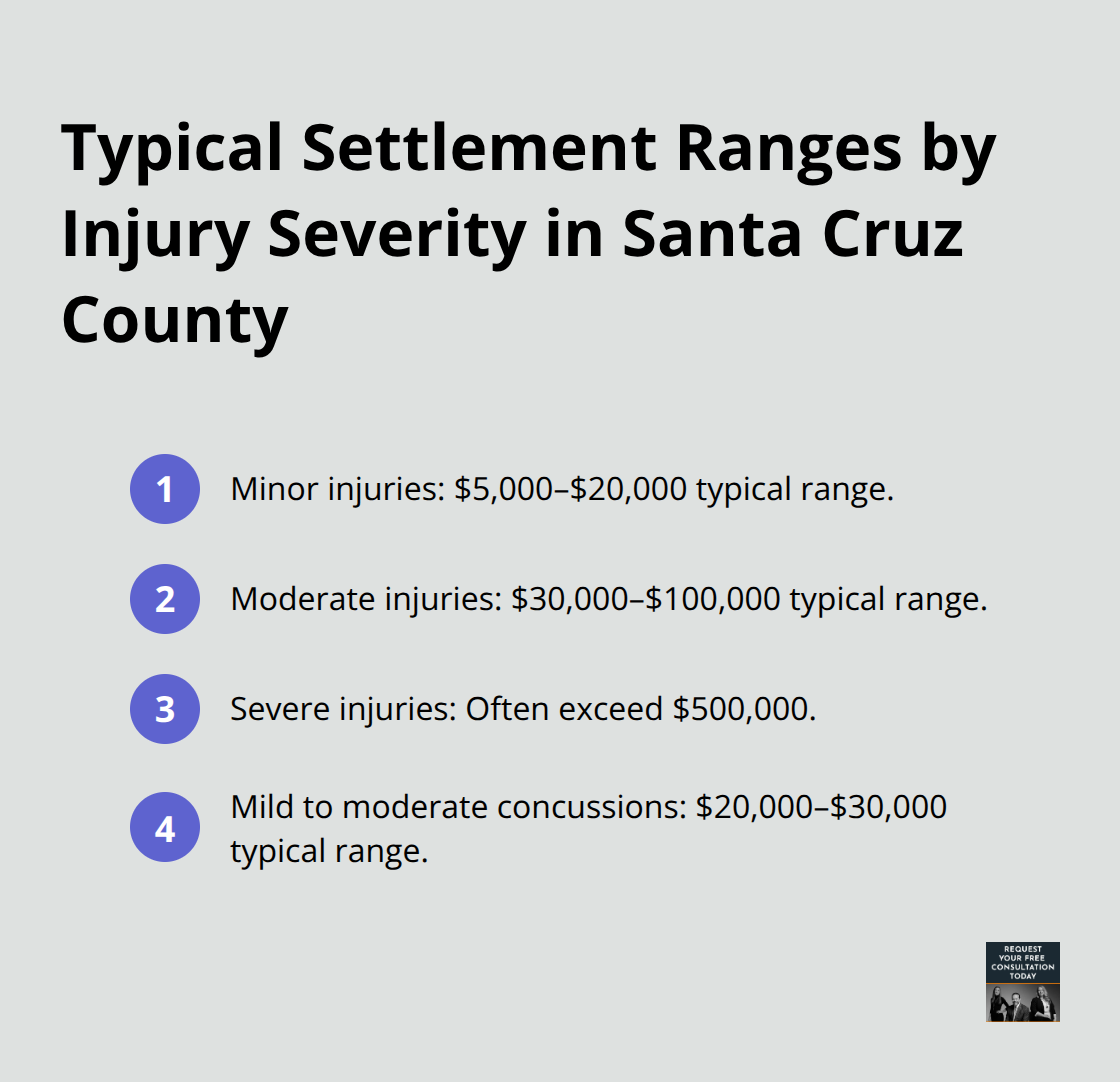
The amount you receive after an auto accident depends on several concrete factors that directly impact your payout. Injury severity is the primary driver of settlement value. If you suffered minor injuries like whiplash or soft tissue damage, settlements typically range from $5,000 to $20,000. Moderate injuries such as fractures, herniated discs, or moderate neck and back injuries settle between $30,000 and $100,000. Severe injuries including spinal cord damage, traumatic brain injury, or permanent disfigurement can exceed $500,000 or more.
Medical Expenses Form Your Claim’s Core
Medical expenses matter because they form the foundation of your claim. The California Office of Traffic Safety reported 147 fatal and injury crashes in Santa Cruz County during 2021, many resulting in substantial medical bills. Average hospitalization costs after a car accident reach approximately $57,000, and these expenses directly influence what insurers will offer. Your medical records document the extent of treatment you received, which strengthens your negotiating position.
Property Damage and Liability Factors
Property damage and vehicle repair costs are straightforward to calculate but shouldn’t be overlooked. Insurance companies assess your vehicle’s repair or replacement value, and this becomes part of your total settlement. Liability and fault determination significantly affect your recovery. If the other driver is clearly at fault, you have a stronger claim and better leverage in negotiations.
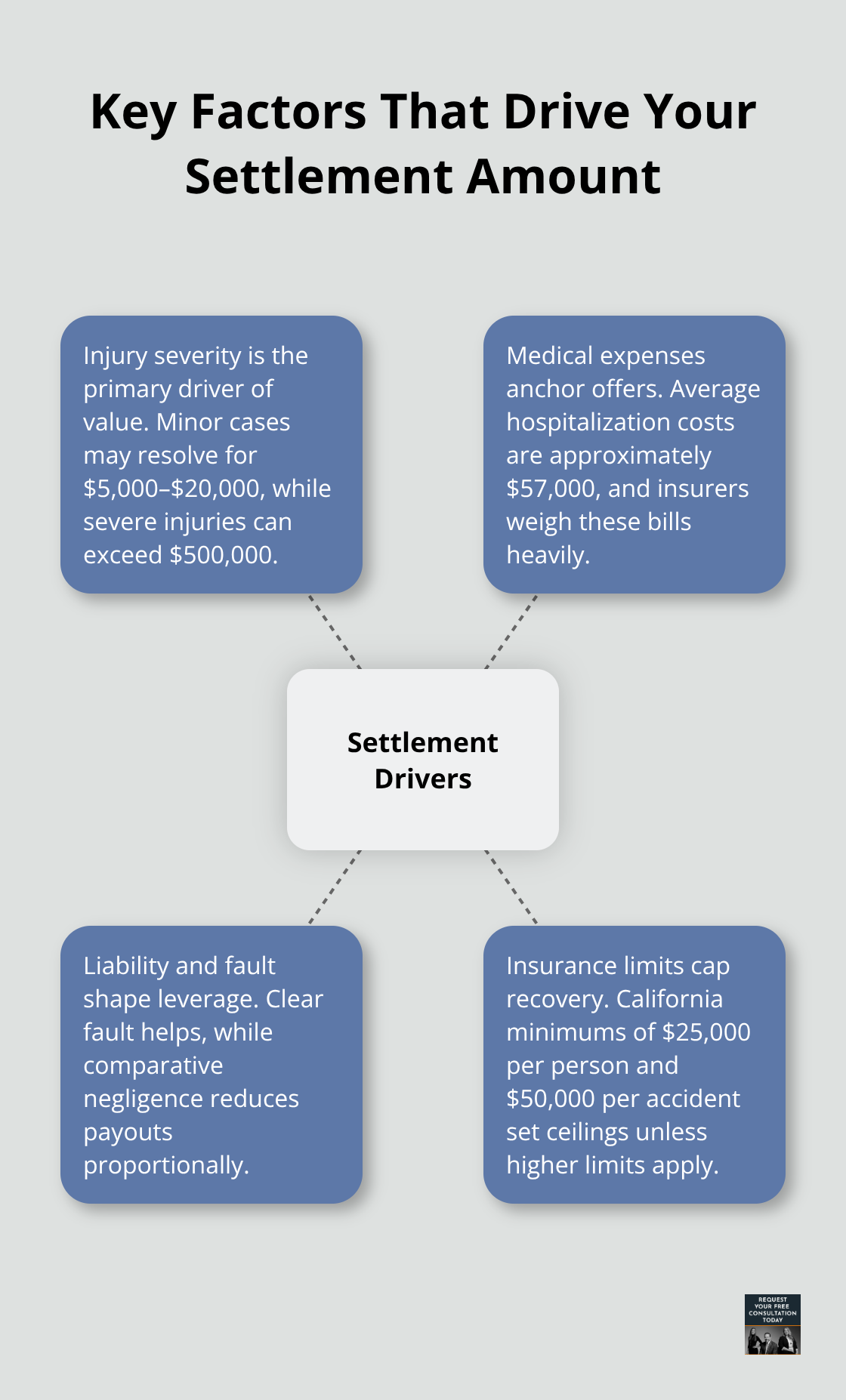
However, California’s comparative negligence rules mean that if you’re found partially responsible, your settlement gets reduced proportionally.
Insurance Limits Cap Your Recovery
Insurance policy limits are the ceiling on what you can recover from the at-fault driver’s policy. Many drivers carry California’s minimum liability limits of $25,000 per person and $50,000 per accident, which caps your recovery regardless of your actual damages. Higher policy limits allow for higher settlements, especially when dealing with serious injuries. Uninsured motorist coverage becomes critical if the at-fault driver lacks insurance, protecting your recovery options. These factors work together to determine your final settlement amount-understanding each one helps you evaluate what’s fair for your situation and prepares you to move forward with confidence.
What You’ll Actually Receive Based on Your Injuries
Minor Injuries and Quick Settlements
Whiplash and minor soft tissue injuries settle between $5,000 and $20,000 in Santa Cruz County. These cases move quickly because medical documentation is straightforward and the damages are limited. Mild to moderate concussions generally land in the $20,000 to $30,000 range, assuming proper neurological evaluation supports the diagnosis.
Insurers pay more attention when you have imaging results and follow-up appointments from a neurologist or emergency room visit.
The difference between a $5,000 settlement and a $20,000 settlement for whiplash often comes down to whether you obtained immediate medical care and continued treatment. Skipping the doctor visit after an accident substantially reduces your settlement value, even if you feel fine initially. Medical records prove your injury existed and required professional attention-without them, insurers offer minimal compensation.
Moderate Injuries and Mid-Range Payouts
Moderate injuries like fractures, herniated discs, and moderate neck or back injuries typically settle between $30,000 and $100,000. Fractures that require surgery or extended immobilization command higher payouts than simple breaks. Herniated discs settle on the higher end of this range, especially when imaging confirms the injury and you’ve undergone physical therapy or epidural injections. Knee and shoulder injuries also fall into this category.
The critical factor is demonstrating that your injury required ongoing treatment beyond the initial emergency visit. Treatment records from multiple appointments show insurers that your condition was serious and persistent. Each therapy session, specialist visit, and imaging study strengthens your negotiating position and justifies a higher settlement demand.
Severe Injuries and Maximum Compensation
Serious injuries including spinal cord damage, traumatic brain injury, or permanent disfigurement frequently exceed $500,000. These cases involve lifetime care costs, lost earning capacity, and substantial pain and suffering damages. California imposes no cap on pain and suffering awards, which means severe injuries can command settlements well into the millions if the at-fault driver carried adequate insurance.
Wrongful death settlements commonly reach or exceed $1,000,000 when a crash results in a fatality. The reality is that injury severity dominates settlement calculations, but only when you have medical documentation to prove it. Without proper treatment records, even a legitimately severe injury settles for far less than it should.
Why Documentation Determines Your Actual Payout
Medical evidence transforms your claim from a verbal dispute into a documented case. Every test result, doctor’s note, and treatment plan becomes ammunition in your negotiation with the insurance company. The settlement you receive reflects not just your actual injuries but your ability to prove them with records.
When you’re ready to move forward with your claim in Santa Cruz County, understanding these injury categories helps you evaluate whether an initial settlement offer is fair. The next step involves gathering the right evidence and deciding whether legal representation will strengthen your position.
How to Strengthen Your Claim After an Accident
Medical documentation separates minimal settlements from ones that reflect your actual damages. Start collecting medical records immediately after your accident, even if you feel relatively fine. The California Office of Traffic Safety documented 147 fatal and injury crashes in Santa Cruz County during 2021, and many victims who delayed medical care received significantly lower settlements than those who sought treatment right away. Request copies of all emergency room reports, imaging studies, lab work, and specialist evaluations. Each document becomes evidence that insurers must account for in their settlement calculations. Continue treatment consistently through your recovery period because gaps in medical care signal to insurers that your injury wasn’t serious.
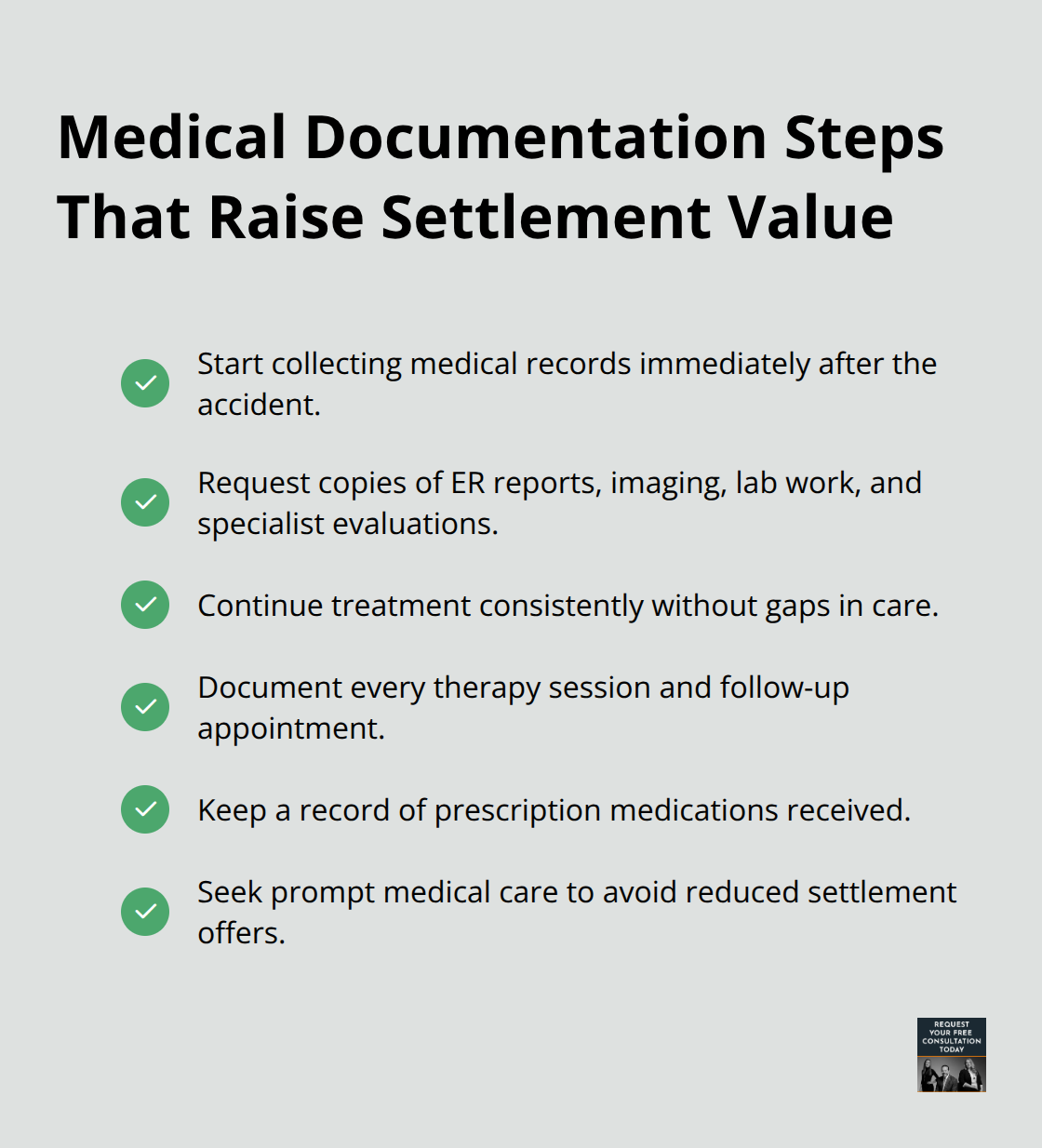
If you stop seeing doctors for two months and then resume treatment, the insurance company will argue your condition improved and use that against you. Document every therapy session, follow-up appointment, and prescription medication you receive. These records prove ongoing treatment was necessary and justify higher compensation demands.
Photograph and Preserve Evidence at the Scene
Photograph the accident scene thoroughly before leaving, capturing vehicle damage from multiple angles, road conditions, traffic signals, and street signs that show the location context. Take photos of the other driver’s vehicle, license plate, and insurance card. Collect contact information from every witness present, including their phone numbers and email addresses, because witness statements significantly strengthen liability arguments. Request the police report immediately after filing your accident claim, as this official document often establishes fault and supports your settlement position. If the police report contains errors, request an amendment through the reporting agency. Preserve your vehicle without repairs until your attorney or insurance adjuster inspects it, because damage patterns help establish accident dynamics and fault.
Insurance Companies Respond to Legal Representation
Insurance companies routinely offer lower settlements to unrepresented victims because they know most people lack knowledge about claim valuation. When you work with legal representation, insurers recognize you’re serious about your claim and adjust their offers accordingly. An attorney involved in your case signals that you won’t accept an inadequate offer, which typically results in substantially better outcomes than settling alone. We at Schaar & Silva LLP help Santa Cruz County accident victims navigate the negotiation process by handling communications with insurance companies, gathering evidence systematically, and building documented cases that support higher settlement demands. Our team can also assist with medical bill support through lien services and property damage claim evaluation, allowing you to focus on recovery while we manage the legal complexities of your situation.
Final Thoughts
Auto accident settlements in Santa Cruz County depend on injury severity, medical documentation, insurance limits, and fault determination. The average auto accident settlement amounts you receive reflect how thoroughly you document your injuries and how effectively you present your claim. Minor injuries typically settle between $5,000 and $20,000, moderate injuries between $30,000 and $100,000, and severe injuries often exceed $500,000.
Professional legal representation fundamentally changes how insurance companies approach your claim. When you work with an attorney, insurers recognize you won’t accept inadequate offers and adjust their settlement proposals accordingly. We at Schaar & Silva LLP help Santa Cruz County accident victims navigate this process by handling insurance communications, gathering systematic evidence, and building documented cases that support fair compensation.
Contact Schaar & Silva LLP for a case evaluation after your accident. California’s statute of limitations limits how long you can file, so timing matters. Your settlement should reflect your actual damages and losses, not what an insurance company initially offers.
