
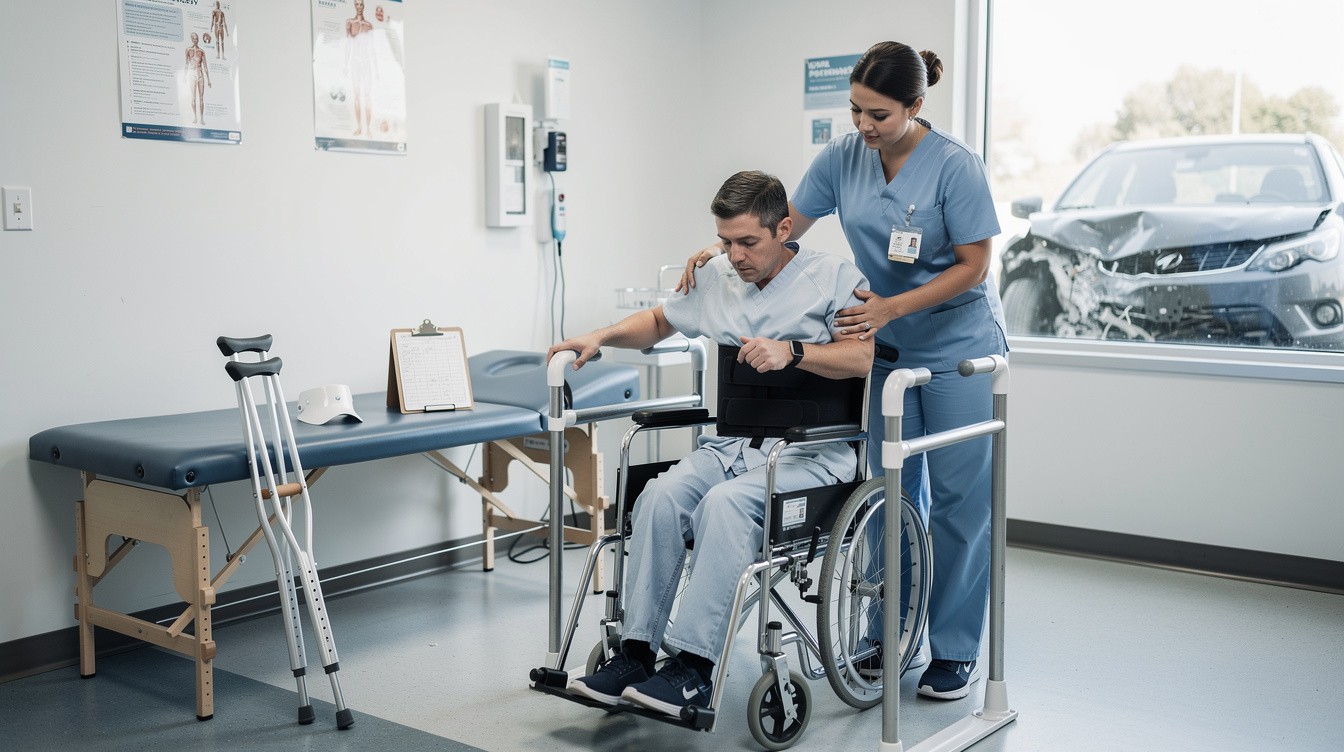
A spinal injury from a car crash can change your life in seconds. The path to recovery involves medical treatment, physical therapy, and often significant financial challenges.
At Schaar & Silva LLP, we work with people in Santa Cruz who are navigating spinal injuries after accidents. This guide walks you through what happens to your spine during a collision, how recovery works, and what financial and legal options are available to you.
How Spinal Injuries Happen in Car Crashes
The Forces at Work During Collision
The spine absorbs tremendous force during a car collision. When a vehicle stops suddenly, your body continues moving forward at high speed until it hits something-the steering wheel, dashboard, or seat. This violent deceleration causes your vertebrae, discs, and nerves to shift violently in ways the spine was never designed to handle. The cervical spine, which includes your neck, is particularly vulnerable because it supports your head’s weight while lacking the muscular protection of other spinal regions.
A rear-end collision at just 5 miles per hour can cause whiplash, where the neck snaps backward then forward, straining ligaments and potentially injuring discs. High-speed frontal crashes cause far more catastrophic damage, including compression fractures where vertebrae crack or collapse, burst fractures where bone fragments scatter into the spinal canal, and disc herniations where the soft interior of a disc pushes through its outer layer and presses against nerves.
Why Early Symptoms Can Deceive You
The immediate aftermath of a spinal injury often feels deceptive. You might feel minimal pain in the first hours or even days, yet serious damage has already occurred. Swelling around the spinal cord develops gradually, and nerve compression worsens over time.
Medical imaging like MRI and CT scans reveals injuries that physical symptoms haven’t announced yet. This is why doctors order these tests immediately after a crash-they catch damage before it progresses further.
Understanding Long-Term Consequences
Long-term consequences depend on injury severity and location. A herniated disc in your lower back might cause chronic pain and limited mobility that persists for years, requiring ongoing physical therapy and medication management.
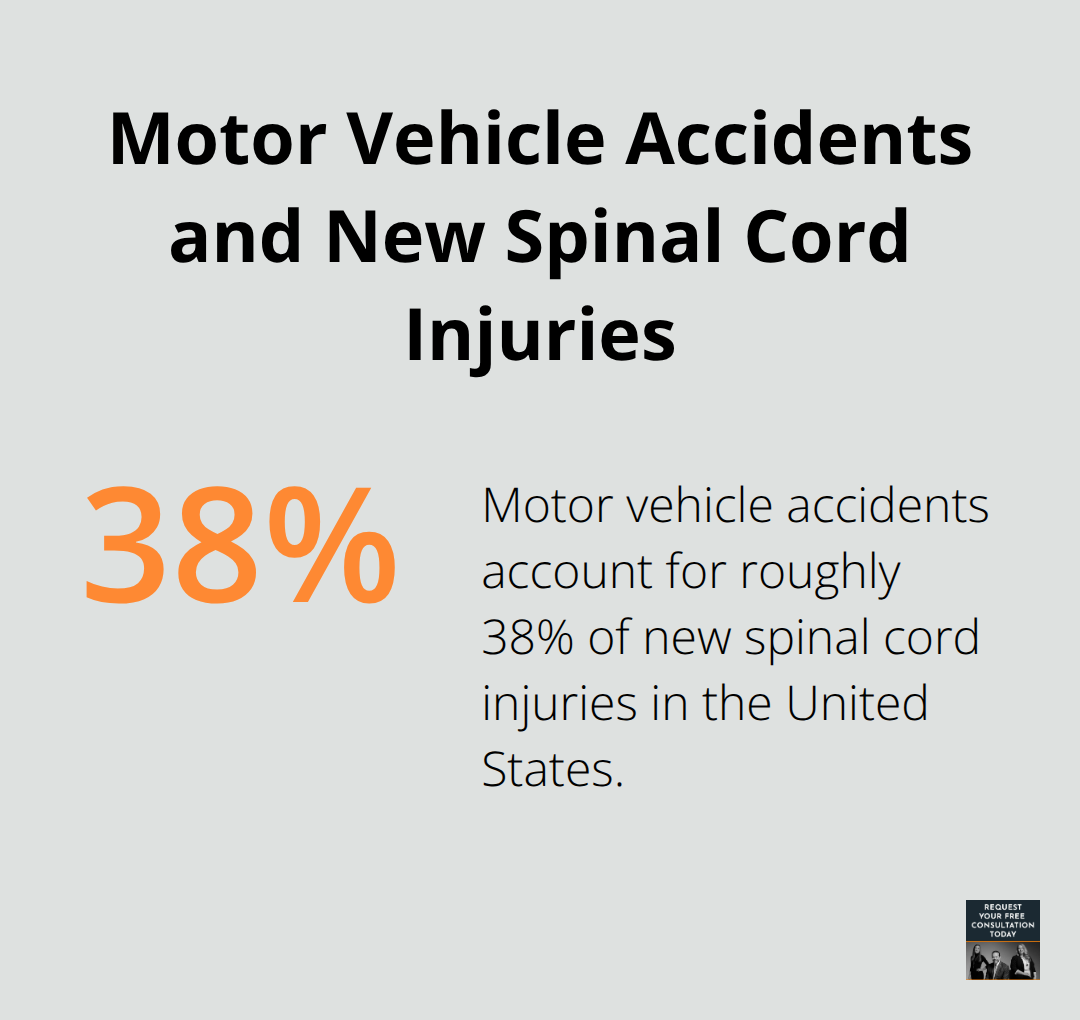
Spinal cord injuries are far more serious. According to the National Spinal Cord Injury Statistical Center, approximately 17,500 new spinal cord injuries occur annually in the United States, with motor vehicle accidents accounting for roughly 38% of those cases. Complete spinal cord injuries result in permanent paralysis below the injury site, while incomplete injuries may allow some function to return through intensive rehabilitation.
Even minor-seeming injuries can develop into chronic conditions-post-traumatic arthritis, nerve pain, and reduced range of motion commonly emerge months or years after the initial crash. This delayed progression makes early medical assessment and ongoing monitoring vital for your recovery trajectory. Understanding these complications helps you recognize why your medical team recommends specific treatments and follow-up care.
Getting Back on Track: Medical Care After a Spinal Injury
Immediate Imaging and Diagnosis
The first 72 hours after a spinal injury determine much of your recovery outcome. Your emergency room physician will order imaging immediately, and this is non-negotiable. MRI scans reveal soft tissue damage that X-rays miss, while CT scans show fractures clearly. Doctors use these images to classify your injury and rule out spinal cord compression requiring emergency surgery.
If you experience progressive numbness, weakness in your legs, or loss of bladder control after the crash, you need imaging within hours, not days. The American Association of Neurological Surgeons emphasizes that delays in diagnosis directly correlate with worse long-term outcomes for spinal cord injuries. Your initial assessment also includes neurological testing where doctors check your reflexes, strength, and sensation to establish a baseline for your recovery.
Conservative Treatment vs. Surgery
Treatment paths diverge sharply based on injury type and severity. Conservative care, which includes rest, anti-inflammatory medications, and immobilization through bracing or collars, works for many disc herniations and minor fractures. Physical therapy typically begins within two to four weeks, focusing first on restoring basic mobility and reducing pain before progressing to strength work.
Surgery becomes necessary when bone fragments press into the spinal canal, when ligaments are completely torn, or when your spine is structurally unstable. Spinal fusion surgery stabilizes vertebrae permanently but restricts movement in that segment, while laminectomy removes bone to decompress nerves without fusing. The timing of surgery matters tremendously-research from the Journal of Neurotrauma shows that decompressive surgery within 24 hours of spinal cord injury improves neurological outcomes compared to delayed procedures.
Recovery Milestones and Rehabilitation
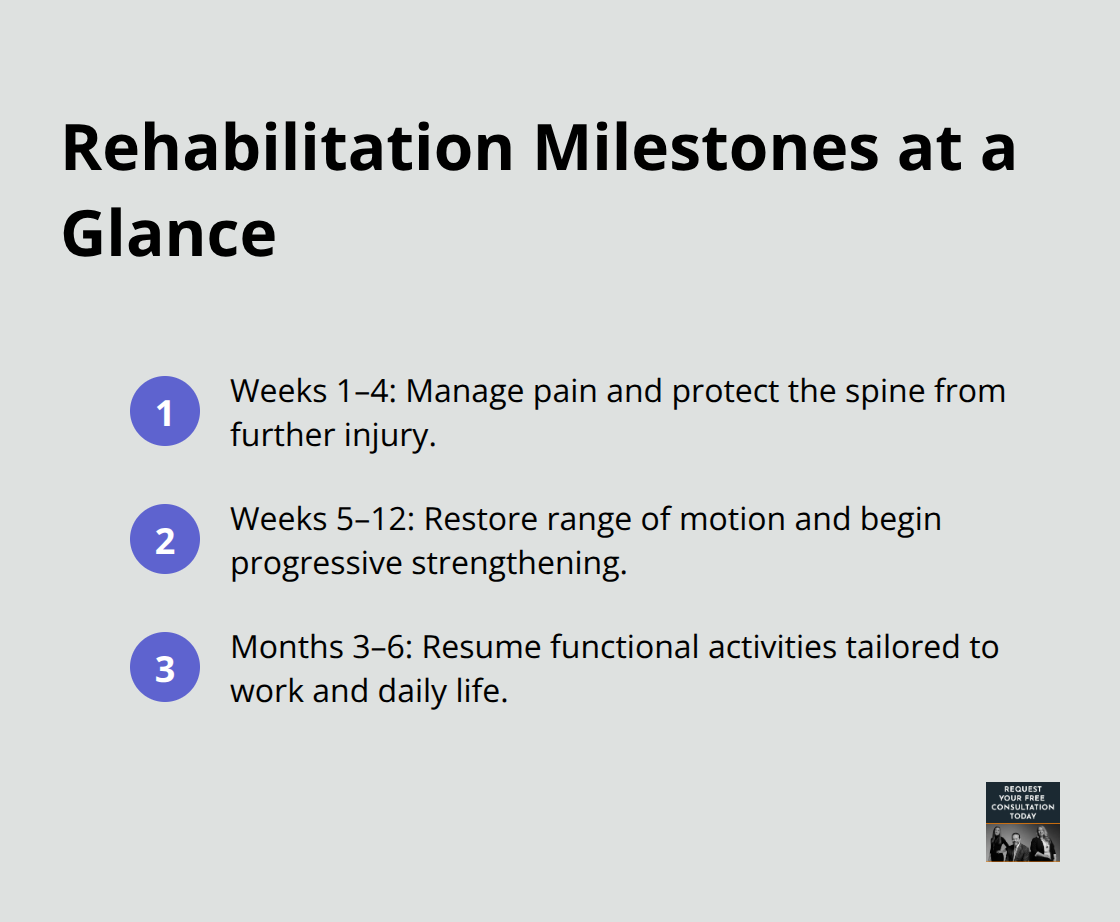
Rehabilitation milestones follow a predictable pattern. Weeks one through four focus on pain management and preventing further injury, weeks five through twelve emphasize restoring range of motion and beginning strengthening, and months three through six involve return-to-function activities tailored to your life. Someone recovering from a lumbar disc herniation might progress from bed rest to walking without assistance to light work duties within four months, while spinal cord injury recovery extends over years with intensive rehabilitation.
Coordinating your medical care across multiple providers-treating physicians, physical therapists, and specialists-prevents costly delays in your therapy schedule. Medical case management services track authorization approvals from insurers and monitor whether your treatment plan aligns with your recovery goals. This coordination becomes especially important as your recovery progresses and your needs shift from acute care to long-term rehabilitation.
Financial and Legal Aspects of Spinal Injury Cases
The True Cost of Spinal Injury Treatment
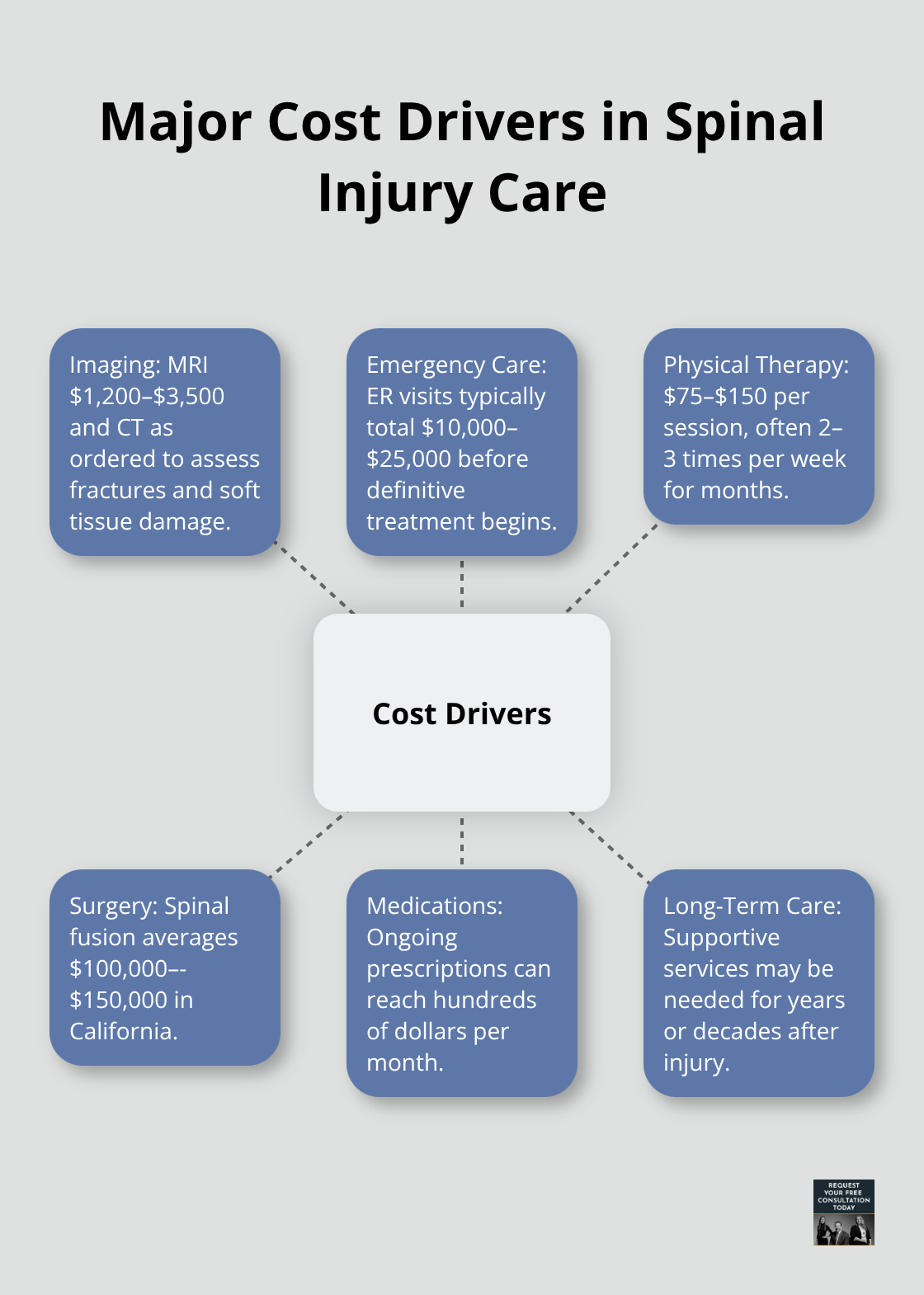
Spinal injury treatment in Santa Cruz County demands serious financial planning from day one. A single MRI scan costs between $1,200 and $3,500 without insurance negotiation, while emergency room visits for spinal cord injuries typically run $10,000 to $25,000 before any treatment begins. Physical therapy sessions cost $75 to $150 per visit, and most spinal injury patients need 2 to 3 sessions weekly for months. Surgery adds another layer entirely-spinal fusion procedures average $100,000 to $150,000 in California, according to the Healthcare Cost and Utilization Project. These numbers compound when you factor in time away from work, medication costs that stretch into hundreds of dollars monthly, and long-term care needs that persist for decades after the accident.
Insurance Coverage Falls Short
Your auto insurance policy’s medical payments coverage typically maxes out at $5,000 to $10,000, which barely covers initial emergency care. This is why your liability claim matters so much-the at-fault driver’s insurance should cover the full scope of your medical costs and lost wages, but insurers routinely undervalue spinal injury claims by offering settlements that don’t account for future complications. Medical lien services facilitate payment of your bills until your case resolves, which prevents collection agencies from derailing your recovery. Many spinal injury patients face a brutal choice between continuing necessary therapy and avoiding medical debt, and this shouldn’t be your position. Your claim should cover not only current treatment but also future medical care, which for serious spinal cord injuries can total $1 million or more over a lifetime according to the National Spinal Cord Injury Statistical Center. Insurance companies know this figure and often resist paying what your case actually warrants. Property damage claims also matter-if the crash damaged your vehicle, documenting that damage strengthens your overall claim credibility with the insurance adjuster.
Why Legal Representation Changes Your Outcome
Legal representation in Santa Cruz County becomes essential when insurance companies deny coverage or offer inadequate settlements for spinal injuries. The difference between handling your claim alone and having an attorney typically amounts to thousands of dollars. Studies show that injury victims with legal representation receive settlements 3.5 times larger on average than those without representation. An attorney evaluates your case based on actual damages-medical bills, wage loss, future care needs, and pain and suffering-rather than accepting initial lowball offers. Your legal team also coordinates with your medical providers to verify treatment records support your claim’s value, which prevents gaps in documentation that insurers use to deny compensation. At Schaar & Silva LLP, we assist in evaluating the extent of your damages and connect you with specialists who can address psychological needs while documenting them properly for your claim, because insurers must compensate for legitimate psychological harm alongside physical injury.
Final Thoughts
Spinal injury recovery after a car crash in Santa Cruz demands immediate medical attention, consistent treatment, and realistic financial planning. The first 72 hours determine much of your outcome, so imaging and diagnosis cannot wait. Your recovery path depends on injury severity-conservative care works for many disc herniations, while spinal cord injuries require intensive rehabilitation spanning months or years.
The financial reality of spinal injury Santa Cruz cases is substantial, with emergency care, imaging, surgery, and physical therapy quickly exceeding what your auto insurance medical payments coverage provides. Your liability claim should cover current medical costs plus future care needs, which for serious injuries can total hundreds of thousands of dollars. Insurance companies often undervalue these claims, which is why legal representation typically results in settlements 3.5 times larger than claims handled alone.
We at Schaar & Silva LLP assist with medical bill management through lien services, evaluate property damage claims, and connect you with support specialists who document your recovery for compensation purposes. Contact us to discuss how we can support your recovery and ensure your case receives the compensation it warrants. Your legal team handles the intricacies of your claim so you can concentrate on healing.
