
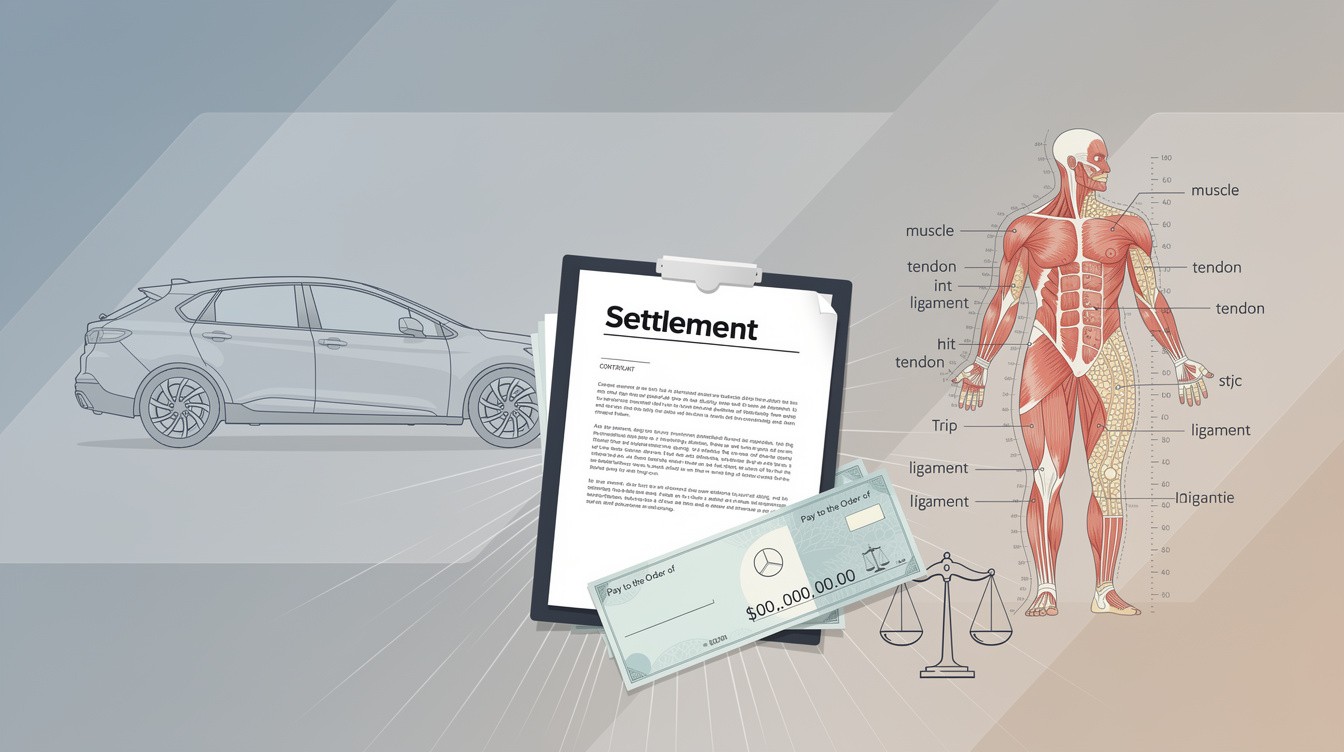
A soft tissue settlement can feel overwhelming when you’re recovering from a car accident. Insurance companies use specific methods to evaluate these claims, and understanding how they work puts you in a better position.
We at Schaar & Silva LLP help people in Santa Cruz County navigate this process every day. This guide walks you through what to expect from start to finish.
What Soft Tissue Injuries Actually Look Like
Soft tissue injuries are the most common result of car accidents in Santa Cruz County, yet many people don’t realize they have one until days or weeks after the crash. These injuries affect muscles, tendons, ligaments, skin, fat, blood vessels, and nerves-essentially everything that isn’t bone. Whiplash dominates the landscape after rear-end collisions, but shoulder impingement, MCL tears, muscle strains, and ligament sprains appear regularly across all accident types. The problem is that soft tissue damage won’t show up on X-rays the way fractures do, which means you need solid medical documentation from day one. A doctor’s clinical evaluation-not imaging alone-establishes that the crash caused your injury.
Why Symptoms Appear Later
Delayed symptoms are the norm, not the exception. You might feel fine at the accident scene, then wake up the next morning with neck pain or shoulder stiffness. Inflammation builds over hours, and soft tissues take time to reveal their damage. The longer you wait to seek medical care after a crash, the harder it becomes to prove the accident caused your injury. Insurance adjusters will argue that if you felt well enough not to go to the hospital immediately, the injury couldn’t be that serious.
Severity Grades That Drive Your Settlement
Soft tissue injuries fall into three severity grades, and this classification directly affects what you’ll recover. Grade 1 injuries are minor-mild muscle soreness that resolves in a few weeks with basic care. Grade 2 injuries are moderate and far more common after car accidents; these include shoulder impingement and MCL tears that require extended physical therapy and can sideline you for months. Grade 3 injuries are severe, marked by symptoms like a crack or pop at impact, numbness, inability to move the affected area, or visible deformity.
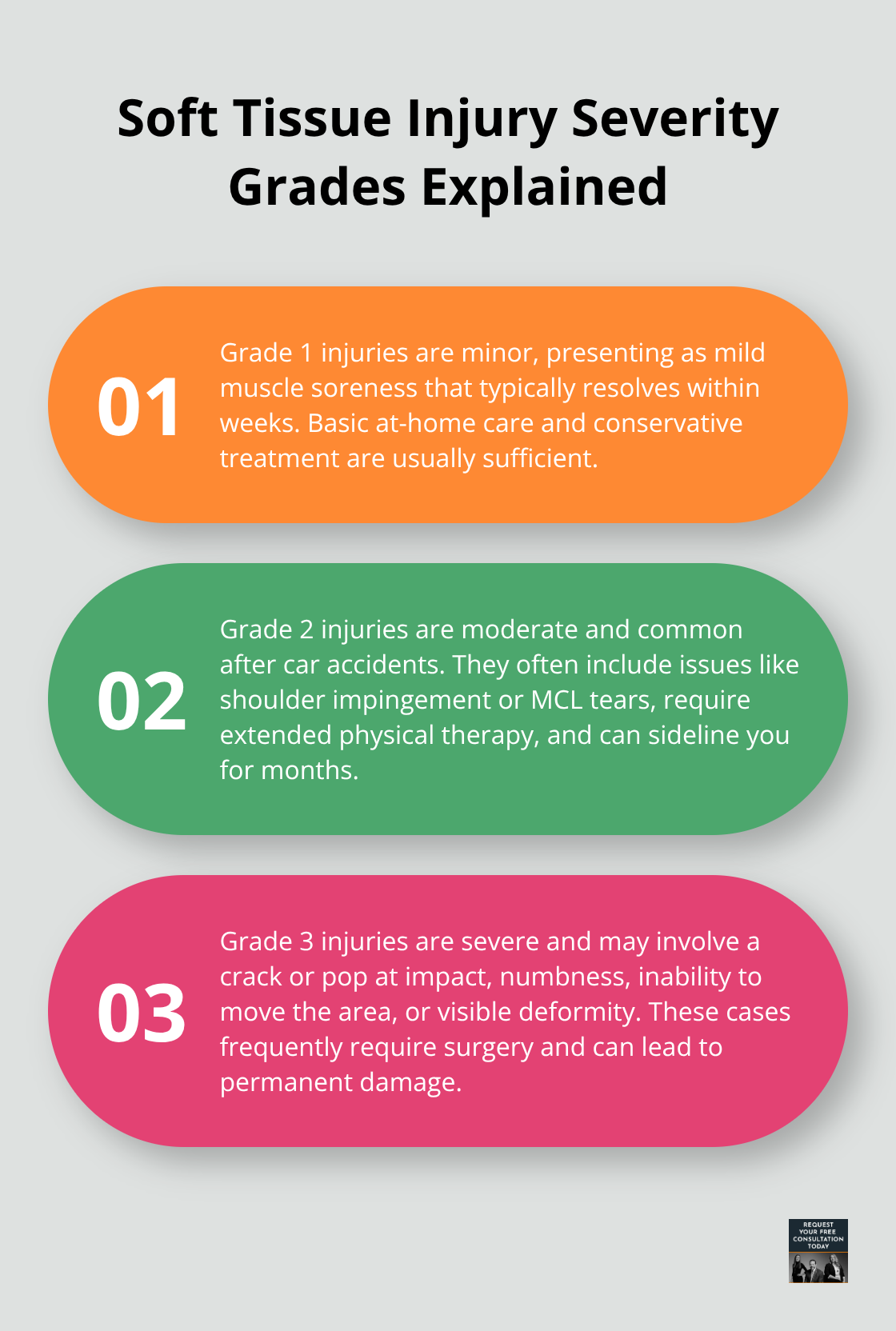
These often require surgery and can result in permanent damage.
Long-Term Consequences of Soft Tissue Damage
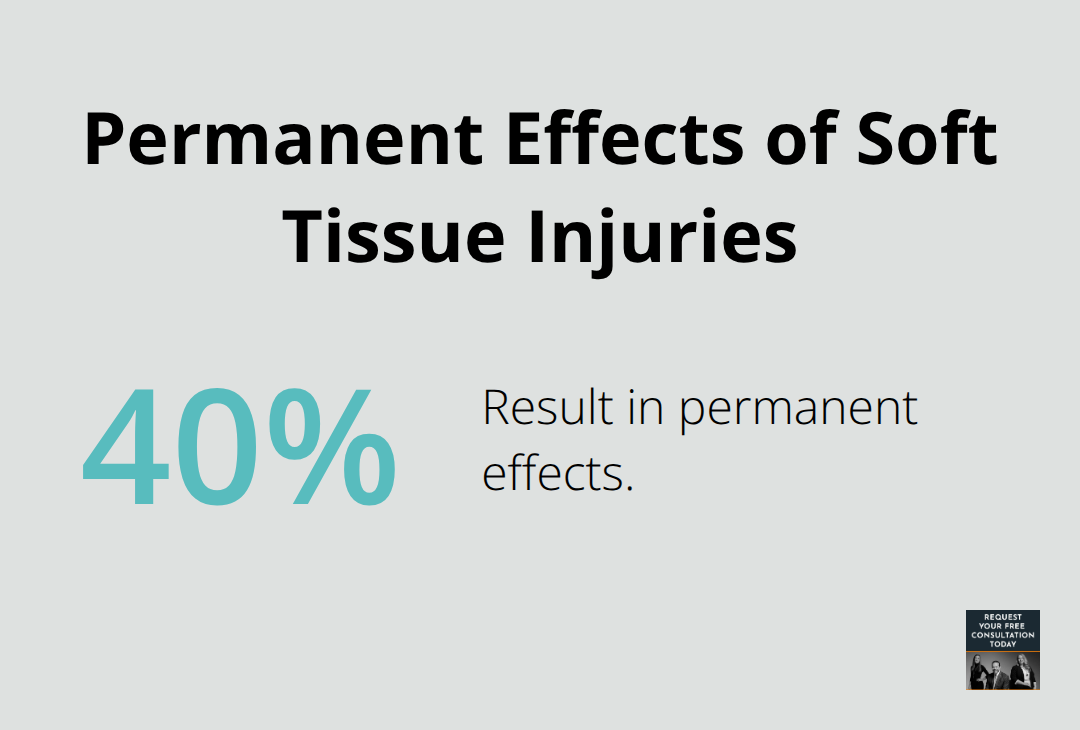
Roughly 40 percent of soft tissue injuries result in permanent effects. Chronic pain, reduced mobility, and loss of function become your reality.
Settlement amounts reflect this spectrum. Minor cases typically settle between $2,500 and $15,000, while moderate injuries fall into the $15,000 to $75,000 range. Severe soft tissue cases can exceed $75,000 and reach six figures when surgery, ongoing treatment, and permanent disability are involved. Understanding where your injury falls on this scale helps you anticipate what insurance companies will likely offer and what documentation you’ll need to support a higher claim.
How Insurers Evaluate Your Soft Tissue Claim
Insurance companies evaluate soft tissue claims differently than fractures or major trauma. They hunt for specific documentation that proves the injury exists, that the accident caused it, and that you followed medical treatment consistently. Without this documentation, adjusters will lowball your offer or deny the claim entirely.
Medical Records Form Your Foundation
Medical records from your first visit after the crash establish your case. Your doctor’s clinical notes should describe your symptoms, the date they appeared, and how the accident triggered them. Imaging studies like X-rays or MRI scans help, but they’re not required for soft tissue cases since these injuries don’t always show on X-rays. What matters most is that your provider documented objective findings-reduced range of motion, muscle tenderness, neurological deficits-rather than relying solely on your pain complaints.
Treatment Consistency Directly Influences Settlement Value
If you start physical therapy two weeks after the crash and attend sessions regularly, insurers see commitment to recovery and take the injury seriously. If you skip appointments or disappear from treatment for months, adjusters will argue the injury wasn’t significant. Your medical bills tell a story; a three-month treatment course with multiple providers signals a legitimate moderate injury, while sporadic visits suggest a minor case.
How Insurers Calculate Your Compensation
Insurers use two main methods to calculate compensation. The multiplier method takes your economic damages (medical bills, lost wages, property damage) and multiplies them by a factor of 1.5 to 5, depending on severity. A $10,000 medical bill for a Grade 2 injury might multiply by 3, resulting in $30,000 in total compensation. The per diem method assigns a daily dollar amount for pain and suffering-say $100 per day-and multiplies it by the number of days you experienced pain. If you were in pain for 180 days, that’s $18,000 in non-economic damages. Adjusters prefer the multiplier method because it’s faster, but the per diem approach often yields higher results for longer recovery periods.
Documentation Strengthens Your Claim Value
In Santa Cruz County, average soft tissue settlements range from $5,000 to $50,000, with mild injuries settling around $2,500 to $15,000 and moderate injuries between $15,000 and $75,000. These figures depend heavily on how thoroughly you document everything. Wage loss statements from your employer, receipts for medical appointments, transportation costs, and prescription records all strengthen your claim. Photos of visible injuries, a pain journal tracking daily symptoms, and records showing how the injury limited your activities create a compelling narrative that justifies higher compensation. The more evidence you present, the harder it becomes for insurers to dispute your settlement demand. This documentation also matters when settlement negotiations stall and you need to move toward litigation-courts rely on the same records to determine what you actually deserve.
Settlement Timelines and What Affects Your Payout
Most soft tissue cases in Santa Cruz County resolve between 6 to 12 months, though timelines vary significantly based on injury severity and how quickly you build your documentation. Simple rear-end collisions with minor whiplash settle in 3 to 6 months because liability is clear and medical costs are modest. The insurer reviews your records, calculates damages using the multiplier or per diem method, and makes an offer. You counter, they adjust, and within weeks you have a settlement. These fast cases typically involve Grade 1 injuries with straightforward treatment histories.
Moderate to severe soft tissue injuries demand more time because insurers need extensive medical records, multiple provider evaluations, and clear documentation of long-term effects before they commit to a fair offer. A Grade 2 injury requiring 4 to 6 months of physical therapy won’t settle in 3 months no matter how organized you are. Insurers wait for you to reach Maximum Medical Improvement, the point where your condition stabilizes and further treatment won’t significantly improve your status. Only then can they accurately calculate future medical costs and permanent damage. This waiting period alone stretches timelines to 8 to 12 months for moderate cases. Severe soft tissue injuries involving potential surgery or permanent disability can take 18 months or longer because settlement demands must account for lifetime medical expenses, lost earning capacity, and chronic pain management.
What Speeds Up Your Settlement
File your auto insurance claim within 30 days of the accident to accelerate everything that follows. Insurers process claims faster when they receive prompt notice, and your medical records begin accumulating immediately. Obtain the official Santa Cruz County Sheriff’s Office accident report as soon as it becomes available because police documentation carries significant weight in negotiations.
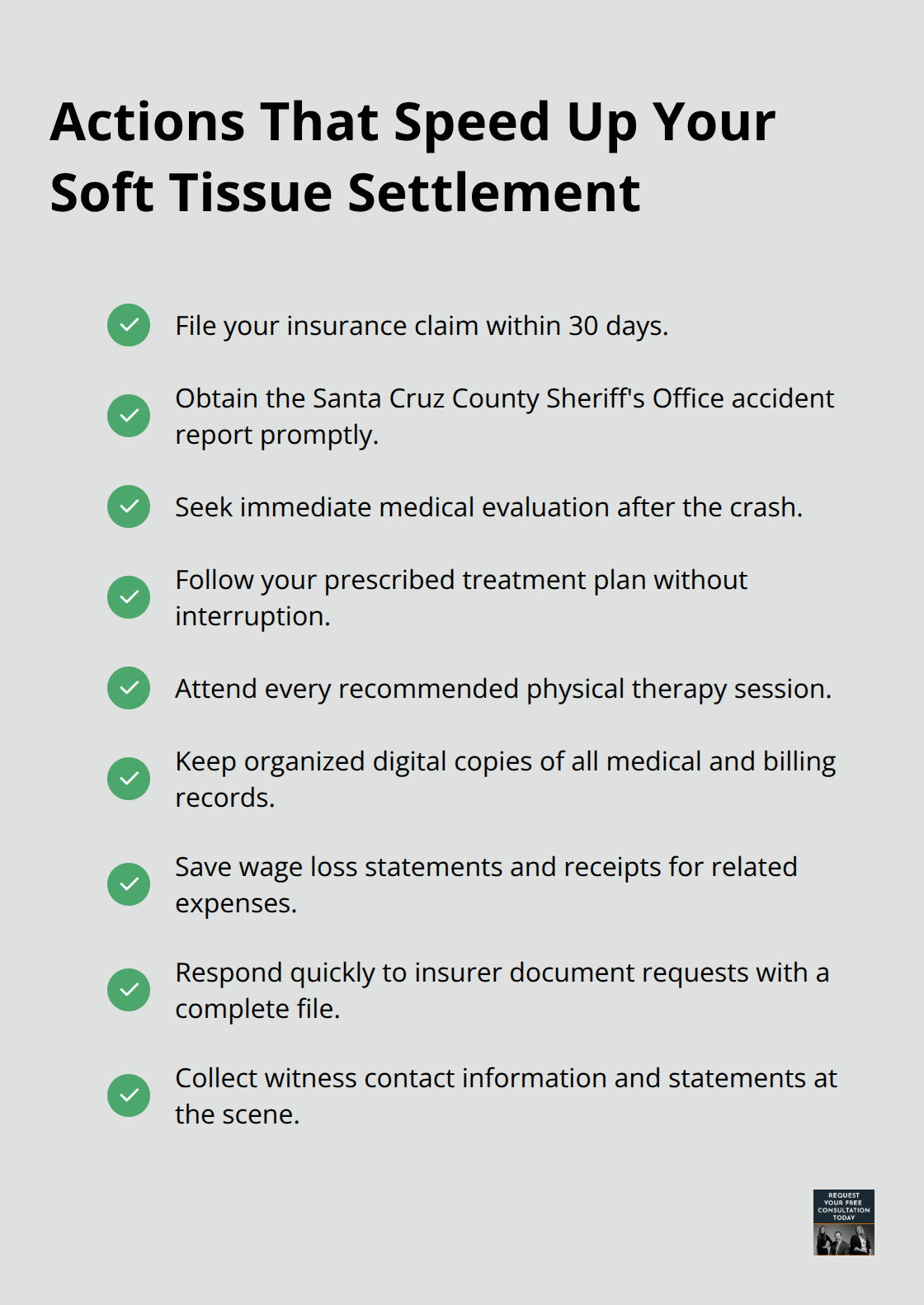
Seek medical evaluation immediately after the crash, even if you feel fine, since delayed symptom onset is common with soft tissue injuries and a prompt medical visit establishes causation.
Follow your prescribed treatment plan without interruption. If your doctor recommends physical therapy twice weekly for 12 weeks, attend every session. Skipping appointments or stopping treatment early signals to insurers that your injury wasn’t serious, which justifies lower offers and extends negotiations as they challenge your claim. Maintain organized documentation from day one. Keep digital copies of your police report, medical records, imaging studies, provider notes, treatment receipts, wage loss statements, and any correspondence with the insurance company. When you produce a complete file within days of an insurer’s request, settlement discussions move faster because you eliminate the back-and-forth of missing documents. Collect witness contact information and statements at the accident scene because independent accounts support your soft tissue claim and reduce liability disputes that would otherwise delay resolution.
Why Some Cases Drag On
Liability disputes are the primary settlement killer in Santa Cruz County. Multi-vehicle accidents or situations where fault is unclear force insurers to investigate thoroughly before committing funds. You might have solid medical documentation, but if the insurer questions whether the other driver was actually at fault, settlement stalls while they gather evidence and potentially hire investigators.
Pre-existing conditions complicate timelines significantly because insurers will argue your current pain stems from an old injury, not the accident. California’s eggshell plaintiff rule requires defendants to compensate for aggravated prior injuries, but proving the crash worsened your condition takes additional medical documentation and opinions that extend negotiations by months. Inadequate liability limits create another delay. If your damages exceed the at-fault driver’s policy limits, you must pursue underinsured motorist coverage through your own policy, which involves separate negotiations and additional processing time.
When Litigation Becomes Necessary
Settlement negotiations that stall force you to consider filing a lawsuit. You have two years from the injury date to file under California Code of Civil Procedure 335.1, but cases involving government vehicles operate under different rules with only six months to file under California Government Code sections 905 and 911.2. Once litigation begins, discovery demands require you to respond to interrogatories and produce documents within 30 days, followed by depositions that can take weeks to schedule. Santa Cruz court timelines typically span 4 to 8 months from filing to trial, with an initial case management conference usually set within 60 to 90 days. Trial preparation involving medical opinions and organized exhibits adds expense-roughly $5,000 to $15,000 in expert fees and court costs-which creates strong incentive for both sides to settle before trial rather than absorb these expenses.
Final Thoughts
Soft tissue settlements in Santa Cruz County follow predictable patterns once you understand how insurers evaluate claims and what documentation matters most. Medical records establish your injury, consistent treatment proves its severity, and organized documentation determines your final payout. Your actions in the first weeks after a crash directly influence whether your case resolves in three months or eighteen months.
Start by filing your insurance claim within 30 days and obtaining the police report immediately. Seek medical evaluation right away, even if symptoms haven’t appeared yet, because delayed onset is normal with soft tissue injuries and prompt documentation proves causation. Follow your treatment plan without interruption and maintain organized records of every medical visit and expense.
When settlement negotiations stall or initial offers fall short of what your injury warrants, litigation becomes necessary. California gives you two years to file a lawsuit, but government vehicle cases operate under a six-month deadline (so timing matters). We at Schaar & Silva LLP help people in Santa Cruz County navigate this entire process and connect you with the support you need to move forward with confidence while you focus on recovery.
