

Car accidents often leave victims with injury car accident bruises that aren’t immediately visible. These hidden injuries can develop hours or even days after the collision, making early identification challenging.
At Schaar & Silva LLP, we’ve seen how overlooked bruising can indicate serious internal damage. Recognizing the warning signs early protects both your health and legal rights in Santa Cruz County.
What Bruise Types Should You Recognize?
Seat belt bruises create diagonal marks across your chest and shoulder within 24 hours of impact. These purple-black marks stretch from your shoulder to your hip and often signal internal organ damage beneath. The National Highway Traffic Safety Administration reports that seat belt injuries affect 52,000 Americans annually, with many victims who dismiss these marks as minor. Airbag burns form circular or oval bruises on your face, arms, and chest, with chemical burns from the airbag powder. These injuries develop immediately but worsen over 48 hours as swelling increases.
Steering Wheel Contact Injuries
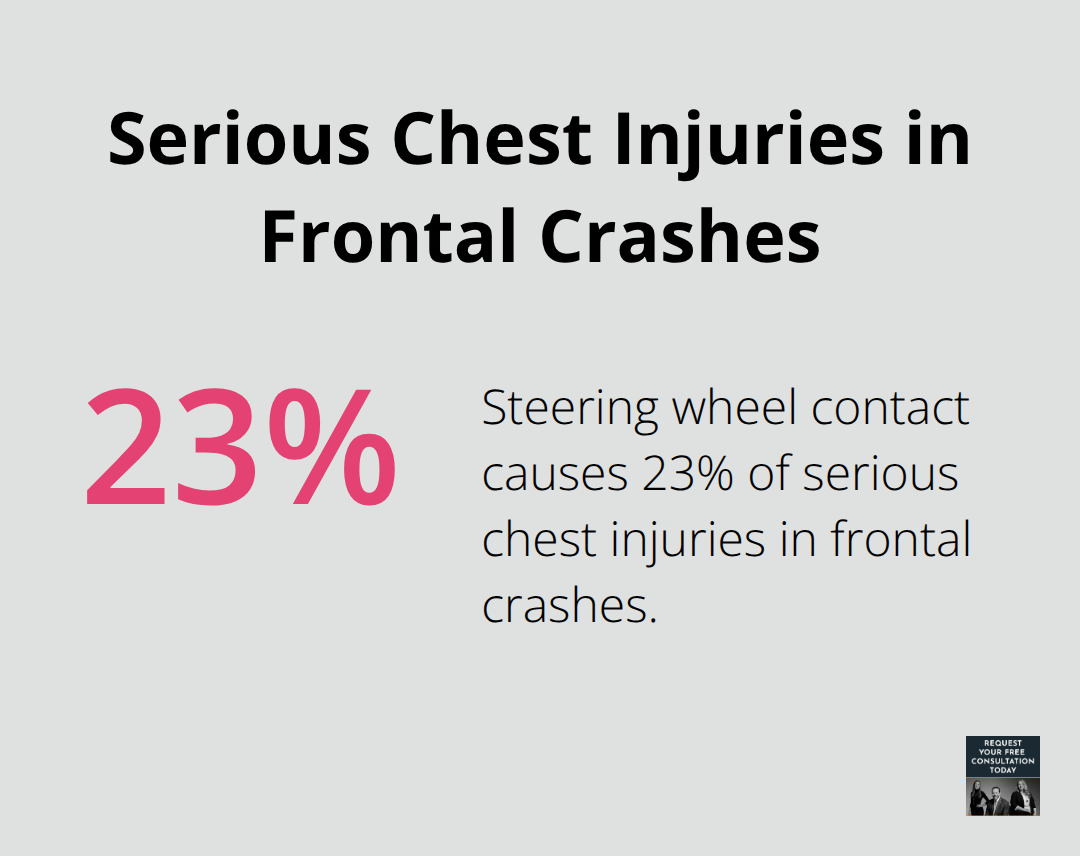
Steering wheel impacts create deep bruises on your chest, ribs, and abdomen that penetrate muscle tissue. These bruises appear darker and larger than surface injuries (typically 4-6 inches across). The Insurance Institute for Highway Safety found that steering wheel contact causes 23% of serious chest injuries in frontal crashes. Watch for bruises that spread beyond the initial impact point, as this signals internal bleeding.
Hidden Body Bruises
Torso and limb bruises often hide under clothing and develop 2-3 days post-accident. Your back, sides, and inner thighs bruise from seat pressure and vehicle deformation during impact. These areas show delayed bruises because blood takes longer to reach the skin surface in areas with thicker tissue (particularly around the torso). Hip and shoulder bruises frequently indicate bone fractures underneath and require immediate X-rays for proper diagnosis.
Once you identify these bruise patterns, you need to monitor how they change over time to determine their severity.
What Changes Should You Monitor in Your Bruises?
Color Progression Tells the Real Story
Fresh bruises start red or purple within the first 24 hours, then shift to dark blue or black by day two. Between days 3-5, your bruises turn green as hemoglobin breaks down, followed by yellow or brown colors during the healing phase. The American Academy of Dermatology reports that bruises that take longer than 14 days to change colors often indicate deeper tissue damage or blood clotting disorders. Bruises that remain dark purple or black after one week signal possible internal bleeding that needs immediate medical evaluation.

Pain and Swelling Patterns Reveal Severity
Normal bruise pain decreases within 48-72 hours, but pain that worsens indicates complications. Swelling that increases after day three suggests internal bleeding or infection. The Mayo Clinic found that bruises with persistent throbbing pain that lasts beyond one week often involve muscle tears or bone fractures underneath. Watch for numbness around bruised areas, as this signals nerve damage that requires immediate treatment. Bruises accompanied by fever above 100.4°F indicate infection and demand urgent medical care.
Delayed Bruises Signal Hidden Damage
Bruises that appear 2-4 days after your accident often prove more serious than immediate injuries. Deep tissue bleeding takes time to reach the skin surface, particularly in areas with thick muscle coverage (like your back and thighs). The Journal of Trauma Medicine documented that 31% of internal injuries present with delayed patterns, which makes these late-appearing marks critical warning signs. Bruises that emerge on your abdomen or lower back after 48 hours frequently indicate kidney or spleen damage that requires immediate CT scanning for proper diagnosis.
These warning signs help you determine when bruises require professional medical evaluation rather than home care.
When Do Bruises Require Emergency Care
Recognizing when bruises require emergency care is crucial for preventing serious complications. Here are the key signs to watch for:

Large Bruises That Spread Signal Internal Damage
Bruises larger than 4 inches across or those that expand beyond their original size within 24-48 hours indicate internal damage that demands immediate medical attention. The American College of Emergency Physicians reports that bruises that cover more than 10% of a body area often involve organ damage beneath the skin. Watch for bruises that develop raised edges or hard lumps, as these signs point to blood that pools in tissue spaces where it doesn’t belong.
Emergency room physicians prioritize patients with abdominal bruises larger than 6 inches because 67% of these cases involve spleen or liver injuries (according to Trauma Surgery International). Never wait to see if large bruises improve on their own, as internal damage can become life-threatening within hours.
Severe Pain and Numbness Demand Urgent Treatment
Bruises that cause pain levels above 7 out of 10 or create numbness in areas around them require immediate emergency evaluation. The National Institute of Neurological Disorders reports that numbness around bruised areas indicates nerve compression or damage that can become permanent without treatment. Bruises accompanied by sensations like tingling or complete loss of feeling signal potential spinal cord involvement that needs immediate studies with medical scans.
Emergency physicians treat bruise-related numbness as a medical emergency because delayed treatment often results in permanent disability. Santa Cruz County emergency rooms see 15-20 cases monthly where delayed treatment of numb bruised areas led to nerve damage that proper immediate care could have prevented.
Signs of Internal Organ Damage
Bruises on your abdomen, back, or chest that appear with nausea, dizziness, or rapid heartbeat indicate possible internal organ damage. The American Trauma Society found that 43% of patients with these symptoms had internal injuries that required surgery within 6 hours of arrival. Watch for bruises that feel warm to the touch or pulse with your heartbeat, as these signs suggest active internal damage.
Vomiting blood or passing dark urine after you develop torso bruises signals kidney or liver damage that requires immediate CT scans for proper diagnosis. These severe injuries often result in significant medical expenses that require proper documentation for insurance claims.
Final Thoughts
Document injury car accident bruises immediately after they appear to protect your insurance claim and legal rights. Take photographs of all bruises every 24-48 hours to show their progression, size, and color changes. Insurance companies often dispute delayed bruise claims, but proper documentation proves the connection between your accident and injuries.
Medical evaluation within 72 hours of bruise appearance creates official records that insurance companies cannot dispute. Emergency room visits, urgent care documentation, and physician reports establish the timeline and severity of your injuries. The California Department of Insurance requires this medical documentation for claim approval (which protects your financial recovery).
We at Schaar & Silva LLP help Santa Cruz County accident victims navigate insurance claims and medical bill complications. Our team works with you to evaluate your case and protect your recovery rights. Don’t let insurance companies minimize your bruise injuries when proper legal support can protect your financial future.
