

A rib injury from a car accident can affect your breathing, movement, and quality of life for weeks or months. The pain is real, the recovery is demanding, and the medical bills add up quickly.
At Schaar & Silva LLP, we help accident victims understand both the physical healing process and the legal path forward. This guide covers what happens to your body after a rib injury, how to document your treatment, and how to build a strong compensation claim.
What Happens to Your Ribs in a Car Crash
Rib injuries from car accidents occur when your chest strikes the steering wheel, dashboard, or seat belt during impact. The force of a collision compresses your chest cavity, and your ribs absorb the brunt of that force. Front-seat occupants face the highest risk because they sit closest to these hard surfaces. Depending on crash severity, you might experience simple bruising, stress fractures, or complete breaks across multiple ribs. Rib fractures along the seat belt path are particularly common, especially in older adults with osteoporosis where bone density is already compromised. The injury pattern tells a story: where you were sitting, how fast the vehicle was moving, and what part of your body hit what surface. This information matters later when documenting your claim because it connects the crash mechanics directly to your specific injuries.
How Rib Pain Develops and Progresses
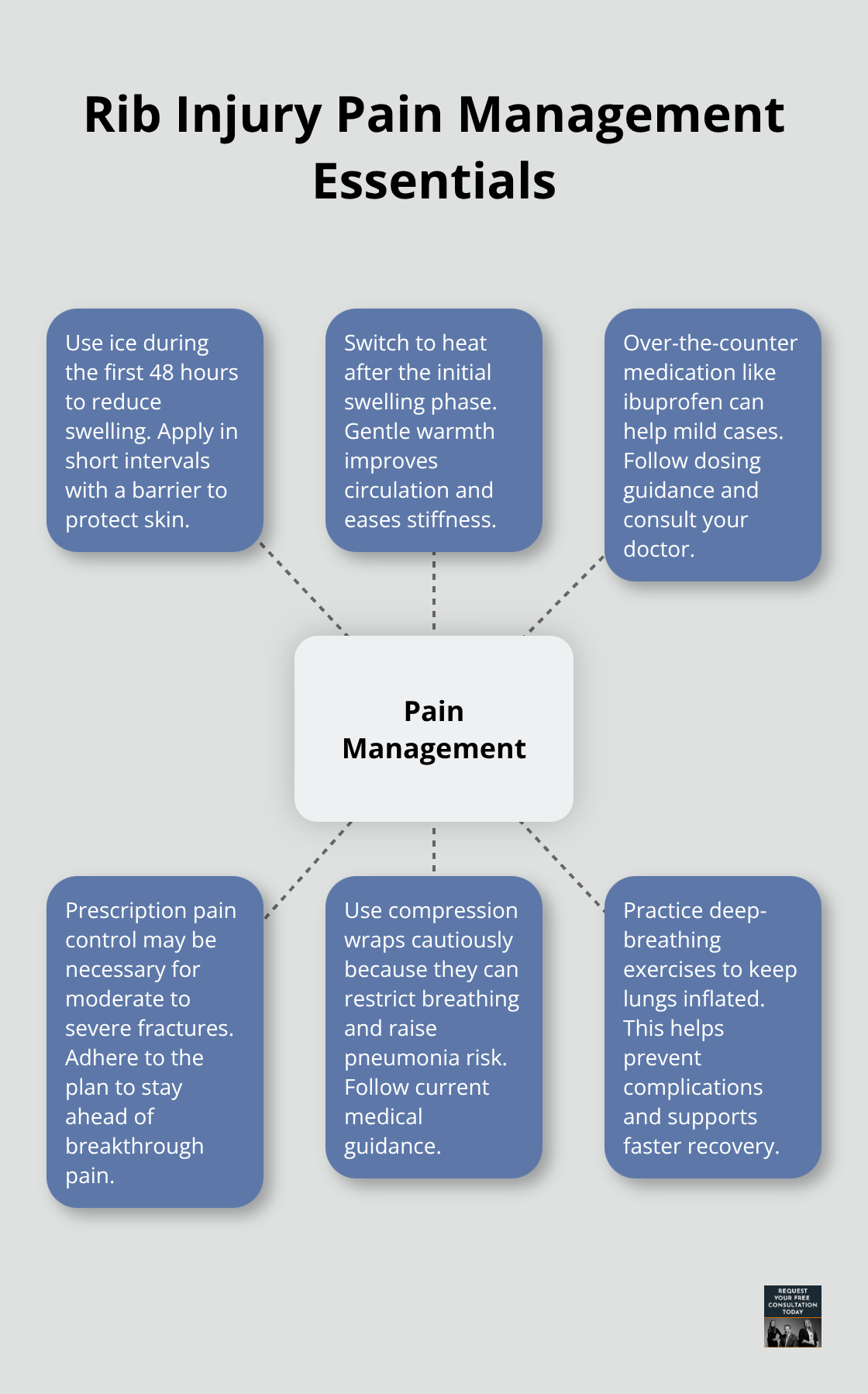
Pain from rib injuries is immediate and intense because your ribs move with every breath. Unlike a broken arm that you can immobilize, your ribs keep moving whether you want them to or not. In the first 48 hours after impact, swelling and inflammation build, often making pain worse on day two or three than on the day of the crash. You feel sharp pain when you breathe deeply, cough, or change positions. Some people also experience referred pain in the upper back or shoulder. Pain management requires a multi-layered approach: ice in the first 48 hours reduces swelling, then heat therapy helps circulation. Over-the-counter pain relievers like ibuprofen work for mild cases, but moderate to severe fractures often need prescription medication. Your doctor may recommend rib belts or compression wraps, though recent medical guidance suggests limiting these because they reduce breathing depth and increase pneumonia risk. Breathing exercises actually speed healing because they keep your lungs fully inflated and prevent complications.
Recovery Takes Longer Than You Expect
Uncomplicated rib fractures heal in 6 to 12 weeks, but this timeline assumes you follow medical advice and avoid re-injury. During this period, activities that seem minor-sleeping, sitting at a desk, driving-become challenging. Many people underestimate recovery time and return to normal activity too quickly, which extends healing or causes new injuries. Multiple rib fractures or fractures in the same rib compound the problem. Serious chest trauma can involve internal bleeding or organ damage that requires emergency surgery and months of recovery. Even after bones heal, some people report lingering chest wall pain or breathing discomfort for months afterward. This delayed recovery affects your ability to work, especially if your job involves physical labor or driving.
Document Your Recovery Impact
Keep detailed records of how injuries affect your daily life-missed work days, inability to perform job duties, and reduced earning capacity. These documents strengthen your compensation claim by showing real financial losses beyond medical bills. Medical records alone don’t capture the full picture of what you’ve lost. Your personal documentation (work emails showing missed deadlines, supervisor statements about reduced hours, calendar notes about activities you couldn’t do) provides concrete evidence that insurers and courts recognize. When you work with an attorney to pursue your claim, this documentation becomes invaluable because it demonstrates the true scope of your losses and supports your request for fair compensation.
Medical Imaging and Documentation Build Your Claim
CT chest imaging identifies rib fractures that standard X-rays miss and reveals internal injuries that aren’t immediately obvious. Many accident victims receive only an X-ray in the emergency room, which catches obvious breaks but overlooks stress fractures and soft tissue damage. Push for CT imaging if you have moderate to severe chest pain, difficulty breathing, or bruising across multiple ribs. The imaging creates a medical record that directly links your injuries to the crash, which insurers need to approve your claim.
Request and Preserve Your Medical Records
When you receive imaging results, request copies for your personal file and verify that your medical records clearly document the specific ribs affected, the fracture classification, and any internal injuries. Insurance adjusters scrutinize gaps in medical documentation, so consistent follow-up visits matter more than you might think. Schedule appointments with your doctor at regular intervals even if pain improves, because medical records showing ongoing treatment demonstrate that your injuries were serious enough to require sustained care. If you delay appointments or stop treatment too early, adjusters will argue your injuries weren’t as severe as claimed, which directly reduces your compensation.
Follow Your Treatment Plan Precisely
Some rib fractures require conservative treatment with pain management and breathing exercises, while others need surgical stabilization if multiple ribs are broken in ways that compromise chest wall function. Your doctor will determine which approach applies to your situation, but the key is following that medical advice precisely. Skipping prescribed physical therapy, ignoring restrictions on activity, or stopping pain medication without medical guidance gives adjusters ammunition to minimize your claim. Your medical records become the foundation of your compensation claim, so treat every appointment and every recommendation as part of building your legal case, not just your physical recovery.
Why Documentation Gaps Weaken Your Claim
Insurance adjusters exploit inconsistencies in your medical file to reduce what they owe you. When months pass between appointments or you stop treatment without medical clearance, adjusters claim your injuries resolved faster than your records suggest. They use these gaps to argue that your pain wasn’t genuine or that your recovery was faster than you reported.
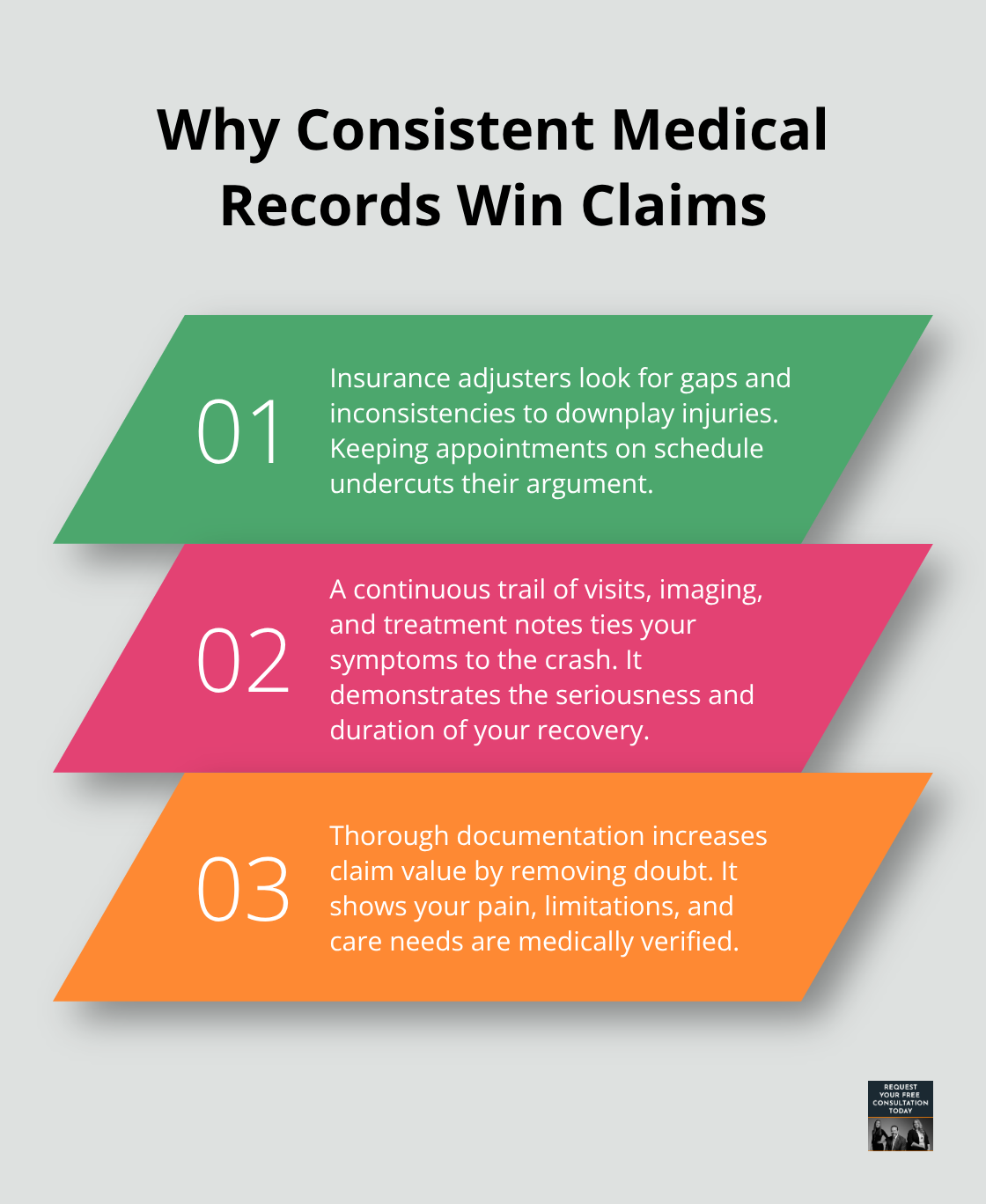
Consistent documentation prevents this strategy from working. Each medical visit, each imaging study, and each treatment note creates a continuous record that supports your account of what happened and how long recovery actually took. This documentation directly affects the compensation you receive because it proves the severity and duration of your injuries.
Legal Steps After a Rib Injury Accident
The first 24 hours after a crash determine what evidence you’ll have later. At the scene, photograph vehicle damage, your injuries, and the surrounding area from multiple angles. Collect the names and phone numbers of anyone who witnessed the crash because witness statements carry significant weight with insurance adjusters. File a police report immediately and obtain the report number, which creates an official record that ties your injuries directly to the crash. Avoid posting accident details on social media because insurance adjusters monitor social media accounts and use posts to contradict injury claims. Document the exact location where your body hit the vehicle (steering wheel, dashboard, seat belt) because this information supports accident reconstruction and proves how your rib injuries occurred.
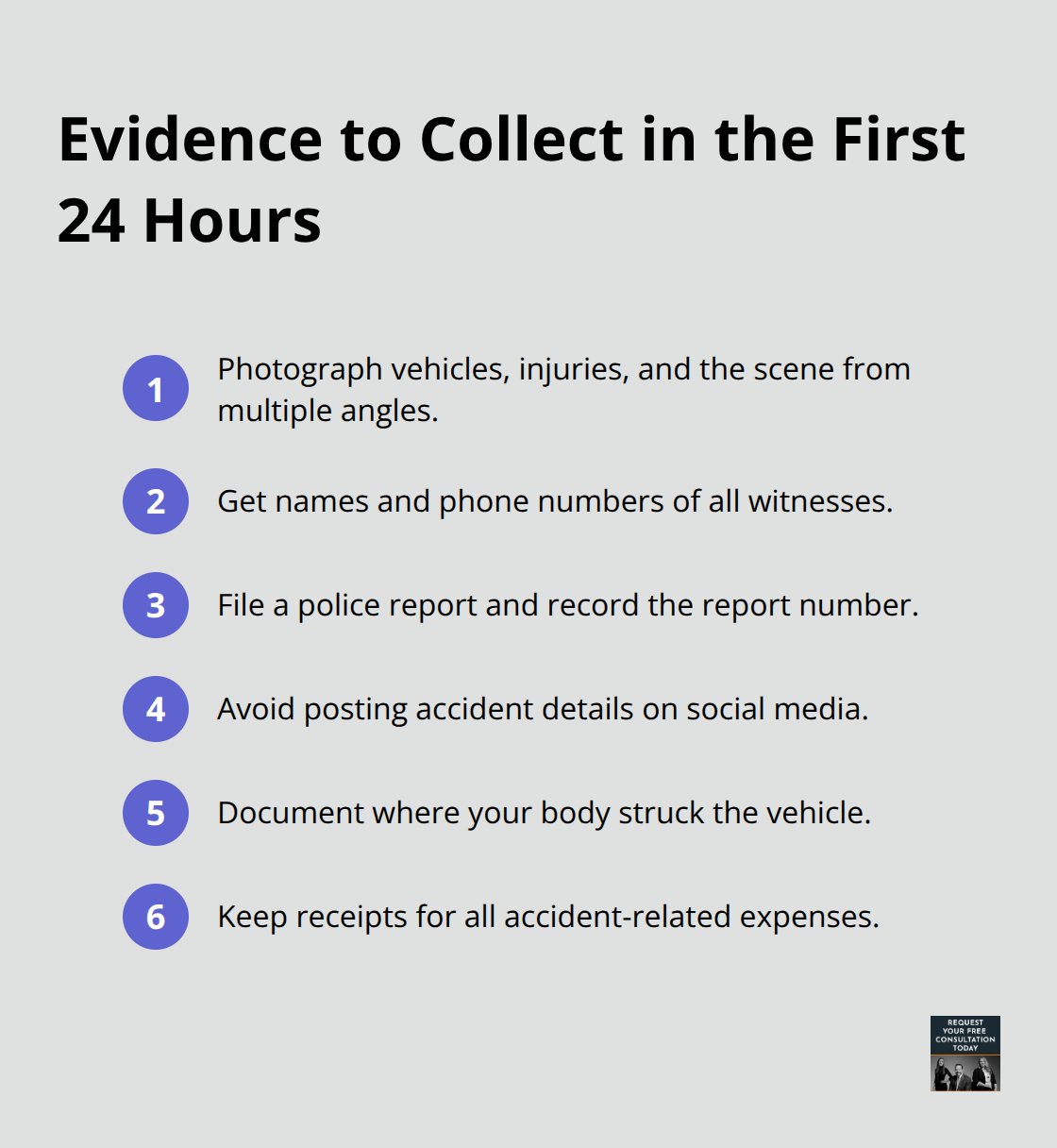
Keep receipts for everything accident-related: medical appointments, prescriptions, travel to appointments, and any equipment like ice packs or compression wraps. These expenses add up quickly and form part of your economic damages claim.
Insurance Claims Require Precise Medical Documentation
Report the accident to your insurance company within 24 to 48 hours of the crash, but provide only basic information at first. Insurance adjusters are trained to minimize injury claims, so give them facts without volunteering details about your pain level or limitations. Your medical records do the talking, not your words during an initial call. When you file your claim, include copies of all imaging reports, doctor visit summaries, and treatment records from day one. Gaps in medical documentation are the single biggest reason claims get reduced because adjusters interpret missing appointments as proof that your injuries weren’t serious. In California, you’re entitled to economic damages (medical bills, lost wages, diminished earning capacity) and non-economic damages (pain, suffering, emotional distress, loss of enjoyment of life). Many accident victims don’t know they can claim diminished earning capacity if injuries prevent you from returning to your previous job or earning level. Insurance adjusters rarely volunteer this information, which means thousands of dollars in legitimate compensation gets left on the table. When multiple ribs are fractured or internal injuries are present, your claim value increases substantially because recovery takes longer and complications are more likely. Push for complete medical imaging because CT scans identify injuries that X-rays miss, and more documented injuries mean higher settlement value.
An Attorney Handles What Insurance Companies Avoid
Insurance adjusters work for the insurance company, not for you, and their goal is to close your claim for the lowest possible amount. When you contact an attorney, they investigate the crash independently, gather police reports, obtain witness statements, and request complete medical records on your behalf. Adjusters often deny claims or offer inadequate settlements when they think you’re handling the case alone. Having legal representation changes the dynamic because insurers know you’ll pursue the claim through litigation if necessary. An attorney ensures your medical records are complete, your damages are accurately calculated, and your settlement reflects the true cost of your injuries and recovery time. Most personal injury attorneys work on contingency, meaning you pay nothing unless you receive compensation, so cost is never a barrier to getting professional legal help.
Final Thoughts
A rib injury car accident creates two parallel challenges that you must address simultaneously: healing your body and securing fair compensation for your losses. Medical records form the foundation of your compensation case because CT imaging identifies fractures, doctor visit summaries track your recovery, and treatment notes document your pain and limitations. Insurance adjusters scrutinize these records for inconsistencies or gaps they can exploit to reduce your settlement, so consistent medical care and complete documentation eliminate their primary argument for paying less than you deserve.
The financial impact extends far beyond immediate medical bills because lost wages, reduced earning capacity, and ongoing treatment costs accumulate quickly during recovery that stretches weeks or months. Non-economic damages like pain, suffering, and loss of enjoyment of life carry equal weight but require thorough documentation to prove their value. Many accident victims leave thousands of dollars in legitimate compensation on the table simply because they don’t understand what damages they can claim or how to document them properly.
We at Schaar & Silva LLP help Santa Cruz County accident victims navigate both the medical and legal sides of rib injury recovery by handling investigations, gathering medical records, and communicating with insurance adjusters to ensure your damages are accurately calculated. Contact Schaar & Silva LLP for a free consultation to discuss your claim, and remember that most personal injury cases work on contingency, meaning you pay nothing unless you receive compensation. The sooner you take action, the sooner your recovery and your claim can move forward.
