
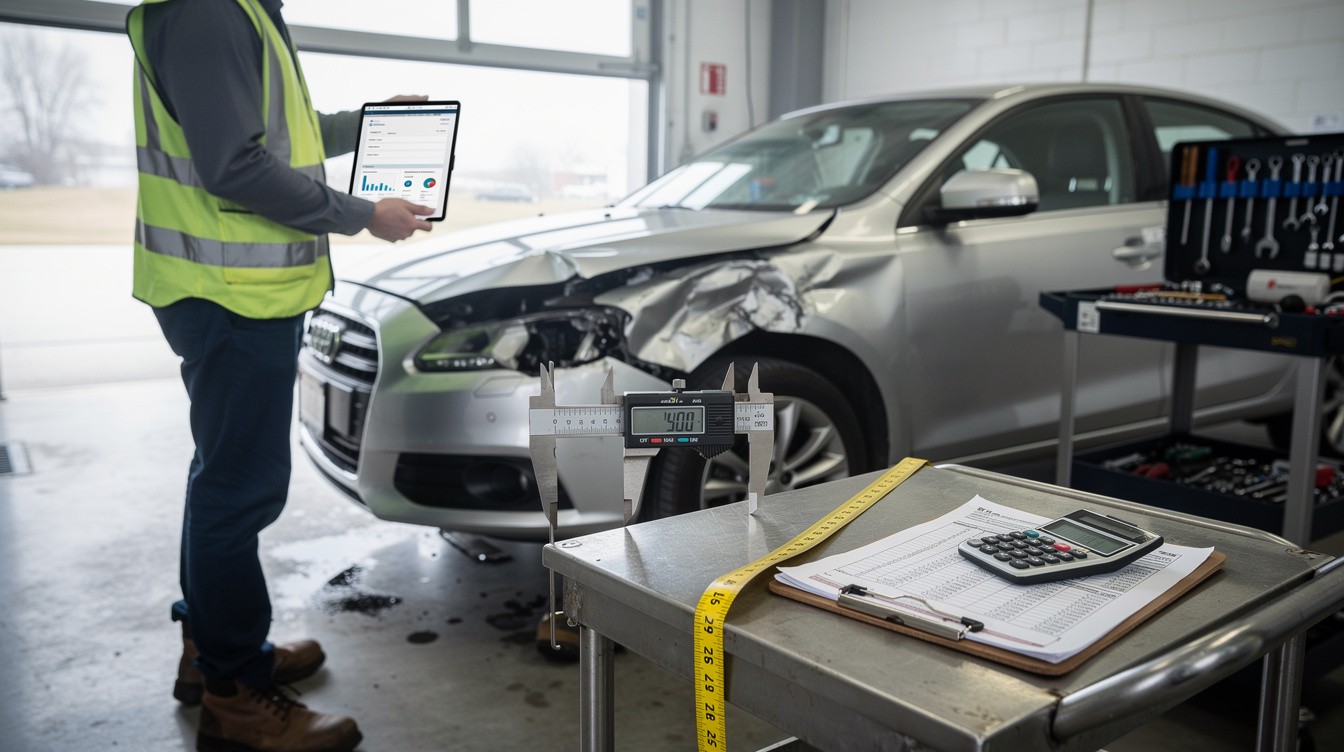
After a car accident, insurance companies often undervalue your vehicle’s damage. We at Schaar & Silva LLP have seen countless clients accept lowball offers without understanding how valuations actually work.
This property damage valuations guide walks you through the assessment process, shows you what factors affect your payout, and reveals the mistakes that cost people thousands of dollars.
How Property Damage Valuations Get Determined
Insurance adjusters and independent appraisers access databases of sold vehicles to calculate what your car was worth at the moment of damage. The adjuster pulls your vehicle identification number, checks the mileage, identifies the trim level and options, then compares it against recent sales of similar cars in your region. This process sounds straightforward, but data errors happen constantly.
Common Valuation Errors That Cost You Money
A misread VIN assigns the wrong trim level to your vehicle. Mileage gets entered incorrectly. Upgraded features you paid for don’t show up in the system. Any of these mistakes shrinks your payout by hundreds or even thousands of dollars. The initial offer from the insurer reflects incomplete or inaccurate information, which is why you should never treat it as final. Start by auditing the valuation for accuracy the moment you receive it. Pull your vehicle’s paperwork and verify every detail the adjuster used: the exact trim, all factory options, the actual mileage at time of loss, and any aftermarket upgrades. Cross-reference this against what appears in the insurer’s valuation report. If discrepancies exist, contact the adjuster immediately with documented proof of the correct information.
Using Kelley Blue Book and Local Market Data
Kelley Blue Book serves as the industry standard for determining fair market value, and you should reference it when challenging an offer. Check KBB and look for similar vehicles within 50 miles of your location to reflect your local market conditions. Online listings from CarMax and Carvana often show higher values than insurer offers, particularly for common vehicles. Gather two or three repair or replacement estimates from licensed local contractors to support your claimed costs. When the insurer’s comparables differ significantly from what you find, request that the adjuster explain why their selected vehicles match yours better than your alternatives. This forces a detailed conversation about condition, mileage, and regional pricing rather than accepting their initial number.
The Appraisal Clause and Third-Party Review
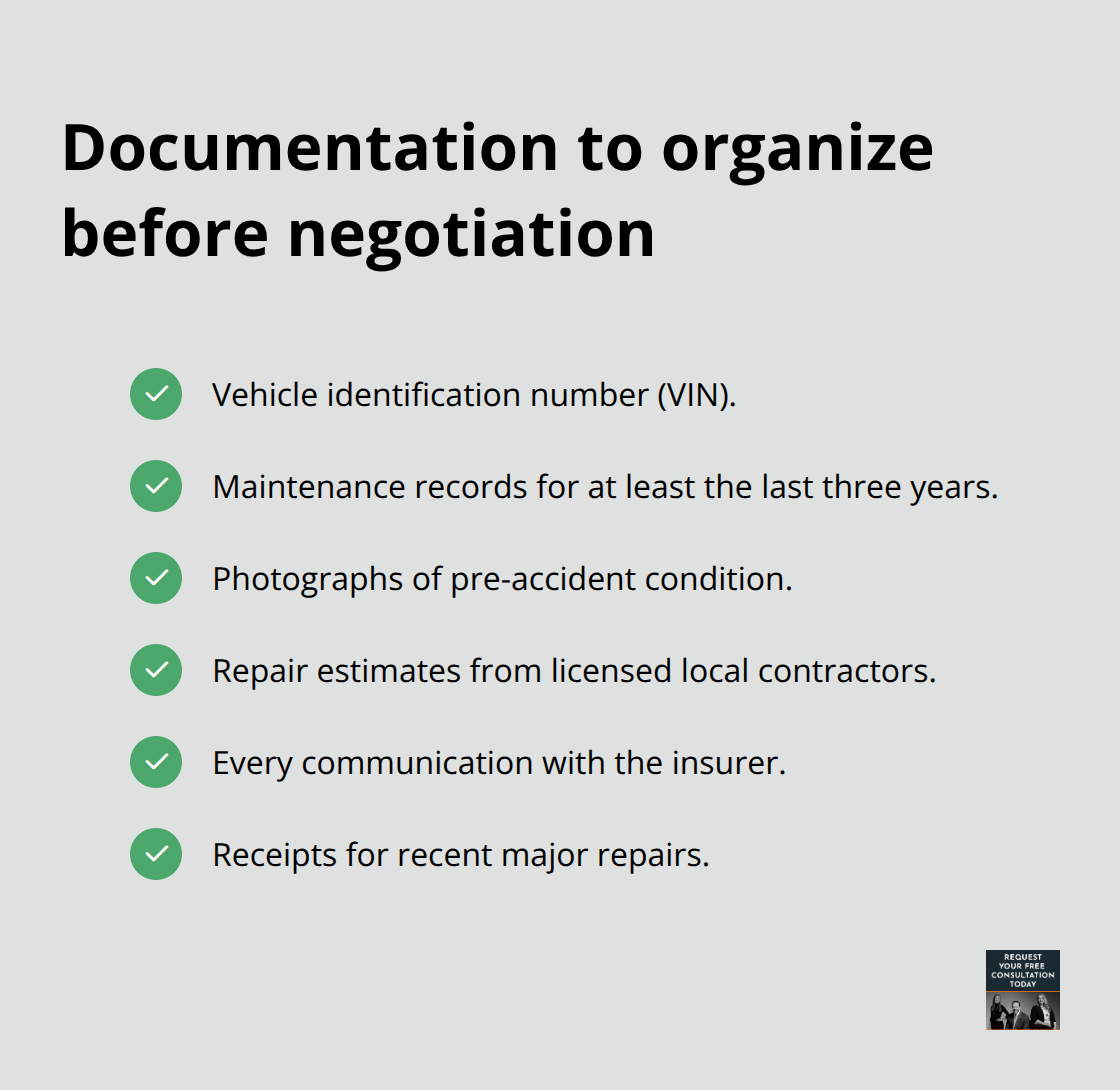
If negotiations stall after you’ve provided solid local comparables and corrected data errors, invoke the appraisal clause in your policy. This allows a third-party appraiser to review the valuation independently, typically costing a few hundred dollars. Many appraisal services guarantee a refund if you don’t recover additional money, reducing your financial risk. Keep all documentation organized: your VIN, maintenance records, photographs of pre-accident condition, repair estimates, and every communication with the insurer. This evidence becomes your leverage in any negotiation or formal appraisal process.
When data errors persist or your local market research reveals a significant gap between your valuation and comparable sales, the next step involves understanding what happens if the insurer refuses to budge-and that’s where knowing your policy rights and available dispute options becomes essential.
What Actually Drives Your Vehicle’s Valuation
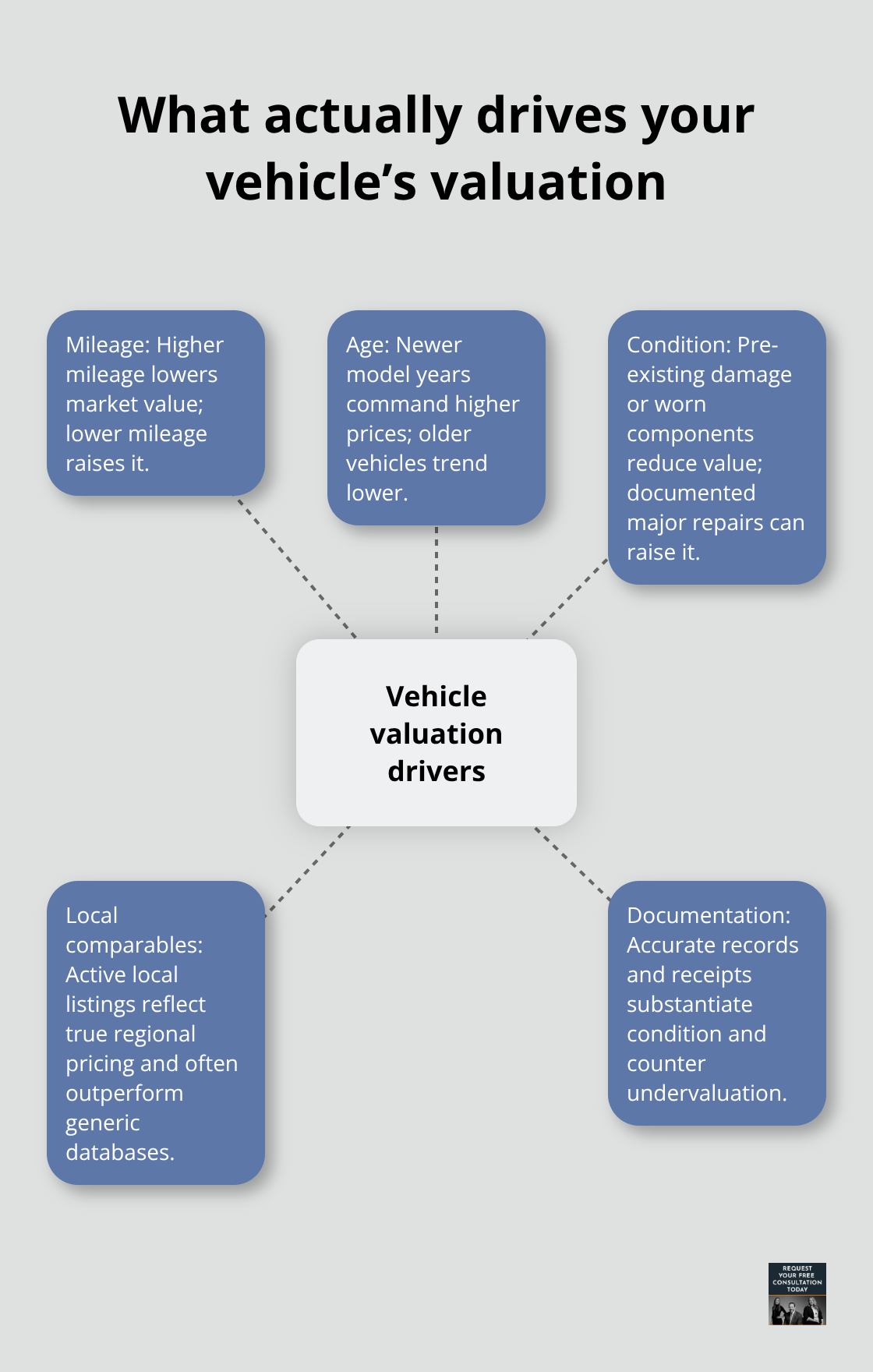
Your vehicle’s fair market value at the moment of damage determines your payout, and three concrete factors control that number. Age and mileage form the foundation of every valuation because they directly correlate with what similar vehicles sell for in your region. A 2022 Honda Civic with 45,000 miles trades for significantly more than a 2019 model with 85,000 miles, even if both are in identical condition.
How Mileage and Age Affect Your Payout
Insurance adjusters apply mileage multipliers to diminished value calculations specifically because market data proves the correlation: vehicles with 0–19,999 miles command a 1.00 multiplier, while those exceeding 100,000 miles receive a 0.00 multiplier under the standard 17c formula used across California. The older your vehicle and the higher the mileage, the lower your valuation will be. Conversely, newer vehicles with lower mileage attract higher payouts because they retain more market value.
The Role of Vehicle Condition
Your vehicle’s actual condition at the time of loss matters tremendously. Pre-existing damage, rust, worn brake pads, or a failing transmission all reduce fair market value below what a pristine comparable would fetch. Pull your maintenance records and be honest about what the adjuster will discover during inspection. If your car had recent major repairs (like a transmission overhaul or new engine), document those with receipts because they increase value and counter claims that your vehicle was worth less than the insurer initially offered.
Finding and Using Local Market Comparables
Market comparables determine everything, which is why local data beats national averages every time. CarMax and Carvana typically show higher valuations than insurance companies because they operate in different markets and accept wider condition ranges, but their asking prices still provide valid reference points for negotiation. Search for vehicles matching your exact year, make, model, trim level, and mileage within 50 miles of your ZIP code in Santa Cruz County, Sacramento, or Oakland to capture true local pricing.
If you find three comparable vehicles selling for $24,500, $25,200, and $24,800 while the insurer valued yours at $22,900, you have concrete ammunition to challenge their offer. Condition differences matter here too: if your comparables show accident-free vehicles or those with full service records commanding premium prices, emphasize your vehicle’s maintenance history. The adjuster’s comparable selections often reflect generic national databases rather than active local listings, which creates the valuation gap you need to exploit.
Challenging the Adjuster’s Comparables
Request the specific vehicles the adjuster used as comparables and research their actual sale prices or current asking prices. Significant mismatches between their chosen comparables and real local market data force the adjuster to either defend their selections with data or revise the valuation upward. When you present three local listings that contradict the insurer’s valuation, the adjuster must explain why their selected vehicles match yours better than your alternatives. This forces a detailed conversation about condition, mileage, and regional pricing rather than accepting their initial number-and that conversation often leads to a higher offer before you ever need to pursue formal dispute options.
Mistakes That Slash Your Payout by Thousands
The Danger of Accepting the First Offer
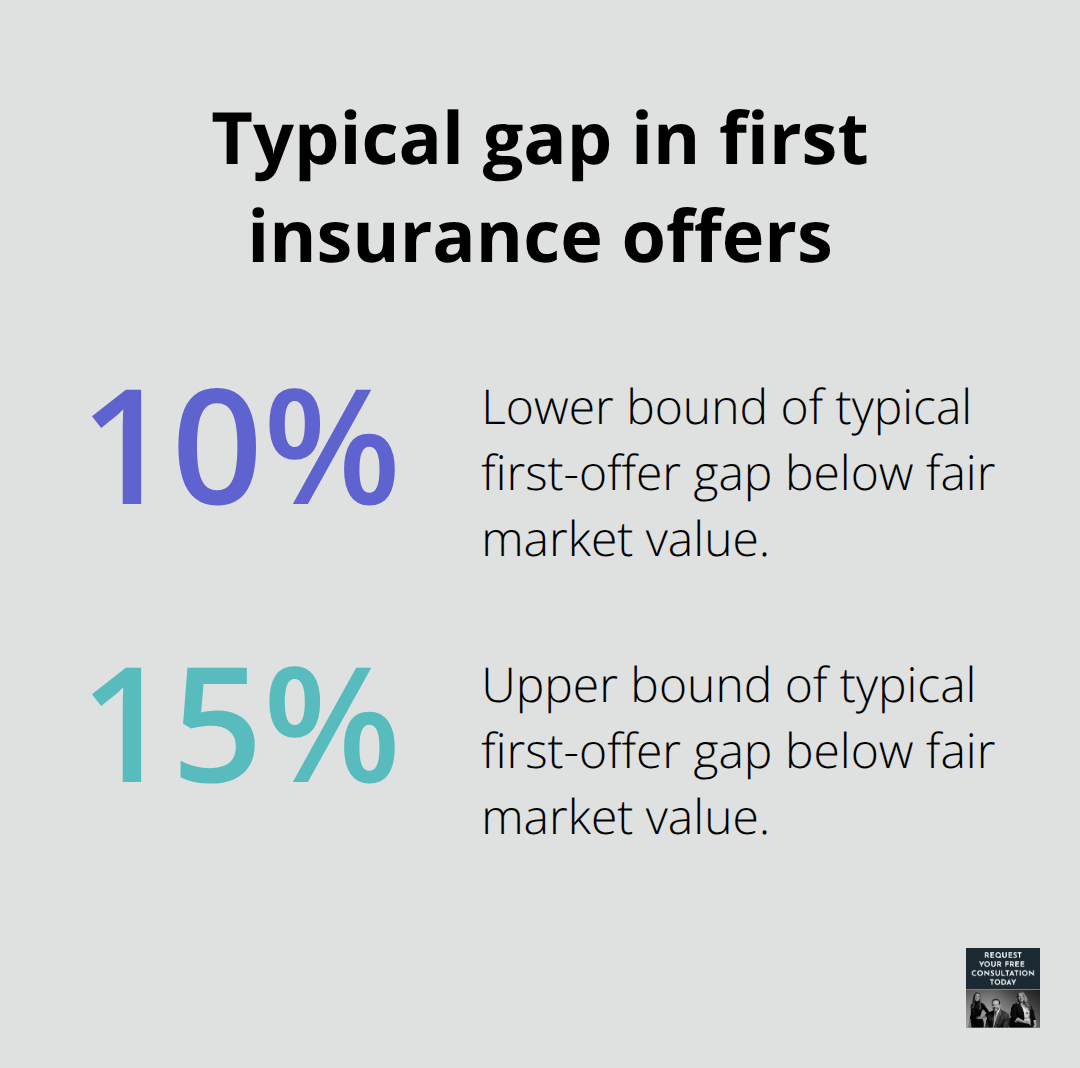
The biggest mistake people make after a vehicle accident is treating the insurance adjuster’s initial offer as a final number rather than an opening position in a negotiation. Adjusters know most accident victims lack the time, knowledge, or confidence to challenge their valuations, which is precisely why the first offer often lands 10 to 15 percent below fair market value. Accepting that lowball number without verification means leaving money on the table that rightfully belongs to you.
The adjuster’s job includes controlling costs for the insurance company, not maximizing your recovery. Clients who push back on initial offers recover an average of $1,200 to $3,500 more than those who accept the first number. That gap exists because most people never audit the valuation for accuracy or gather competing market data. You must treat the initial offer as a starting point, not a destination.
How to Challenge the Adjuster’s Valuation
Request the specific comparables the adjuster used and verify their actual sale prices or current asking prices. When you find three local listings that contradict the insurer’s valuation, you have concrete evidence to demand a revision. Most adjusters will increase their offer once presented with solid local market data because the documentation forces them to defend their position with facts rather than generic national databases.
Documentation That Protects Your Claim Value
The second critical mistake involves failing to document your vehicle’s condition, maintenance history, and damage thoroughly before the insurer’s inspection. Photograph your vehicle from multiple angles before any repairs begin, capturing damage from wide shots and close-ups that show severity. Collect every maintenance receipt dating back at least three years because a full service record increases your vehicle’s value significantly compared to one with gaps in documentation.
When you present receipts for recent major repairs (like transmission overhauls or engine replacements), you counter the adjuster’s claims that your vehicle was worth less than initially offered. These receipts transform the narrative from “your car was worth $22,000” to “your car was worth $24,500 because you invested in major repairs that extended its life and reliability.”
The Power of Multiple Independent Valuations
The third mistake compounds the first two: accepting a single valuation without obtaining multiple independent assessments. Get two or three estimates from licensed local contractors who can inspect the actual damage and provide detailed repair or replacement costs. Online market data from CarMax and Carvana, while not identical to insurance valuations, provides valid reference points showing what similar vehicles command in your region.
Request that the adjuster explain why their selected vehicles match yours better than your alternatives when significant gaps appear between their offer and your local research. This forces a detailed conversation about condition, mileage, and regional pricing rather than accepting their number without challenge. The effort required to gather this documentation and challenge the initial offer takes perhaps four to six hours of your time but routinely results in thousands of dollars in additional recovery.
Final Thoughts
The property damage valuations guide you’ve read throughout this article reveals one undeniable truth: accepting the insurer’s first offer costs you thousands of dollars. You now understand how adjusters calculate value, what factors drive your payout, and which mistakes drain your recovery. The gap between a lowball initial offer and fair market value exists because most accident victims never challenge the numbers or gather competing evidence.
If the adjuster’s offer falls within a few hundred dollars of your local market research and data errors have been corrected, a phone call requesting a revised offer often resolves the matter. Present your three comparable listings, explain the discrepancies in trim level or mileage, and ask the adjuster to reconsider. Many will increase their offer rather than escalate to formal appraisal, and the effort takes only a few hours of your time.
When the gap exceeds $1,000 or the adjuster refuses to budge after you’ve provided solid evidence, the appraisal clause becomes your leverage. For substantial losses or persistent disputes with your insurer, professional guidance accelerates resolution and protects your rights. We at Schaar & Silva LLP assist in evaluating property damage and help you receive a fair valuation for your loss.
