

After a car accident, medical bills pile up fast. A medical lien in Santa Cruz lets healthcare providers get paid directly from your settlement instead of you paying out of pocket first.
Understanding how these liens work protects your recovery money and keeps more of your settlement in your pocket. We at Schaar & Silva LLP help accident victims navigate medical liens so you’re not caught off guard by unexpected claims.
How Medical Liens Actually Work in Santa Cruz
A medical lien is a binding agreement between you and a healthcare provider that gives them the right to be paid directly from your settlement or verdict. When you sign a lien, the provider agrees to treat you now without requiring payment upfront, and in exchange, they receive payment from the money you recover later. This arrangement exists because most accident victims cannot afford medical bills while their case is pending, and California’s fault-based system means the at-fault driver’s insurance does not pay doctors as treatment happens. Instead, liability gets resolved at settlement or verdict. In Santa Cruz County, serious injuries cost 59.8% above the California average, with medical expenses often ranging from $57,000 to $123,000 according to the California Office of Traffic Safety. Without liens, many people would skip necessary care or rack up credit card debt. The lien protects both you and the doctor: you receive immediate access to treatment, and the provider gains assurance they will be reimbursed.
Understanding What Gets Paid from Your Settlement
When your case settles, the lien amount gets paid directly from settlement funds before you receive your portion. If you settle for $100,000 and have a $30,000 lien, approximately $70,000 remains before other deductions like health insurance subrogation or attorney fees. This is why negotiating the lien amount down matters significantly. Many lien providers overestimate what they are owed, and you can often reduce liens by 20-40% through negotiation. Before signing any lien, request a written summary of all terms, including the total owed, any interest charges, and the provider’s fee structure. Many lien companies charge 10-15% of the lien amount as their fee, so knowing the exact cost upfront prevents surprises later. California Civil Code Section 3040 caps health care liens depending on whether services were capitated or noncapitated, and if you hire an attorney, the lien cannot exceed one-third of your recovery. This legal protection means having an attorney handle lien negotiations significantly improves your net recovery.
When Liens Get Resolved
Medical liens remain in effect until your case closes, which typically takes 6-18 months in Santa Cruz County for standard cases, though complex injuries take longer. You should seek medical evaluation within 48 hours of your accident, even if you feel fine, because soft tissue injuries and internal damage often appear days later. Document every medical visit with dates, providers, treatments, and costs from day one. Good records prevent overclaiming and strengthen your negotiation position when the settlement arrives. The lien gets paid the moment funds are distributed, so plan for this reduction when calculating what you will actually receive.
How Liens Affect Your Final Recovery
Lien negotiations happen after your settlement is reached, which gives you leverage to reduce what you owe. Providers know that if they demand too much, you may dispute the amount or challenge their billing records. You hold the power to question whether all charges relate directly to your accident injuries. Coordination between your attorney, the lien provider, and your medical team ensures billing stays accurate throughout your case. This coordination prevents duplicate charges and protects your net recovery. Hospital and emergency room bills often represent the largest portion of liens, making these negotiations particularly important for your final payout. Understanding how liens reduce your settlement allows you to plan for actual money you will receive and avoid disappointment when funds arrive.
What Medical Bills Does a Lien Actually Cover
Emergency Room, Hospital, and Surgery Costs
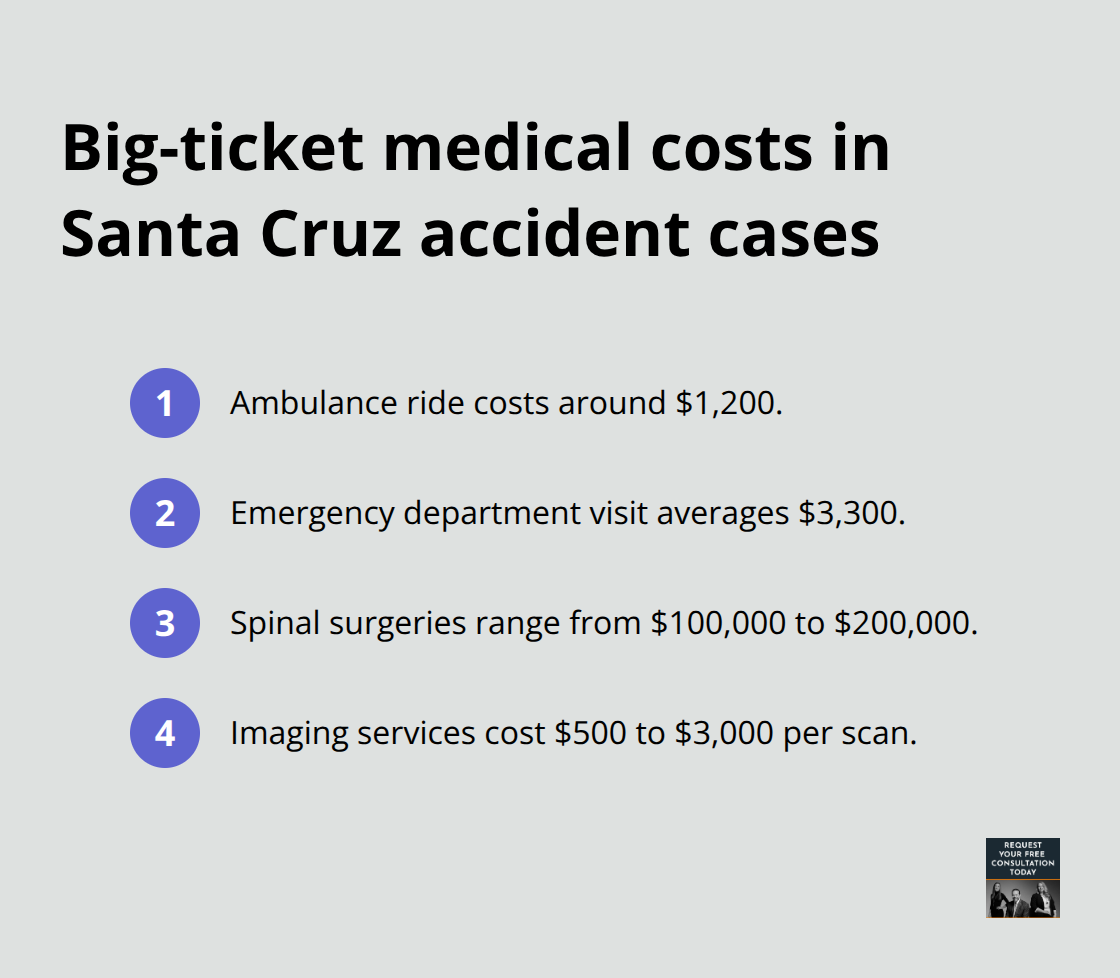
Emergency room visits, hospital stays, and surgery represent the largest expenses in Santa Cruz County accident cases. An ambulance ride costs around $1,200, while an emergency department visit averages $3,300 according to the California Office of Traffic Safety. If your accident requires hospitalization or surgery, bills escalate rapidly. Spinal surgeries range from $100,000 to $200,000, and imaging services (X-rays, MRI, CT scans) cost $500 to $3,000 per scan.
Medical liens cover all of these costs because providers know they will be reimbursed from your settlement.
Not every charge on a hospital bill relates to your accident. Request itemized billing statements and review each line item carefully. If a bill includes charges unrelated to your injury, challenge them before the lien is finalized. Specialist consultations, orthopedic evaluations, and neurology assessments all qualify for lien coverage and are necessary to document the full extent of your injuries. These evaluations build the evidence needed to negotiate a higher settlement, which ultimately increases the pool of money available after lien deductions.
Physical Therapy, Chiropractic Care, and Rehabilitation
Physical therapy, chiropractic care, and rehabilitation services form the second major category of lien-covered expenses. A typical physical therapy session costs $200 to $300, and most accident victims require 12 to 20 sessions over several months. Chiropractic treatment runs $50 to $150 per visit and may continue for months depending on your injury severity.
Document every session with dates, provider names, treatment descriptions, and costs. This comprehensive treatment record justifies the lien amount and prevents providers from inflating their claims when your case settles.
Mental Health Treatment and Trauma Therapy
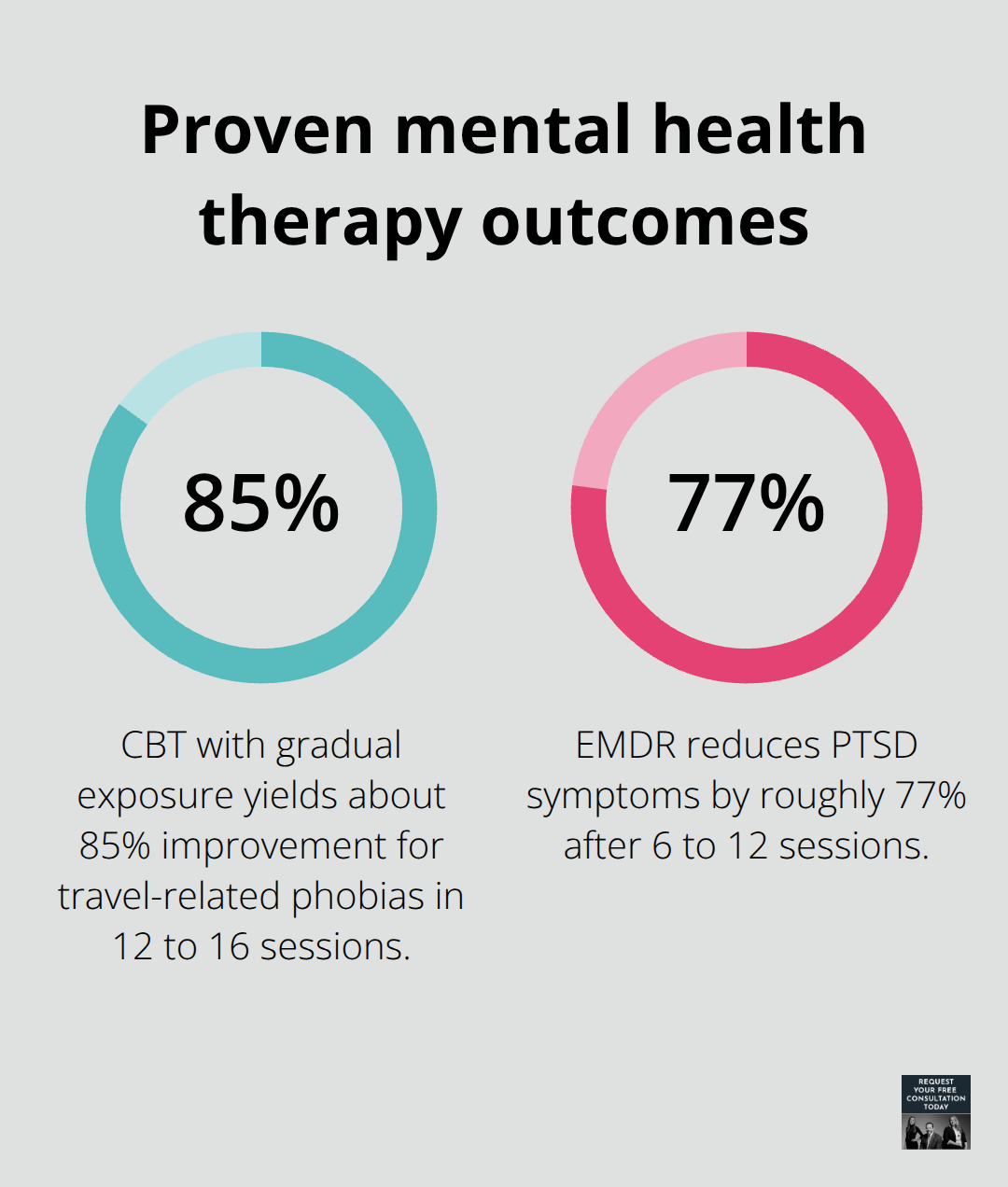
Mental health treatment, including trauma therapy and cognitive behavioral therapy, qualifies for lien coverage at $200 to $300 per session. Evidence-based trauma therapies show strong outcomes: cognitive behavioral therapy with gradual exposure yields about 85% improvement for travel-related phobias in 12 to 16 sessions, while EMDR reduces PTSD symptoms by roughly 77% after 6 to 12 sessions according to the American Psychological Association. These treatments address real injuries that impact your ability to work and function.
Many trauma therapists in Santa Cruz County accept major insurers (Aetna, Cigna, Anthem, UnitedHealthcare, Blue Shield, Medi-Cal) or offer sliding-scale fees. When your case settles, this treatment documentation supports your damages claim and prevents providers from overstating their charges. Understanding what liens cover helps you make informed decisions about your medical care and protects your recovery. The next step involves working with legal support to manage these liens effectively and maximize what you actually receive from your settlement.
How an Attorney Protects Your Medical Lien Recovery
Handling medical liens alone puts your settlement at serious risk. Lien providers know that most accident victims lack negotiating experience, so they submit inflated amounts expecting you to accept whatever they demand. An attorney shifts this dynamic entirely. When you work with legal representation, your attorney obtains itemized billing records and challenges every charge that doesn’t directly relate to your accident injuries. This scrutiny alone typically reduces liens by 20-40%, which translates to thousands of dollars staying in your pocket.
Understanding Legal Protections Under California Law
California Civil Code Section 3040 sets strict caps on health care liens depending on whether services were capitated or noncapitated. If you hire an attorney, the lien cannot exceed one-third of your recovery. Most accident victims never learn this legal protection exists, so they pay amounts that exceed what the law actually allows.
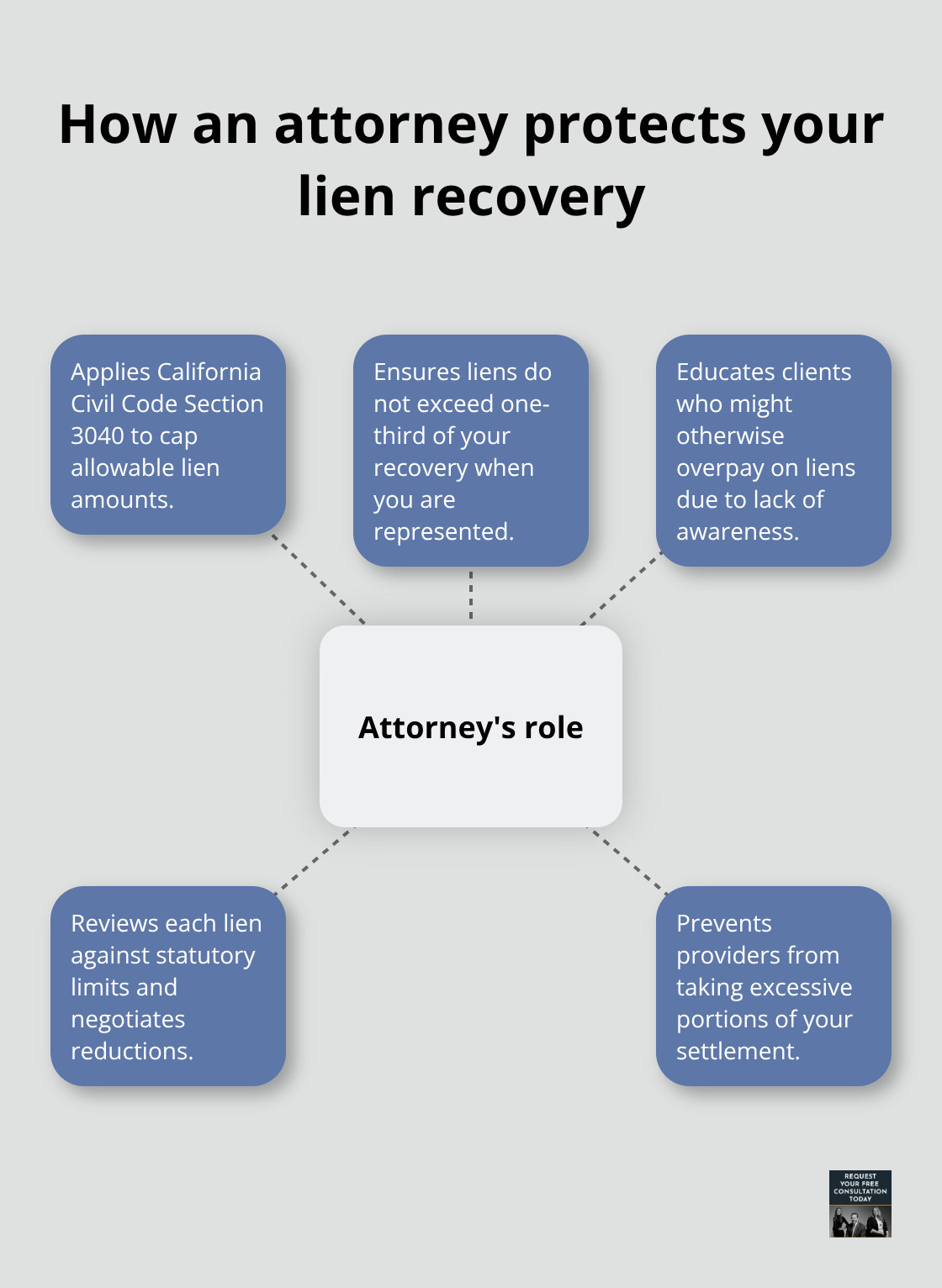
An attorney reviews every lien against these statutory limits and fights for reductions that protect your net recovery. This legal framework exists specifically to prevent providers from taking excessive portions of your settlement.
Preventing Duplicate Billing and Overcharges
Coordination between your medical providers, the lien company, and your legal team prevents duplicate billing and catches overcharges before they reduce your settlement. If a hospital bills $85,000 in total medical expenses but the provider’s lien company attempts to claim $95,000, an attorney identifies the discrepancy and corrects it. You hold the power to question whether all charges relate directly to your accident injuries, and legal representation ensures providers cannot inflate their claims without justification.
Managing Health Insurance Subrogation Claims
Your attorney also manages subrogation claims from your health insurance, which operates separately from liens but has the same effect of reducing your final payout. When health insurers pay medical bills during your treatment, they often demand reimbursement from your settlement. California’s made whole doctrine prevents insurers from recovering if you would be under-compensated, but only if an attorney properly asserts this protection. Without legal representation, insurers routinely recover amounts they shouldn’t. An attorney negotiates these subrogation claims downward and protects you from paying twice for the same medical care.
Coordinating Timelines and Final Distribution
Since most Santa Cruz County accident cases settle within 6-18 months, timing matters for lien management. Your attorney tracks when liens mature, communicates with providers about payment timelines, and coordinates the final distribution so you understand exactly what you receive after all deductions. This transparency prevents the common mistake of expecting a $100,000 settlement only to discover liens and subrogation reduce it to $60,000. When you know the actual numbers upfront, you can plan accordingly and avoid financial surprises when settlement funds arrive.
Final Thoughts
Medical liens in Santa Cruz remove the barrier between you and the care you need after an accident. Instead of choosing between treatment and financial hardship, you can receive immediate medical attention while your case moves forward. The key is understanding that liens reduce your final settlement, so negotiating them downward and documenting every medical visit protects what you actually receive. California law caps these liens at one-third of your recovery if you have an attorney-a protection most accident victims never learn about.
The real damage happens when you handle liens alone. Providers submit inflated charges, health insurers demand subrogation payments, and duplicate billing goes unchallenged. An attorney prevents this by reviewing every charge, challenging overages, and coordinating with providers to ensure accurate billing throughout your case. We at Schaar & Silva LLP connect you to medical lien services, evaluate your medical bills for accuracy, and negotiate lien amounts to maximize your net recovery.
If you have been in an accident in Santa Cruz County, contact us today. Visit Schaar & Silva LLP to discuss your case and learn how we protect your settlement from excess liens.
