
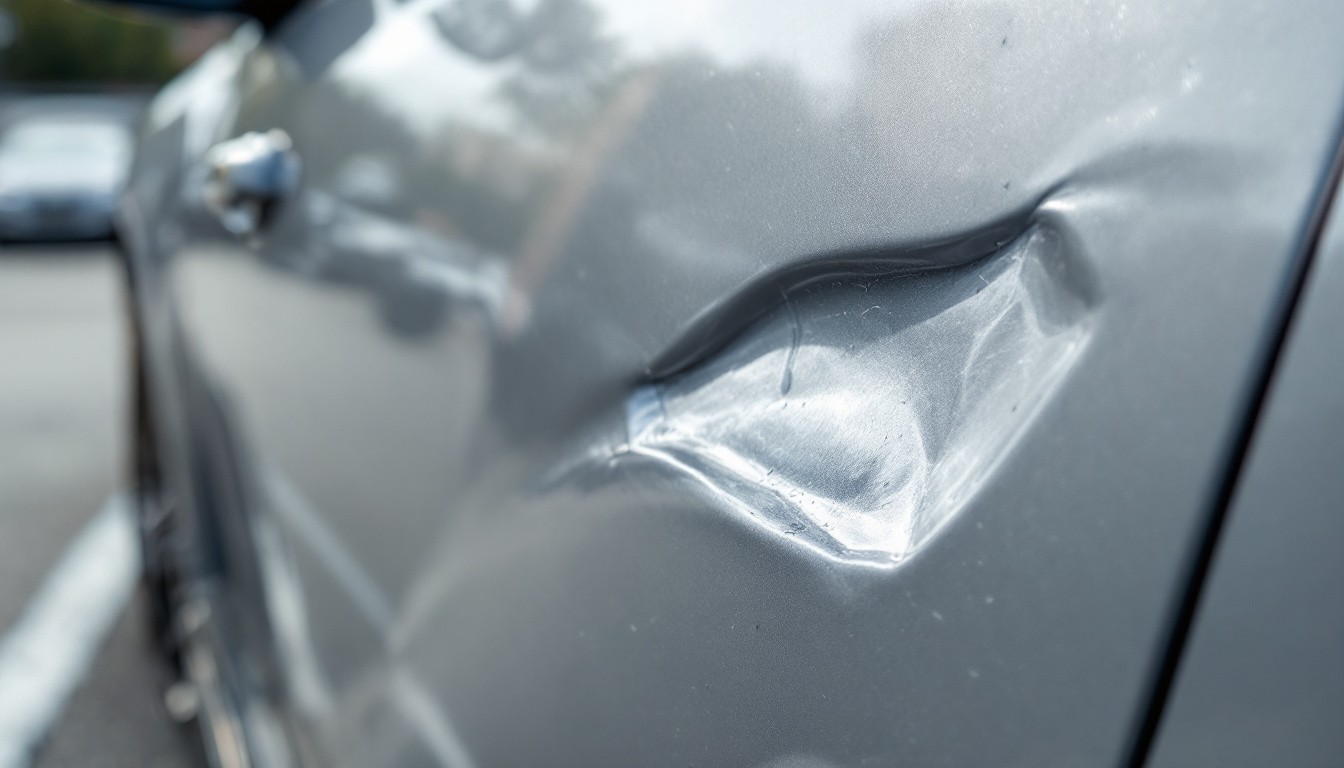
Even a small parking lot bump can cost you thousands when it’s time to sell your car. Do minor accidents affect car value? The answer is yes, and the impact goes far beyond the initial repair costs.
We at Schaar & Silva LLP see how accident history follows vehicles for years, affecting everything from trade-in offers to private sales. Understanding these effects helps you make better decisions after any collision.
How Much Value Do Minor Accidents Really Cost?
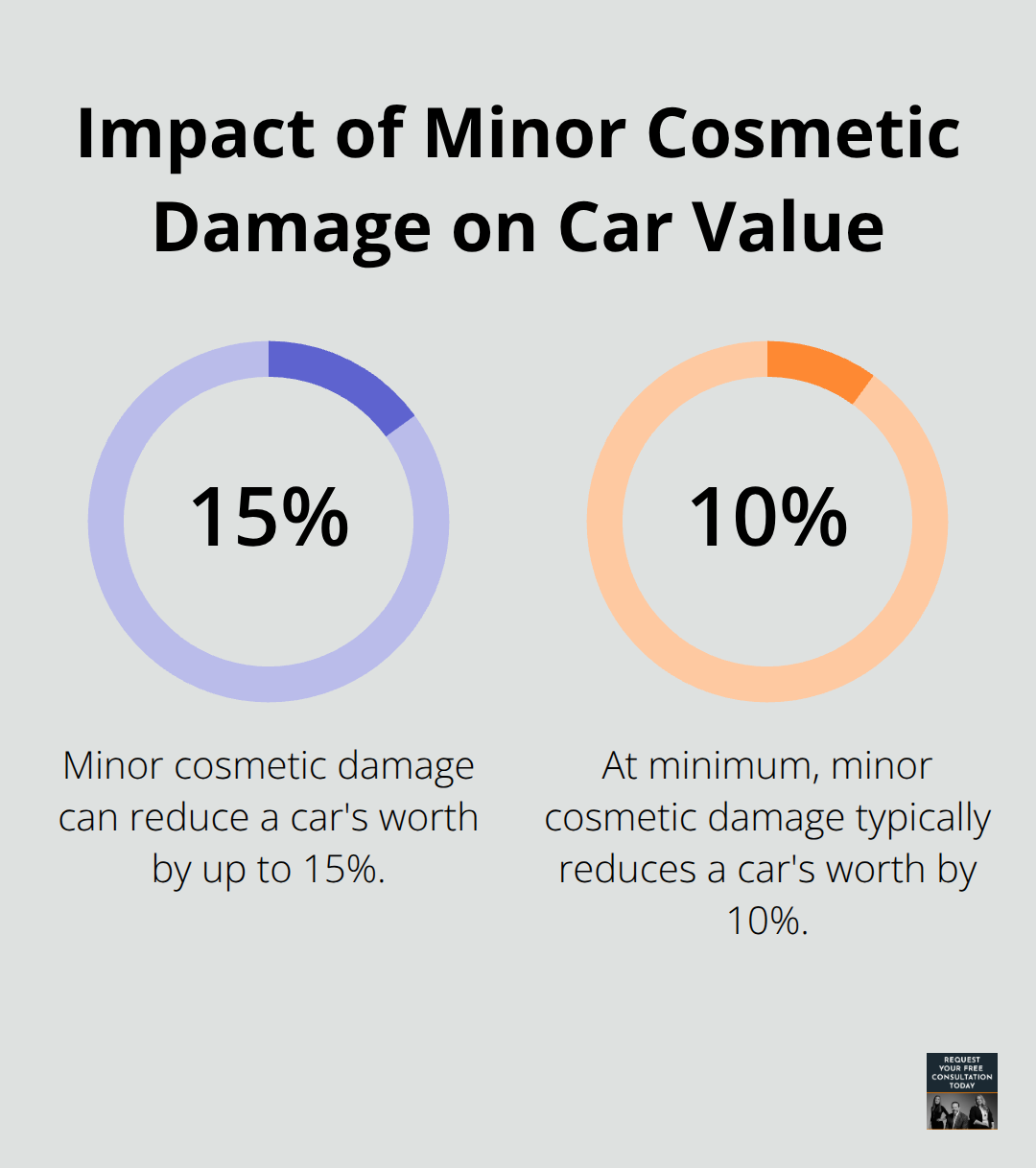
Your car loses value the moment someone reports an accident, regardless of how minor the damage appears. Research from the National Automobile Dealers Association shows that vehicles can lose 10% to 30% of their pre-accident value, with minor cosmetic damage typically reducing worth by 10% to 15%. This depreciation happens instantly and permanently affects your vehicle’s market position.
Accident Reports Create Permanent Records
Once an accident appears on Carfax or similar vehicle history reports, that information stays there forever. Studies indicate that up to 33% of buyers walk away from used car purchases when they discover any accident history. Minor fender-benders that cost $2,000 to repair can reduce your car’s value by $4,000 to $6,000 at resale. The stigma that buyers attach to accident reports often outweighs the actual damage severity.
Trade-In Offers Drop Significantly
Dealerships typically offer 15% to 25% less for vehicles with accident history during trade-ins, while private buyers may negotiate 10% to 20% discounts. Luxury vehicles experience steeper depreciation after accidents due to buyer expectations for perfection. Kelley Blue Book research consistently shows that buyers offer lower prices for accident-history vehicles regardless of repair quality. Your negotiation power weakens significantly once accident history becomes known (whether you sell privately or trade at a dealership).
Structural Damage Creates Market Penalties
Vehicles with structural damage or airbag deployment face the harshest market penalties, often losing 25% or more of their value. Frame damage reports can make cars nearly unsellable in competitive markets, forcing owners to accept drastically reduced offers or keep vehicles longer than planned. These severe impacts highlight why the quality of repairs and documentation becomes so important in protecting your investment.
What Really Determines Your Car’s Value Loss
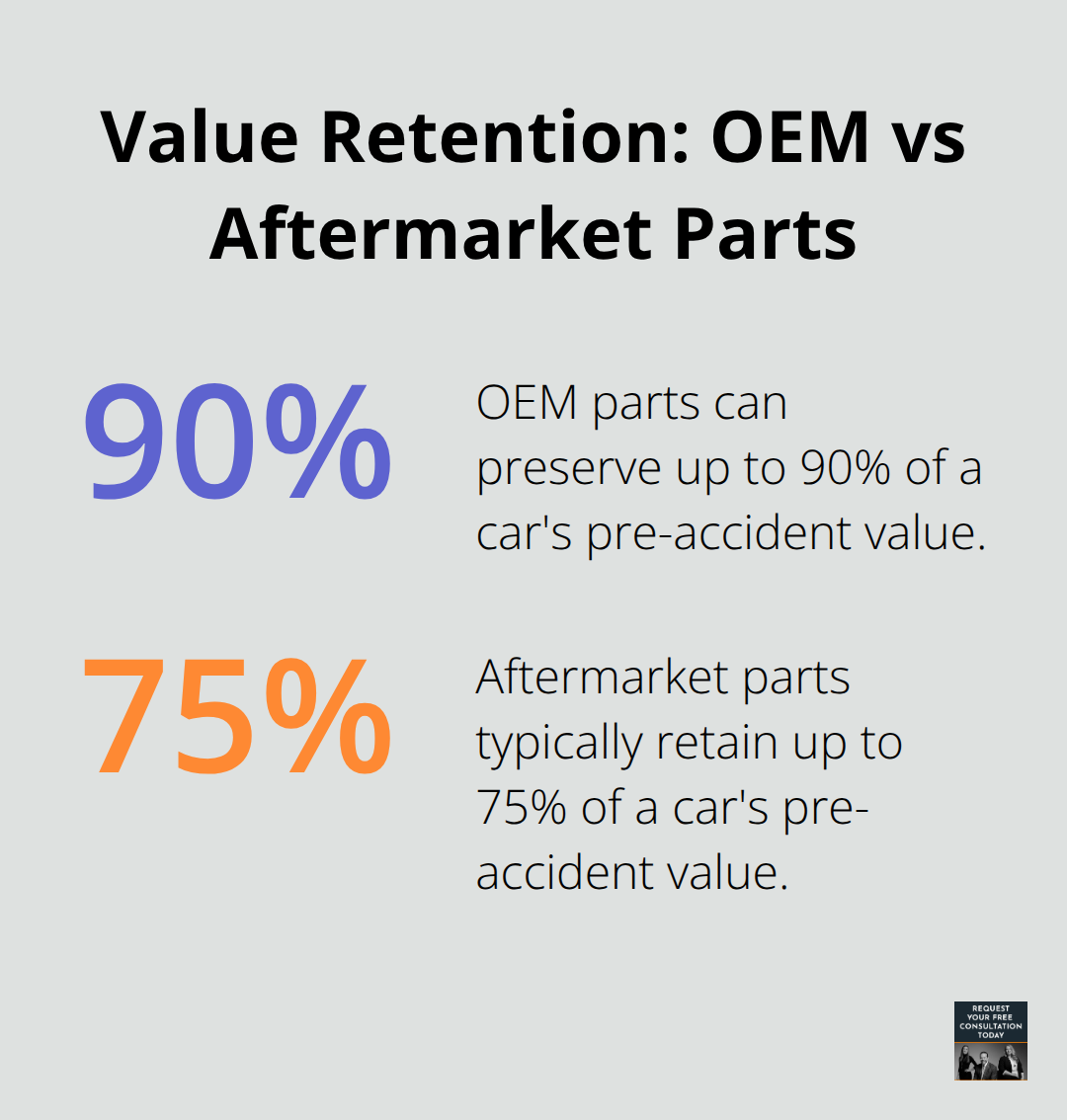
The quality of repairs performed on your vehicle after an accident directly controls how much value you lose. Original Equipment Manufacturer parts preserve 85% to 90% of your car’s pre-accident value, while aftermarket parts only retain 70% to 75% according to industry data. Poor repair quality creates visible defects like paint mismatches or panel gaps that buyers immediately notice and use to negotiate lower prices. Certified collision centers command higher prices because buyers trust their adherence to manufacturer repair procedures, which translates to higher resale offers.
Vehicle History Reports Control Market Perception
Whether your accident appears on Carfax or AutoCheck reports makes the difference between market value sales and significant discounts. These reports document every reported accident permanently and create stigma that affects resale value for years. Vehicles with clean history reports sell for 15% to 20% more than those with documented repairs. Insurance companies often report accidents when claims exceed $1,000 (making minor incidents appear on these reports). Your vehicle’s marketability decreases substantially once buyers see accident history, regardless of repair quality.
Age and Mileage Multiply Value Loss
Newer vehicles lose more absolute value after accidents but may retain higher percentages of their worth compared to older cars. The 17c Formula used by insurance companies applies mileage multipliers that reduce diminished value calculations, with vehicles over 100,000 miles receiving a multiplier of zero. Luxury vehicles under three years old experience the steepest depreciation after accidents due to buyer expectations and market alternatives. High-mileage vehicles already face depreciation pressure, so accident history compounds existing value loss and extends time on market significantly.
Documentation Quality Affects Recovery Options
Professional appraisals conducted within 30 days of an accident establish baseline value loss that influences insurance negotiations. Independent appraisers charge $400 to $600 but can recover $3,000 to $8,000 more in settlement value with comprehensive evaluations. Detailed maintenance records increase buyer confidence and can boost resale value by 15% to 20% compared to vehicles without complete repair documentation. Smart documentation practices (such as before-and-after photos and repair histories) become your strongest tools when protecting your investment and maximizing recovery from insurance claims.
How Can You Protect Your Car’s Value After an Accident
Take photos immediately after any accident, even minor ones. Document vehicle damage from multiple angles, capture license plates, and photograph the accident scene before cars move. Take pictures of both vehicles’ positions, street signs, and any relevant traffic conditions. Insurance companies process claims faster when you provide comprehensive visual evidence, and detailed photos become your strongest defense against lowball settlement offers. Request police reports for accidents that involve injuries or significant damage, as these official documents carry more weight than personal statements during insurance negotiations.
Choose OEM Parts and Certified Repair Shops
Insist on Original Equipment Manufacturer parts during repairs, as they preserve 85% to 90% of your vehicle’s pre-accident value compared to 70% to 75% for aftermarket alternatives. Select collision centers that your vehicle’s manufacturer certifies, as these shops follow factory repair procedures that buyers trust. Avoid the cheapest repair options, which often use inferior materials and create visible defects like paint mismatches or panel gaps. Quality repairs cost more upfront but protect thousands in resale value. Get written guarantees on all repair work and paint matching (as these warranties transfer to future buyers and increase their confidence in your vehicle’s condition).

Maintain Complete Documentation Files
Create a dedicated folder that contains all accident-related paperwork, including police reports, insurance correspondence, repair estimates, and final invoices. Keep before-and-after photos that show repair quality, and maintain detailed records of all maintenance performed after the accident. Professional appraisals conducted within 30 days of accidents establish baseline value loss and strengthen insurance negotiations. Independent appraisers charge $400 to $600 but often recover $3,000 to $8,000 more in settlements through comprehensive evaluations.
Store Digital Copies Safely
Store digital copies of all documents in cloud storage (as complete repair histories can increase resale value by 15% to 20% compared to vehicles without proper documentation). Create backup files on multiple devices to prevent loss of important paperwork. Organize files by date and category to make information easy to access when you sell or trade your vehicle. Digital storage also allows you to share documentation quickly with potential buyers or insurance adjusters when needed.
Final Thoughts
Do minor accidents affect car value? The evidence shows they absolutely do. Minor accidents reduce worth by 10% to 15% even after quality repairs. Your vehicle loses value the moment someone reports an accident, and this depreciation becomes permanent once it appears on Carfax or similar history reports.
The financial impact extends beyond repair costs. Buyers consistently offer lower prices for vehicles with accident history, and up to 33% may walk away entirely. Trade-in values drop 15% to 25% at dealerships, while private sales face similar discounts. Quality repairs with OEM parts and certified collision centers help preserve value, but proper documentation becomes your strongest protection.
Professional appraisals within 30 days establish baseline losses and strengthen insurance negotiations (complete repair records can boost resale value by 15% to 20%). When you face significant value loss after an accident, professional legal guidance becomes valuable. We at Schaar & Silva LLP help Santa Cruz County residents navigate property damage claims and obtain fair valuations for their losses.
