
Car accidents don’t just damage your vehicle – they permanently reduce its market value. Even minor fender-benders can decrease your car’s worth by thousands of dollars.
At Schaar & Silva LLP, we see how accidents affect car value every day through our clients’ cases. Understanding this impact helps you make informed decisions about repairs and insurance claims.
How Fast Does Your Car Lose Value After an Accident
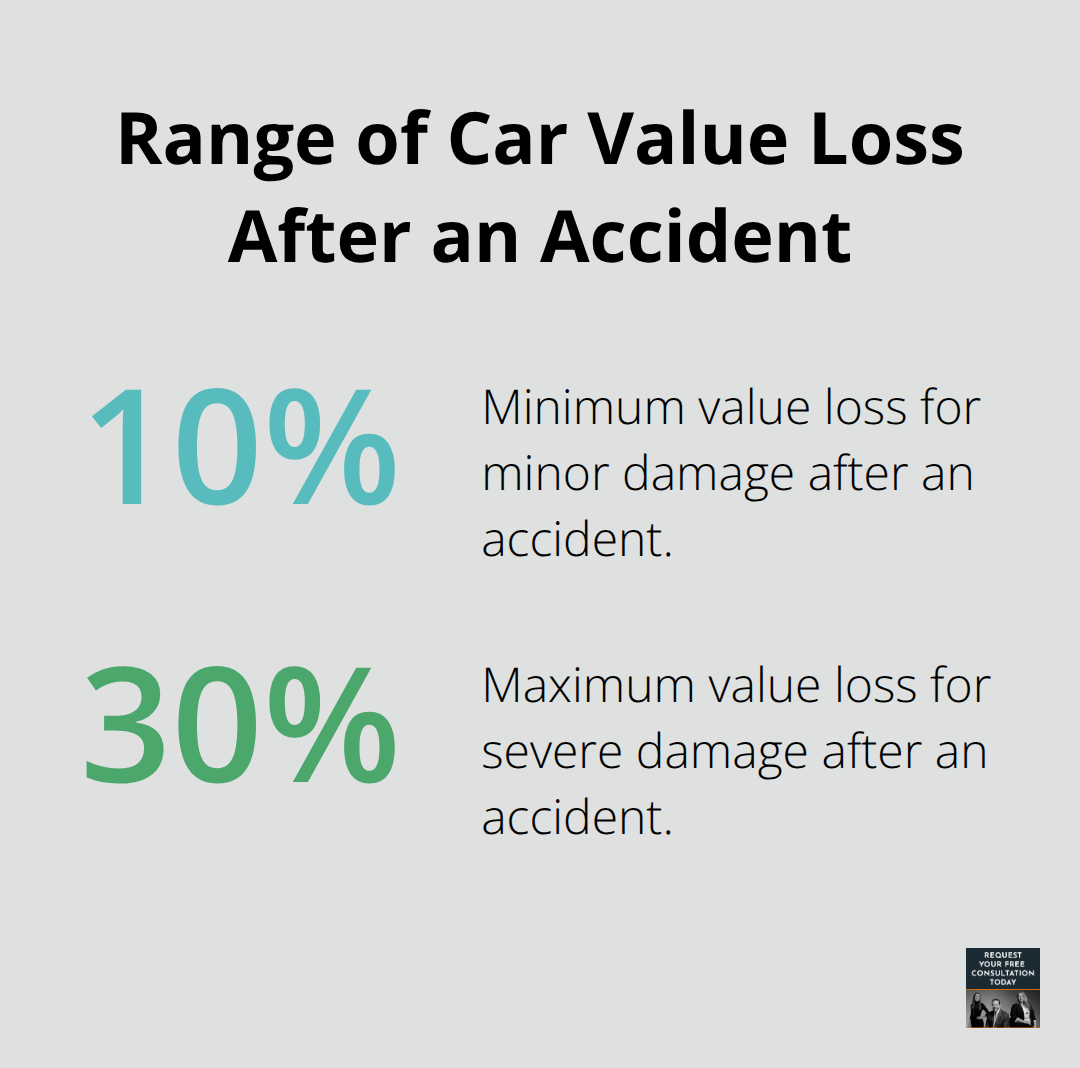
Your vehicle starts to lose value the moment another car hits it, even before any repairs begin. This immediate depreciation happens regardless of fault and occurs instantly when insurance companies receive the accident report. The National Automobile Dealers Association data shows that vehicles can lose 10% to 30% of their pre-accident value based on damage severity, with luxury cars that experience steeper drops than standard models.
Damage Severity Creates Different Value Impacts
Minor cosmetic damage typically reduces value by 10% to 15%, while structural damage pushes losses to 25% or higher. Frame damage represents the worst scenario for value retention because buyers fear hidden problems that could surface later. Carfax reports reveal that vehicles with airbag deployment history sell for significantly less than those without, as deployment indicates more severe impact forces. The 17c Formula that insurance companies use calculates base value loss at 10% of pre-accident worth, then applies damage multipliers that range from 0.00 for minor scratches to 1.00 for severe structural damage.
Accident History Follows Your Vehicle Forever
Vehicle history reports from Carfax and similar services permanently document every reported accident, which creates a stigma that affects resale value years later. Kelley Blue Book research indicates that buyers consistently offer lower prices for accident-history vehicles, even when repairs meet factory standards. This stigma damage means your car will never command the same price as an identical vehicle with a clean history, regardless of repair quality or time that passes since the accident.
Multiple Factors Compound the Value Loss
The type of damage, repair quality, and market conditions all work together to determine your final value loss. Vehicles that require aftermarket parts (rather than original manufacturer parts) face additional depreciation because buyers question long-term reliability. Age and mileage also play roles – newer vehicles with low mileage typically lose more absolute value but may retain a higher percentage of their worth compared to older cars. Understanding these factors helps you make better decisions about repair options and insurance settlements.
What Determines How Much Value Your Car Loses
Structural damage creates the most devastating impact on your car’s value because it signals fundamental safety concerns to future buyers. Frame damage, bent chassis components, and compromised crumple zones can reduce your vehicle’s worth by 50% or more, even with professional repairs. Insurance companies apply the highest damage multipliers to structural issues, with the 17c Formula assigning values between 0.75 and 1.00 for severe frame damage (compared to 0.25 for minor cosmetic issues).
Repair Quality Makes or Breaks Resale Value
Original Equipment Manufacturer parts maintain significantly higher resale values than aftermarket alternatives. OEM repairs typically preserve 85% to 90% of pre-accident value versus 70% to 75% for aftermarket repairs. Certified collision centers that follow manufacturer repair procedures command premium prices because buyers trust their work quality. Poor repair execution creates compound value loss – first from the accident itself, then additional depreciation from substandard workmanship that buyers can spot through paint mismatches, panel gaps, or rattling components.

Documentation Controls Your Vehicle’s Future Worth
Carfax and AutoCheck reports permanently record every insurance claim, police report, and repair facility visit. These services create an unalterable digital history that follows your car forever. Vehicles with detailed maintenance records and professional repair documentation sell for 15% to 20% more than those with incomplete histories. Smart owners maintain comprehensive files including repair estimates, parts receipts, and before-and-after photos to demonstrate quality workmanship to potential buyers.
Age and Mileage Multiply Value Loss
Newer vehicles with low mileage typically lose more absolute value but may retain a higher percentage of their worth compared to older cars. The 17c Formula applies mileage multipliers that range from 1.0 for vehicles under 19,000 miles to 0.4 for those over 100,000 miles. Luxury vehicles face steeper depreciation after accidents because buyers expect perfection in high-end purchases and have more alternatives to choose from in the market.
These value loss factors work together to determine your final settlement amount, which leads directly to strategies you can use to protect your investment after an accident occurs.
How Can You Protect Your Car’s Value After an Accident
Your repair decisions in the first 48 hours after an accident determine whether you lose 15% or 50% of your vehicle’s value. Insurance-certified repair shops that use Original Equipment Manufacturer parts preserve 85% to 90% of pre-accident value, while body shops that rely on aftermarket components reduce retained value to just 70%. The National Automobile Dealers Association confirms that OEM parts maintain warranty coverage and factory specifications, which buyers recognize when they evaluate used vehicles.
Choose Quality Repair Facilities and Parts
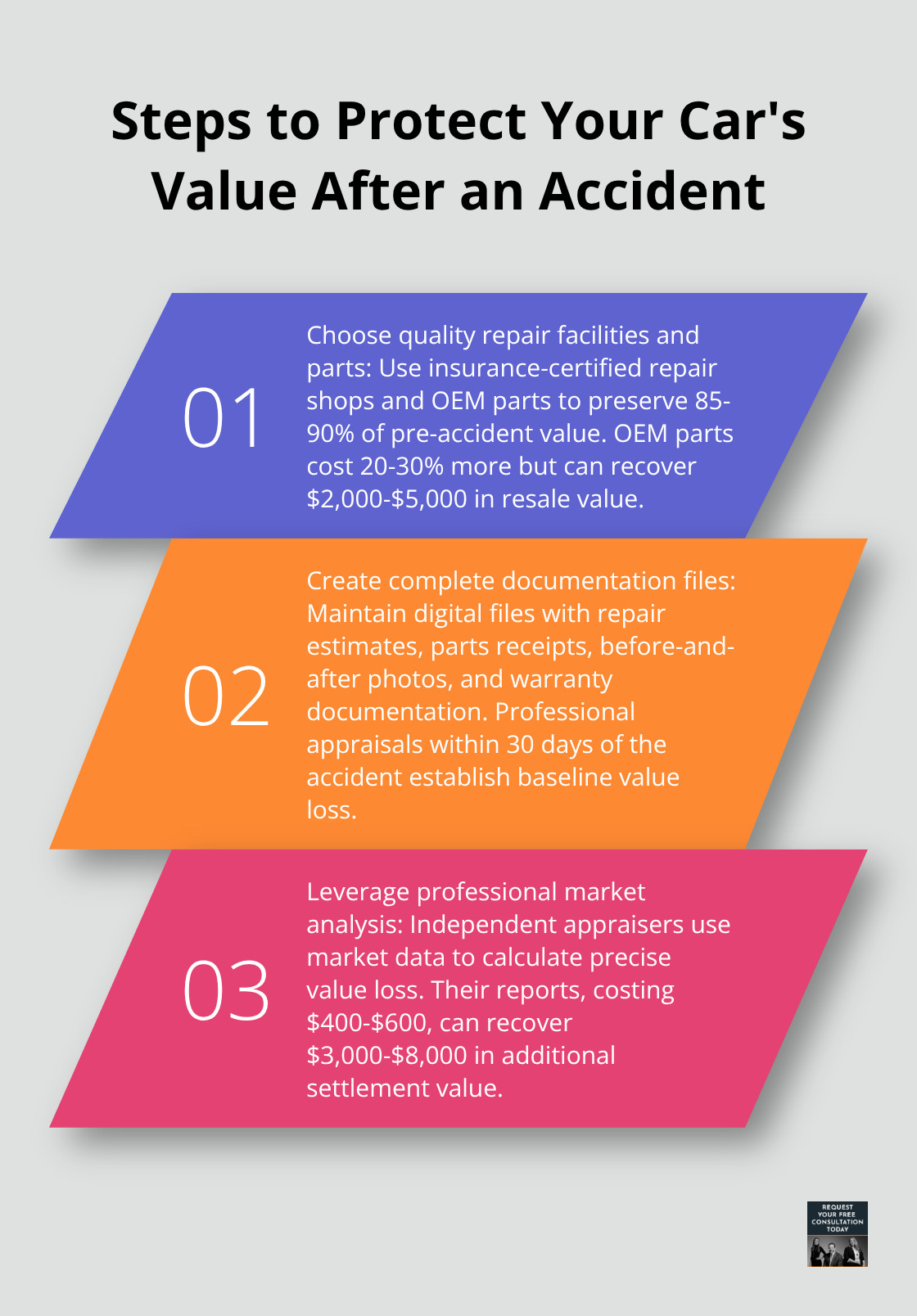
Certified collision centers follow manufacturer repair procedures and provide warranties that transfer to future owners. These facilities create measurable value protection that generic shops cannot match. OEM parts cost 20% to 30% more than aftermarket alternatives, but this investment typically recovers $2,000 to $5,000 in additional resale value for most vehicles. Insurance companies often push aftermarket parts to reduce claim costs, but you can demand OEM components if you pay the difference upfront.
Create Complete Documentation Files
Professional appraisals conducted within 30 days of your accident establish baseline value loss that insurance companies must acknowledge. Independent automotive appraisers certified by the American Society of Appraisers charge $400 to $600 for comprehensive evaluations, but their reports typically recover $3,000 to $8,000 in additional settlement value. Maintain digital files that contain repair estimates, parts receipts, before-and-after photos, and warranty documentation.
Leverage Professional Market Analysis
Independent appraisers use market data from NADA and Kelley Blue Book to calculate precise value loss with the 17c Formula, then adjust for local market conditions that insurance adjusters often ignore. Their written reports include comparable vehicle sales, repair quality assessments, and projected resale impact that transforms insurance negotiations from guesswork into data-driven discussions. Vehicles with complete repair histories sell for 15% to 20% more than those with missing paperwork (Carfax reports permanently record every insurance claim, so transparent documentation actually increases buyer confidence rather than hides problems that surface during inspections).
Final Thoughts
Accidents affect car value immediately and permanently, with losses that range from 10% for minor damage to over 50% for structural issues. Vehicle history reports document every collision forever, which creates stigma that reduces resale prices regardless of repair quality. Smart vehicle owners who understand how do accidents affect car value make better decisions about repairs and insurance claims.
Quality repairs with OEM parts and certified collision centers preserve thousands more in resale value than budget alternatives. Professional documentation including appraisals and repair records creates transparency that buyers reward with higher purchase offers. These upfront investments typically recover far more money during resale than their initial costs (making them financially smart decisions for most vehicle owners).
Property damage claims become complex when insurance companies undervalue losses or push inferior repair options. We at Schaar & Silva LLP help Santa Cruz County residents navigate these challenges and work to secure fair valuations that reflect true vehicle value loss. When insurance settlements fall short of actual damages, legal representation becomes necessary to protect your rights and recover appropriate compensation.