

Hip injuries rank among the most serious consequences of vehicle collisions in Santa Cruz County. These injuries often require extensive medical treatment and can leave victims facing months of recovery time.
We at Schaar & Silva LLP understand how a hip injury after car accident can completely disrupt your life and finances. The path to recovery involves both medical care and protecting your legal rights to compensation.
Common Types of Hip Injuries from Car Accidents
Car crashes cause three distinct categories of hip injuries that demand immediate medical attention. Hip fractures represent the most severe type, with over 300,000 Americans aged 65 and older hospitalized annually for hip fractures according to national health data. These fractures often occur in the hip socket or femoral neck and typically require surgical intervention within 24 hours to prevent complications.

The recovery time extends 6-12 months, with many patients needing hip replacement surgery.
Hip Bone Breaks and Socket Damage
Acetabular fractures affect the hip socket where the thigh bone connects to the pelvis. These injuries happen when the knee strikes the dashboard during frontal impacts, transmitting force directly through the femur to the hip socket. The fracture pattern determines treatment options, with simple fractures healing in 8-12 weeks while complex fractures require reconstructive surgery. Weight-bearing restrictions last 3-4 months after surgery (making these injuries particularly costly for working adults).
Joint Displacement and Cartilage Tears
Hip dislocations occur when the femoral head separates from the hip socket, creating an orthopedic emergency. Posterior dislocations account for 85% of cases and happen during rear-end collisions when passengers brace against the dashboard. The dislocation must be reduced within 6 hours to prevent permanent nerve damage and blood supply loss to the femoral head. Even successful reduction leads to a 20% risk of developing arthritis within 5 years (highlighting the long-term consequences).
Muscle and Tendon Damage
Bursitis affects the fluid-filled sacs that cushion the hip joint and causes persistent pain that worsens with movement. This condition often gets misdiagnosed as muscle strain, delaying proper treatment for weeks. Hip flexor strains and IT band injuries create chronic pain patterns that interfere with walking and sitting. Physical therapy takes 6-8 weeks for mild strains but severe tears may require 4-6 months of rehabilitation before patients return to normal activities.
The severity of these injuries makes prompt medical evaluation essential, but understanding your treatment options (and their associated costs) becomes equally important for your recovery journey.
Medical Treatment and Recovery Process
Emergency departments prioritize hip injury patients based on the mechanism of injury and pain severity scores. Trauma protocols require X-rays within 30 minutes of arrival, followed by CT scans if fractures appear displaced or complex. Pain management begins immediately with IV medications, but doctors avoid muscle relaxants initially because they can mask neurological symptoms that indicate nerve damage. The first 6 hours determine whether surgical intervention becomes necessary, which makes rapid diagnosis absolutely critical for long-term outcomes.
Surgical Intervention Timeline and Success Rates
Hip fracture surgery must occur within 24 hours to prevent complications, according to orthopedic surgery standards. Partial hip replacements take 2-3 hours and show 95% success rates for mobility restoration within 6 months. Total hip replacements require 3-4 hours of surgery time and cost $40,000-$60,000 in Santa Cruz County hospitals. Acetabular reconstruction surgery takes 4-6 hours and requires 12 weeks of non-weight-bearing recovery. Surgeons use titanium implants that last 20-25 years, but patients under 50 face a 30% chance of needing revision surgery during their lifetime.
Recovery Phases and Physical Therapy Milestones
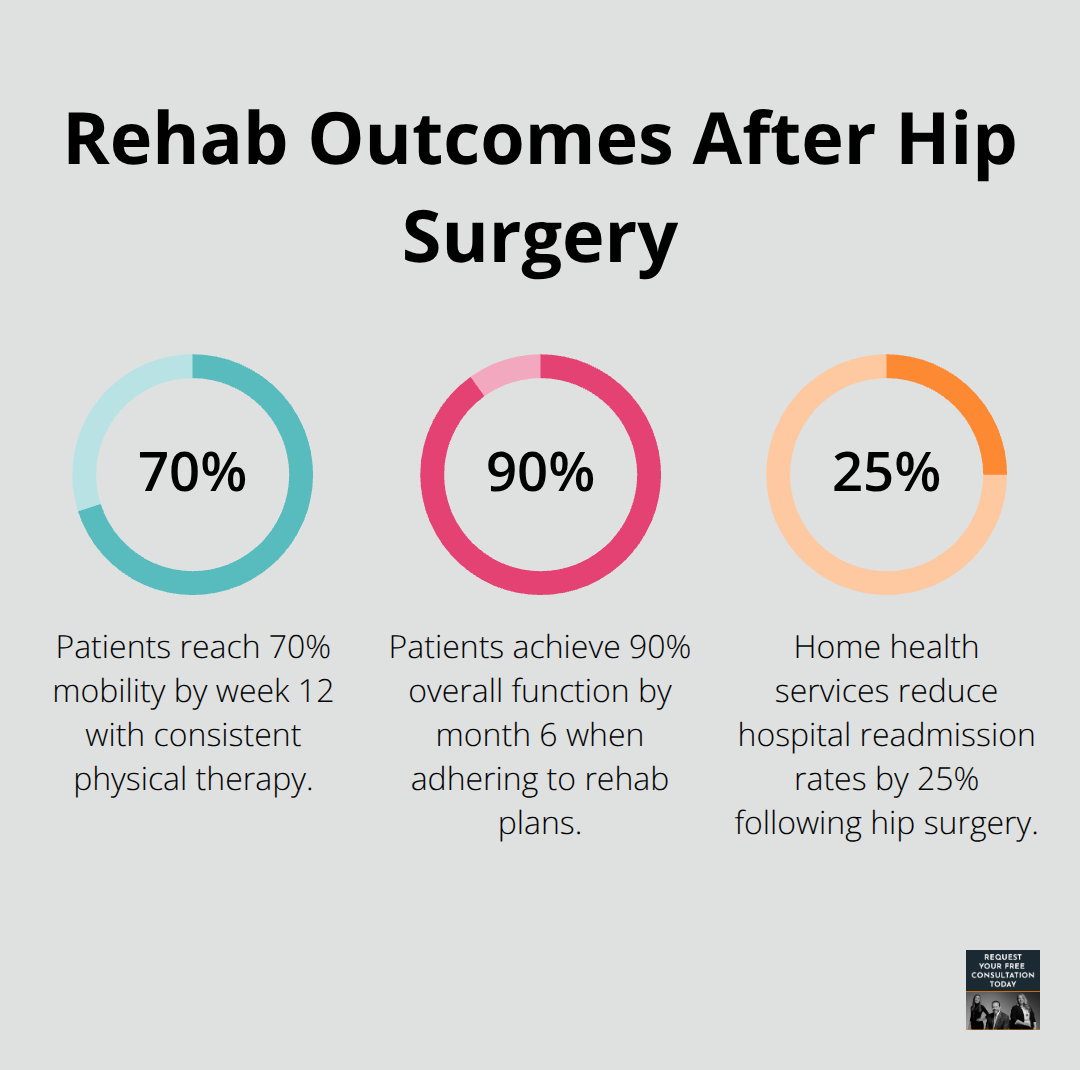
Physical therapy begins 24-48 hours after surgery with bed exercises and progresses to walking with assistants by day 3. The acute phase lasts 6-8 weeks with therapy sessions 3 times weekly at $150-$200 per session. Patients achieve 70% mobility by week 12 and 90% function by month 6 with consistent therapy attendance. Home health services cost $200-$300 per visit but reduce hospital readmission rates by 25%.
Return to work timelines vary dramatically: desk jobs resume at 8-12 weeks while manual labor requires 4-6 months of recovery time.
Long-Term Care and Complications
Post-surgical complications affect 15-20% of hip injury patients and include infections, blood clots, and implant loosening. Patients develop post-traumatic arthritis in 25% of cases within 2 years after the initial injury (even with successful surgery). Chronic pain management becomes necessary for 30% of patients who experience persistent discomfort beyond the standard recovery period. Regular follow-up appointments every 3-6 months monitor implant stability and joint function throughout the first two years.
These extensive medical costs and recovery challenges highlight why proper insurance coverage and compensation for injuries become essential components of your overall treatment and recovery process.
Legal Rights and Compensation Options
California insurance companies receive hip injury claims worth an average of $85,000 per case, but they typically offer initial settlements of just $25,000-$35,000. Your insurance company has 40 days to respond to your claim under California law, but they often request multiple medical records to delay payment. Personal Injury Protection coverage in California pays up to $2,500 for medical expenses, which covers less than one week of hip surgery costs. The key mistake victims make involves acceptance of the first settlement offer without calculation of their total losses.
Initial Insurance Response and Coverage Limits
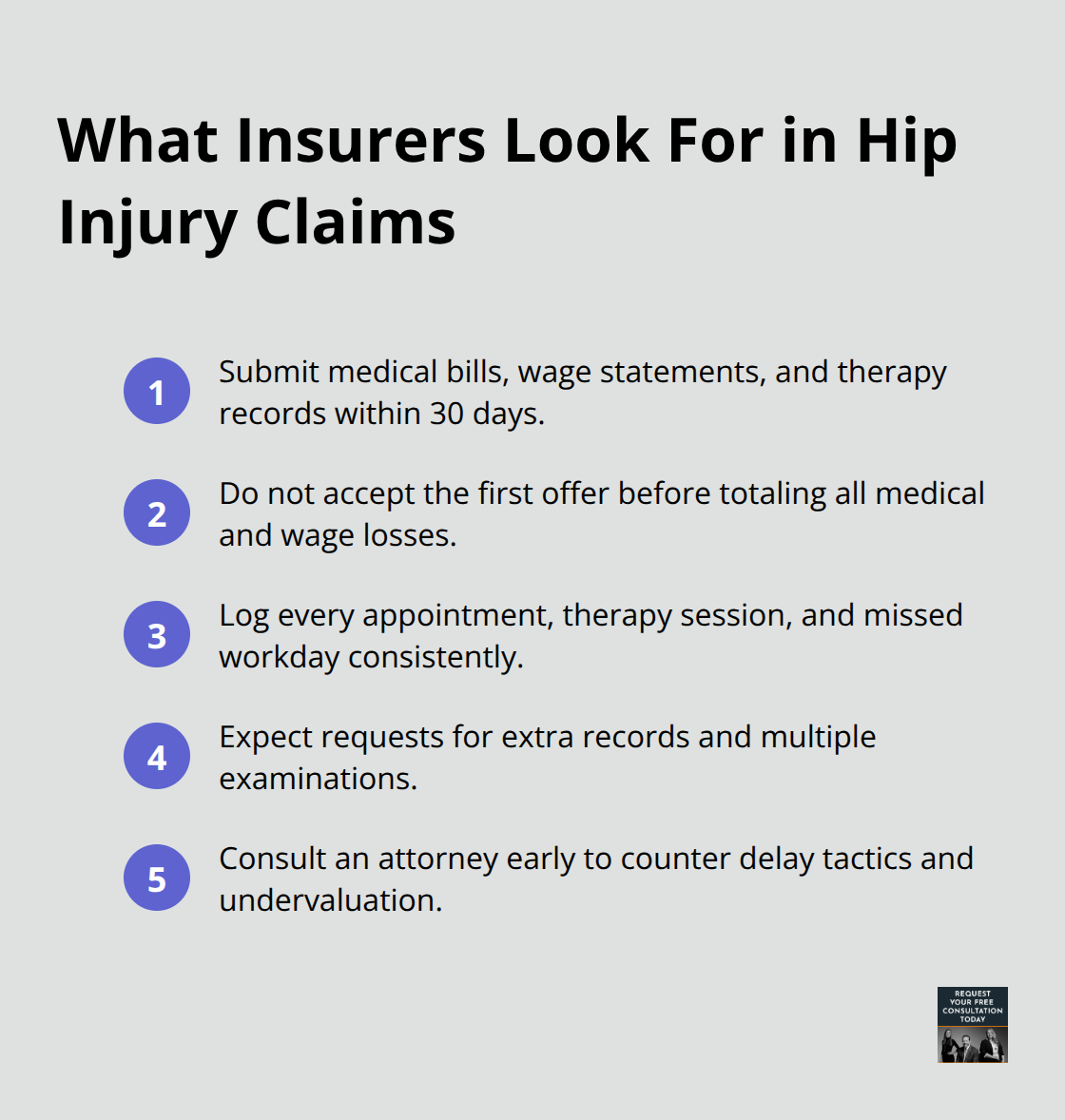
Hip injury cases in Santa Cruz County settle for an average of $120,000-$180,000 when properly documented, but you need medical bills, wage statements, and therapy records within 30 days of your accident. Insurance adjusters use delay tactics to pressure victims into quick settlements before the full extent of injuries becomes clear. They request unnecessary documentation and schedule multiple medical examinations to create frustration and financial pressure.
Calculation of Your True Financial Losses
Lost wage calculations must include overtime, bonuses, and benefits that total 30-40% more than base salary for most workers. Hip surgery patients miss an average of 16 weeks of work, which creates $25,000-$45,000 in lost income for Santa Cruz County residents who earn median wages. Future medical costs become significant because 25% of hip injury patients need revision surgery within 10 years at $60,000-$80,000 per procedure.
Pain and suffering damages in California average 3-5 times your medical expenses for permanent injuries, but insurance companies start negotiations at 1.5 times medical costs. Document every medical appointment, therapy session, and day off work because insurance adjusters challenge any gaps in your records.
Professional Legal Representation Benefits
Attorneys increase settlement amounts by 40-60% compared to self-representation according to Insurance Research Council data. The statute of limitations for personal injury claims in California is two years from the accident date, but evidence disappears quickly after crashes. Insurance companies assign their most experienced adjusters to cases without legal representation because unrepresented victims accept lower settlements 80% of the time.
Hip injury cases require immediate action because medical liens, property damage claims, and witness statements must be secured within the first 60 days after your accident (when memories remain fresh and documentation stays accessible).
Final Thoughts
Hip injury after car accident cases require immediate action on both medical and legal fronts. Medical attention within hours of your crash prevents complications that affect 15-20% of patients who delay treatment. The 24-hour surgical window for hip fractures determines whether you achieve full recovery or face permanent disability.
California’s two-year statute of limitations starts immediately, but evidence disappears quickly after accidents. Insurance adjusters offer settlements that average $25,000-$35,000 while properly documented cases settle for $120,000-$180,000 in Santa Cruz County. Your legal rights have strict deadlines that insurance companies actively exploit.
Recovery demands both medical care and financial protection. Hip surgery costs $40,000-$60,000, with 16 weeks of lost wages that add $25,000-$45,000 to your losses (creating mounting bills while you cannot work). We at Schaar & Silva LLP help Santa Cruz County residents navigate these challenges. Contact us today to protect your rights and secure the compensation you need for complete recovery.
