
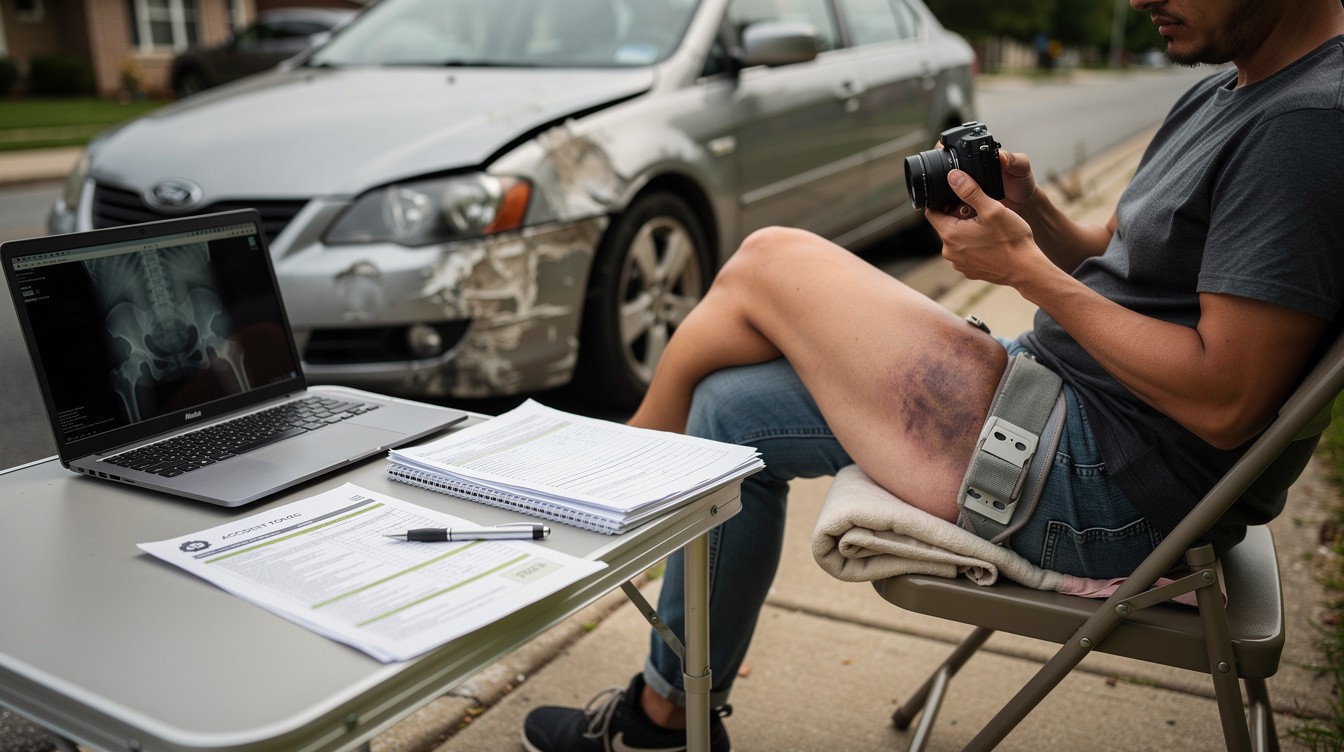
A hip injury after a crash can affect your ability to walk, work, and enjoy daily life. The path to recovery involves three critical steps: documenting what happened, getting proper medical diagnosis, and building a strong claim for fair compensation.
At Schaar & Silva LLP, we’ve helped countless accident victims in Santa Cruz County, Sacramento, and Oakland navigate this process. This guide walks you through each stage so you know exactly what to do next.
Document Your Hip Injury After a Crash
Photograph and Record the Accident Scene
The first hours after a hip injury from a crash are critical for building a strong claim. Most people focus on getting medical help, which is correct, but they overlook documenting the scene itself. Without scene documentation, insurance companies will question how the injury happened and may offer lower settlements.
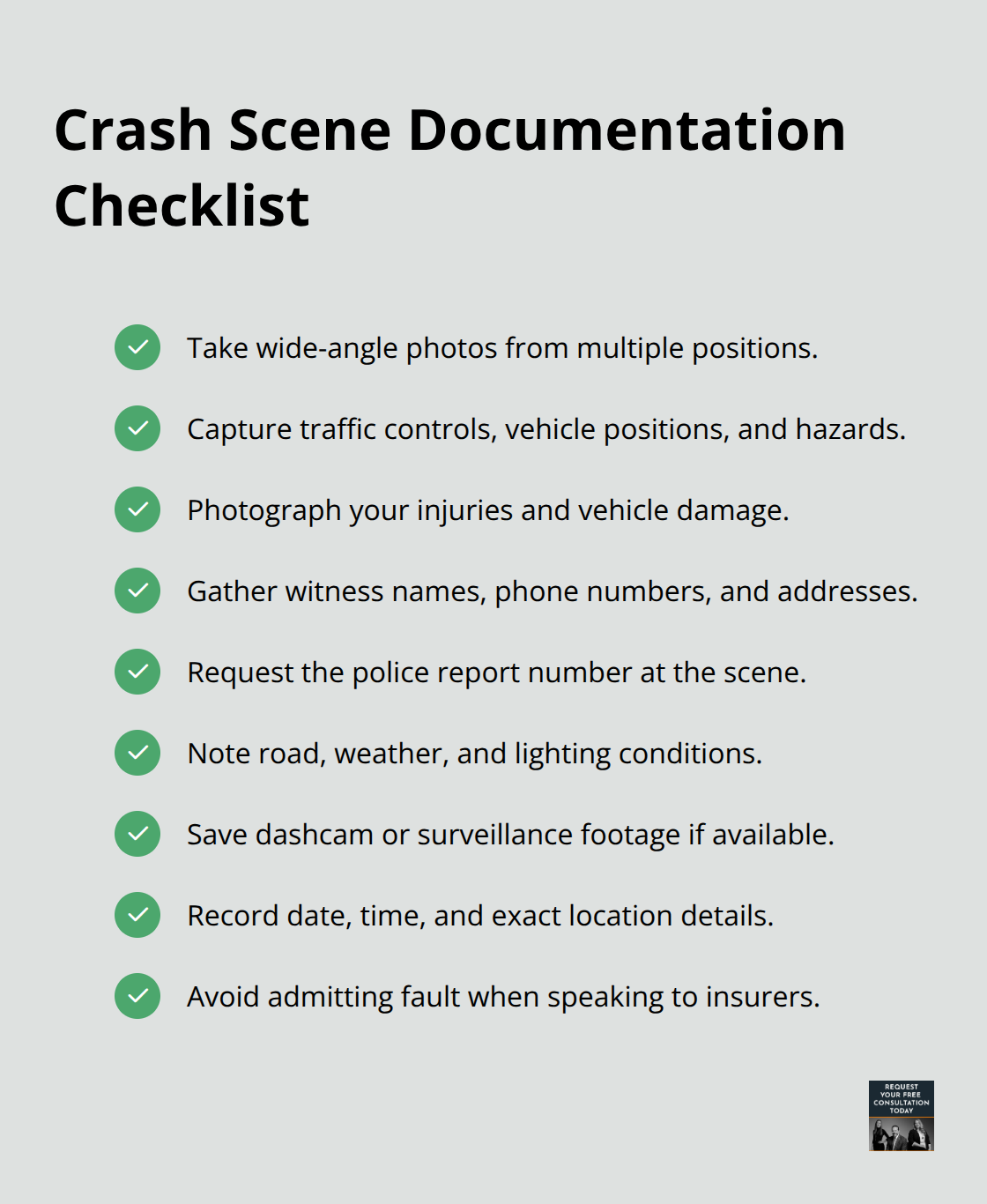
Take photos and videos of the accident location from multiple angles. Capture the road conditions, traffic signals, vehicle positions, and any hazards that contributed to the crash. If you can move safely, photograph your injuries and damaged vehicles. These images create a visual record that supports your account of what happened.
Collect Witness Information and Police Reports
Get the names, phone numbers, and addresses of witnesses at the scene, and ask them what they saw. Contact the police immediately and request the accident report number so you can obtain the official report later. This report becomes essential evidence when negotiating with insurers.
Report the accident to your insurance company within the timeframe specified in your policy (typically within 24 to 72 hours). State the facts in your statement but do not admit fault or speculate about what caused the crash. Insurance adjusters use your words against you, so stick to what you observed.
Seek Immediate Medical Evaluation
Seek medical attention as soon as possible, even if you feel fine initially. Hip injuries often develop delayed symptoms due to adrenaline masking pain; symptoms can emerge hours or days after the crash. Request that your doctor document the accident as the cause of your injury in your medical records.
Keep every receipt, prescription, imaging report, and medical bill in a dedicated folder. Create a timeline of your symptoms and medical visits, noting how the injury affects your daily activities like walking, working, or sleeping. This documentation becomes the foundation for calculating damages later.
Maintain Complete Financial Records
If you incur transportation costs to medical appointments, save those receipts too. Insurance companies scrutinize claims without complete medical records, so the more thorough your documentation, the stronger your negotiating position. The next step involves understanding what your hip injury actually is and how doctors diagnose it, which shapes both your treatment plan and your settlement value.
Understanding Your Hip Injury Diagnosis
After a crash, getting the right diagnosis matters more than most people realize. Hip injuries range from simple soft-tissue damage to serious fractures requiring surgery, and the difference between these conditions shapes both your recovery timeline and your settlement value. When you arrive at the hospital or doctor’s office, medical staff will ask detailed questions about how the crash happened, where you feel pain, and how your movement is limited. This information guides them toward the correct diagnosis.
Common Hip Injuries from Car Accidents
Car crashes produce several distinct hip injuries. Fractures of the femoral neck (the narrow section of bone connecting the hip joint to the thighbone), intertrochanteric fractures (breaks between the hip joint and the upper thighbone), and acetabular fractures (breaks in the hip socket itself) all require surgical intervention. Soft-tissue injuries like labral tears, bursitis, and ligament sprains also occur frequently. Hip dislocations result from blunt trauma, though they usually heal without invasive procedures. The challenge lies in timing: some injuries appear immediately while others emerge days later as swelling increases or adrenaline wears off. Seeking medical evaluation within hours of the crash, not days later, gives doctors a clearer picture of what actually happened to your hip.
Imaging Reveals the True Extent of Damage
Doctors cannot diagnose most hip injuries through physical examination alone. X-rays provide the first look at bone structure and detect obvious fractures, but they miss soft-tissue injuries entirely. CT scans create detailed cross-sectional images and identify complex fractures and hairline breaks that X-rays miss. MRI scans show soft-tissue damage like muscle tears, ligament injuries, and bursitis that CT and X-rays cannot detect.
Bursitis presents a particular challenge-it develops over time and causes pain that mimics joint damage, yet MRI alone reveals it. Request that your doctor order imaging appropriate to your symptoms. If your doctor orders only X-rays but you have ongoing pain without visible fractures on those images, ask specifically for MRI or CT imaging. Insurance companies sometimes push back on imaging costs, but documented imaging results prove injury severity and justify settlement demands.
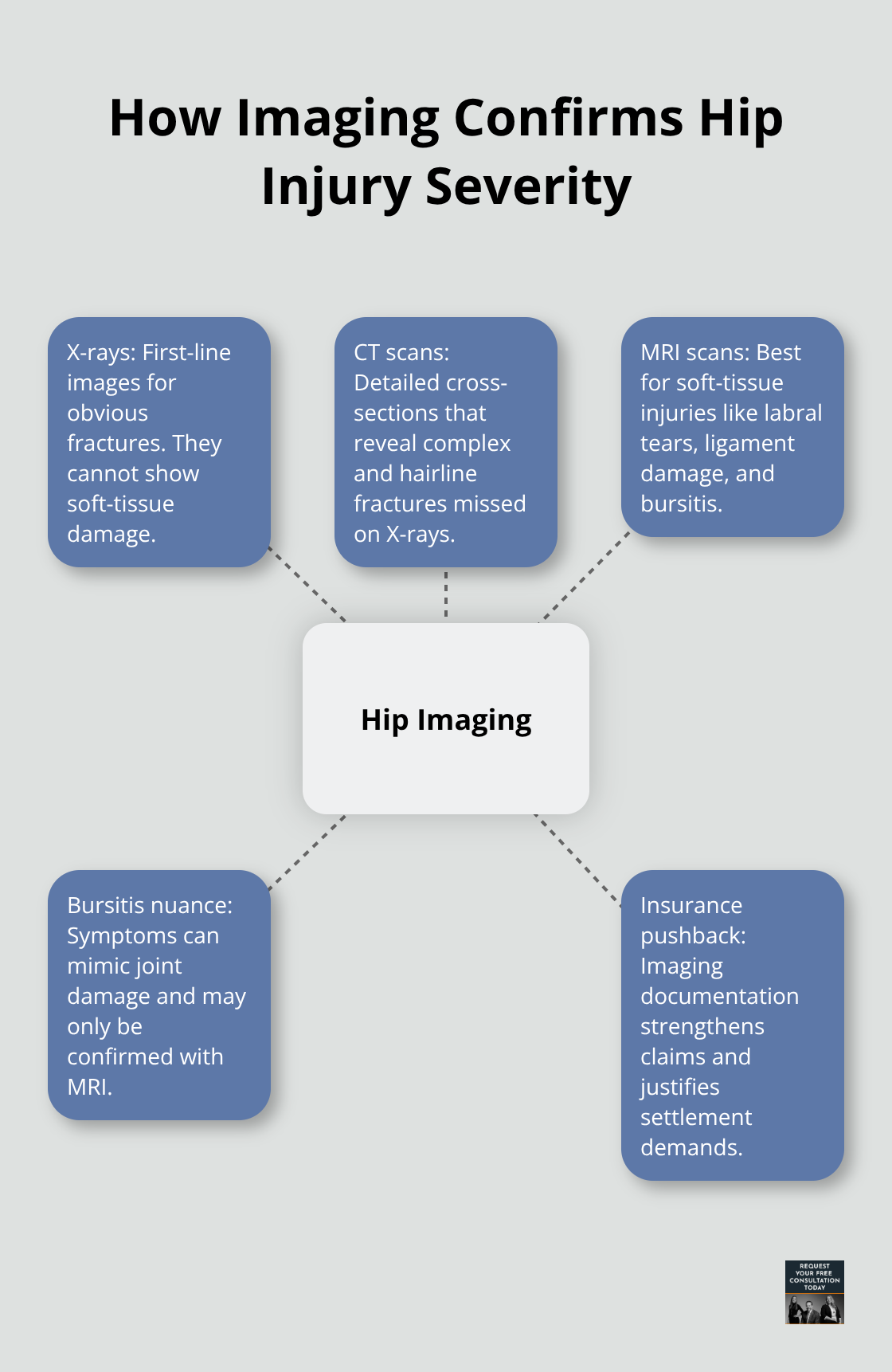
Without imaging evidence, adjusters assume your injury is minor and offer settlements far below what your actual medical needs require.
Treatment Depends on Injury Type and Severity
Hip fractures in adults over 65 carry serious medical consequences. Research shows that approximately one in three people with hip fractures die within one year, and risk climbs even higher for those over 80. This mortality risk influences both medical urgency and settlement value.
Fractures typically require surgery. Open reduction and internal fixation (ORIF) allows surgeons to realign broken bones and secure them with plates and screws. Hemiarthroplasty replaces the femoral head. Total hip replacement becomes necessary in some cases. Recovery from surgery typically takes three to six months for basic mobility, though full strength and function may take a year or longer.
Soft-tissue injuries and bursitis respond initially to rest, ice, and anti-inflammatory medications. Persistent cases require physical therapy, corticosteroid injections, or in some cases, surgery. Your recovery timeline directly affects your damages calculation because longer recovery periods mean more lost wages, more medical expenses, and greater impact on your daily life.
Documentation Transforms Medical Records Into Settlement Evidence
Document your treatment plan from your doctor in writing, including the recommended duration of physical therapy and any restrictions on work or activities. This documentation becomes critical evidence when calculating both economic damages (medical bills and lost wages) and non-economic damages (pain, suffering, and loss of independence). The connection between your diagnosis, treatment plan, and documented recovery needs is what transforms a medical file into a compelling settlement demand. Once you understand your injury and have the medical evidence to support it, the next step involves gathering the financial records and evidence that prove the full cost of your injury to your life.
Building Your Claim for Fair Settlement
Your medical records and diagnosis form the foundation of your settlement demand, but they alone won’t generate fair compensation. Insurance adjusters respond to documented financial losses and evidence of impact on your life. Start by creating a spreadsheet that lists every medical expense related to your hip injury: emergency room visits, imaging costs, surgical fees, anesthesia, hospital stays, physical therapy sessions, prescriptions, and durable medical equipment like crutches or walkers. Include transportation costs to appointments, home healthcare services, and modifications to your home if mobility limitations required them.
Settlement Ranges Based on Age and Injury Severity
California hip fracture settlements vary significantly based on victim age and injury severity. For someone under 60 with a standard fracture, typical settlements range from $100,000 to $300,000. Middle-aged victims typically receive $200,000 to $450,000, while adults over 60 with displaced fractures that require open reduction and internal fixation or hip replacement often receive $400,000 to $900,000 or more. These ranges exist because surgery complexity, recovery duration, and long-term care needs drive damages upward.
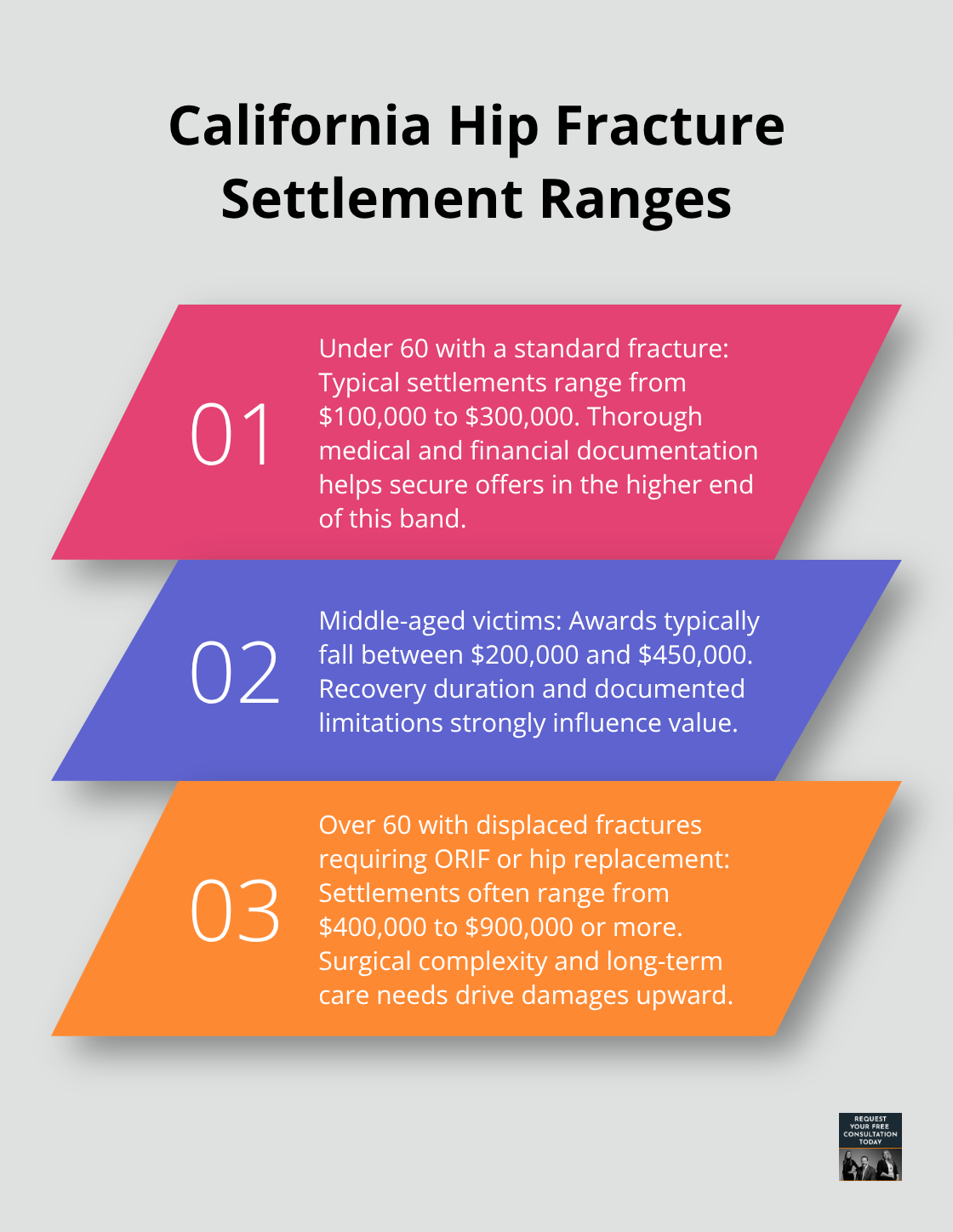
Document exactly which surgical procedures you underwent and the associated costs, as this directly influences settlement value.
Calculate Lost Wages and Income Loss
Lost wages present another critical component of your claim. Calculate your income from the date of the crash through your expected return to work, accounting for any reduced hours or job changes due to mobility limitations. If your injury prevents you from returning to your previous occupation, document that permanent income loss as well, since settlements must account for lifetime earning capacity reduction. This calculation often represents substantial damages, particularly for workers in their peak earning years.
Document Pain, Suffering, and Loss of Independence
Non-economic damages prove harder to quantify but often represent the largest portion of settlements. Pain and suffering damages reflect your actual experience: the severity of pain, duration of recovery, and impact on daily activities. Courts in California recognize that a hip fracture affecting someone over 65 carries greater consequences than the same fracture in a younger person, partly due to mortality risk and partly due to reduced remaining lifespan for recovery.
Document your pain levels daily using a simple scale from one to ten, and record specific limitations: if you cannot walk without assistance, cannot return to work, cannot drive, or cannot perform household tasks, write these down with dates. Emotional distress from loss of independence carries weight in settlements, particularly for older adults who lose the ability to live independently. Loss of enjoyment of life encompasses the activities you cannot perform: travel, hobbies, social events, or intimate relationships.
Strengthen Your Claim Through Organization and Legal Representation
When you present an adjuster with organized medical records, precise financial calculations, and detailed documentation of your daily limitations, settlement offers increase dramatically compared to vague claims. Insurance adjusters know that many accident victims in Santa Cruz County, Sacramento, and Oakland attempt negotiation alone and accept initial lowball offers simply because they lack this framework. Having legal representation shifts the dynamic entirely because adjusters understand that documented claims backed by an attorney will proceed to trial if necessary, making settlement more attractive to them. At Schaar & Silva LLP, we guide clients through this documentation process because insurance companies undervalue claims that lack specific evidence.
Final Thoughts
A hip injury after a crash demands three interconnected steps that build on each other. You document the accident scene and collect witness information, seek immediate medical evaluation, and maintain complete financial records-this foundation prevents insurance adjusters from dismissing your claim. You then obtain proper diagnosis through imaging and medical evaluation, understanding exactly what type of hip injury you sustained and what treatment it requires, which directly influences your settlement value. Finally, you gather organized evidence of medical expenses, lost wages, pain and suffering, and loss of independence, then present this evidence to insurance adjusters during settlement negotiations.
Insurance companies offer higher settlements when they see organized medical records, precise financial calculations, and documented daily limitations backed by medical evidence. Adjusters understand that claims supported by legal representation will proceed to trial if necessary, making settlement more attractive than litigation risk. Your settlement demand should reflect the actual cost of your injury: every medical bill, every lost wage, every day of pain, and every activity you cannot perform.
If you sustained a hip injury after crash in Santa Cruz County, Sacramento, or Oakland, contact Schaar & Silva LLP to begin building your claim. We help accident victims navigate medical documentation, connect with medical lien services for bill assistance, and negotiate fair settlements with insurance companies. Your recovery matters, and you deserve compensation that reflects the true impact of your injury on your life.
