

A head injury from a car accident can have serious consequences that aren’t always visible right away. Many people don’t realize they’ve suffered a traumatic brain injury until symptoms emerge hours or even days later.
At Schaar & Silva LLP, we’ve helped countless accident victims in Santa Cruz County, Sacramento, and Oakland understand their rights and recover the compensation they deserve. This guide walks you through the immediate steps you need to take after impact.
What Head Injury Symptoms Should You Watch For
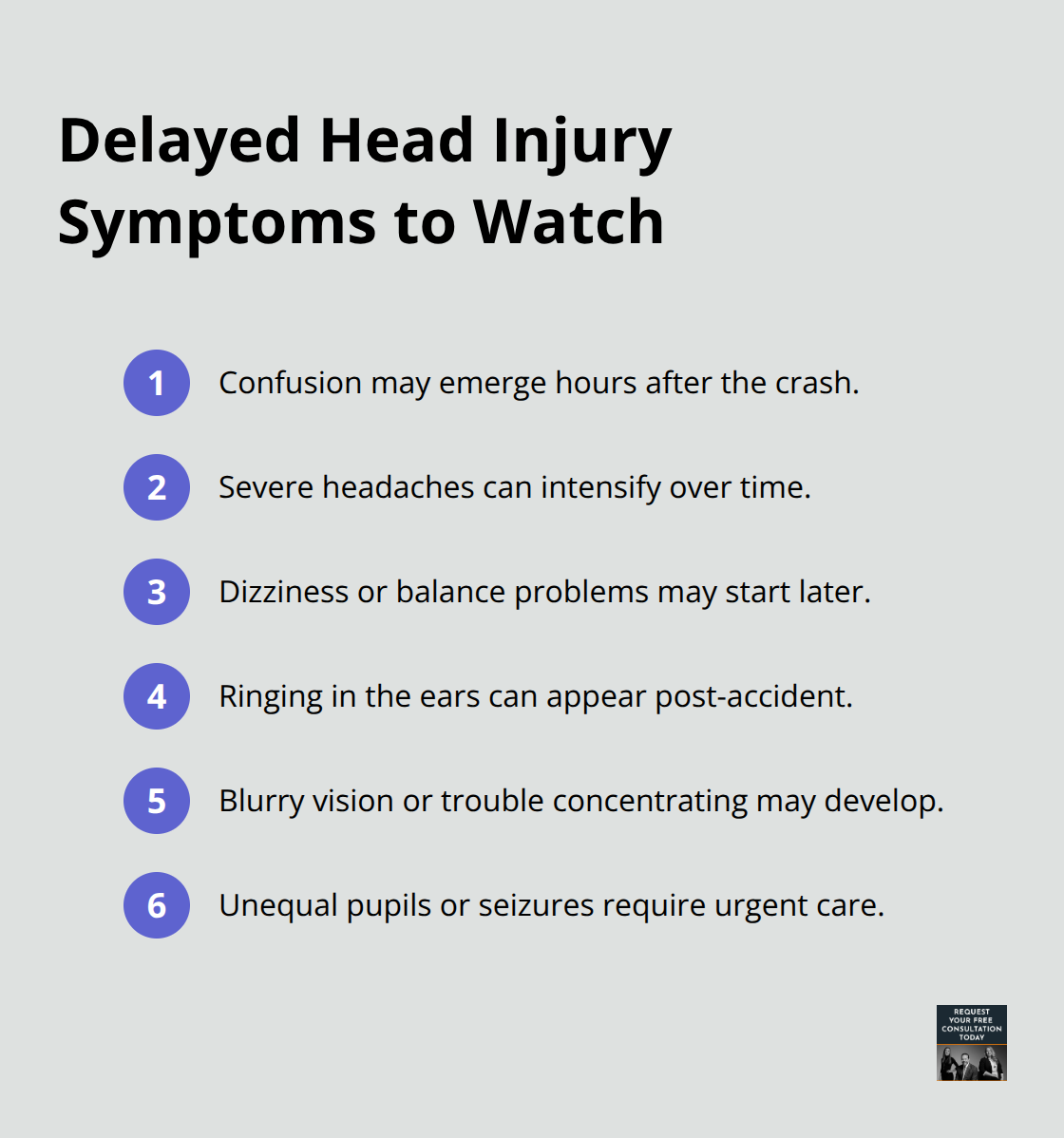
Nearly 3 million people in the U.S. sustain a traumatic brain injury each year, and motor vehicle crashes rank among the leading causes according to the CDC. The problem isn’t just the initial impact-it’s that many head injury symptoms don’t appear immediately. You might feel fine at the accident scene, only to experience confusion, severe headaches, or dizziness hours later. This delayed onset is why the CDC emphasizes that medical evaluation is essential even after minor impacts.
Red Flag Symptoms That Demand Urgent Care
Confusion, memory loss around the event, severe headaches, dizziness, vomiting, slurred speech, unequal pupils, and seizures are red flags that require immediate attention. Some victims report ringing in the ears, trouble with balance, blurry vision, or difficulty concentrating-symptoms that can worsen over days. The reason these injuries hide is straightforward: your brain doesn’t always show damage immediately after trauma, and swelling or internal bleeding can develop gradually. Don’t assume you’re fine just because you walked away from the crash.
Symptoms That Appear Later
The CDC warns that head trauma symptoms can develop or worsen after the initial event, making a symptom diary invaluable for tracking what happens next. Write down when headaches start, changes in mood, trouble sleeping, or difficulty remembering conversations. Share this diary with your healthcare provider-it helps them understand whether your condition is improving or deteriorating. Some people recover within days to weeks, while others experience longer-lasting cognitive and emotional changes. This variation is why clinical guidelines exist: doctors use tools like the Canadian CT Head Rule for adults to decide whether imaging is necessary, avoiding unnecessary scans while catching serious injuries.
Why Immediate Documentation Matters
After a crash, document your injuries and seek medical attention regardless of how minor the impact feels. This documentation protects your health and your legal rights. Insurance companies and legal claims depend on medical records showing when symptoms began and how they progressed. Without this evidence, proving your injury becomes significantly harder. The medical records you collect now will form the foundation for any compensation claim you pursue later.
Getting the Right Medical Evaluation After a Head Injury
Seek immediate medical evaluation after a head injury, regardless of how you feel at the accident scene. The CDC emphasizes that even minor impacts warrant professional assessment because symptoms develop gradually and internal bleeding or swelling can worsen over hours. Call 911 if you lose consciousness, experience difficulty breathing, or show any of the red flag symptoms mentioned earlier. If symptoms are less severe, drive to an emergency department or urgent care facility as soon as possible. Do not wait to see if symptoms resolve on their own.
Medical professionals will assess your responsiveness, check for neurological changes, and decide whether imaging is necessary. During this evaluation, provide a complete account of what happened at the moment of impact, any loss of consciousness, and all symptoms you’ve experienced since the crash. The timeline matters significantly for diagnosis and treatment.
What Imaging Tests Reveal
When you arrive at the emergency department, clinicians typically use CT scans to check for brain bleeding or swelling, according to the NIH and National Institute of Neurological Disorders and Stroke. CT is fast and effective for detecting acute injuries that require immediate intervention. If your initial CT is normal but symptoms persist or worsen, your healthcare provider may order an MRI to identify subtle injuries that CT cannot detect.
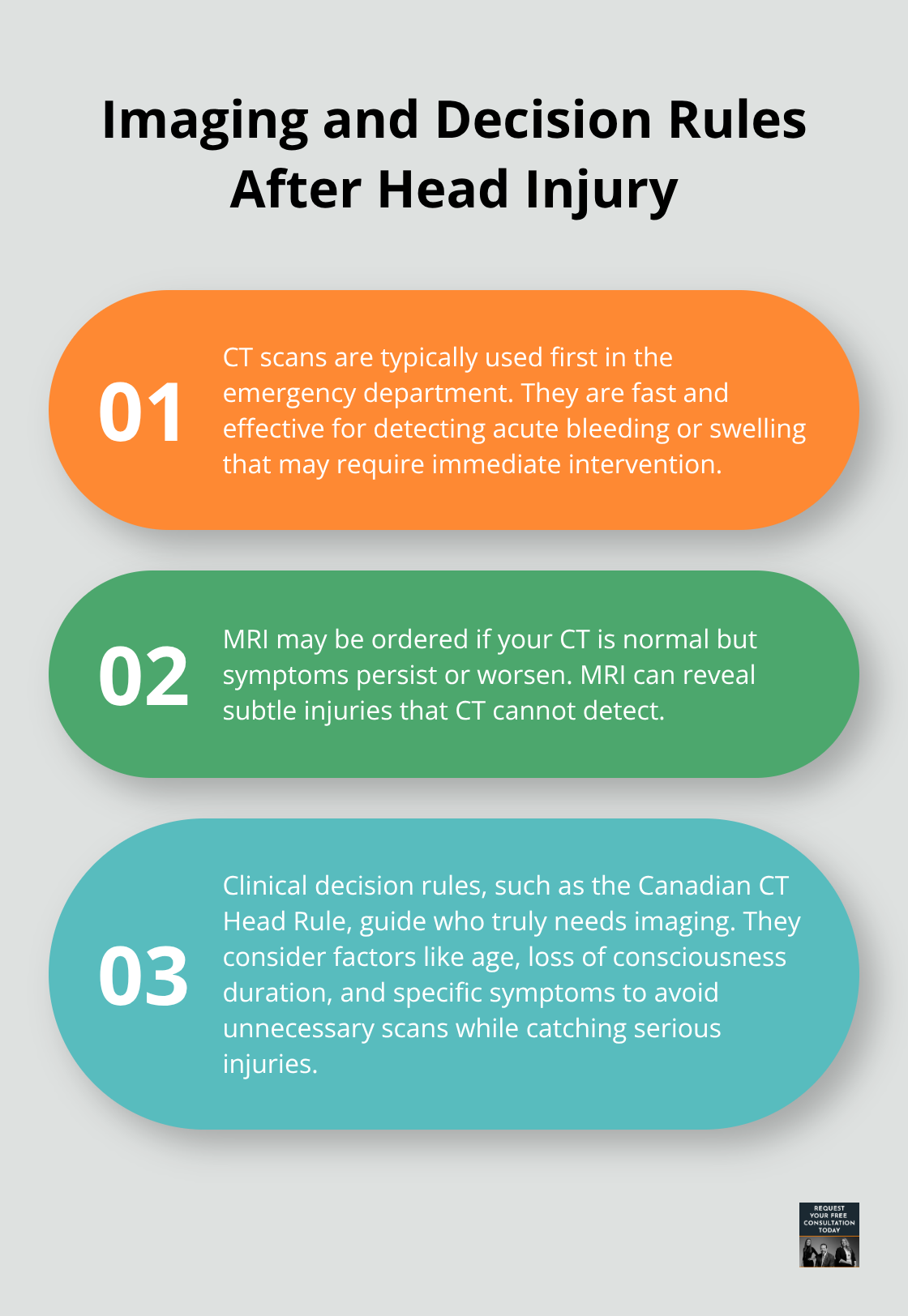
Clinical decision rules like the Canadian CT Head Rule help doctors determine who truly needs imaging and who can safely avoid unnecessary scans. These rules consider factors like your age, loss of consciousness duration, and specific symptoms to guide imaging decisions. A normal CT scan does not guarantee you are injury-free; some traumatic brain injuries show no imaging abnormalities initially but cause serious symptoms.
Start Your Symptom Diary Immediately
Begin a symptom diary right after your accident and continue it for weeks. Write down headaches, sleep disturbances, concentration problems, mood changes, memory gaps, dizziness, or any other physical or cognitive changes. Include the time symptoms appeared and their severity. Bring this diary to every medical appointment and share it with your healthcare provider.
Medical records from the emergency department, urgent care visits, imaging results, and follow-up appointments with neurologists or primary care physicians form the foundation of your injury documentation. Request copies of all medical records, test results, and provider notes for your personal records. Insurance companies and legal claims depend on these detailed records to understand the full extent of your injury and its impact on your life.
Why Documentation Determines Your Claim’s Strength
Without thorough documentation, proving causation between the accident and your symptoms becomes significantly harder. Incomplete medical records (even when your injuries are real) can undermine otherwise valid claims. Detailed records showing exactly when symptoms appeared, how they progressed, and what medical professionals observed create the evidence you need for insurance negotiations or legal action. This documentation also protects your health by helping your medical team track whether your condition is improving or deteriorating over time.
As you gather medical records and build your documentation, understanding how these materials support a potential legal claim becomes the next critical step.
What Compensation Can You Recover From a Head Injury Claim
Head injury claims involve multiple categories of damages, and understanding what you can recover matters significantly for your financial recovery. Medical expenses form the foundation of any claim-emergency department visits, CT scans, MRI imaging, specialist consultations, and ongoing treatment all count. If you required hospitalization or rehabilitation, those costs add up quickly.
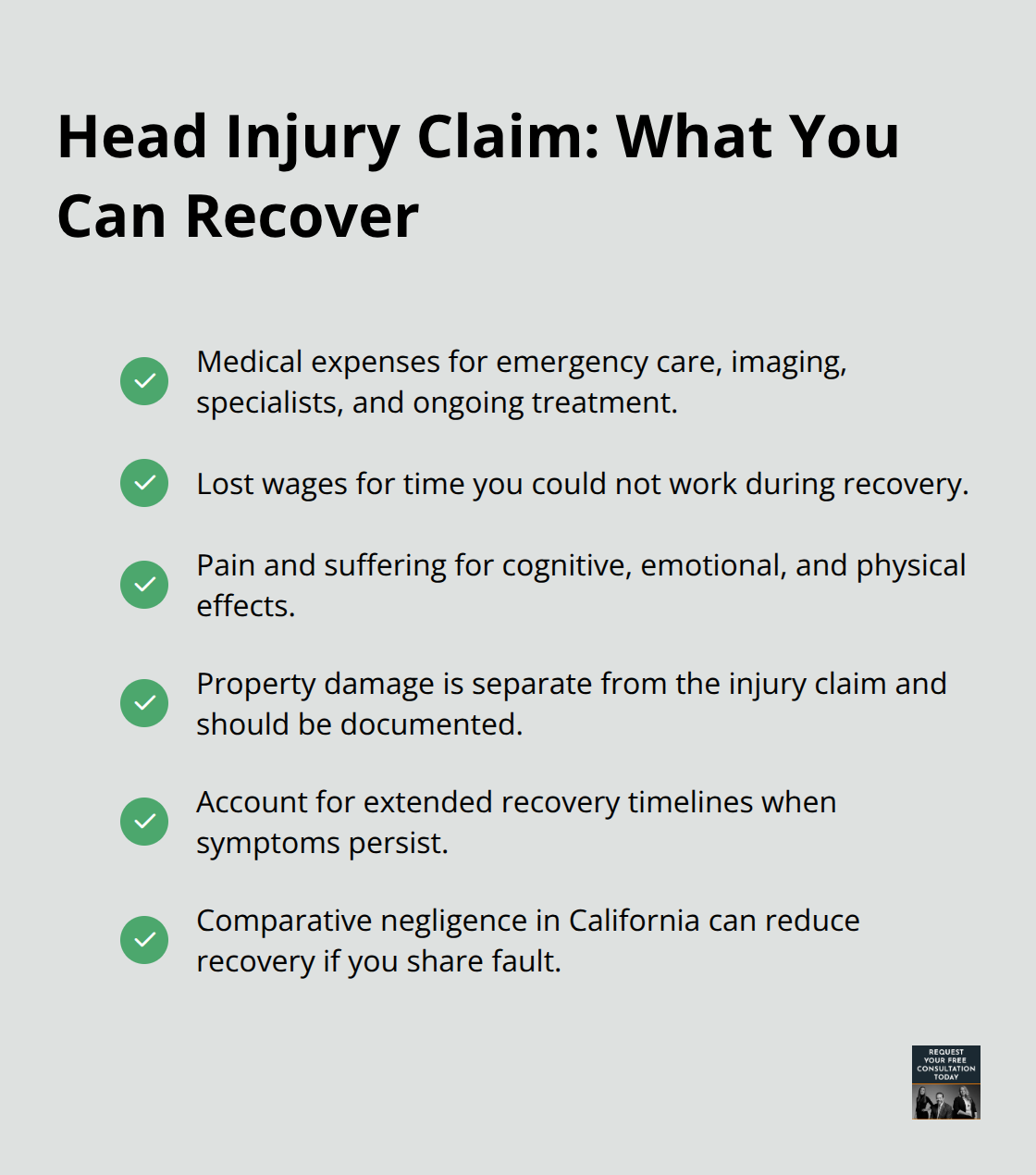
Beyond medical bills, you can recover lost wages if your injury prevented you from working during recovery. The CDC reports that most mild traumatic brain injuries recover within days to weeks, but some people experience longer-lasting symptoms that extend recovery timelines considerably. Your claim should account for every week you missed work during treatment and recovery.
Pain and suffering damages represent a second major category that many accident victims underestimate. Headaches, cognitive difficulties, memory problems, and emotional changes caused by your injury have real financial value in California personal injury law. If your injury caused permanent changes to your cognitive abilities, emotional regulation, or physical function, your damages increase substantially. Property damage to your vehicle is separate from your personal injury claim and should be documented with repair estimates or valuations. In Santa Cruz County, Sacramento, and Oakland, filing a claim requires understanding California’s comparative negligence rules-if you bear any responsibility for the accident, your recovery reduces proportionally. This is why detailed accident documentation and witness statements matter from the moment the crash occurs.
How Claims Work in Your County
Filing a personal injury claim in Santa Cruz County begins with notifying the at-fault driver’s insurance company and filing a claim within California’s statute of limitations, which allows three years from the date of injury. Your medical records, symptom diary, and documentation of lost wages form the evidence supporting your claim value. Insurance adjusters often undervalue head injury claims because symptoms don’t always show on imaging-they’ll argue your injury wasn’t serious if your CT scan appears normal. This is precisely why your symptom diary and ongoing medical treatment become critical; they prove your injury exists regardless of imaging results. Most claims settle without trial through negotiation with the insurance company, though some require litigation when insurers refuse fair offers.
Working With Your Legal Team
At Schaar & Silva LLP, we handle the negotiation process while you focus on recovery. Our team can direct you to medical lien services that facilitate payment of your medical bills until your case resolves, eliminating the burden of paying out-of-pocket for treatment. We evaluate property damage claims to ensure you receive fair valuation for vehicle repairs or replacement. Beyond the financial aspects, emotional trauma from serious accidents requires real support-we connect clients with psychological specialists who can address the emotional impact of your injury. Your role is straightforward: document everything, attend medical appointments, maintain your symptom diary, and communicate openly with your healthcare providers about how your injury affects daily life.
Final Thoughts
A head injury car accident demands immediate action and careful documentation from the moment of impact. The steps you take in the first hours and days after your crash directly influence both your recovery and your ability to recover compensation. Seek medical evaluation regardless of how you feel, maintain a detailed symptom diary, and preserve all medical records and accident documentation.
Recovery from head injuries varies significantly from person to person, with some people regaining full function within weeks while others experience lasting cognitive or emotional changes that require months of treatment and support. Your healthcare providers will guide your return-to-work and return-to-drive timelines based on your specific symptoms and progress. During this recovery period, psychological support services help address the emotional impact that often accompanies serious head injuries.
Insurance companies will attempt to minimize your claim value, particularly when imaging results appear normal despite your ongoing symptoms-this is why your symptom diary and medical records become your strongest evidence. California’s three-year statute of limitations for personal injury claims means you have time to build your case, but acting quickly protects your rights. Contact Schaar & Silva LLP to discuss your head injury car accident claim and learn how we can support your path forward.
