
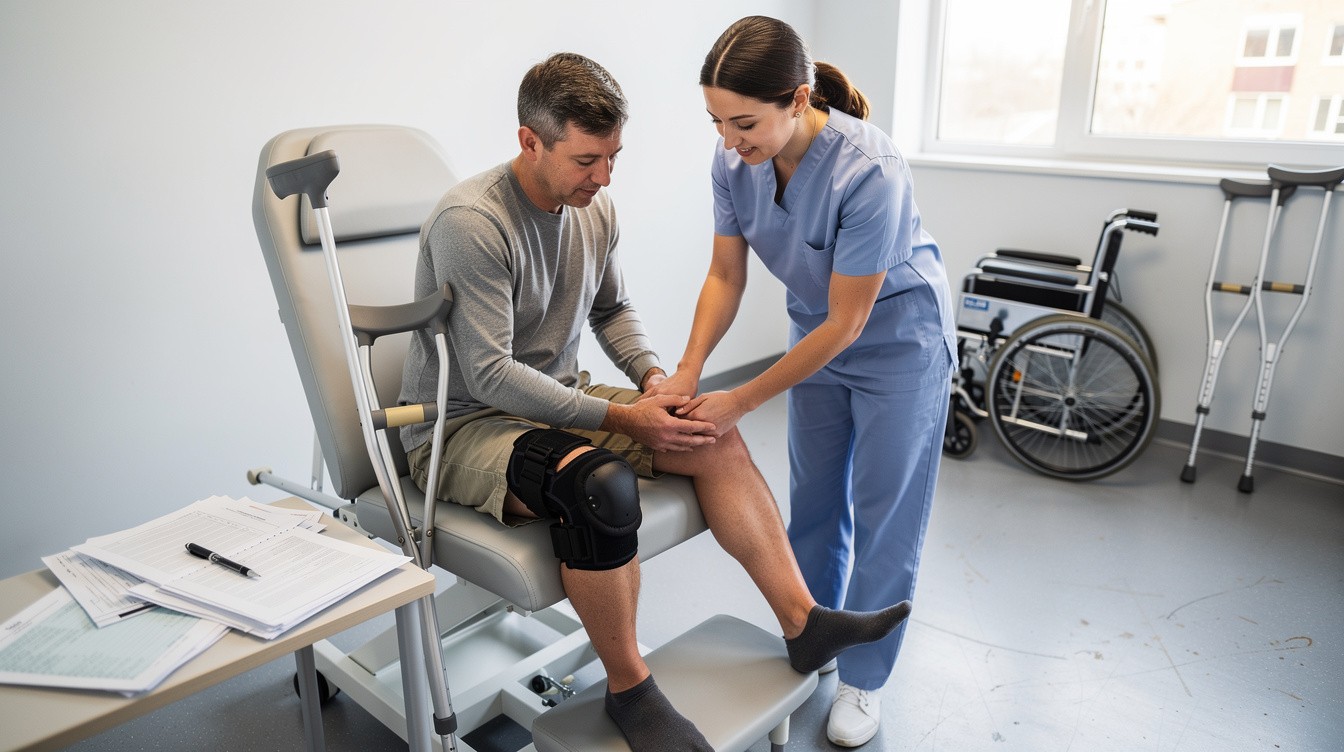
A car crash changes everything in seconds. The physical pain, medical bills, and lost time at work pile up fast, making injury recovery after a crash feel overwhelming.
We at Schaar & Silva LLP know that healing involves more than just medical treatment-it also means getting the compensation you deserve. This guide walks you through the recovery process and shows you how to build a strong claim.
How Your Body Heals After a Crash
The Critical First Hours and Days
Your recovery starts the moment the crash happens, though you may not feel the full extent of your injuries right away. Adrenaline masks pain for 24 to 72 hours after impact, which means soft-tissue injuries like whiplash and ligament sprains often go unnoticed initially. This is why you must seek immediate medical assessment-it is the fastest way to catch hidden injuries before they become chronic problems. An emergency room visit documents your condition on day one, creating a medical record that proves your injuries existed from the crash itself. If you skip this step, insurance companies later question whether your injuries came from the accident or developed afterward.
Starting Physical Therapy Early
Within the first week, physical therapy should begin if you have neck, back, or soft-tissue damage. Early PT evaluation identifies injuries that X-rays miss and starts a structured recovery plan immediately. Research from the Journal of Orthopaedic & Sports Physical Therapy shows that phase-based rehabilitation-starting with gentle motion and swelling control, then progressing to strengthening and functional training-produces faster return to work and daily activities than delayed or sporadic treatment.
The Short-Term Recovery Window
The short-term phase typically spans 2 to 12 weeks, depending on injury severity. About 50 percent of whiplash cases fully recover within three months, with little improvement occurring after that window, according to research by Sterling and Casey. This compressed timeline means consistency matters enormously. You must attend physical therapy sessions twice or three times weekly, not once monthly, to drive measurable progress in pain reduction, range of motion, and strength.
Long-Term Healing and Individual Factors
Long-term recovery extends beyond three months for moderate to severe injuries. Back injuries with herniated discs and head trauma often require 6 to 12 months of structured care. Preinjury health patterns influence how fast you heal-people with prior sick leave or existing pain conditions typically recover more slowly than those starting from a healthy baseline. Your overall health, age, fitness level, and sleep quality all accelerate or slow healing. Mental and emotional health matters equally. Stress and poor sleep delay tissue repair and increase pain perception.
Documentation That Strengthens Your Claim
You must document everything during recovery: pain levels, treatment sessions, functional limitations, and what activities you cannot do. This documentation becomes essential evidence for your compensation claim and helps your medical team adjust your plan as you progress. The goal is not to rush healing but to follow your doctor’s guidance consistently and avoid the trap of pushing too hard or stopping treatment early, both of which extend recovery or create new problems. As your physical condition stabilizes, the next critical step involves translating your medical records and recovery timeline into a compensation claim that reflects the true cost of your injuries.
What Injuries Show Up After a Crash
Neck Injuries and Whiplash
Whiplash dominates auto accident injuries, but it is far from the only concern. Neck injuries occur in roughly 50 percent of moderate-to-severe crashes, and unlike broken bones, they do not always appear on X-rays immediately.
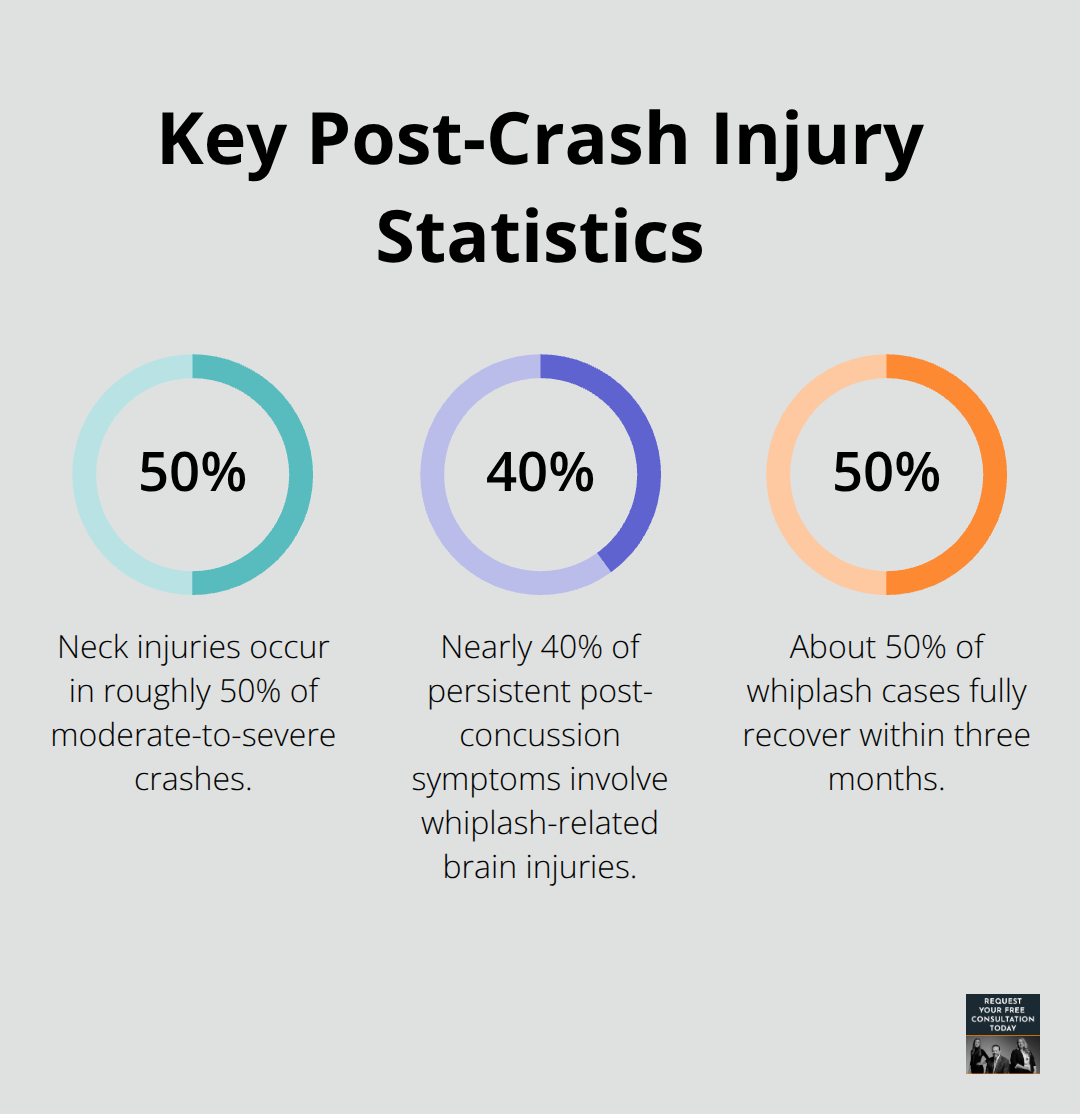
The soft tissues-ligaments, tendons, muscles-tear or strain without obvious imaging evidence, which is why so many people feel fine on day one and develop severe pain by day three. Research shows that whiplash-related brain injuries account for nearly 40% of persistent post-concussion symptoms, and initial neck pain intensity and disability level are the strongest predictors of long-term recovery. If your neck pain is moderate to severe right after the crash, you face a higher risk of ongoing problems beyond three months.
Back and Spinal Injuries
Back injuries carry equal weight in crash recovery. Herniated discs, ligament sprains, and muscle tears in the lumbar spine are extremely common, and they require aggressive early intervention. Physical therapy focusing on core stabilization and nerve-gliding exercises produces measurable improvement in function and pain reduction within 4 to 6 weeks if you commit to two or three sessions weekly. Stopping treatment early or waiting two weeks before starting therapy extends your overall recovery timeline significantly.
Head Trauma and Concussions
Head trauma and concussions represent a separate category of risk because they are invisible to most observers and often misunderstood by insurance companies. A person can walk away from a crash feeling alert and then experience cognitive fog, memory problems, balance issues, or emotional changes days later. The Glasgow Outcome Scale, used by neurologists to measure brain injury recovery, distinguishes between true functional restoration and compensatory adaptation-meaning you might return to work while still experiencing silent deficits in attention, processing speed, or emotional regulation.
The Gap Between Appearance and Actual Recovery
This gap between apparent recovery and actual neurological healing is critical for your claim because it explains why ongoing treatment remains necessary even when you look fine to others. Symptoms like neck stiffness, headaches, and shoulder pain often appear 24 to 72 hours after impact, not immediately, giving you objective evidence for your compensation claim. Obtaining comprehensive imaging within the first two weeks (if you experience significant pain or neurological symptoms) strengthens both your medical case and your legal position. These injury patterns shape how you build your compensation claim, since each type requires different documentation and evidence to prove its impact on your life.
How to Build a Strong Compensation Claim
Organize Your Medical Records Chronologically
Your medical records form the foundation of your compensation claim. Start collecting them immediately after your crash and arrange them in order by date, because insurance adjusters and opposing attorneys will scrutinize every gap and delay. Request copies from your emergency room visit, all physical therapy sessions, imaging reports, and doctor’s notes. The Journal of Orthopaedic & Sports Physical Therapy emphasizes that objective measurements recorded at each session-pain scores on a 0-10 scale, range of motion in degrees, strength testing results-carry far more weight than general statements like “I feel better.”
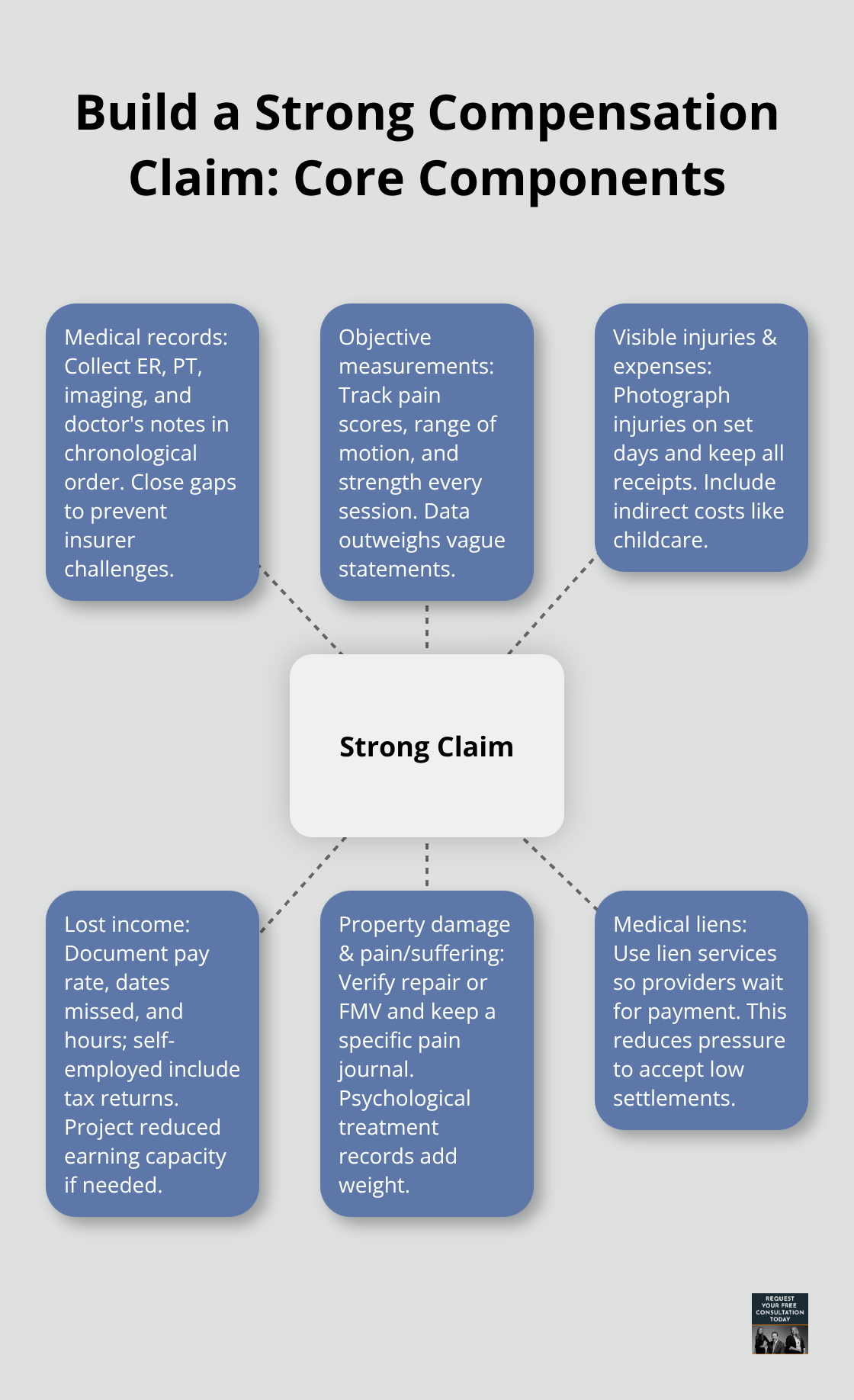
Insurance companies dismiss vague claims but cannot argue with documented data showing you had 30 degrees of neck rotation on week one and 50 degrees on week six.
Document Visible Injuries and Medical Expenses
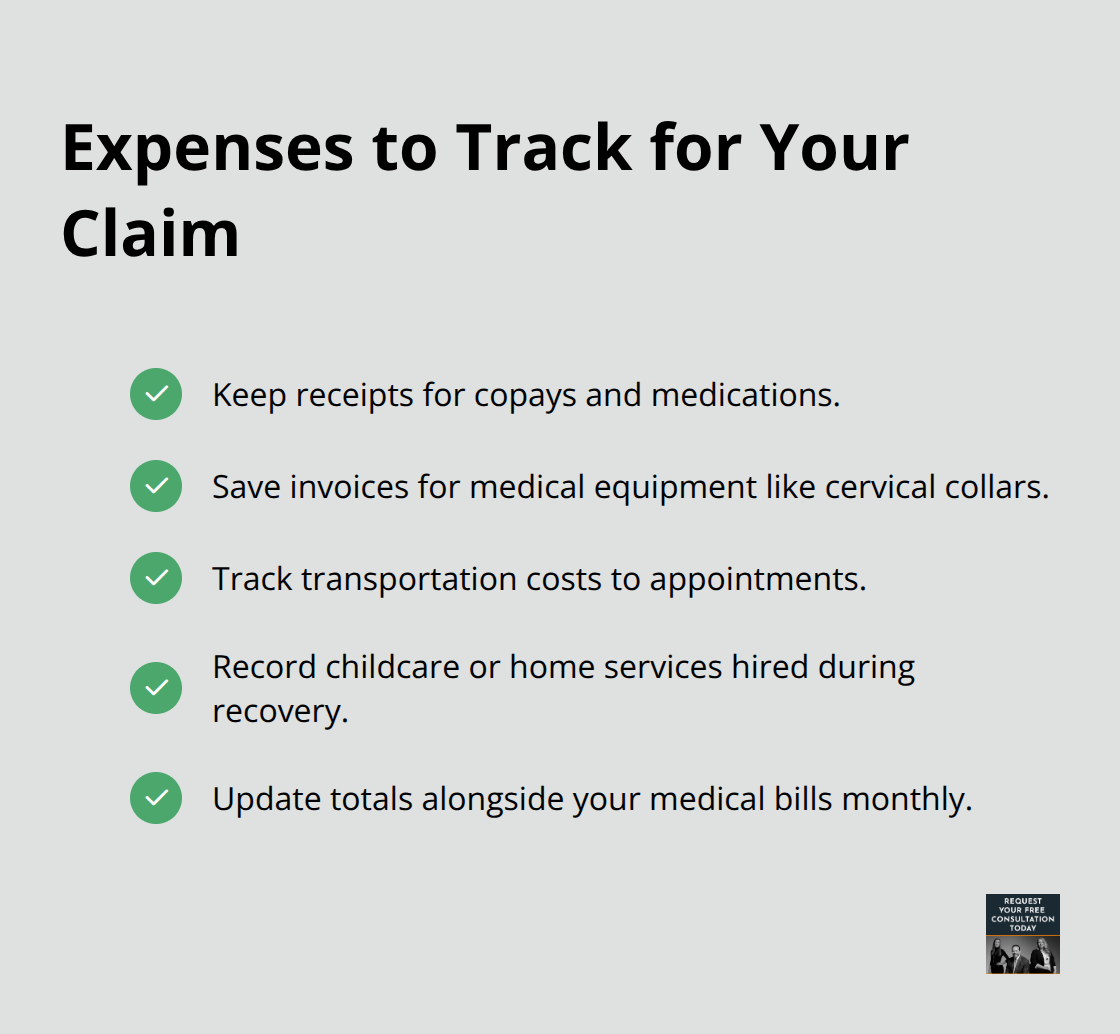
Photograph any visible injuries on days one, three, and seven after the crash, then monthly during recovery. These images create a visual timeline that reinforces your medical records. Keep receipts for every medical expense: copays, medications, medical equipment like cervical collars, and transportation to appointments. Many people miss indirect costs like childcare hired while they recovered or home services they paid for because they could not perform normal duties. These expenses count and must be tracked with the same care as direct medical bills.
Calculate Lost Wages and Future Earning Capacity
Lost wages require specific documentation beyond a simple statement from your employer. Request a detailed letter showing your hourly rate or salary, the exact dates you missed work, and total hours or days lost. If you are self-employed, provide tax returns from the prior two years plus current year records showing your average daily income. The calculation is straightforward: multiply your daily earning rate by the number of days you could not work. Future earning capacity is harder but critical if your injury causes long-term limitations. If your crash injury prevents you from returning to your previous job or forces a career change to lower-paying work, you can claim the difference in lifetime earnings. An economist or vocational rehabilitation specialist can calculate this figure by comparing your pre-crash earning trajectory to your post-crash realistic earning potential, accounting for your age, education, and injury limitations.
Establish Property Damage and Pain and Suffering Claims
Property damage claims require the repair estimate from a certified mechanic or the vehicle’s fair market value if it is totaled. Never accept the insurance company’s first valuation without verification. Pain and suffering damages exist because your injury caused real losses beyond medical bills and lost wages-lost enjoyment of activities, damaged relationships, sleep disruption, emotional distress. Document these losses through a pain journal where you record daily how your injury affected your activities, mood, and relationships. Write specific entries like “Could not play soccer with my children for six weeks” or “Missed my daughter’s school events due to pain and fatigue” rather than generic statements. Medical records showing psychological treatment for depression, anxiety, or PTSD related to your crash strengthen pain and suffering claims significantly. Insurance companies use multipliers-typically 1.5 to 5 times your medical expenses-to estimate pain and suffering, so higher medical expenses directly increase this component.
Connect with Medical Lien Services for Financial Relief
If you live in Santa Cruz County, Schaar & Silva LLP can connect you with medical lien services that facilitate bill payment during your case, so you are not forced to settle quickly because of financial pressure. These services allow your medical providers to wait for compensation from your settlement rather than demanding immediate payment. This arrangement removes a major barrier that forces injured people into unfavorable settlements before their recovery is complete.
Final Thoughts
Your injury recovery after a crash depends on three interconnected elements: consistent medical treatment, thorough documentation, and legal support that protects your rights while you heal. The first 72 hours set the trajectory for everything that follows, as seeking immediate medical assessment catches hidden injuries before they become chronic and starting physical therapy within the first week accelerates your return to normal activities. About 50 percent of whiplash cases resolve within three months, but only if you attend sessions consistently and follow your doctor’s guidance without interruption.
Documentation transforms your medical experience into a compensation claim that insurance companies cannot dismiss. Objective measurements from each physical therapy session, photographs of visible injuries, and a detailed pain journal create evidence that proves the crash caused your injuries, while lost wage calculations and property damage documentation quantify your financial losses. Pain and suffering claims rest on specific examples of how your injury disrupted your life, not vague statements about discomfort.
Professional support accelerates healing in two ways: your medical team addresses the physical damage through targeted rehabilitation, while legal guidance ensures you receive fair compensation without settling prematurely. Many injured people rush settlements because medical bills pile up and they cannot afford to wait, so we at Schaar & Silva LLP connect Santa Cruz County residents with medical lien services that allow providers to wait for payment from your settlement. Contact us to discuss your case and learn how we can support both your healing and your claim.
