
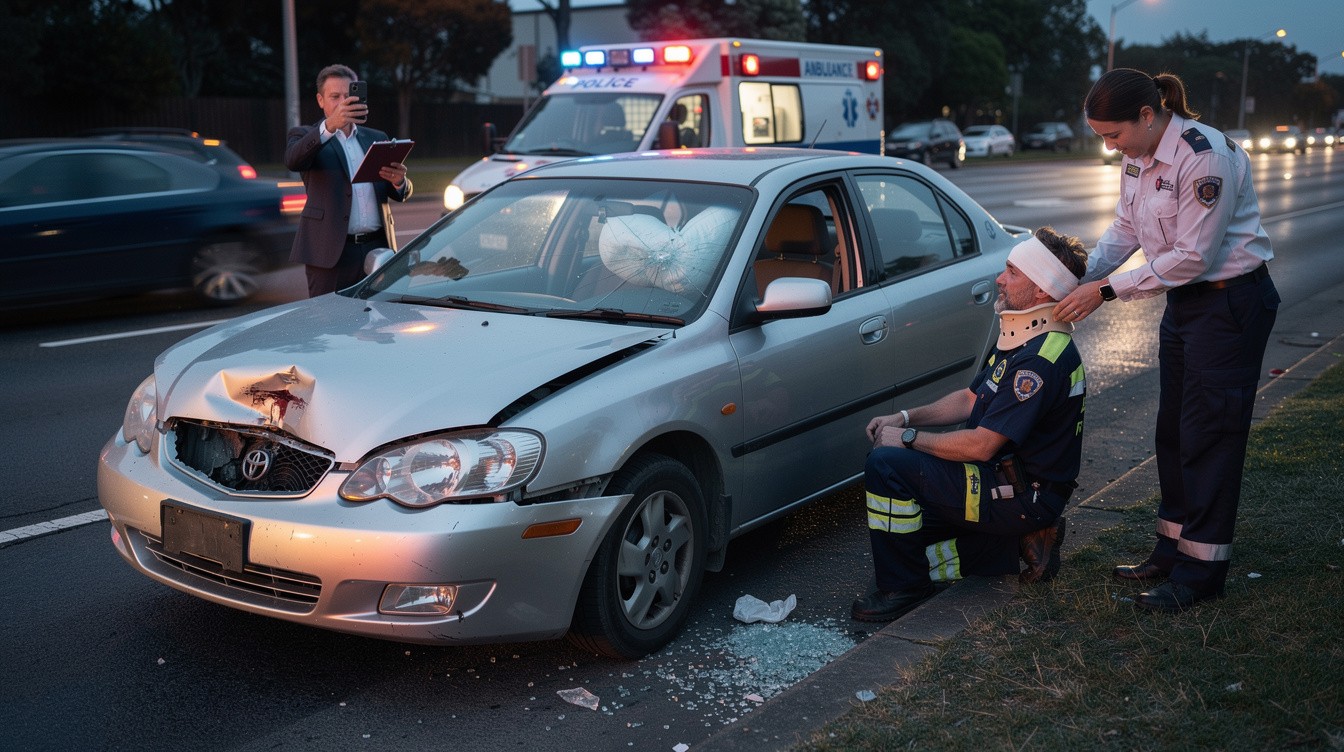
A head injury after a crash can change everything in seconds. Even impacts that seem minor at first often lead to serious complications weeks or months later.
We at Schaar & Silva LLP have helped many accident victims in Santa Cruz County, Sacramento, and Oakland understand how head injuries affect their legal claims. This guide walks you through the medical evidence you’ll need and how these injuries translate into fair compensation.
What Head Injuries Look Like After a Crash
Concussions and Post-Crash Symptoms
Concussions happen more often than people realize after car crashes, and they’re not always obvious in the immediate aftermath. Adrenaline masks symptoms, which is why the CDC recommends seeking emergency medical evaluation on the same day as any significant head impact, even if you feel fine. Concussions cause headache, dizziness, confusion, nausea, sensitivity to light or noise, and memory gaps-loss of consciousness isn’t required for a diagnosis.
The real problem emerges days or weeks later when post-concussion syndrome develops, affecting sleep, concentration, mood, and daily functioning. This delayed onset makes documentation critical for your claim because insurers often question injuries that don’t appear immediately. If you experience ongoing symptoms days after a crash, prompt evaluation matters even if initial imaging was normal.
Traumatic Brain Injuries and Serious Complications
Traumatic brain injuries go beyond concussions and involve brain contusions, which are bruises on brain tissue that cause cognitive or behavioral changes and may require surgery if swelling increases. Diffuse axonal injury results from rapid acceleration and deceleration forces and often causes coma, with MRI being more sensitive than CT scans for detection. Brain hemorrhages-epidural, subdural, subarachnoid, or intracerebral-can present with delayed symptoms, which is why CT scans are commonly used in emergency care to assess bleeding and guide treatment decisions.
Skull Fractures and Risk Factors
Skull fractures significantly increase the risk of underlying brain injury and infection, and the CDC identifies motor vehicle crashes as the leading cause of traumatic brain injury deaths for people aged 5–24. Red-flag symptoms requiring immediate 911 response include loss of consciousness, repeated vomiting, seizures, severe or worsening headache, weakness or numbness, slurred speech, or clear fluid from your nose or ears.
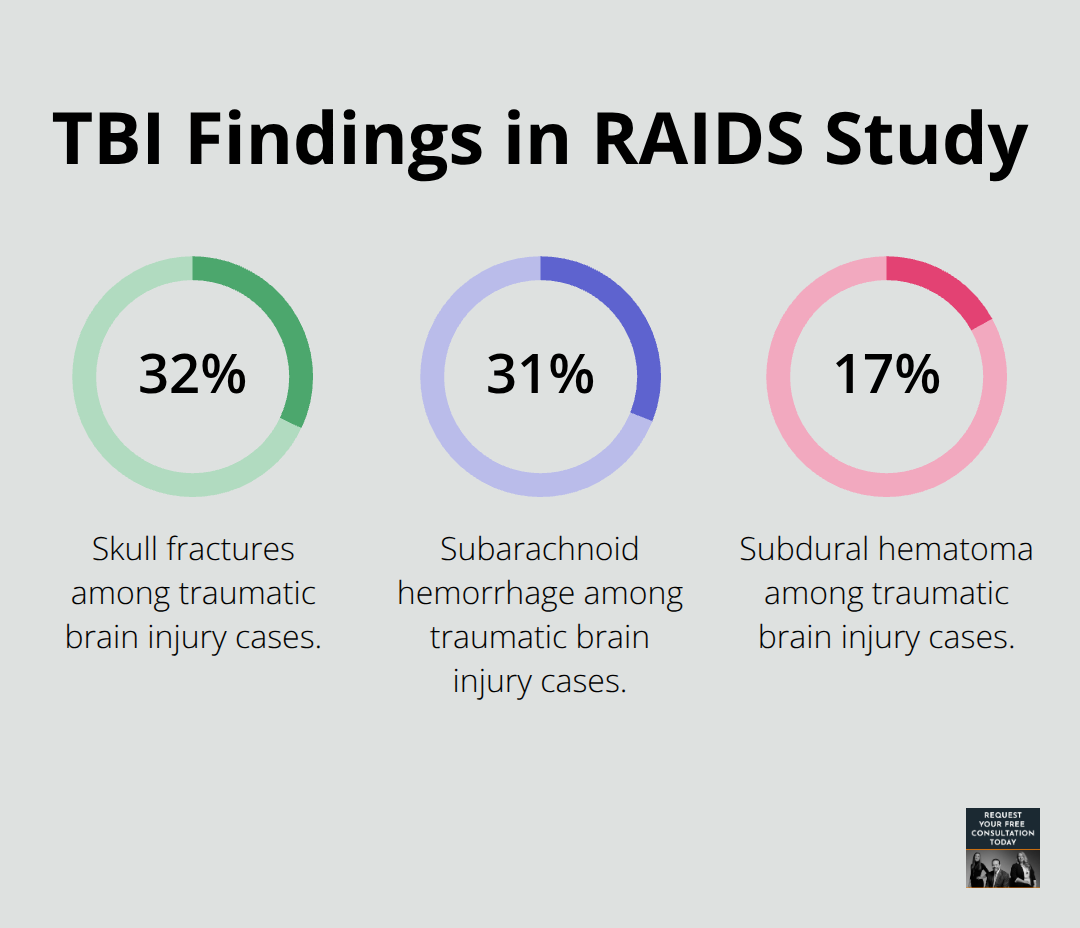
Research from the RAIDS database, which analyzed over 2,000 collisions affecting nearly 5,400 people, found that skull fractures occurred in about 32 percent of traumatic brain injury cases, subarachnoid hemorrhage in 31 percent, and subdural hematoma in 17 percent. Vulnerable road users like pedestrians face markedly higher moderate to severe TBI risk than car occupants-pedestrians have roughly 3.65 times higher risk.
Impact Velocity and Recovery Timelines
The delta-V, or total change in velocity during impact, strongly predicts TBI risk; no moderate to severe TBI occurred in car occupants below 20 kilometers per hour total delta-V in the RAIDS study. Recovery timelines vary dramatically: mild concussions may resolve in 2 to 6 weeks, while moderate to severe traumatic brain injury can require months or years of therapy including physical, occupational, speech, and cognitive rehabilitation plus psychological support.
Preserving medical records, imaging reports, discharge summaries, therapy notes, and symptom diaries strengthens your claim significantly because these documents prove the injury severity and connect it directly to the crash. The medical evidence you gather now becomes the foundation for calculating what your injury actually cost you-both in immediate medical expenses and in long-term losses.
Building Your Medical Evidence
Seek Immediate Medical Evaluation
Getting evaluated immediately after a crash is non-negotiable for your claim, not optional. The moment you leave the hospital without a formal medical assessment, you hand insurers ammunition to deny your injury happened at all. Seek emergency medical evaluation on the same day as any significant head impact, even if you feel fine, because adrenaline masks symptoms that emerge hours or days later. When you arrive at the emergency room, tell medical staff about the impact force and your crash circumstances so they document the mechanism of injury properly. This connection between the crash dynamics and your symptoms becomes essential later when calculating what your injury is actually worth.
Imaging Tests and Diagnostic Reports
CT scans serve as the standard imaging test in emergency settings to rule out bleeding or skull fractures, but if symptoms persist beyond the initial evaluation, MRI becomes necessary because it detects diffuse axonal injury that CT misses. Research from the RAIDS database, which examined over 5,000 crash victims, showed that imaging findings directly correlate with injury severity and treatment costs, making these diagnostic reports critical evidence for settlement negotiations. The radiologist’s interpretation of these images carries significant weight in your claim because it provides objective documentation of what the crash caused.
Collect and Organize Medical Records
Your medical records form the foundation of everything that follows in your claim. Collect discharge summaries from the emergency room, all imaging reports with radiologist interpretations, neurological exam findings, and any follow-up visit notes from your physician. If you undergo physical therapy, occupational therapy, or speech therapy, those progress notes document ongoing impairment that justifies compensation for future care costs.
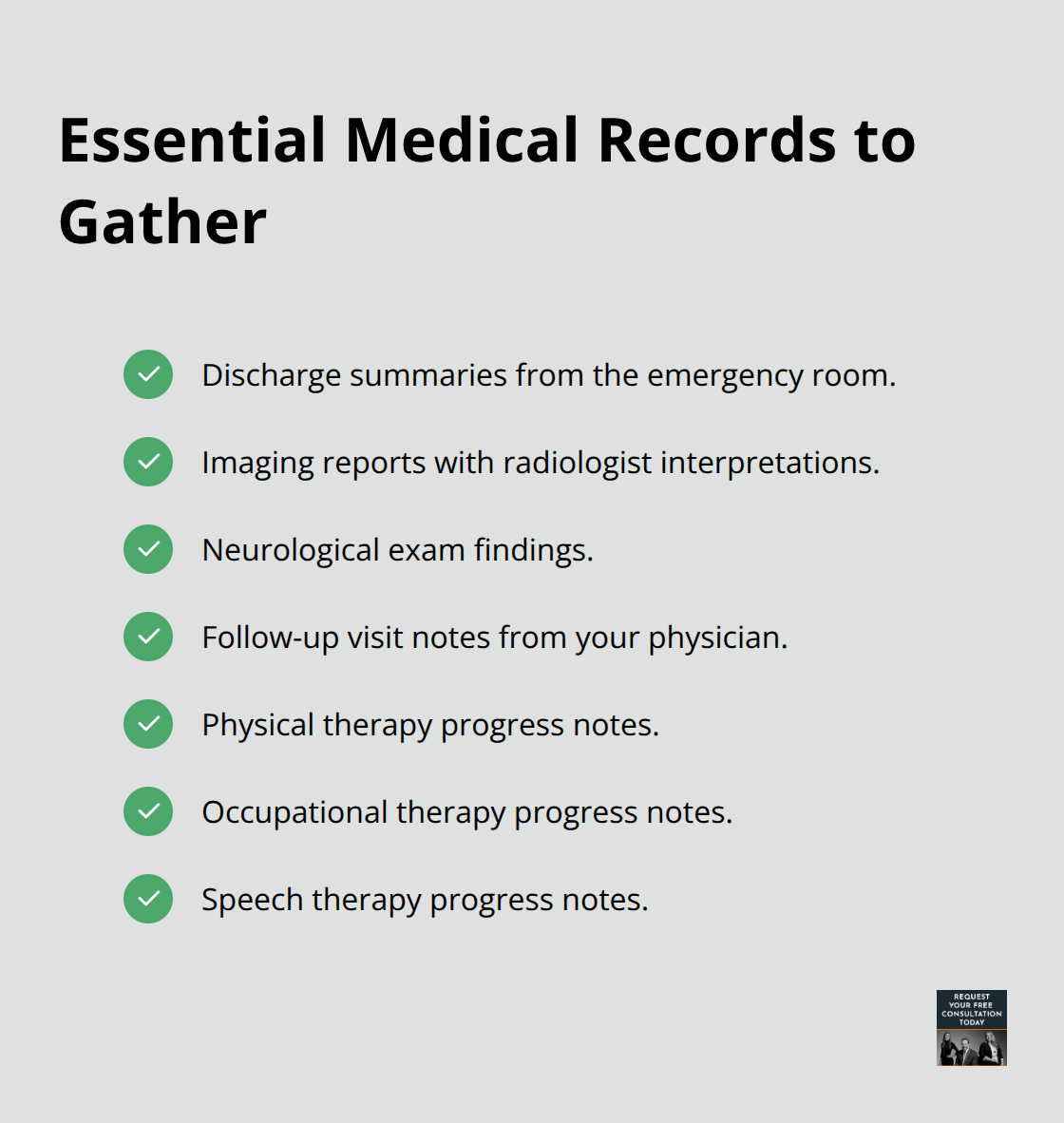
Therapy notes are particularly valuable because they show that your injury wasn’t a one-time event but rather something requiring sustained professional intervention.
Create a Symptom Diary
Insurance companies scrutinize medical records to find inconsistencies or gaps that suggest your injury wasn’t serious, so consistent documentation from multiple providers strengthens your position considerably. Keep a symptom diary recording headaches, memory problems, sleep disruption, and mood changes on specific dates because this contemporaneous record proves post-concussion syndrome wasn’t retroactively invented. If initial CT or basic imaging appears normal but you have persistent symptoms, that disconnect actually supports your claim because it demonstrates that standard imaging can miss significant injury. This is precisely why follow-up MRI or advanced neurological testing becomes necessary and justifiable as additional medical expenses directly caused by the crash.
Advanced Testing for Persistent Symptoms
When standard imaging misses injury that your symptoms clearly indicate, advanced neurological testing fills that gap and strengthens your position with insurers. The medical evidence you gather now becomes the foundation for calculating what your injury actually cost you-both in immediate medical expenses and in long-term losses that extend far beyond the initial hospital visit.
What Your Head Injury Is Actually Worth
Medical Expenses Add Up Fast
Head injuries translate into measurable financial losses that extend far beyond the ambulance ride and emergency room bill. Medical expenses for moderate to severe traumatic brain injury average between $85,000 and $3 million over a lifetime, according to the CDC, but most accident victims fail to capture the full scope of what they’re entitled to recover. Insurance companies count on this knowledge gap and will offer settlements that cover immediate hospital costs while ignoring the months of physical therapy, cognitive rehabilitation, and lost income that follow.
Start with your medical bills and don’t stop there. Collect every invoice from your emergency room visit, all imaging costs, neurologist consultations, and any diagnostic testing. If you underwent MRI because standard CT scans missed diffuse axonal injury, that advanced imaging expense belongs in your claim because the crash made it necessary. Therapy bills matter enormously. Physical therapy for balance and coordination issues, occupational therapy for returning to work tasks, and speech therapy for communication problems all represent quantifiable losses directly caused by the crash.
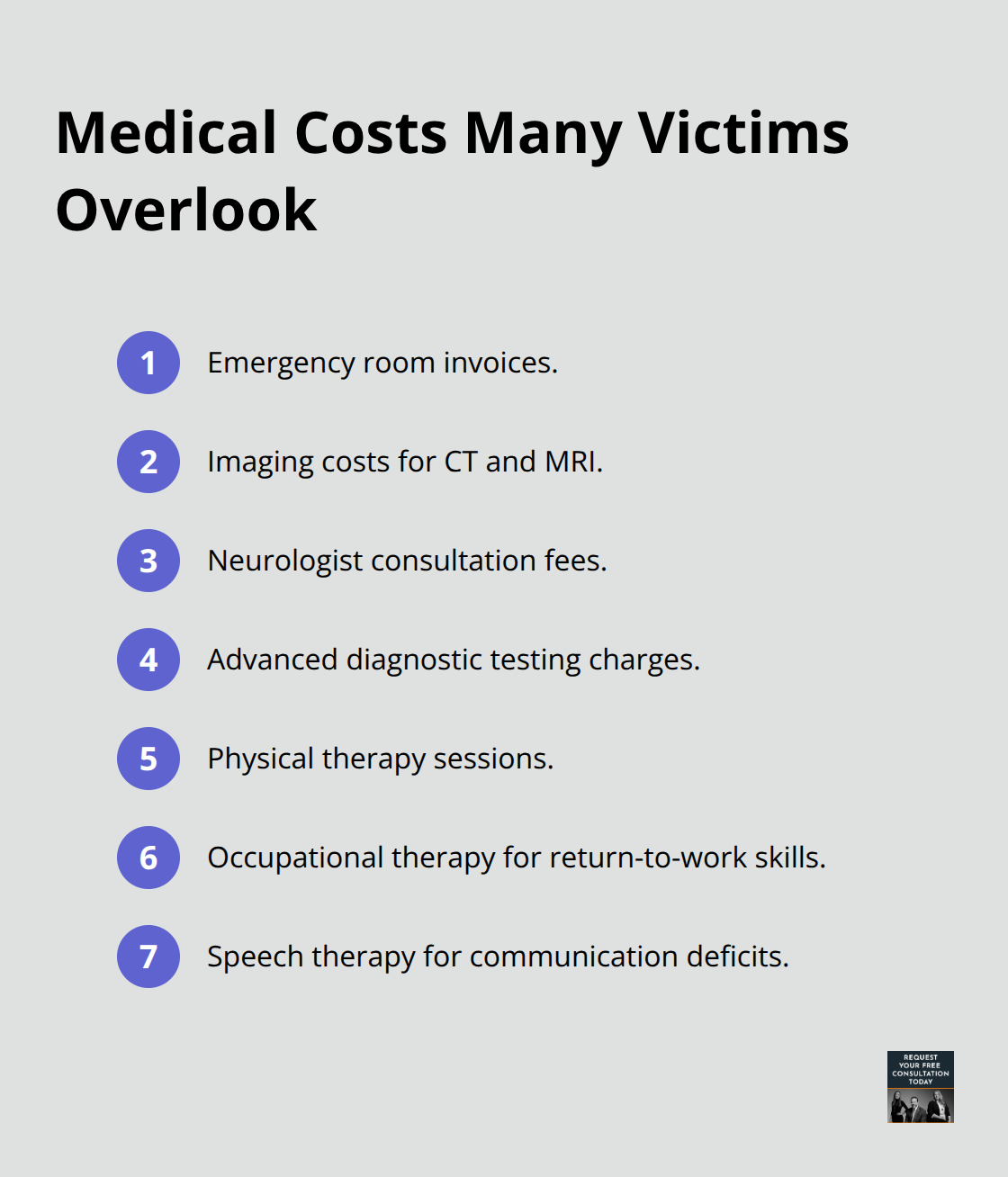
Keep receipts organized by date and provider because insurers will scrutinize these expenses to find reasons for reduction. The RAIDS database research showed that skull fractures and brain hemorrhages require ongoing medical intervention, not one-time treatment, so your medical damages calculation should account for follow-up appointments, medication costs, and any future procedures your condition might require.
Lost Wages and Earning Capacity
Lost wages hit harder than most accident victims anticipate, especially when head injuries prevent immediate return to work. If you missed two weeks of work during recovery, that’s straightforward income loss you calculate by multiplying your daily rate by days missed. But post-concussion syndrome often creates a longer disruption where you’re physically present at work but cognitively impaired, reducing productivity or requiring reduced hours. Document this carefully because it’s harder to prove but absolutely recoverable.
Future earning capacity becomes the critical factor in larger settlements. If your head injury causes permanent memory problems or attention deficits that prevent you from performing your previous job, you’re entitled to recover the difference between what you would have earned and what you can now realistically earn over your remaining working years. A financial expert calculates this by examining your age, education, pre-injury earning history, and the specific cognitive or physical limitations your injury created. Someone earning $65,000 annually as a project manager who can no longer handle complex multitasking due to concentration problems might see their realistic earning capacity drop to $45,000 in a different role, creating $20,000 annual losses multiplied across decades.
Non-Economic Damages for Pain and Suffering
Pain and suffering damages represent the non-economic losses that numbers alone can’t capture. Headaches that persist for months, sensitivity to light that prevents normal social activity, sleep disruption affecting your quality of life, and mood changes from brain injury all qualify for compensation. California law recognizes these losses as legitimate damages, and juries often award substantial amounts for documented suffering.
The key is consistency between what your medical records show and what your testimony describes. If your neurologist notes persistent headaches and sleep disturbance but you never mention these symptoms in conversations or social media, insurers will claim you’re exaggerating for the settlement. Your documentation must align across all sources-medical provider notes, therapy progress reports, and your own contemporaneous records-to establish credibility with insurance adjusters and, if necessary, with a jury.
Final Thoughts
A head injury after a crash demands immediate action and careful documentation from the moment impact occurs. The medical evidence you gather, the records you preserve, and the timeline you establish directly determine what compensation you’ll receive, since insurance companies count on accident victims not understanding the full scope of their losses. Connecting your crash dynamics to your symptoms through solid medical documentation matters far more than most people realize.
Your recovery involves two parallel paths that both require attention and persistence. The first is medical: you need immediate evaluation, imaging and therapy follow-through, and consistent records of your symptoms and progress. The second is legal: you must understand that your losses extend beyond the initial hospital bill to include lost wages, future earning capacity, and the documented pain and suffering your injury caused.
If you’re in Santa Cruz County, Sacramento, or Oakland and dealing with a head injury after a crash, we at Schaar & Silva LLP help accident victims navigate these claims by connecting you with the medical support you need while handling the legal complexities. Contact us for a free consultation to discuss your specific situation and bring your medical records, crash report, and any documentation of your symptoms and lost income.
