
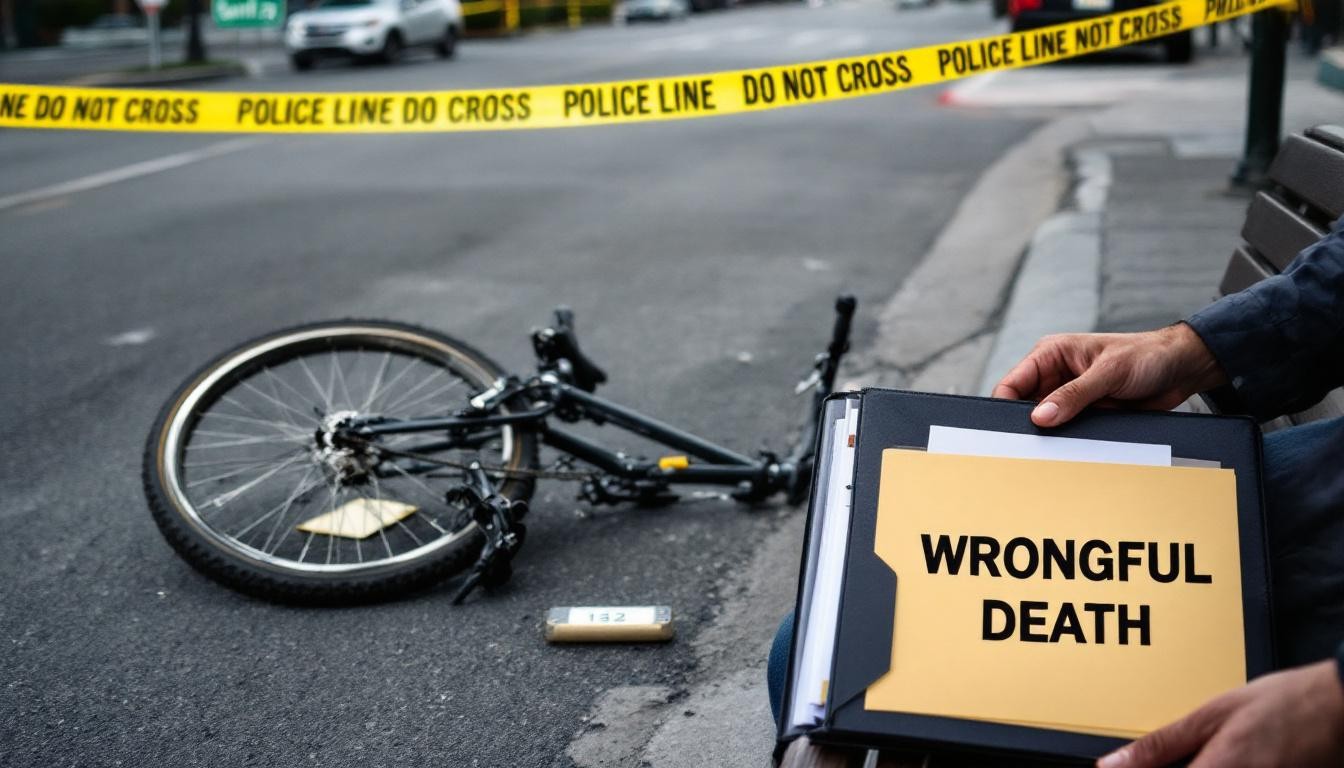
Losing a loved one in a bicycle crash leaves families devastated and searching for answers. When negligence causes a Santa Cruz bicycle wrongful death, families have legal options to pursue justice and hold responsible parties accountable.
We at Schaar & Silva LLP understand the pain you’re facing. This guide walks you through wrongful death claims, coroner reports, and local resources to support your family during this difficult time.
What Happens in a Wrongful Death Claim After a Fatal Bicycle Crash
A wrongful death claim in California allows surviving family members to pursue compensation when negligence or misconduct causes a death. In Santa Cruz County, you hold the right to seek accountability from negligent drivers, vehicle manufacturers with defective products, or government entities that failed to maintain safe road conditions. California’s pure comparative negligence rule permits recovery even if the deceased shared some fault, though your compensation will be reduced proportionally. The two-year deadline to file is absolute and unforgiving-missing it bars recovery entirely. Some cases involving government entities have shorter notice periods, making early consultation with an attorney essential to protect your rights.
Economic Damages Cover Real Financial Losses
Your claim can recover medical expenses incurred before death, funeral costs, and lost income the deceased would have earned. The National Funeral Directors Association reported a median funeral cost of $7,848 in 2021, though Santa Cruz costs may run higher. Santa Cruz County’s median household income of approximately $89,986 and average life expectancy of about 82 years serve as benchmarks for calculating future earnings losses.

If your loved one was a primary breadwinner or supported dependents, these economic damages become substantial. You must gather medical records, tax returns, employment letters, and financial statements to substantiate every dollar claimed.
Non-Economic Damages Address Immeasurable Loss
California imposes no cap on non-economic damages in wrongful death cases, meaning you can pursue compensation for loss of companionship, guidance, emotional distress, and mental anguish. These damages reflect the real human cost of losing a parent, spouse, or child. The strength of your claim depends on evidence of the relationship’s depth and the deceased’s role in family life. Punitive damages are rare but available in cases involving extreme negligence or misconduct (such as intoxicated driving) and require clear and convincing evidence of malice. You must build a strong damages case through thorough documentation of your loved one’s relationships, financial contributions, and impact on family members’ lives.
Building Your Case with Evidence and Documentation
You need police reports, eyewitness statements, medical records, and autopsy results to establish liability and quantify damages. An accident reconstruction expert can analyze how the crash occurred and identify all potentially liable parties. You should organize financial documents that show the deceased’s earning capacity, dependents’ needs, and household contributions. Medical records from before the death demonstrate any pain and suffering the deceased experienced. This evidence transforms your claim from a general loss into a specific, measurable case that courts and insurers take seriously.
The coroner’s report and police investigation provide the foundation for your wrongful death action, revealing critical details about how the crash happened and who bears responsibility.
Building Your Case with Coroner Reports and Police Evidence
The Coroner Report: Your Foundation for Liability
When a bicycle crash ends in death, the coroner’s report becomes your most important document. In Santa Cruz County, the Sheriff-Coroner’s Office investigates deaths under California Government Code sections 27490–27512, and a forensic pathologist conducts the autopsy to determine cause of death. You can obtain the coroner report from the Santa Cruz County Sheriff’s Records Division for a $35 fee, along with pathology and toxicology reports. The cause of death typically emerges within a few days, though blood tests or microscopic analysis can extend the timeline to approximately four months. This timeline matters because insurers and defendants will use delay tactics to weaken your case, so request these documents immediately after death notification. The coroner’s findings establish whether impairment, speed, medical events, or other factors contributed to the crash, which directly supports your liability argument. Tissue samples and organ retention may occur for specialized testing, and the coroner will notify your family in advance if this happens.
Interpreting Medical Findings with Professional Help
The coroner’s report contains medical language that requires careful interpretation to connect to negligence. Work with your attorney to translate the pathologist’s findings into evidence that shows how the at-fault party’s actions caused your loved one’s death. If the report indicates the deceased was not wearing a seat belt (in vehicle crashes) or identifies impairment in another party, these facts strengthen your claim significantly. The toxicology results reveal whether alcohol or drugs played a role, which can support punitive damages claims in cases involving intoxicated drivers. Your attorney will use these medical conclusions to establish causation-the direct link between the defendant’s negligence and the fatal outcome.
Police Reports: The Investigative Record
Police reports from the California Highway Patrol or local law enforcement provide the investigative foundation that coroner reports build upon. These reports document the crash scene, road conditions, vehicle damage, witness statements, and the officer’s preliminary assessment of how the crash occurred. Investigators examine factors such as impairment, excessive speed for conditions, drowsy driving, distraction, overcorrection, and hazardous road conditions. Request the full police report, not just the summary, because officers often include observations about sight lines, road markings, and environmental factors that support your claim. If the crash occurred on a state highway like Highway 9 or Highway 1, the CHP retains primary jurisdiction and their reports carry significant weight in settlement negotiations.
Accident Reconstruction: Connecting Evidence to Negligence
Accident reconstruction experts analyze the police data, vehicle damage patterns, and road geometry to establish exactly how the crash happened and identify all potentially liable parties. In Santa Cruz County, where single-vehicle crashes on winding rural roads like Zayante remain a major safety concern, reconstruction experts often uncover design defects, inadequate lighting, or poor maintenance that contributed to the death. These professionals translate physical evidence into clear narratives about fault and causation. Their expert opinions carry substantial weight with insurers and courts because they rest on engineering principles and measurable data rather than speculation.
Creating an Airtight Liability Case
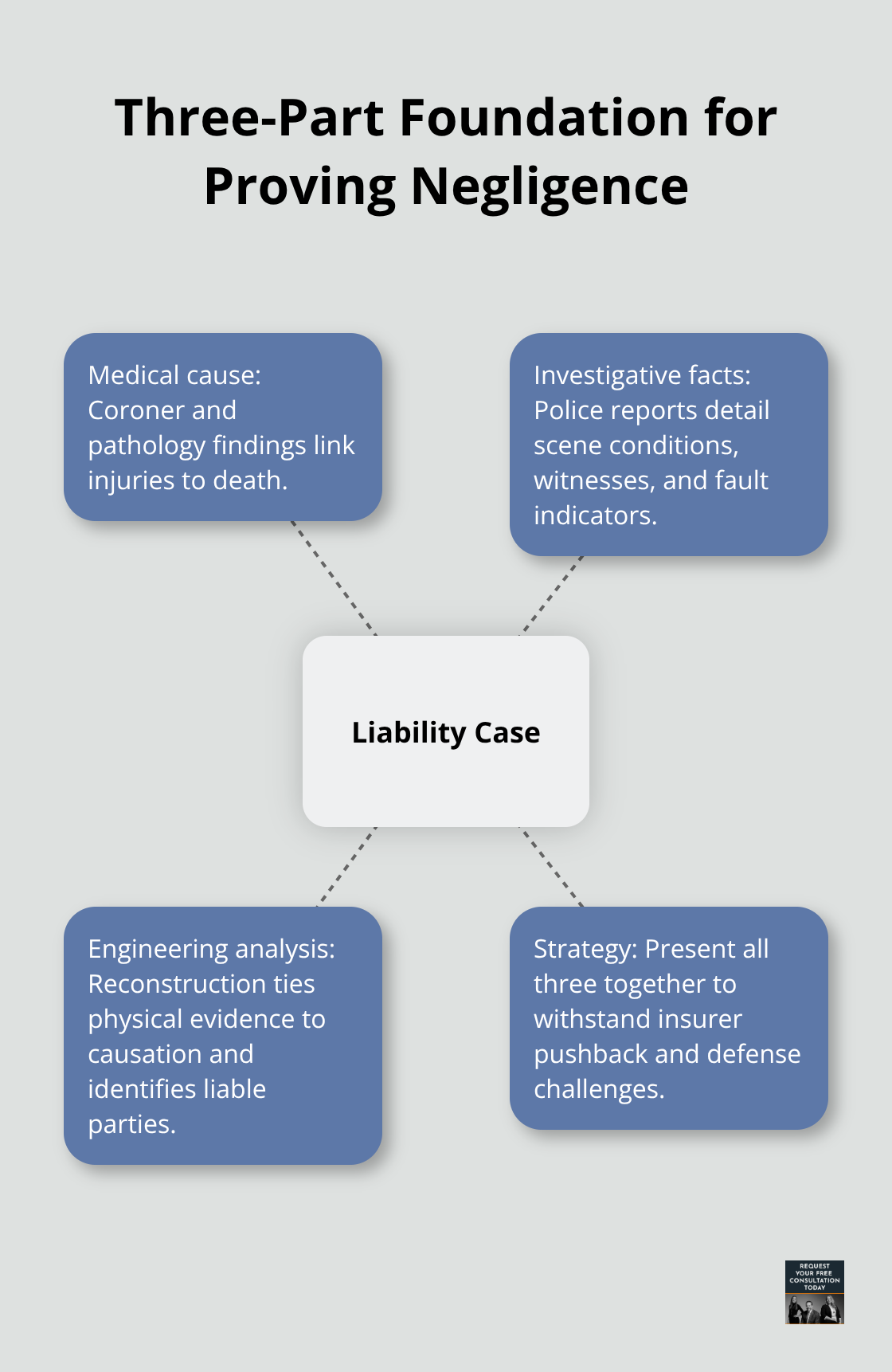
Combine the coroner’s medical findings with the police investigation and expert reconstruction to establish negligence caused your loved one’s death. This three-part foundation-medical cause, investigative facts, and engineering analysis-creates a compelling case that defendants and insurers cannot easily dismiss. The evidence you gather now determines whether you recover full compensation or face pressure to settle for far less than your family deserves.
Once you have secured these critical documents and expert analysis, you can identify all parties responsible for the crash and pursue them through settlement negotiations or litigation.
Where to Find Help and Support in Santa Cruz County
Losing a family member to a bicycle crash creates immediate practical demands alongside overwhelming grief. Santa Cruz County offers multiple mental health, financial, and community resources specifically designed to support bereaved families.
Mental Health and Crisis Support Services
Santa Cruz County Behavioral Health provides counseling and crisis intervention services; call 831-454-3000 during business hours or contact the 988 Suicide & Crisis Lifeline for immediate support. Hospice of Santa Cruz County offers grief counseling programs for families navigating sudden loss. These services matter because grief left unaddressed compounds the stress of legal proceedings and financial recovery. The 988 Suicide & Crisis Lifeline operates 24/7 and connects you with trained counselors who understand trauma and loss.
Financial Assistance and Victim Support Programs
The California Victim Compensation Board reimburses eligible families for funeral expenses, counseling costs, and lost wages for family members attending court proceedings or managing the death. You must file within one year of the death, though extensions are possible. Victim Witness Assistance Centers in Santa Cruz and Watsonville provide free case navigation, court preparation, and emotional support throughout wrongful death proceedings. These agencies understand the intersection of trauma and litigation and help your family stay organized when everything feels chaotic.
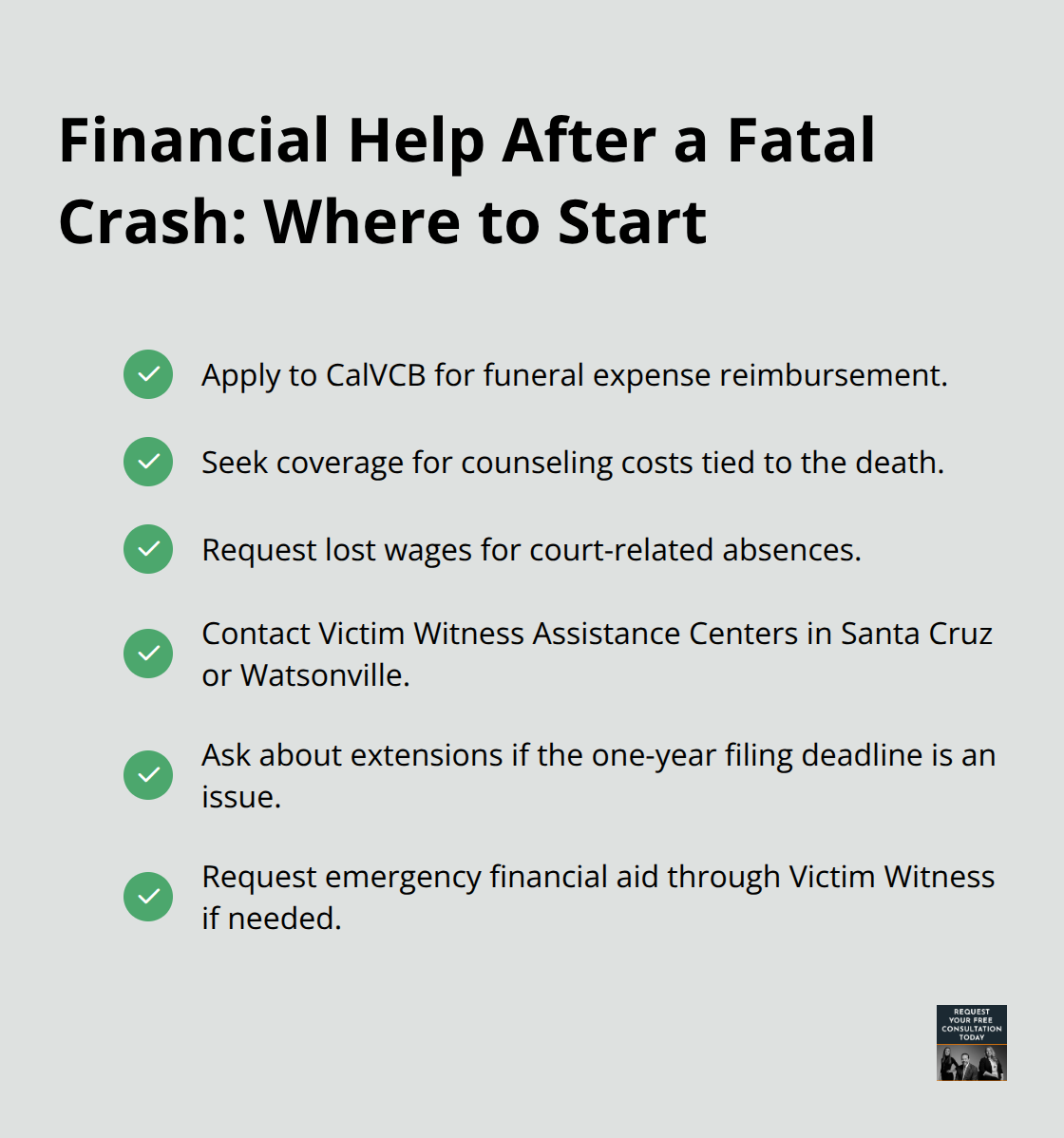
The Victim Witness Assistance Center also connects families with emergency financial aid for immediate expenses when a breadwinner dies suddenly.
Community Resources and Practical Support
Community Bridges offers case management services that help families access housing assistance, food support, and utility payment programs if the deceased’s death creates financial hardship. MADD (Mothers Against Drunk Driving) provides targeted support for families whose loved ones died in crashes involving impaired drivers, including help understanding the criminal justice process and victim impact statements. Local organizations like Ecology Action actively work on biking and walking safety, and many families find purpose in supporting their advocacy efforts to prevent future crashes on dangerous Santa Cruz corridors.
Advocacy and Systemic Change
The Santa Cruz County Community Traffic Safety Coalition surveys community members about safety concerns, offering families a constructive way to influence local infrastructure improvements. These organizations become especially valuable because they connect your grief to systemic change, moving families from isolation toward meaningful action. Contact the Victim Assistance and Victim Notification Program at the District Attorney’s office for comprehensive guidance on all available resources and to understand how the criminal investigation process unfolds if impairment or recklessness is involved.
Moving Forward After a Fatal Bicycle Crash
The path to justice after a Santa Cruz bicycle wrongful death begins with finding an attorney who understands both the legal complexities and the emotional weight your family carries. An experienced personal injury attorney investigates the crash thoroughly, identifies all potentially liable parties, and builds a case that reflects the true value of your loss. Your attorney handles communications with insurance companies, negotiates settlements, and prepares for trial if necessary, allowing you to focus on grieving and healing.
Filing a wrongful death claim requires meeting strict deadlines and procedural requirements that vary depending on whether liability involves a private party, a government entity, or multiple defendants. Your attorney files the complaint within the two-year window, serves notice on all defendants, and manages discovery to obtain evidence the other side possesses. Throughout this process, your lawyer coordinates with medical experts, accident reconstructionists, and financial analysts to quantify your damages accurately.
We at Schaar & Silva LLP work with families throughout Santa Cruz County who have lost loved ones in bicycle crashes. Our team conducts thorough investigations with accident reconstruction experts, reviews police reports, inspects vehicles, and gathers medical records to identify all potentially liable parties. Contact Schaar & Silva LLP for a free case evaluation and to learn how we can help your family seek justice.
