

Losing a loved one to someone else’s negligence creates overwhelming grief and confusion about what comes next. A Santa Cruz wrongful death claim can help your family recover financially while holding the responsible party accountable.
We at Schaar & Silva LLP understand how difficult this time is, and we’re here to guide you through each step of the legal process. This guide explains the compensation available to your family and what to expect along the way.
What Makes a Wrongful Death Claim Valid in Santa Cruz
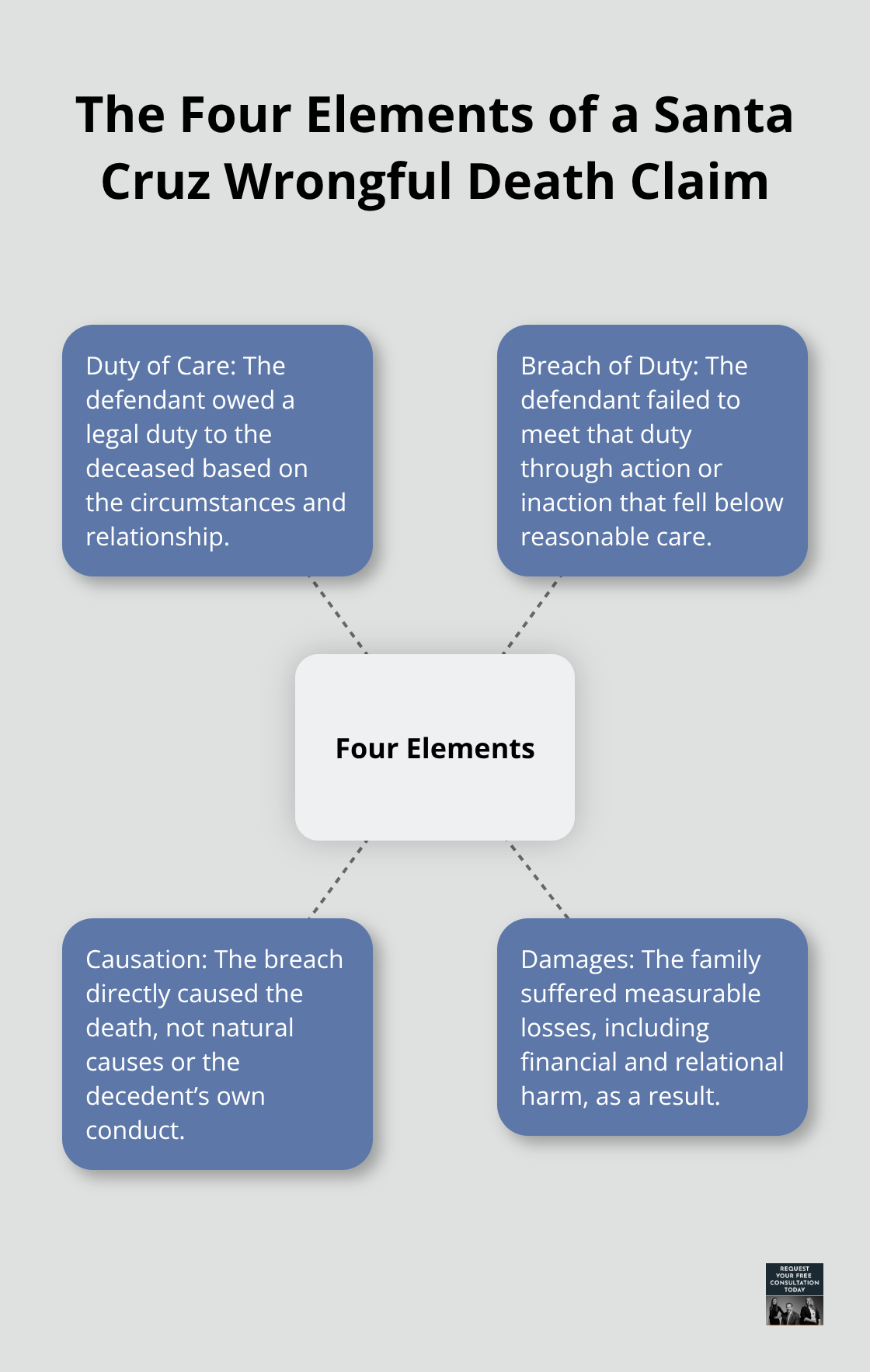
The Four Elements of a Valid Wrongful Death Claim
A wrongful death claim exists when someone dies because of another person’s negligence or wrongful conduct, and California law allows surviving family members to pursue financial recovery. The key requirement is establishing that the death resulted directly from someone else’s actions or failure to act, not from natural causes or the deceased’s own conduct. In Santa Cruz County, you must prove four elements: the defendant owed a duty of care to the deceased, the defendant breached that duty, the breach caused the death, and the family suffered damages as a result.
Critical Deadlines You Cannot Miss
The statute of limitations gives you exactly two years from the date of death to file a claim, according to California Code of Civil Procedure Section 335.1. This deadline is absolute, and missing it typically bars your claim permanently, so you must act quickly. If the death involved medical malpractice, the timeline becomes more complex-you must provide a 90-day notice to the healthcare provider before filing suit, with subsequent deadlines of one year from discovery or three years from the incident, whichever comes first.
Common Incidents That Trigger Wrongful Death Claims
Auto accidents, pedestrian collisions, bicycle accidents, trucking crashes, and workplace negligence lead to wrongful death claims regularly in Santa Cruz. These aren’t theoretical scenarios-they happen in our community. A distracted driver strikes a cyclist, a truck operator fails to maintain brakes, or a property owner neglects safety hazards, and fatal outcomes result that justify a claim.
Economic and Non-Economic Damages Explained
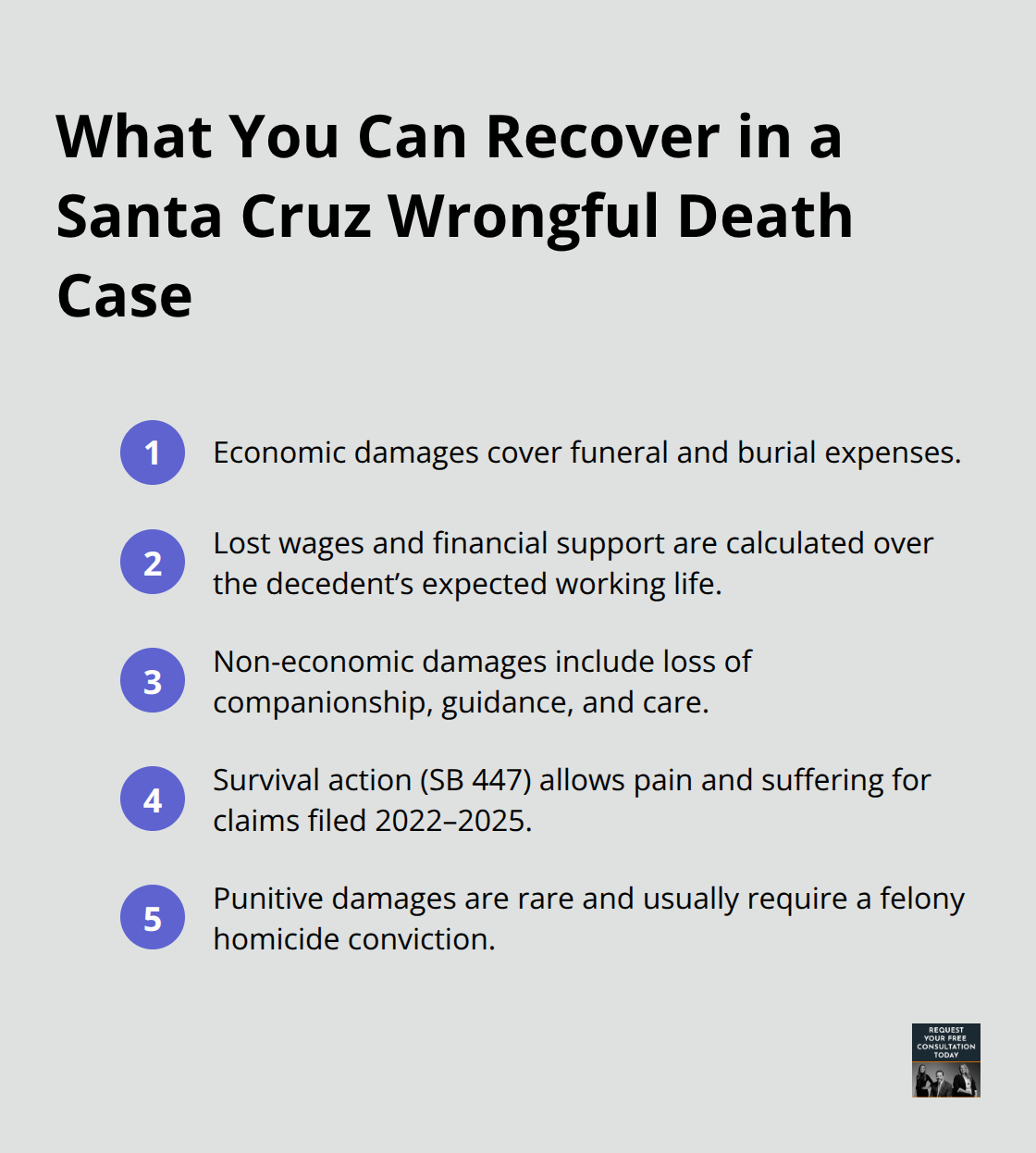
Economic damages cover funeral costs (which average around ten thousand dollars), plus lost wages and financial support the deceased would have provided over their lifetime. Non-economic damages address the intangible losses: loss of companionship, guidance, care, and emotional pain experienced by surviving spouses, children, or dependents. Under Senate Bill 447 (passed in 2021), families can also pursue pain and suffering damages through a survival action for claims filed between 2022 and 2025, allowing recovery for the deceased’s own suffering from injury to death. Punitive damages remain unavailable in most wrongful death cases unless the death resulted from felony homicide with a conviction.
What Happens Next in Your Case
Understanding these distinctions matters because they directly affect how much your family can recover and which legal mechanisms apply to your situation. The next step involves filing your claim and launching an investigation into the circumstances surrounding your loved one’s death.
How Much Can Your Family Recover in a Wrongful Death Case
Economic Damages: Funeral Costs and Lost Wages
California law recognizes three distinct categories of damages in wrongful death claims, and understanding what your family can actually receive matters far more than theoretical maximums. Economic damages are straightforward to calculate: funeral and burial expenses typically run between eight thousand and fifteen thousand dollars depending on the type of service, cremation costs, casket selection, and cemetery fees. Beyond immediate burial costs, economic damages include the full value of lost wages and financial support the deceased would have provided throughout their lifetime.
California courts use mortality tables, the deceased’s age, health status, and occupation to project how many years of income your family lost, then calculate that as a lump sum intended to replace those future benefits when invested wisely. A parent earning fifty thousand dollars annually who would have worked another twenty years represents one million dollars in lost financial support before accounting for raises or career advancement.
Non-Economic Damages: Loss of Companionship and Care
Non-economic damages address what money cannot truly replace: loss of companionship, guidance, parental care, and emotional suffering experienced by spouses, children, and dependents. These damages often constitute the largest portion of a wrongful death settlement because courts recognize that losing a family member creates permanent relational harm that extends far beyond financial loss.
Expanded Recovery Through Senate Bill 447
Senate Bill 447, which took effect in 2022, temporarily expanded what families can recover by allowing pain and suffering damages through a survival action for claims filed between 2022 and 2025. This means your family can now recover not only for your own losses but also for the deceased’s pain and suffering from the moment of injury until death, with those damages flowing to the decedent’s estate and then to heirs.
Punitive Damages: When They Apply
Punitive damages remain largely unavailable in wrongful death cases unless the death resulted from felony homicide with a conviction, which is rare in Santa Cruz. Understanding these distinctions helps your family make informed decisions about which legal mechanisms to pursue and what realistic compensation looks like for your specific situation. The next step involves determining who can file your claim and what role the personal representative plays in the legal process.
Moving Your Wrongful Death Claim Forward
Act Quickly to Preserve Critical Evidence
Filing a wrongful death claim in Santa Cruz requires immediate action and strategic planning. Within days of your loved one’s death, you should contact an attorney to preserve evidence and meet the two-year statute of limitations deadline. Gather documentation immediately: the death certificate, medical records showing the cause of death, police reports if the incident involved an accident, witness contact information, and any communications with the responsible party or their insurance company. Your attorney will file a complaint in Santa Cruz County Superior Court naming the defendant and describing how their negligence caused the fatal injury. Investigators reconstruct what happened through photographs of the accident scene, video surveillance footage if available, and interviews with witnesses while their memories remain fresh.
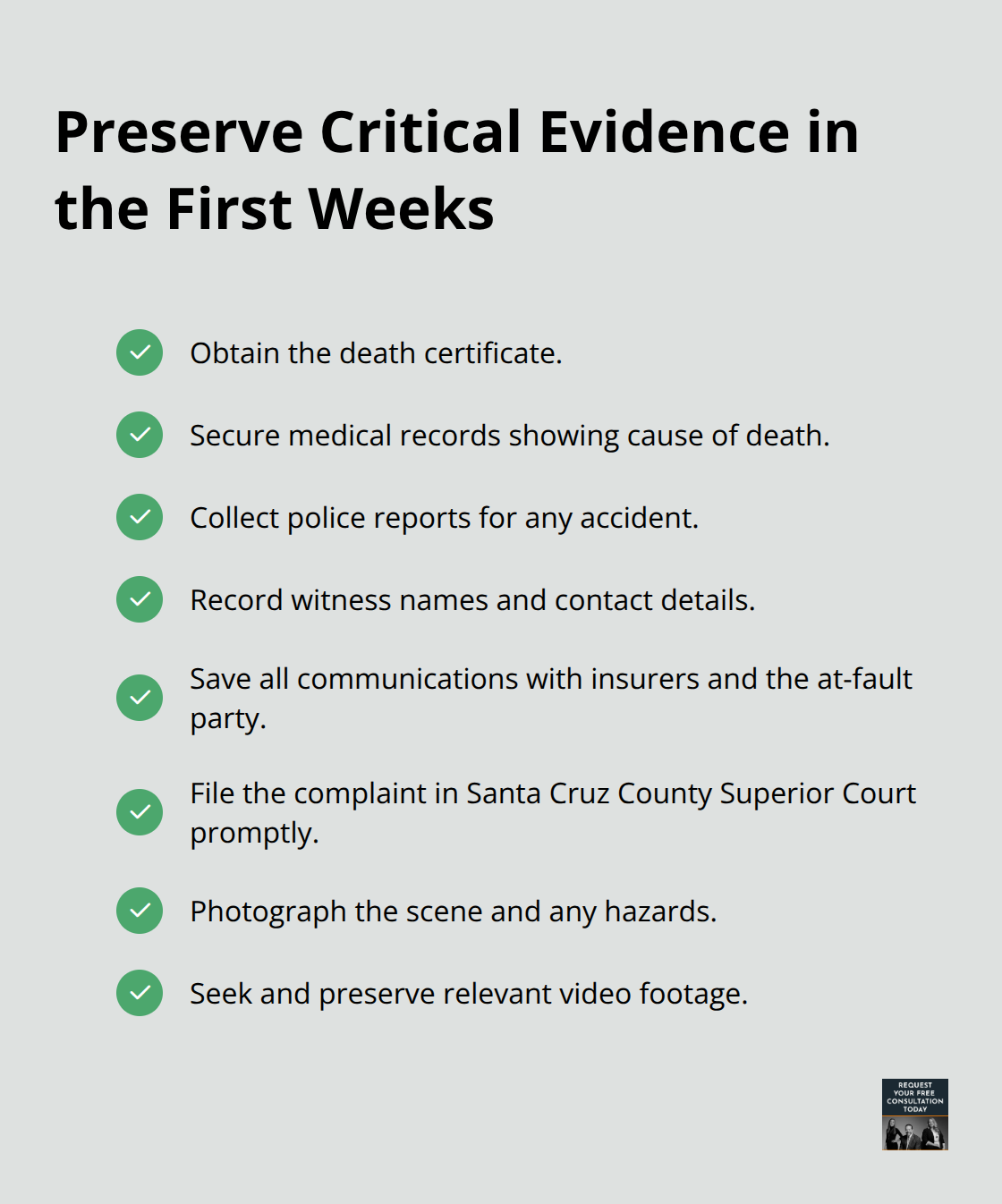
Many families delay this step thinking they need more time to grieve, but evidence deteriorates quickly-security footage gets deleted, witnesses relocate, and memories fade within weeks.
Discovery Reveals the Strength of Your Case
The discovery phase determines whether your case settles or proceeds to trial. Your attorney exchanges written questions called interrogatories and document requests with the defendant’s legal team, forcing them to disclose evidence about their conduct, safety records, and financial condition. Depositions follow, where witnesses and the defendant answer questions under oath, creating a transcript that locks in their story and reveals contradictions. Medical experts review records to establish causation between the defendant’s actions and death, while economic experts calculate lost wages using mortality tables and the deceased’s earning history.
Settlement Negotiations and Trial Preparation
Settlement negotiations typically occur after discovery when both sides understand the evidence strength. Insurance adjusters often lowball initial offers, but thorough evidence of liability and damages leads to substantially higher recovery. If the defendant refuses a reasonable settlement, your case proceeds to trial where a jury decides liability and damages. Santa Cruz juries tend to award significant compensation in wrongful death cases involving clear negligence, particularly when the deceased had decades of earning potential ahead or left young children.
Timeline Expectations for Your Case
The entire process from filing to settlement typically takes eighteen to thirty-six months, though complex cases involving multiple defendants or medical malpractice extend longer. Understanding this timeline helps your family plan financially and emotionally for the months ahead.
Final Thoughts
A Santa Cruz wrongful death claim represents more than a legal process-it’s a path toward financial stability and accountability when negligence takes someone you love. Time matters because the two-year statute of limitations moves quickly, and evidence deteriorates faster than most families realize. Acting within weeks of your loved one’s death, not months, preserves the strongest possible case and protects your family’s right to recover.
Your family can realistically expect economic damages covering funeral costs and lost wages, plus non-economic damages for loss of companionship and care. Senate Bill 447 temporarily expanded these options through 2025, allowing recovery for the deceased’s own suffering. Families in Santa Cruz have recovered six- and seven-figure settlements and verdicts when the evidence clearly establishes negligence and damages.
Contact Schaar & Silva LLP to discuss your specific situation with someone who understands the trauma of losing a family member. We listen to your family’s story, answer your questions about deadlines and damages, and explain exactly what to expect. The consultation costs nothing, but the delay costs everything.
