

A car accident in Santa Cruz leaves more than physical injuries. The emotional aftermath-anxiety, depression, and trauma-can linger long after the crash.
At Schaar & Silva LLP, we know that Santa Cruz emotional recovery requires both professional mental health support and proper legal documentation. This guide connects you with local counselors, support groups, and the steps needed to strengthen your personal injury claim.
What Happens to Your Mind After a Car Crash
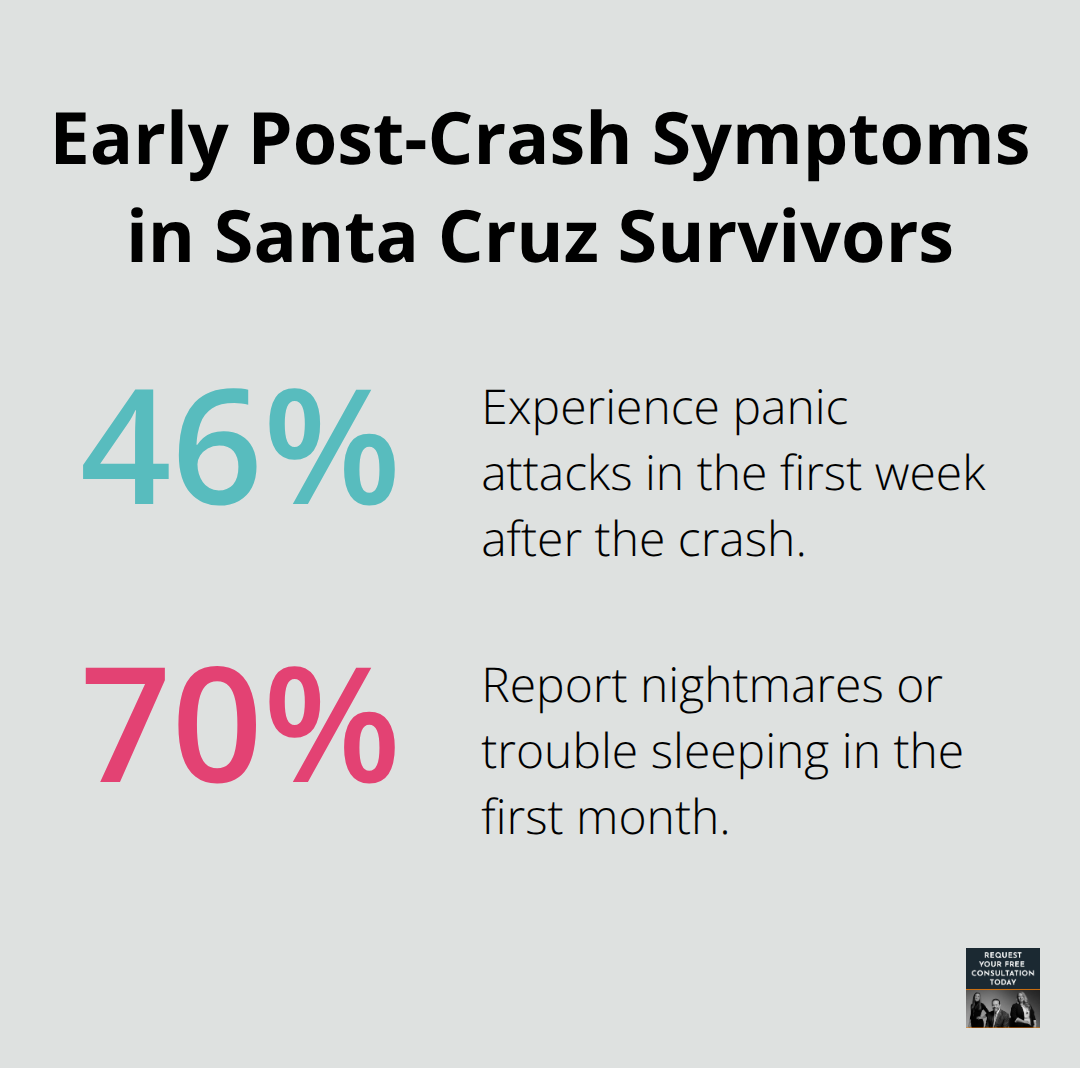
Your body’s immediate response to a Santa Cruz car accident is involuntary and powerful. The National Institute of Mental Health documents that adrenaline and cortisol surge through your system within seconds, triggering reactions that range from shakiness to an eerie sense of calm. Within the first week, roughly 46 percent of crash survivors experience panic attacks, according to the American Psychological Association. Sleep becomes unreliable fast-up to 70 percent report nightmares or trouble sleeping in the first month.
Some people experience emotional numbness or dissociation that can persist for days or weeks as the brain essentially protects itself from overwhelming input. These reactions are not weakness; they are standard neurobiology. The crash hijacks your nervous system, and expecting yourself to feel normal immediately is unrealistic.
The Gap Between Immediate and Lasting Effects
The distinction between short-term shock and long-term damage matters significantly for your recovery plan. Within six months, roughly 39.2 percent of survivors develop anxiety disorders, while about 17.4 percent develop depression, with concentration problems affecting roughly 70 percent of those experiencing depression, according to the Journal of Clinical Medicine. About 32.3 percent develop post-traumatic stress disorder, with women facing approximately 2.5 times higher risk than men. Avoidance behaviors emerge in about 39.2 percent within six months-people avoid driving certain routes or highways altogether. Persistent physical pain six to eight weeks after the crash strongly predicts greater depression severity around two months later. If you had anxiety or depression before the accident, the crash typically amplifies those conditions. Longer hospital stays beyond seven days correlate with higher depression at the two-month mark. This timeline matters because early intervention works dramatically better than waiting months to seek help.
Why Starting Treatment Now Changes Everything
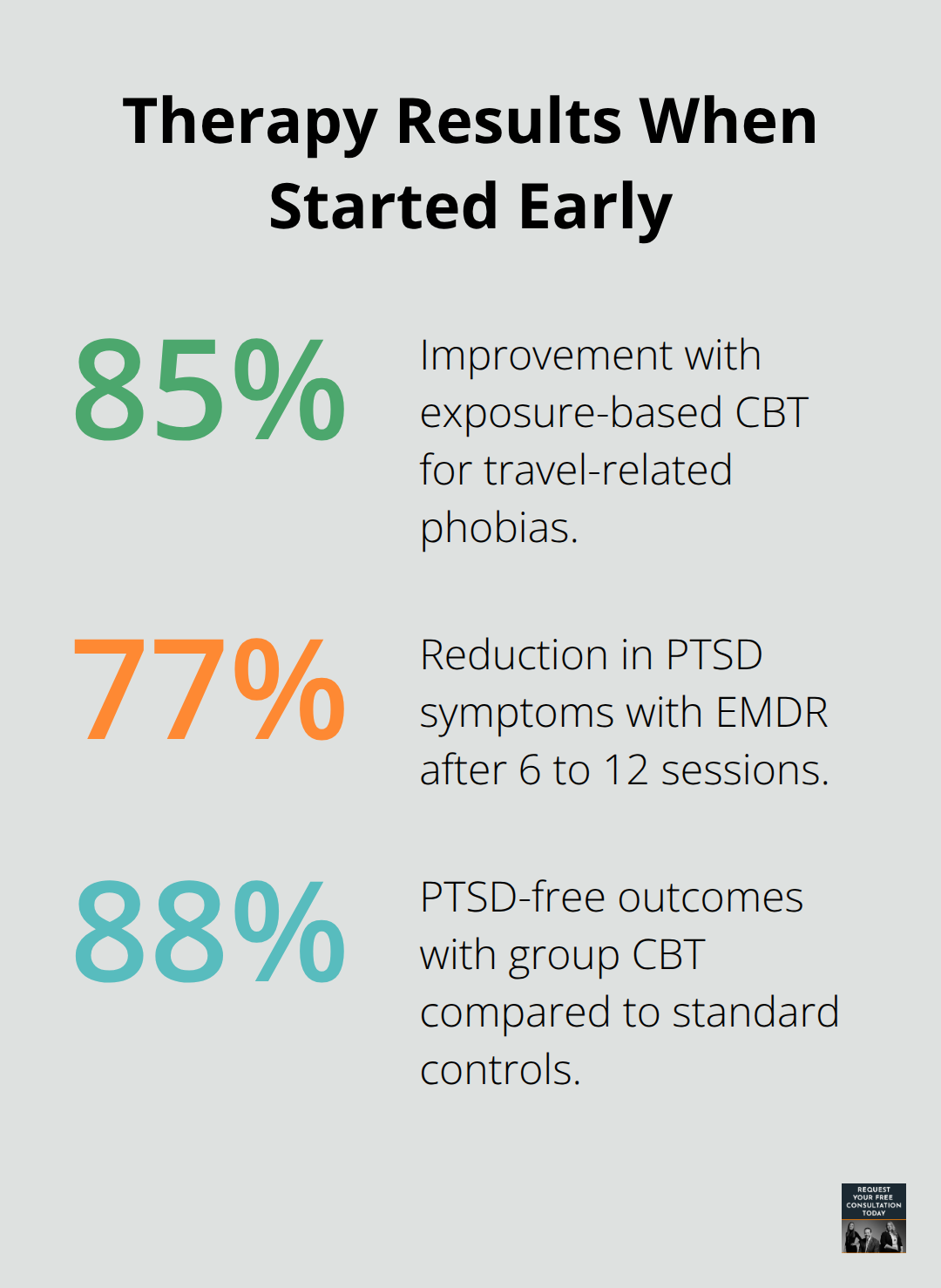
Evidence-based therapy produces measurable results if you start soon after the crash. Cognitive-behavioral therapy with gradual exposure yields roughly 85 percent improvement for travel-related phobias across 12 to 16 sessions. EMDR therapy reduces PTSD symptoms in about 77 percent of accident survivors after 6 to 12 sessions. Group CBT specifically for accident-related PTSD achieves about 88 percent PTSD-free outcomes compared to just 31 percent in control conditions.
Brief CBT for acute stress disorder started within the first weeks substantially reduces your risk of developing full PTSD versus supportive counseling alone. The difference between starting treatment now versus waiting is stark: early intervention prevents temporary distress from crystallizing into chronic conditions. A trauma-informed therapist with credentials like LMFT, PsyD, PhD, or LCSW can assess your specific needs and recommend whether EMDR, exposure therapy, or another approach fits your situation best. The next section shows you exactly where to find these qualified professionals in Santa Cruz County.
Where to Find Mental Health Support in Santa Cruz County
Locating Qualified Trauma Therapists
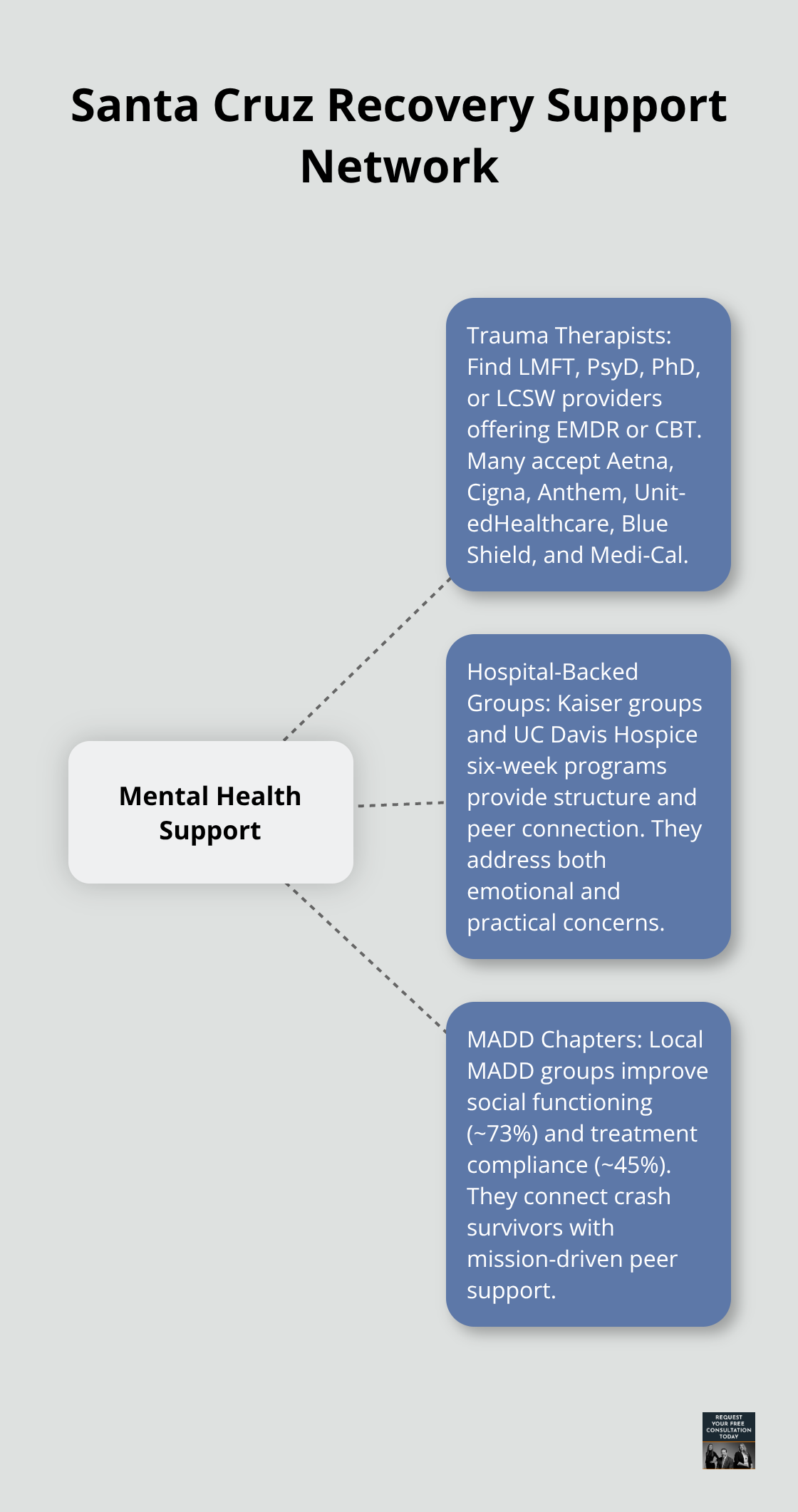
Santa Cruz County has more than 500 trauma and PTSD therapists listed on Psychology Today, yet selecting the right one matters enormously for your recovery. Start by filtering for credentials: look specifically for LMFT (Licensed Marriage and Family Therapist), PsyD (Doctor of Psychology), PhD, or LCSW (Licensed Clinical Social Worker). These credentials indicate formal training in trauma treatment. Verify that potential therapists offer evidence-based approaches like EMDR or cognitive-behavioral therapy-the two methods with the strongest track records for accident survivors. Most major insurers operate in Santa Cruz County (Aetna, Cigna, Anthem, UnitedHealthcare, Blue Shield, and Medi-Cal) and cover trauma-focused therapy with many providers. If cost presents a barrier, ask about sliding-scale fees when you call; many therapists adjust rates based on income. Psychology Today’s therapist finder lets you filter by insurance and specialty, which cuts through the noise quickly.
Hospital-Backed and Community Support Groups
Hospital-backed support groups often outperform standalone community groups because they connect you with others who have experienced similar trauma and provide structure. Kaiser Permanente operates groups in the area, and UC Davis Hospice runs six-week grief and trauma programs that address both emotional and practical concerns. Mothers Against Drunk Driving (MADD) maintains active chapters in Santa Cruz County and improves social functioning by about 73 percent among participants while boosting treatment compliance by about 45 percent.
Choosing the Right Therapeutic Approach
When you locate a therapist, tell them upfront about your accident and ask whether they recommend EMDR (effective for 77 percent of accident survivors in 6–12 sessions) or exposure-based CBT (85 percent improvement for travel fears over 12–16 sessions). The right match between your needs and a therapist’s specialty accelerates healing and prevents false starts with providers who lack accident trauma experience. Call 988 anytime if you experience suicidal thoughts or overwhelming panic-the Suicide and Crisis Lifeline operates 24/7 and has trained counselors ready to listen.
Coordinating Your Recovery Plan
As you build your support network, you’ll also need to address the practical side of your recovery. Medical bills, insurance claims, and property damage assessments add stress that can undermine your emotional progress. At Schaar & Silva LLP, we handle these legal complexities so you can focus on healing. We connect you with medical lien services that facilitate bill payment until your case resolves, assist with property damage claims, and help you understand what compensation you may receive. This coordination between mental health treatment and legal clarity removes obstacles that often slow recovery.
Building Your Documentation Trail
Start Treatment and Document Everything
Your mental health records form the foundation for proving emotional injury to an insurance company or court. Most people skip this step, which is a mistake because insurance adjusters will deny claims without documented evidence of psychological harm. Start treatment immediately and inform your therapist that you were in a car accident-this context matters enormously for your clinical notes. Your therapist should document the specific symptoms you report, the date of onset relative to the crash, and how those symptoms interfere with daily functioning like work, sleep, or driving. The Journal of Clinical Medicine shows that persistent pain six to eight weeks post-crash predicts greater depression severity around two months later, so gaps in your treatment timeline weaken your claim.
Maintain Consistent Treatment Records
Attend every scheduled appointment without cancellations; insurance companies scrutinize sporadic attendance and use it to argue your condition is not serious. Request copies of your clinical notes after each session and retain them in a dedicated folder-these become exhibits in your claim. Your therapist’s credentials matter for credibility; LMFT, PsyD, PhD, and LCSW providers carry more weight in legal proceedings than unlicensed counselors. If you take prescribed medication for anxiety or depression following the crash, that prescription strengthens your documentation because it shows a physician assessed your condition as requiring pharmacological intervention.
Create a Personal Symptom Journal
Beyond therapy notes, create a personal journal that documents your symptoms daily for at least the first month. Write specific incidents: the date you had a panic attack, how long it lasted, what triggered it, and how it affected you physically and emotionally. Include avoidance behaviors like refusing to drive on specific highways or canceling work meetings due to anxiety. Photographs of accident scenes, vehicle damage, and any visible injuries establish the severity of the collision, which correlates with psychological injury severity.
Gather Objective Medical Evidence
Medical records from your initial emergency room visit, including vital signs and physician observations about your emotional state, provide objective documentation that trauma occurred immediately post-crash. Insurance companies understand that women face approximately 2.5 times higher risk of developing PTSD than men following motor vehicle crashes according to the American Psychological Association, so gender-specific trauma responses receive appropriate consideration when properly documented. These records demonstrate that your emotional injury began at the moment of impact, not weeks later.
Coordinate Documentation with Legal Support
We at Schaar & Silva LLP guide you through this documentation process and organize your records for maximum impact on your claim. We coordinate directly with your mental health providers to obtain necessary clinical documentation and explain to insurance adjusters why your emotional recovery timeline and treatment costs warrant compensation.
Final Thoughts
Your Santa Cruz emotional recovery depends on combining professional mental health treatment with practical legal support. Schedule your first therapy appointment this week and commit to consistent attendance, telling your therapist about the accident immediately so they document your trauma timeline accurately. Address the financial and legal pressures that drain your emotional energy while you heal, because medical bills and property damage claims create additional stress that undermines your progress in therapy.
We at Schaar & Silva LLP handle these practical obstacles so you can focus entirely on healing. We direct you to medical lien services that arrange payment of your medical bills until your case resolves, meaning you avoid collection calls while recovering. We evaluate your property damage claim, negotiate fair compensation with insurance companies, and connect you with trauma specialists who understand accident-related PTSD and anxiety.
Your personal injury claim covers documented emotional trauma, and we organize your clinical records and symptom documentation to present the strongest possible case to insurance companies. Therapy costs, medication, and lost work time from anxiety or depression qualify as legitimate damages when your mental health records show consistent treatment with a qualified provider. Contact Schaar & Silva LLP today to discuss your case and accelerate your path forward.
