
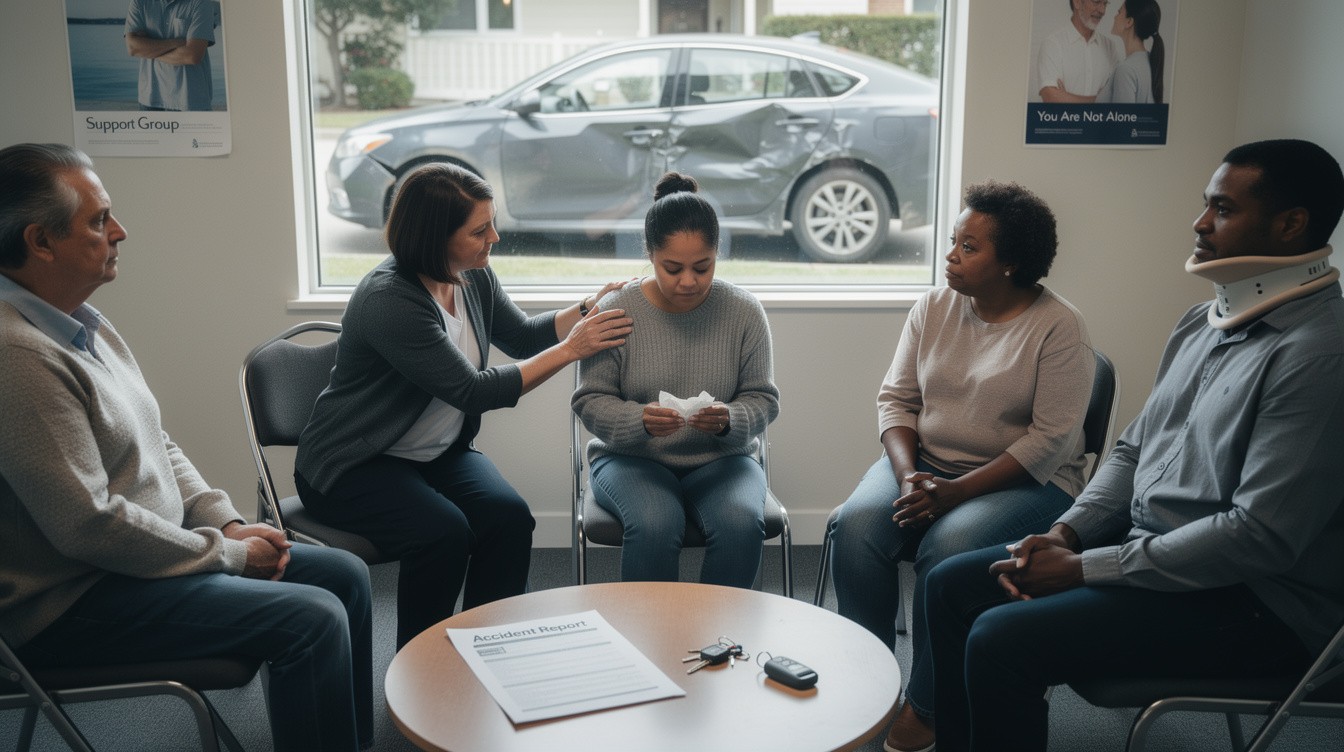
A car accident leaves more than physical injuries. The emotional trauma that follows can be just as debilitating, affecting your sleep, relationships, and daily life.
At Schaar & Silva LLP, we understand that recovery means addressing both your legal needs and your mental health. This guide connects you with local mental health resources in Santa Cruz County and shows how we support your complete healing journey.
The Psychological Impact of Auto Accidents
Your Nervous System After a Crash
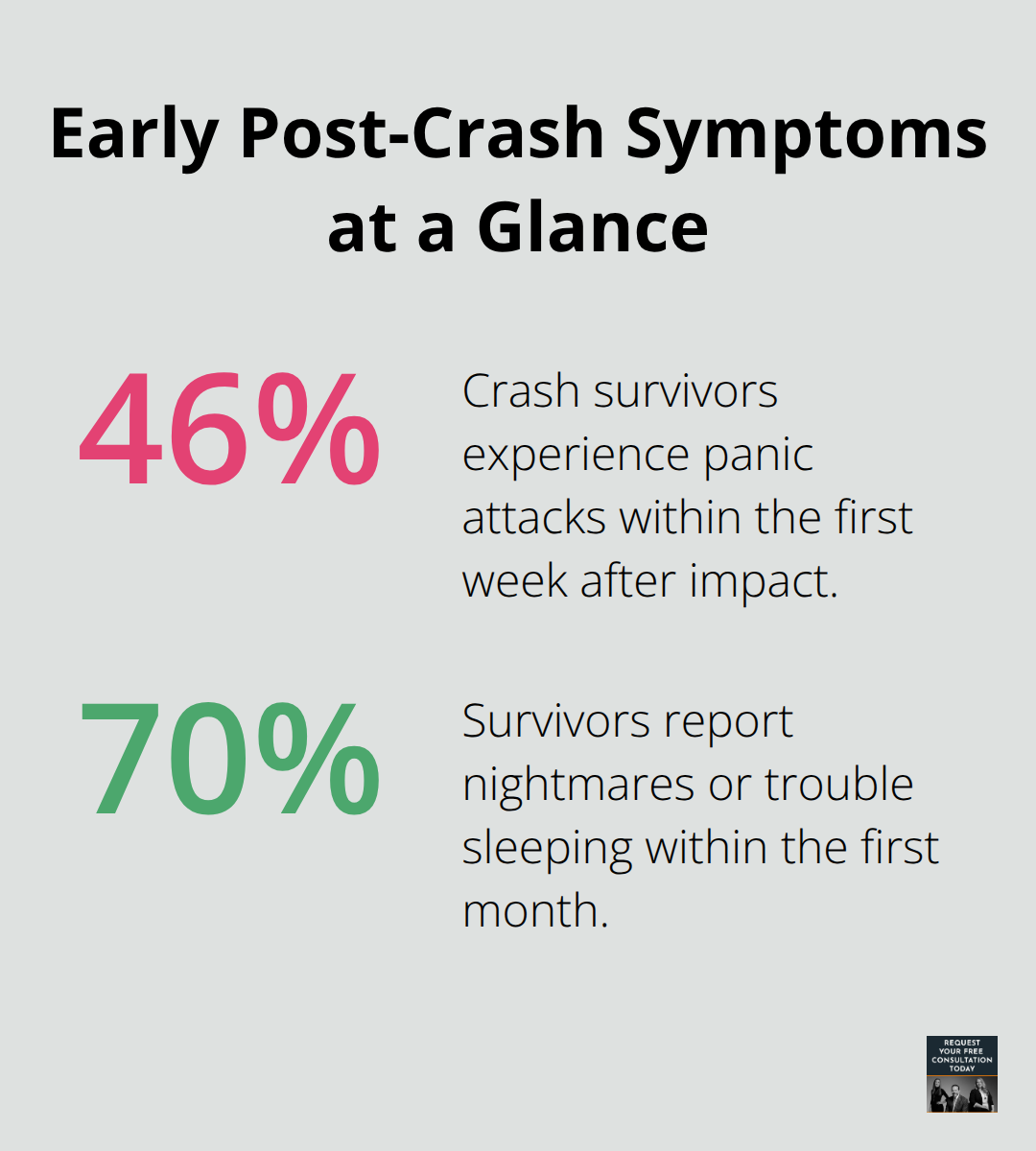
A car accident triggers immediate changes in your nervous system that can last far longer than any physical injury. The American Psychological Association reports that 46% of crash survivors experience panic attacks within the first week after impact. Your body floods with stress hormones, your heart races, and your breathing becomes shallow. This isn’t weakness or overreaction-it’s your brain’s survival mechanism activating. Within the first month, up to 70% of survivors report nightmares or trouble sleeping, making recovery feel impossible when exhaustion sets in.
The Journal of Clinical Medicine found that pain persisting six to eight weeks after a crash strongly predicts greater depression severity about two months later, showing how physical and emotional trauma interconnect. Ignoring your emotional response while treating physical injuries leaves you vulnerable to long-term mental health challenges that compound your suffering.
What Untreated Trauma Becomes
The statistics over six months paint a sobering picture of what untreated trauma becomes. About 39.2% develop anxiety disorders, 17.4% develop depression, and 32.3% develop PTSD within six months after a crash, according to the Journal of Clinical Medicine. Women face roughly 2.5 times higher risk of PTSD compared to men. Among those who develop depression, approximately 70% experience concentration problems that make returning to work or managing daily responsibilities feel overwhelming. About 39.2% of survivors avoid driving certain routes or highways, which disrupts your independence and forces you to reorganize your life around fear.
Evidence-Based Therapies Work Fast
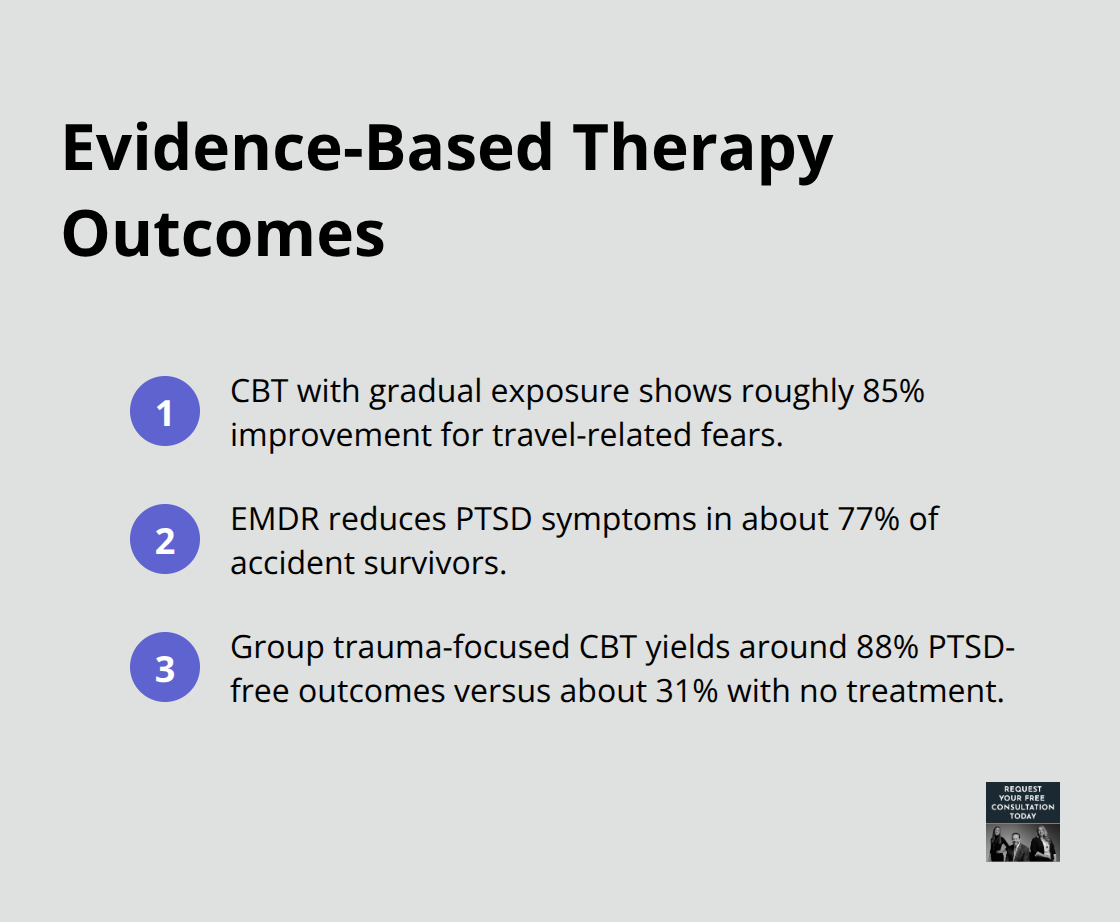
The good news is that evidence-based therapies work fast when you start immediately. Cognitive Behavioral Therapy with gradual exposure shows roughly 85% improvement for travel-related fears over 12 to 16 sessions, while EMDR therapy reduces PTSD symptoms in about 77% of accident survivors after 6 to 12 sessions. Group trauma-focused CBT yields around 88% PTSD-free outcomes versus about 31% with no treatment.
Starting therapy within weeks after your crash produces better outcomes and lower risk of chronic symptoms. Delaying treatment only deepens the hole you’re digging, which is why finding the right mental health support in Santa Cruz County matters so much for your recovery.
Where to Find Trauma Therapists in Santa Cruz County
Locating Qualified Therapists Locally
Santa Cruz County has over 500 trauma and PTSD therapists listed on Psychology Today, which means you have genuine options rather than a single path forward. Start by filtering for credentials that matter: LMFT, LCSW, PsyD, or PhD. Verify their license status through the California Board of Behavioral Sciences to confirm they’re current and in good standing. Look for therapists with documented experience treating motor vehicle crash survivors specifically, since accident trauma has distinct triggers and patterns compared to other trauma types. Typical Santa Cruz therapy costs around $175 per session, which falls within the nationwide range of $100 to $200 and beyond. About two-thirds of local therapists now offer both in-person and online sessions, giving you flexibility when leaving your house feels difficult or triggering.
Evaluating Therapy Approaches and Progress Tracking
When you call for an initial consultation, ask directly how they track progress with accident survivors and whether they use EMDR or trauma-focused CBT, the two approaches with the strongest evidence behind them. The VA National PTSD Center’s PCL-5 symptom checklist is a common measurement tool that legitimate providers use to monitor your improvement over time. Teletherapy can be as effective as in-person therapy when a strong therapeutic relationship exists, so don’t dismiss online options if they fit your schedule better. If cost becomes a barrier, ask about sliding-scale rates or group therapy options, which often cost less while still delivering measurable results.
Understanding Insurance Coverage
Insurance coverage varies by plan, but major carriers operating in Santa Cruz County include Aetna, Cigna, Anthem, UnitedHealthcare, Blue Shield, and Medi-Cal. Call your insurer directly and ask which in-network trauma therapists they cover, then cross-reference those names with Psychology Today to check credentials and approach. Medical lien services can cover your therapy bills during your case, which means you stop worrying about collection calls while you heal and instead focus energy on recovery.
Community Support Groups and Programs
Local support groups matter too: Mothers Against Drunk Driving chapters in Santa Cruz County report approximately 73% improved social functioning among participants, showing that shared experience accelerates healing. Kaiser Permanente offers hospital-backed trauma groups if you’re a member, while UC Davis Hospice runs six-week grief and trauma programs accessible to the broader community. These options complement individual therapy and provide connection with others who understand your specific experience.
Coordinating Your Care with Legal Support
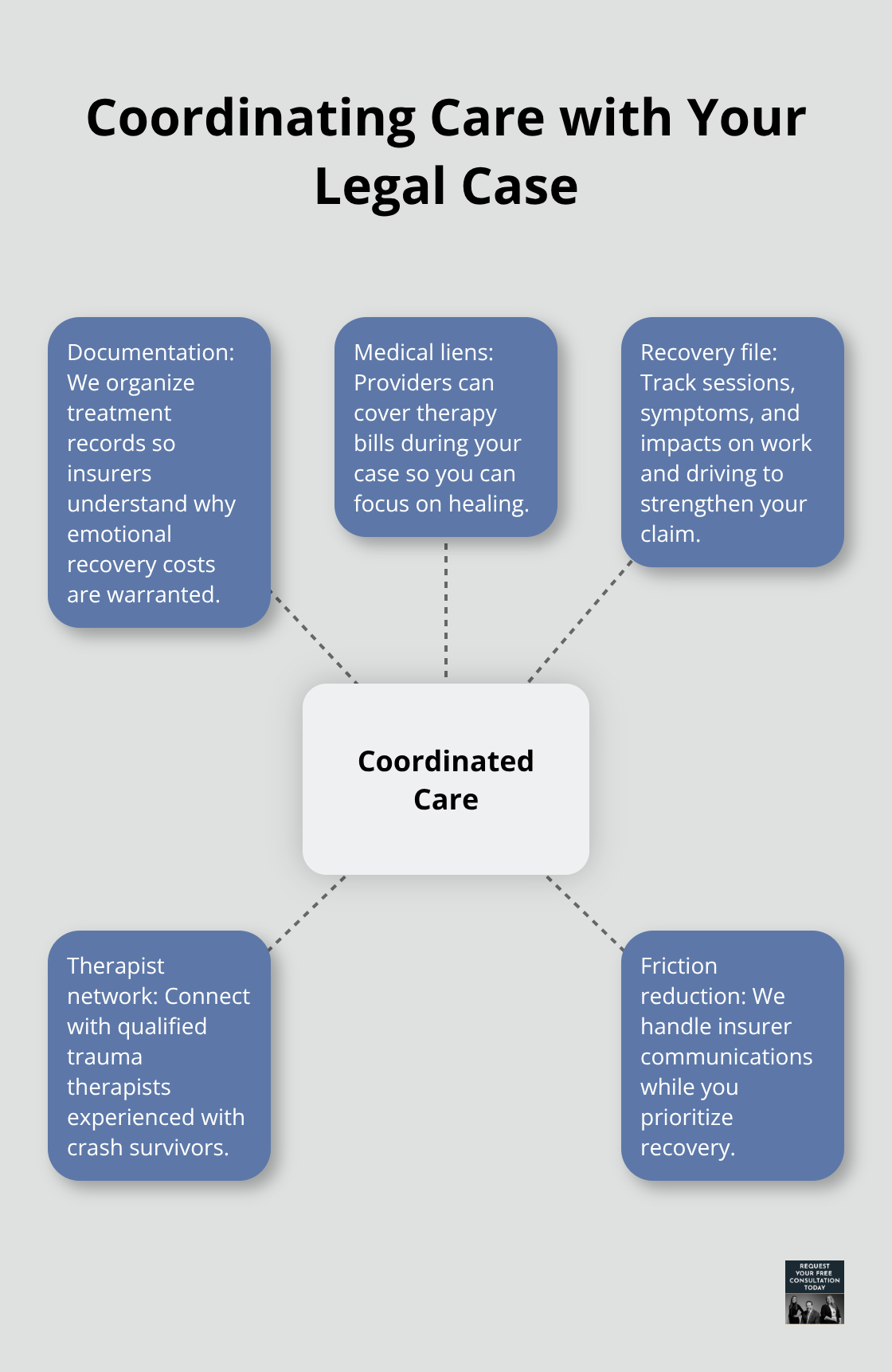
We at Schaar & Silva LLP can help organize your treatment records and explain to insurers why emotional recovery costs are fully warranted as part of your damages claim. This coordination removes friction between your healing and your legal case, allowing you to focus on recovery while we handle the documentation and communication with insurance companies. Your next step involves building a comprehensive recovery file that documents both your medical treatment and emotional progress.
How We Help You Access Mental Health Care
Connect with Experienced Trauma Therapists
We at Schaar & Silva LLP connect you with qualified mental health professionals in Santa Cruz County who have treated motor vehicle crash survivors. When you call a therapist, mention that you need someone experienced with accident trauma and ask whether they use EMDR or trauma-focused CBT-the two approaches with the strongest evidence. Many Santa Cruz therapists charge around $175 per session and accept major insurers like Aetna, Cigna, Anthem, UnitedHealthcare, Blue Shield, and Medi-Cal, so verify coverage before booking. Starting therapy immediately after your accident matters more than finding the perfect therapist, since early intervention produces better outcomes and lower risk of chronic symptoms.
Coordinate Documentation with Your Legal Case
We organize your treatment records and explain to insurers exactly why emotional recovery costs are fully warranted as damages. This coordination prevents the common scenario where insurers deny psychological treatment claims simply because the documentation wasn’t clear enough to justify the connection between your crash and your symptoms. Your therapist’s progress notes, combined with your symptom journal and medical records, create the evidence insurers need to approve full compensation for emotional trauma.
Eliminate Financial Barriers to Care
Medical lien services eliminate a major barrier to immediate care: instead of paying therapy bills out of pocket and hoping your case resolves quickly, medical lien providers cover your treatment costs until settlement. This stops collection calls and lets you focus entirely on recovery without financial stress interrupting your healing. The Journal of Clinical Medicine found that pain persisting six to eight weeks after a crash strongly predicts greater depression severity two months later, which is why delaying mental health treatment while waiting for physical injuries to heal often backfires.
Build Your Recovery File from Day One
Start your recovery file immediately by tracking therapy sessions, symptoms, and how your condition affects work and driving. Share these records with our team so we can build a stronger claim that reflects your actual experience. We handle the administrative side so you never waste energy arguing with insurance companies about whether your psychological recovery is legitimate.
Final Thoughts
Emotional trauma in Santa Cruz after a car accident responds well to early intervention, and recovery starts the moment you contact a mental health professional. The evidence is clear: trauma-focused therapy produces measurable results within weeks, not months, so waiting for physical injuries to heal before addressing your emotional wounds only deepens your suffering. Contact a trauma therapist through Psychology Today or your insurance provider within the next few days, then start documenting your symptoms and how your condition affects your work and daily life.
We at Schaar & Silva LLP coordinate your mental health care with your legal case, removing the burden of managing insurance conversations while you focus on healing. We connect you with qualified mental health professionals in Santa Cruz County, direct you to medical lien services that cover therapy costs during your case, and ensure your emotional trauma receives full recognition in your damages claim. Reach out to us to support your complete recovery and transform your emotional trauma claim into the compensation you deserve.
