

Car accidents leave visible injuries, but the psychological trauma Santa Cruz residents experience often goes unnoticed. Anxiety, depression, and PTSD are common after a crash, and they can disrupt your work, relationships, and daily routines.
We at Schaar & Silva LLP understand that healing requires both professional mental health support and fair legal compensation. This guide walks you through finding help and protecting your rights.
What Happens to Your Mind and Body After a Crash
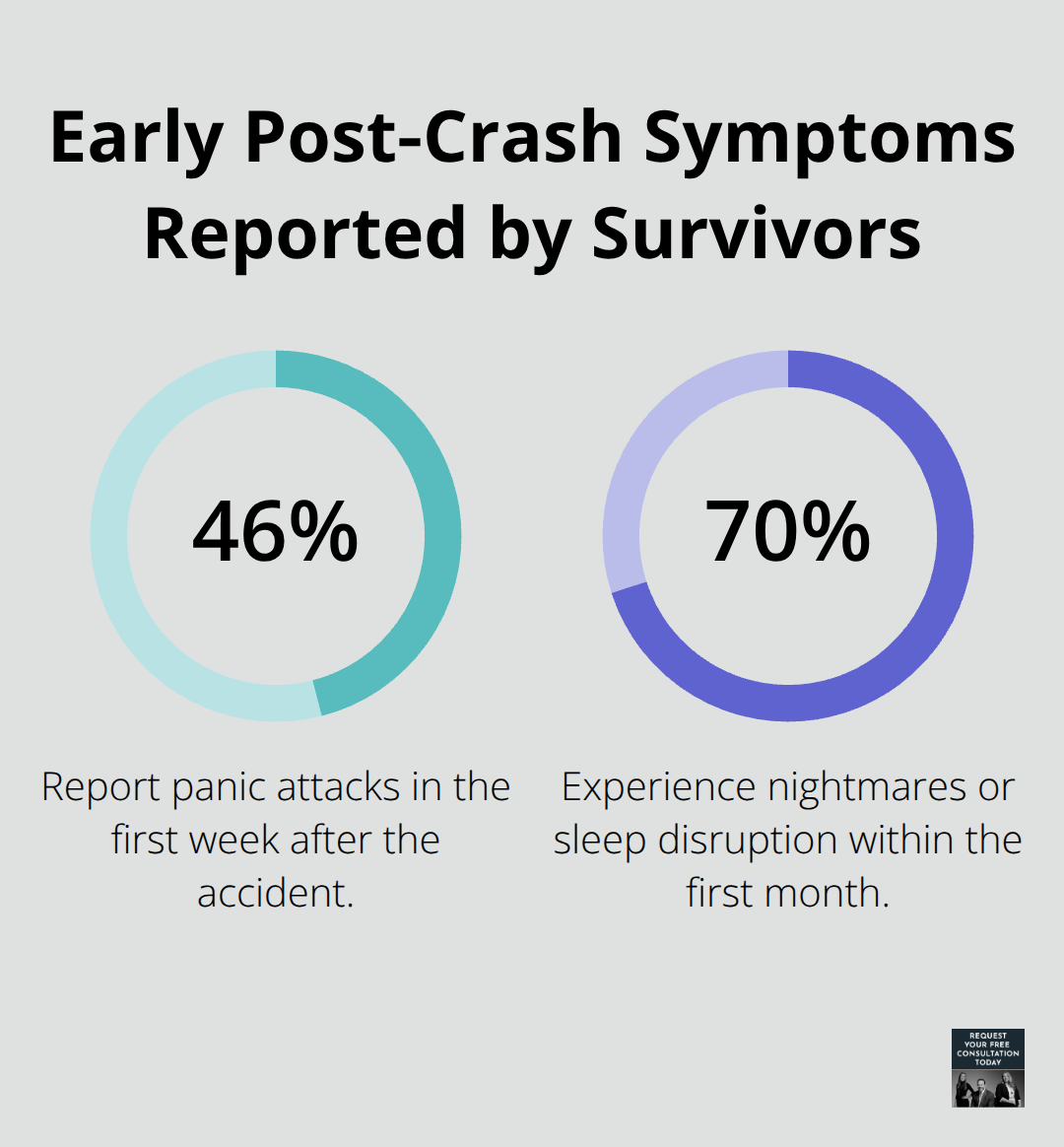
A car accident triggers an immediate stress response in your brain and body. Adrenaline and cortisol flood your system within seconds, preparing you for survival. About 46% of crash survivors report panic attacks in the first week following the accident, according to the American Psychological Association. Within the first month, roughly 70% experience nightmares or sleep disruption. These aren’t signs of weakness-they’re normal neurological responses to trauma.
Your nervous system has been shocked, and it takes time to reset.
Mental Health Conditions That Follow Accidents
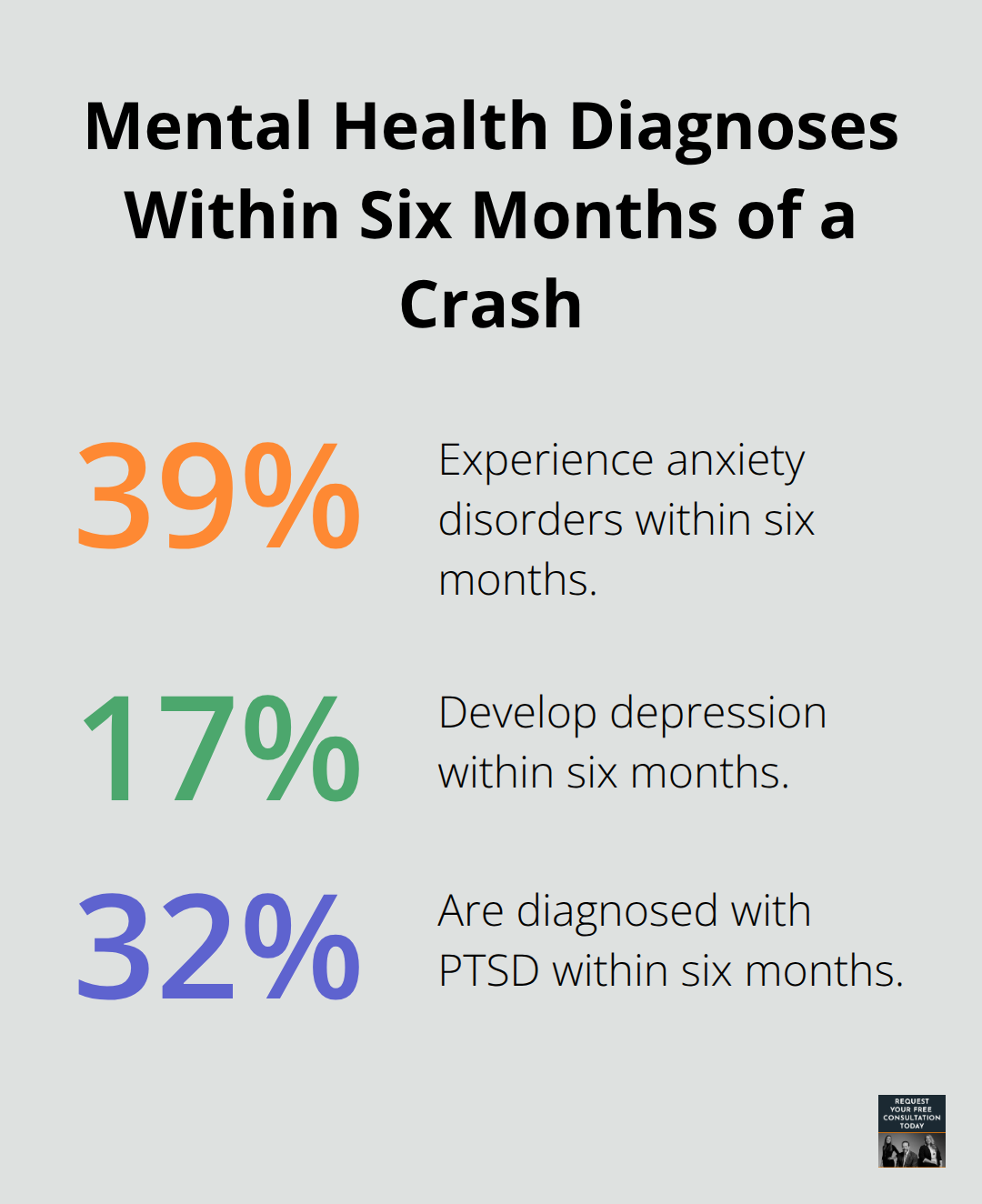
Within six months, many Santa Cruz residents develop lasting mental health conditions. About 39.2% experience anxiety disorders, 17.4% develop depression, and roughly 32.3% are diagnosed with PTSD, according to the Journal of Clinical Medicine and American Psychological Association research. Women face approximately 2.5 times higher risk of developing PTSD than men after motor vehicle crashes.
These aren’t temporary worries-they’re clinical conditions that interfere with work, relationships, and your ability to drive. Some survivors avoid routes connected to the crash or specific driving situations. Others struggle to concentrate at work or withdraw from social activities. If you notice flashbacks, intrusive thoughts about the accident, or avoidance behaviors persisting beyond a few weeks, professional treatment becomes essential rather than optional.
The Physical Toll of Psychological Trauma
Emotional trauma produces measurable physical symptoms that often surprise people. You might experience tension headaches, chest tightness, or stomach problems without obvious physical causes. Persistent pain six to eight weeks after the crash predicts greater depression severity two months later, according to the Journal of Clinical Medicine. Sleep disruption commonly leads to fatigue that compounds anxiety and mood problems. Some people develop muscle tension or chronic pain patterns tied directly to their nervous system’s heightened alert state. These physical symptoms deserve the same medical attention as broken bones, yet many people dismiss them as unrelated to the crash.
How Trauma Disrupts Work and Relationships
The real cost of psychological trauma shows up in your daily functioning. About 70.2% of road traffic accident survivors face significant disruption to work or school performance, and 51.9% experience major effects on social functioning, according to a long-term panel study of survivors. Reduced concentration makes it hard to meet deadlines. Irritability strains relationships with partners, family, and coworkers. Some people lose interest in activities they previously enjoyed. Financial stress compounds these problems when medical bills pile up and missed work reduces your income. This is why early professional treatment matters-it prevents temporary symptoms from becoming chronic conditions that derail your career and relationships.
Getting the Right Help Now
The path forward requires both clinical support and legal protection. Professional mental health providers can address your symptoms with evidence-based treatment, while we at Schaar & Silva LLP help you navigate the compensation process. We connect you with mental health professionals and medical lien services so you can focus on recovery without financial strain. Your emotional injuries deserve recognition and fair compensation, just as physical injuries do. The next section shows you how to find qualified mental health support in Santa Cruz County and what to expect from the treatment process.
Finding Mental Health Support in Santa Cruz County
Locating Qualified Trauma Therapists
Your first step after a crash is finding the right mental health professional. Licensed therapists in Santa Cruz County hold credentials like LMFT, PsyD, PhD, or LCSW, and these qualifications matter because they indicate formal training in trauma treatment. Look specifically for providers who list trauma or PTSD as treatment areas and who use evidence-based methods like EMDR or cognitive behavioral therapy. Psychology Today’s directory lets you filter Santa Cruz County therapists by credential, insurance accepted, and trauma focus, making it easier to narrow your search without calling dozens of offices. Your primary care doctor can also refer you to trauma-informed therapists, and many will discuss whether EMDR or exposure-based CBT fits your situation best.
Starting Treatment Early Matters
Start treatment soon after the crash, even if symptoms feel mild at first. Research shows that EMDR produces about 77% improvement in PTSD symptoms after 6 to 12 sessions, according to clinical trials, and cognitive behavioral therapy delivers similarly strong results when started early. Delays allow symptoms to entrench and become harder to treat. The sooner you connect with a qualified therapist, the sooner you interrupt the trauma cycle and prevent temporary symptoms from becoming chronic conditions.
Insurance and Affordability Options
Insurance coverage in Santa Cruz commonly includes Aetna, Cigna, Anthem, UnitedHealthcare, Blue Shield, and Medi-Cal, and most mental health providers accept at least one of these plans. If cost creates a barrier, many therapists offer sliding-scale fees based on income, so ask directly about this option when you call. Community organizations like Walnut Avenue Family and Women’s Center offer crisis intervention and counseling with phone support at 831-426-3062 or toll-free at 866-269-2559, and these services exist specifically for accident survivors in your area. Kaiser Permanente runs local trauma support groups, and UC Davis Hospice offers six-week programs for grief and trauma recovery.
Immediate Crisis Support
If you feel overwhelmed or in crisis, call 988 anytime for the Suicide and Crisis Lifeline. This service operates 24/7 and connects you with trained counselors who understand trauma responses. Having this number available removes one barrier to reaching out when symptoms spike.
Coordinating Recovery With Legal Support
As you build your recovery plan, Schaar & Silva LLP can connect you with medical lien services so therapy costs don’t drain your savings before your case resolves. This coordination between legal support and mental health treatment removes a major barrier that stops many accident survivors from getting the help they need. With professional mental health care underway, the next step involves understanding what compensation you can pursue for your emotional injuries.
What Compensation Can You Pursue for Emotional Injuries
California law recognizes that psychological trauma after a car accident deserves financial compensation just as physical injuries do. Your emotional distress is not a secondary concern-it’s a legitimate damage category under California tort law. Non-economic damages for emotional injuries include pain and suffering, anxiety, depression, PTSD, grief, and loss of enjoyment of life. California Civil Jury Instructions acknowledge mental suffering as part of compensable damages, and there is no statewide cap on what you can recover for these injuries. This means your award depends on the severity of your condition, how thoroughly you document it, and how well your legal team presents the evidence. Insurance companies routinely undervalue emotional distress claims because psychological symptoms are harder to quantify than a broken leg, but that’s exactly why strong documentation and professional representation matter.
Document Your Condition From Day One
Start documenting your condition immediately after the crash. Seek mental health treatment quickly and have your therapist note the onset of symptoms relative to the accident date-this connection is essential for your claim. Attend all appointments consistently and obtain copies of your clinical notes, diagnostic evaluations, and treatment plans. Create a personal symptom journal for at least the first month, logging panic attacks with dates and duration, avoidance behaviors, sleep disruption, and how symptoms affect your ability to work or function socially. Take photos of the accident scene and vehicle damage to illustrate crash severity alongside your emotional injuries. Obtain objective medical evidence from your initial emergency room visit, including vital signs and physician observations about your emotional state, because this corroborates that trauma began at impact.
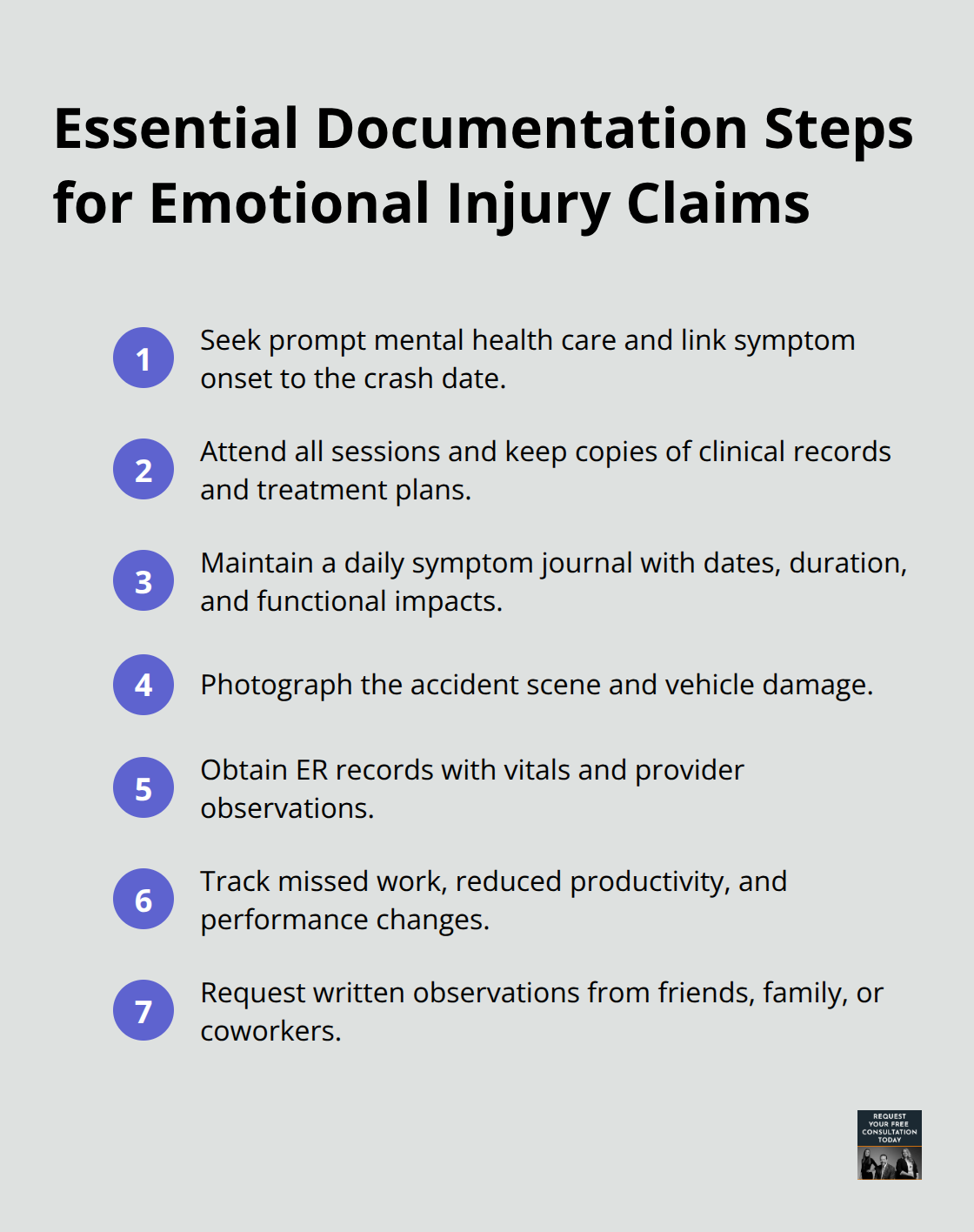
Gather workplace documentation showing reduced productivity, missed work days, or performance changes. Ask friends, family members, or coworkers to document behavioral changes they’ve observed. This layered evidence approach transforms vague complaints into a compelling narrative that demonstrates real, measurable harm.
Strengthen Your Claim With Professional Evaluation
Credible psychological evaluations from licensed mental health professionals carry far more weight than your own account of symptoms. Licensed psychologists, psychiatrists, or clinical social workers provide official diagnoses, explain how your condition impacts daily functioning, and potentially offer expert testimony if your case goes to trial. Insurance companies often deny or minimize emotional distress claims by claiming pre-existing symptoms, questioning therapy diagnoses, pointing to minimal property damage, or highlighting treatment delays. Professional evaluations directly counter these arguments because they rest on standardized assessment tools and clinical training. Document therapy costs, medication expenses, and lost wages from mental health issues as economic damages alongside your non-economic claim. If you experienced persistent pain six to eight weeks after the crash, research from the Journal of Clinical Medicine shows this predicts greater depression severity two months later-mention this connection in your claim because it demonstrates how physical and emotional injuries compound each other.
Connect Legal Support With Your Recovery Plan
Your legal team can coordinate with mental health professionals to ensure your evaluation serves your compensation claim effectively. When you work with an attorney who understands both the legal and clinical aspects of emotional trauma, your case gains credibility and strength. Your lawyer helps gather the right documentation, presents evidence clearly to insurance companies, and prepares you for settlement negotiations or trial. This coordination removes barriers that stop many accident survivors from getting the help they need while pursuing fair compensation. The combination of professional mental health care and strong legal representation creates the foundation for both your recovery and your financial protection.
Final Thoughts
Psychological trauma in Santa Cruz after a car accident is treatable, and recovery happens when you combine professional mental health care with legal protection. Start by calling a mental health provider this week-use Psychology Today’s directory to filter Santa Cruz County therapists by trauma credentials and insurance, or ask your primary care doctor for a referral. If cost concerns you, ask about sliding-scale fees or contact Walnut Avenue Family and Women’s Center at 831-426-3062, and for immediate crisis support, call 988 anytime.
Simultaneously, reach out to a personal injury attorney who understands both the clinical and legal sides of emotional distress claims. We at Schaar & Silva LLP help Santa Cruz residents navigate this process by connecting you with mental health professionals, directing you to medical lien services so therapy costs don’t drain your savings, and handling property damage claims while you focus on recovery. Your emotional injuries deserve recognition and compensation under California law, but only strong documentation and professional representation make that happen.
Document everything from today forward: therapy notes, symptom journals, medical records, and workplace impacts. This evidence transforms vague complaints into a compelling case that insurance companies cannot dismiss. Contact Schaar & Silva LLP for a free consultation to discuss your case and next steps.
