

A concussion from a car or truck accident can change your life in seconds. You might face mounting medical bills, lost wages, and ongoing symptoms that affect your daily routine.
Filing a concussion claim in California requires specific steps and solid evidence. We at Schaar & Silva LLP help accident victims like you navigate this process and recover the compensation you deserve.
What Happens When You Get a Concussion From a Car Crash
A concussion is a type of traumatic brain injury caused by a blow to the head or violent shaking during a collision. The impact forces your brain to move inside your skull, damaging brain cells and creating chemical changes that affect how your brain works. Unlike broken bones, concussions don’t always show up on CT scans or MRIs, which is why many people don’t realize how serious their injury is.
You might feel fine immediately after the crash, then develop symptoms days or even weeks later. Headaches, dizziness, memory problems, difficulty concentrating, sensitivity to light and noise, and sleep disturbances are common signs. Some people experience mood changes, irritability, or anxiety. The Centers for Disease Control and Prevention reports that concussions make up the majority of the roughly 1.7 million traumatic brain injuries in the United States annually, yet many go untreated because victims assume they’ll recover on their own.
Why Post-Concussion Syndrome Changes Everything
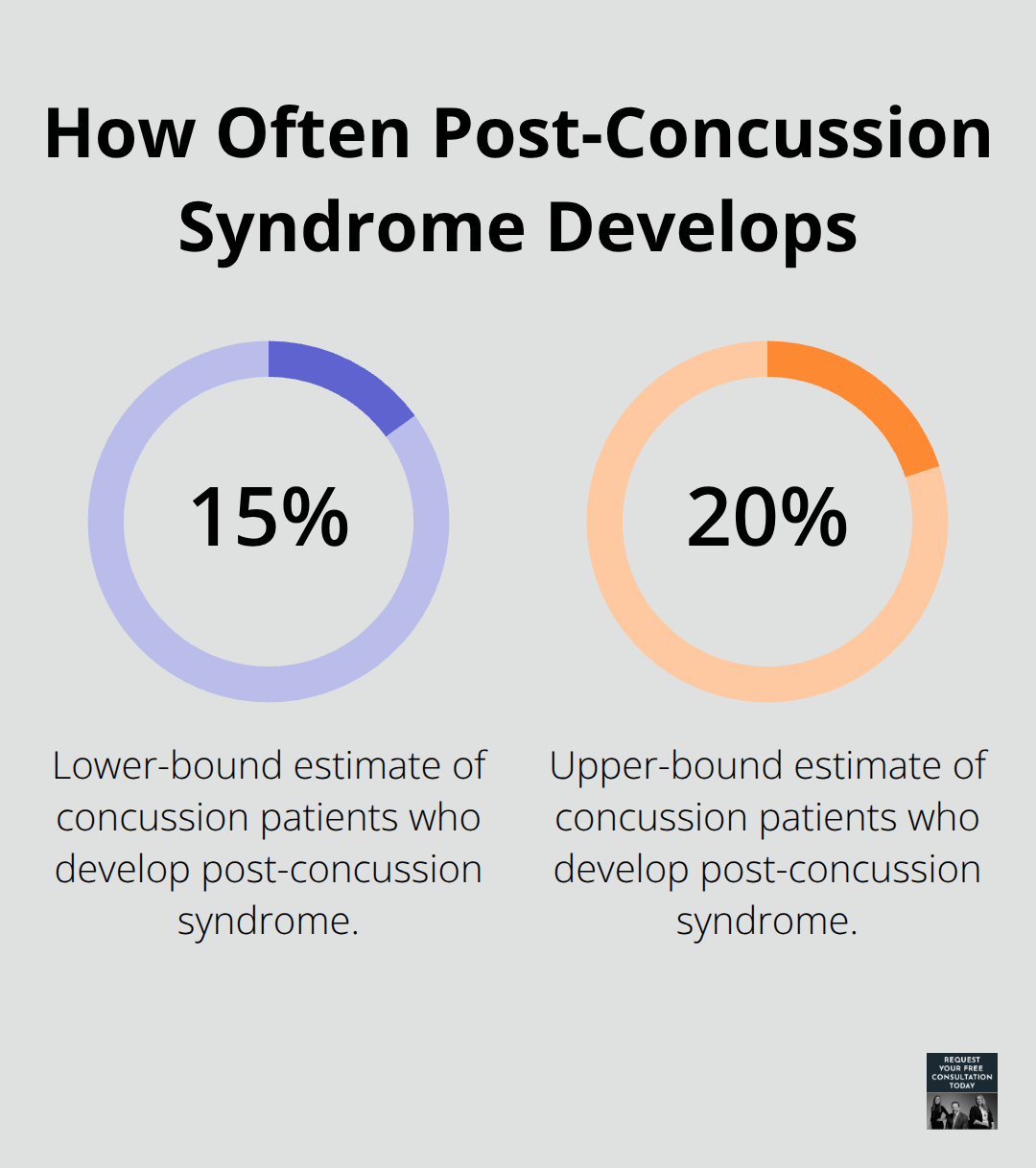
About 15 to 20 percent of concussion patients develop post-concussion syndrome, a condition where symptoms persist for months or even years after the initial injury. This invisible injury can wreck your ability to work, care for your family, or enjoy activities you once took for granted.
California law gives you two years from the date of your car crash to file a personal injury claim for a concussion or post-concussion syndrome. If a government vehicle caused your accident, the timeline is shorter: you must file a written claim within six months before pursuing a lawsuit.
Why Immediate Medical Treatment Protects Your Claim
You must start treatment immediately after your accident because delayed medical attention weakens your claim. Insurance companies scrutinize cases where victims waited weeks or months to seek help, arguing symptoms might be unrelated to the crash.
Documentation matters enormously. Medical records from neurologists or neuropsychologists, cognitive testing results, and consistent notes about your symptoms build the foundation of a strong claim. These records prove the accident caused your injury and show how it affects your daily life.
How California Protects Your Right to Recover
California’s pure comparative fault rule means you can recover compensation even if you shared some responsibility for the crash. Your recovery gets reduced by your percentage of fault, but you still have a right to pursue damages.
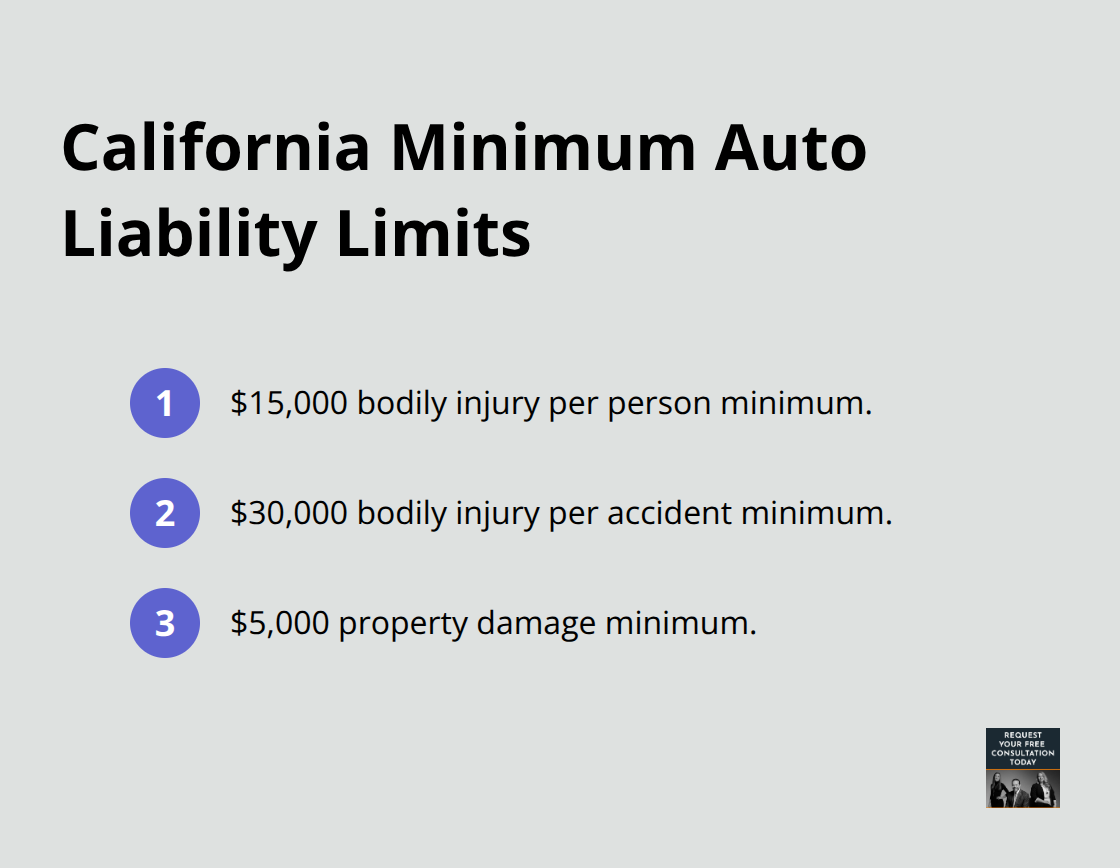
Minimum auto liability insurance in California requires drivers to carry at least $15,000 per person and $30,000 per accident in bodily injury coverage, plus $5,000 for property damage. When damages exceed these limits, uninsured or underinsured motorist coverage can bridge the gap.
The statute of limitations is strict: miss the two-year deadline and you lose your right to file a claim entirely. This deadline doesn’t pause while you negotiate with insurance companies. Filing a lawsuit is the only way to preserve your rights. Understanding what evidence you need and how to present it to insurance companies determines whether your claim succeeds or fails.
Building Your Proof: What Insurance Companies Actually Need
Medical Evidence That Proves Your Claim
Medical evidence determines whether your concussion claim succeeds or fails, and insurance companies know exactly what they’re looking for. You need objective documentation that proves the accident caused your injury and shows how it affects your ability to work and live. A neurologist’s evaluation and neuropsychological testing are non-negotiable. These tests measure cognitive function, memory, processing speed, and attention span, creating measurable data that insurance adjusters cannot dismiss as subjective complaints. The American Academy of Neurology emphasizes that consistent medical records linking your symptoms to the crash are critical.
Start treatment within days of your accident, not weeks later. Insurance companies will argue that delayed treatment suggests your symptoms are unrelated to the collision. Document everything: medical bills, therapy notes, prescriptions, work restrictions from your employer, and observations from family members about changes in your behavior or memory. One 2023 Los Angeles County verdict awarded approximately $40,000 in a crash case, with $10,000 specifically allocated for future medical costs, demonstrating how detailed medical projections influence outcomes.
Projecting Long-Term Costs and Lost Income
Life-care planners and economists project your long-term treatment needs and lost earning capacity, translating years of ongoing care into concrete dollar figures that justify higher settlements. These professionals calculate rehabilitation costs, assistive devices, home modifications, and the income you’ll lose if you cannot return to your previous job. Their reports carry substantial weight in settlement negotiations because they transform abstract suffering into measurable financial impact.
How Insurance Companies Calculate Settlement Value
Insurance companies evaluate concussion claims using the multiplier method, where they assign a number between 1.5 and 5 based on injury severity, then multiply that by your total medical expenses. A mild concussion might receive a 1.5 multiplier, while post-concussion syndrome pushes 3 to 5 multipliers. This means if your medical costs total $50,000, a 3x multiplier produces a $150,000 valuation before considering lost wages or future damages.
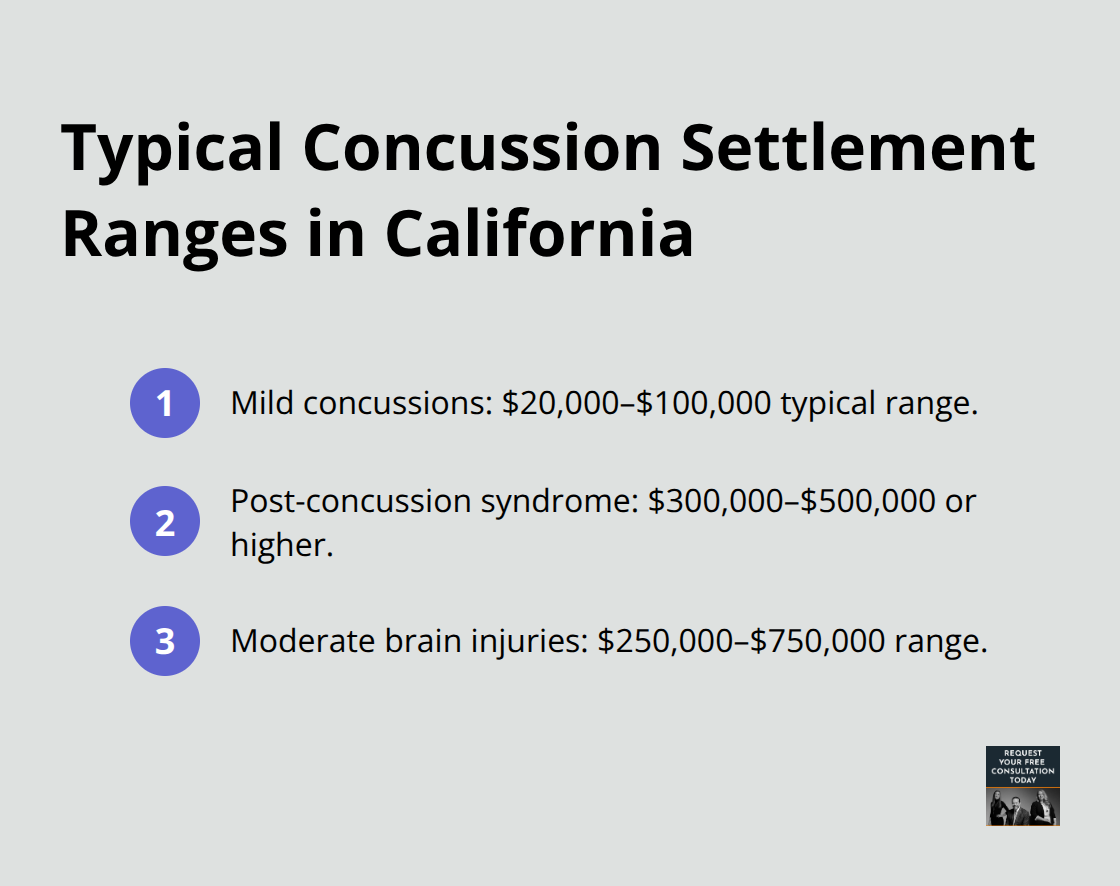
California imposes no cap on economic or non-economic damages in standard personal injury cases, meaning settlements can reach hundreds of thousands or millions for serious cases. The CDC reports concussions represent the majority of roughly 1.7 million traumatic brain injuries annually, yet settlement values vary dramatically based on your specific evidence. Mild concussions typically settle between $20,000 and $100,000, while post-concussion syndrome cases often reach $300,000 to $500,000 or higher. Moderate brain injuries fall into the $250,000 to $750,000 range.
Timing Your Settlement for Maximum Recovery
Never accept an insurance company’s initial offer, which is deliberately low. You should wait until you reach maximum medical improvement, when your long-term prognosis becomes clear. At this point, you and your attorney can accurately project future medical needs and lost income, creating a realistic settlement demand that reflects the full scope of your injury. Insurance adjusters count on victims accepting inadequate offers under pressure, but solid medical evidence and professional projections shift the negotiating power in your favor.
The strength of your claim depends on how thoroughly you document the accident’s impact on your life. Medical records, test results, and expert projections work together to create an undeniable case for compensation. When you have this evidence in place, settlement negotiations take on a different character-one where insurance companies recognize they face a credible threat of trial and a jury that will award substantial damages.
What Mistakes Kill Your Concussion Claim
The Cost of Waiting for Medical Treatment
The gap between your accident and your first medical visit is the single biggest weapon insurance companies use against you. Wait two weeks after your crash to see a doctor, and the insurer will argue your symptoms stem from something else entirely. The Mayo Clinic confirms that concussion symptoms often appear days or weeks after impact, yet insurance adjusters weaponize this delay against victims. They’ll claim you had pre-existing headaches, depression, or memory problems unrelated to the collision. One Los Angeles County case saw a $40,000 verdict, but that outcome required immediate medical documentation proving the crash caused the injury. If you wait, you hand the insurance company reasonable doubt.
Schedule a neurological evaluation within 48 hours of your accident, not next week. Your medical records from that appointment become the foundation of your entire claim. Delayed treatment doesn’t just hurt your health-it destroys your credibility with insurance adjusters who are trained to exploit gaps in your medical timeline.
Why Your Documentation Determines Your Settlement
Documentation failures are equally destructive. You must maintain detailed records of every symptom, every treatment session, every prescription, and every day you missed work. Write down specific examples: the morning you couldn’t remember your child’s soccer schedule, the day you had to leave work because fluorescent lights triggered migraines, the week you couldn’t sleep more than three hours nightly. Insurance companies evaluate claims through the lens of measurable impact on your daily life, and vague complaints about feeling bad carry zero weight.
A neuropsychologist’s testing creates objective data, but your personal documentation proves how that injury actually disrupts your existence. Track medication side effects, therapy notes, employer restrictions on your duties, and family observations about personality changes. The CDC reports concussions represent the majority of roughly 1.7 million traumatic brain injuries annually, yet many victims lose their claims because they failed to document the injury’s real-world consequences.
Never Negotiate Alone With Insurance Companies
Never negotiate directly with insurance adjusters or accept their first settlement offer. These offers arrive deliberately low, designed to close your case before you understand your claim’s actual value. An attorney calculates your damages based on medical evidence, lost income projections, and future care costs-figures that typically dwarf the insurer’s opening bid. Accepting inadequate compensation without legal guidance means you absorb the actual costs of your concussion for years while the insurance company walks away having paid a fraction of what you deserved.
Final Thoughts
A concussion claim in California demands strategy, documentation, and professional representation to succeed. We at Schaar & Silva LLP connect you with neurologists, neuropsychologists, life-care planners, and economists who transform your symptoms into measurable evidence that insurance companies cannot dismiss. This foundation of professional documentation shifts power away from adjusters and toward you, allowing settlement negotiations to reflect what your injury actually costs rather than what the insurer wants to pay.
Settlement values for concussion claims vary dramatically based on medical evidence and long-term projections. Mild concussions typically settle between $20,000 and $100,000, while post-concussion syndrome cases often reach $300,000 to $500,000 or higher depending on your specific circumstances. We handle all communication with insurance companies, preventing you from accepting lowball offers under pressure, and we prepare to take your case to trial if settlement negotiations stall.
Contact Schaar & Silva LLP for a free consultation about your concussion claim in California-we work on contingency, so you pay nothing unless we recover compensation for you.
