

A car crash turns your life upside down in seconds. Medical bills pile up, your vehicle needs repairs, and lost wages add financial stress on top of physical pain.
We at Schaar & Silva LLP understand how overwhelming this feels. This guide walks you through the car crash claim steps you need to take, from the moment of impact through receiving compensation.
What to Do Right After a Crash
Stop and Secure the Scene
The first minutes after a crash determine how strong your claim becomes. Stop your vehicle in a safe location if possible and turn on hazard lights. If anyone is injured or this is a hit-and-run, call 911 immediately and wait for police. Visual evidence from the crash scene proves invaluable later, so the California Department of Insurance recommends having a dash cam or smartphone ready at all times.
Photograph and Document Everything
Take clear photos of all vehicle damage, license plates, street signs, road angles, and weather conditions. Photograph the other driver’s insurance card and driver’s license if you can, or write down their name, phone number, insurance company, and policy number. Get names and contact information from any witnesses at the scene. Do not admit fault at the scene, and avoid discussing the crash on social media afterward, as statements can be used against you later.
Report to Police and Your Insurer
According to California’s Fair Claims Settlement Practices Regulations, your insurer must acknowledge your claim within 15 days and respond within 15 days after you submit proof of claim. The sooner you report the accident to your insurance company and police, the sooner this timeline begins. Contact your insurance company and get your adjuster’s name and direct contact information.
Organize Your Information at Home
Once you’re home, organize all information from the crash. Write down the accident location, exact time, weather conditions, and a detailed description of what happened. If you visited a doctor after the crash, keep every medical record and bill to substantiate medical claims. The California Department of Insurance consumer helpline at 800-252-3439 can answer questions about your rights and the claims process.
Meet Critical Deadlines
If you anticipate serious injuries or property damage exceeding $750, you must report the accident to the California DMV within 10 days to avoid license suspension. These early actions set the foundation for your claim and position you to move forward with gathering the medical and financial documentation that strengthens your case.
Building Your Claim with Documentation
Your claim is only as strong as the evidence supporting it. After you report to your insurance company and police, the real work begins: gathering the documentation that proves your damages. Your insurer will contact you within 15 days of your report, according to California’s Fair Claims Settlement Practices Regulations, and they will ask for medical records, repair estimates, and proof of expenses.
Collect Medical Records Immediately
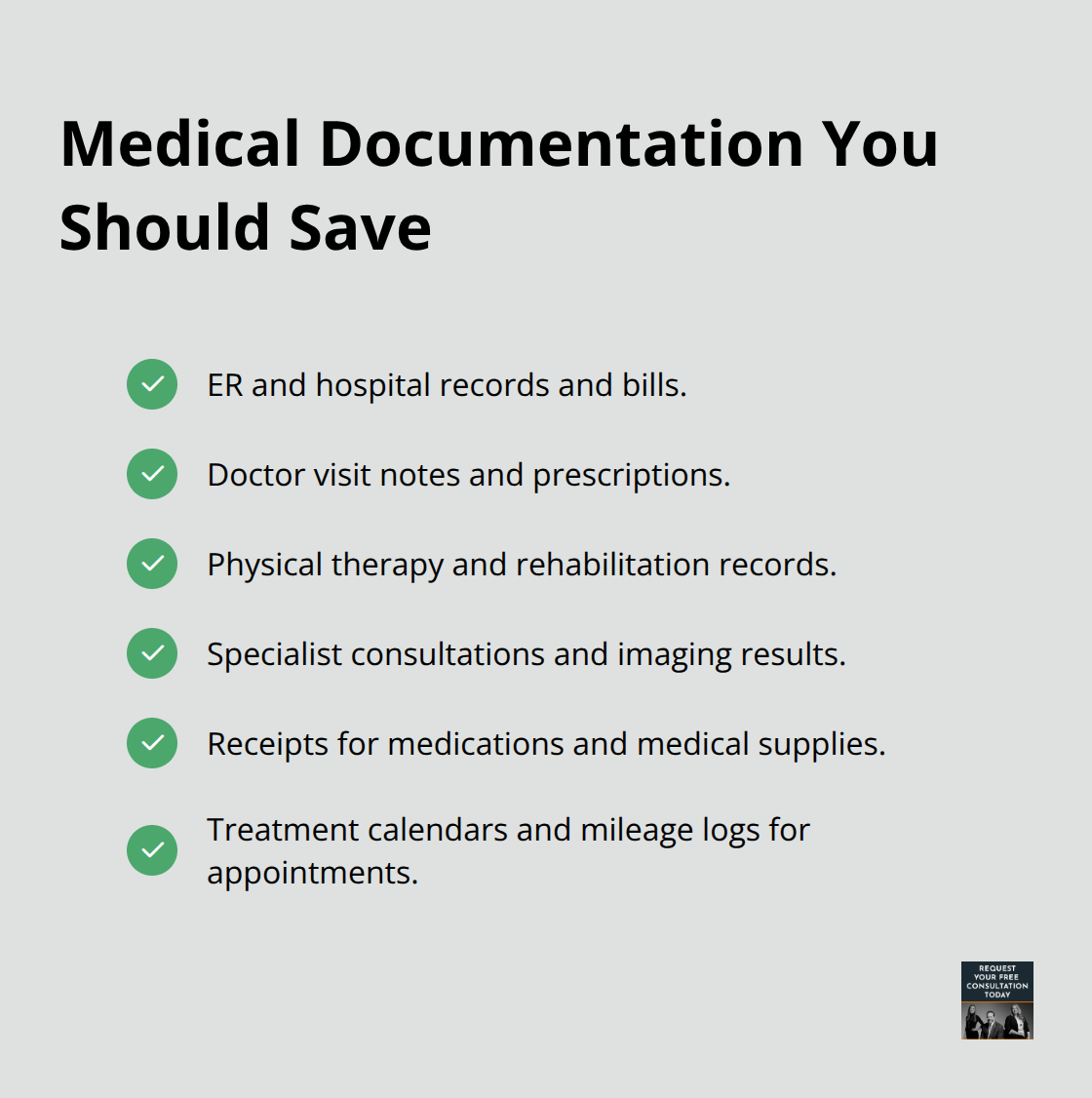
Start collecting medical documentation after your first doctor visit. Keep every receipt, bill, and medical report, including those from emergency rooms, follow-up appointments, physical therapy, and any specialist visits related to your injuries. If you suffered a brain injury, spinal injury, or wrongful death case, medical records become even more critical because they establish the severity and long-term impact of your damages. Your insurer will use these records to calculate what they owe you, so completeness matters.
Understand Vehicle Repair and Valuation
Your insurer will pay the lesser of the repair cost or your vehicle’s Actual Cash Value, which means the fair market value a willing buyer would pay in an open market. Take your vehicle to any body shop you choose; your insurer may provide a list, but you are not required to use their preferred shops. Before you leave your vehicle with any shop, read their contract carefully.
When the shop provides an initial repair estimate, review it for part types (original equipment manufacturer parts versus aftermarket parts) and verify that replacement parts are comparable in kind, quality, safety, fit, and performance. If the shop discovers additional damage during repairs, they will issue a new estimate, and your insurer will only pay the difference if they agree the additional repairs are necessary.
Track All Accident-Related Expenses
Document every expense related to your accident from day one. Track lost wages by keeping pay stubs or employer letters showing the income you lost during recovery and medical appointments. If your policy includes rental car coverage, understand that your insurer pays a daily limit for a set number of days, and coverage typically ends when your vehicle is repaired or the loss is paid. Keep all rental receipts and agreements, as your rental charges and coverage depend on both your rental agreement and your own policy terms.
Organize and Respond Promptly
Organize everything in one folder, whether digital or physical, with clear labels and dates. When your claims adjuster contacts you, respond promptly with requested information because delays in your responses can slow your entire claim. If you disagree with the settlement amount your insurer offers, you can invoke the appraisal provision: two appraisers will be selected (one by you and one by the insurer), and they will pick a neutral umpire to decide the dispute if they cannot agree. The umpire’s decision is binding, and each party pays for its own appraiser. This process can recover additional compensation if you believe your vehicle’s value or repair costs were underestimated.
As your claim moves forward and your medical treatment progresses, understanding your compensation options becomes the next critical step in maximizing what you receive.
What Compensation Can You Actually Recover
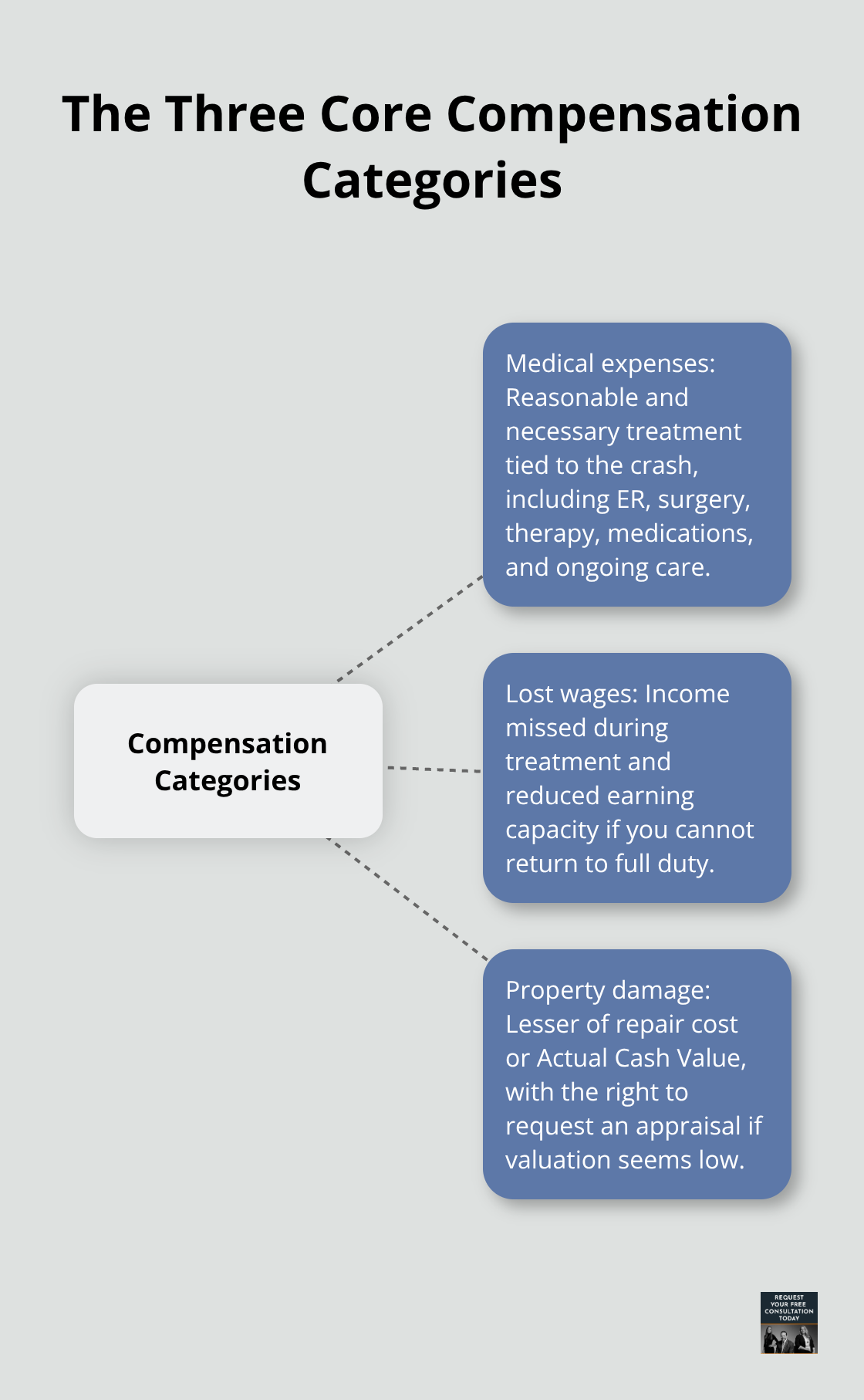
Your insurer calculates compensation across three main categories, and understanding how each works prevents you from accepting lowball offers. Medical expenses, lost wages, and property damage form the foundation of what you can recover.
Medical Expenses and Treatment Costs
Your insurer must cover all reasonable and necessary treatment costs directly tied to your accident, including emergency room visits, surgery, hospitalization, physical therapy, medications, and ongoing care for brain injuries, spinal injuries, or other serious conditions. California courts recognize that some injuries take months or years to fully manifest, so treatment documentation matters enormously. If you suffered a traumatic brain injury or spinal cord damage, medical bills often exceed $100,000 within the first year alone.
Keep every receipt and bill because your insurer will only pay what you can prove with documentation. We at Schaar & Silva LLP can help direct you to medical lien services that facilitate payment of your bills until your case is resolved, allowing you to focus on recovery without the immediate financial burden.
Lost Wages and Reduced Earning Capacity
Lost wages represent the income you could not earn while recovering or attending medical appointments. Your insurer must reimburse you for work time lost during treatment, and this extends beyond just days in the hospital. If your injury prevents you from returning to work at full capacity, you may claim reduced earning capacity going forward.
Document this by collecting pay stubs from before the accident, employer letters confirming the wages you lost, and medical records showing treatment dates and restrictions your doctor imposed on your work activities. The more detailed your documentation, the stronger your claim for lost income.
Property Damage and Vehicle Valuation
Property damage claims follow a straightforward but often disputed formula: your insurer pays the lesser of repair costs or your vehicle’s Actual Cash Value. If your vehicle is worth $15,000 and repairs cost $18,000, your insurer typically pays $15,000, not more. This is where the appraisal process becomes valuable.
If you believe your vehicle’s fair market value was underestimated, you can demand an independent appraisal, and the neutral umpire’s decision becomes binding on both parties. Many people accept initial settlement offers without understanding they have this right, leaving thousands of dollars on the table. Request the appraisal if your vehicle’s value seems low or if the repair estimate seems incomplete.
Evaluating Fair Valuations
We at Schaar & Silva LLP assist in evaluating the extent of property damage and work to ensure you receive a fair valuation for your loss. If you serve Santa Cruz County, our team can review your settlement offer and help you understand whether the amount reflects the true value of your vehicle and damages.
Final Thoughts
You now understand the car crash claim steps that move you from the accident scene to receiving compensation. The foundation of a strong claim rests on three actions: documenting everything immediately, reporting to police and your insurer within the required timeframes, and organizing your medical records and expenses from day one. California’s Fair Claims Settlement Practices Regulations give you specific protections, requiring your insurer to acknowledge your claim within 15 days and respond within 15 days after you submit proof of claim.
Many people leave money on the table by accepting initial settlement offers without understanding their rights. If your insurer’s valuation seems low, you can invoke the appraisal process, where a neutral umpire makes a binding decision on disputed amounts. This single step has recovered thousands of dollars for people in Santa Cruz County, Sacramento, and Oakland who questioned their initial offers.
When injuries are serious-brain injuries, spinal damage, or wrongful death-the complexity of your claim increases significantly. Medical bills mount quickly, lost wages extend over months or years, and calculating fair compensation becomes difficult without guidance. We at Schaar & Silva LLP can help you navigate these complexities and evaluate your settlement offer to ensure you receive what you truly deserve.
