
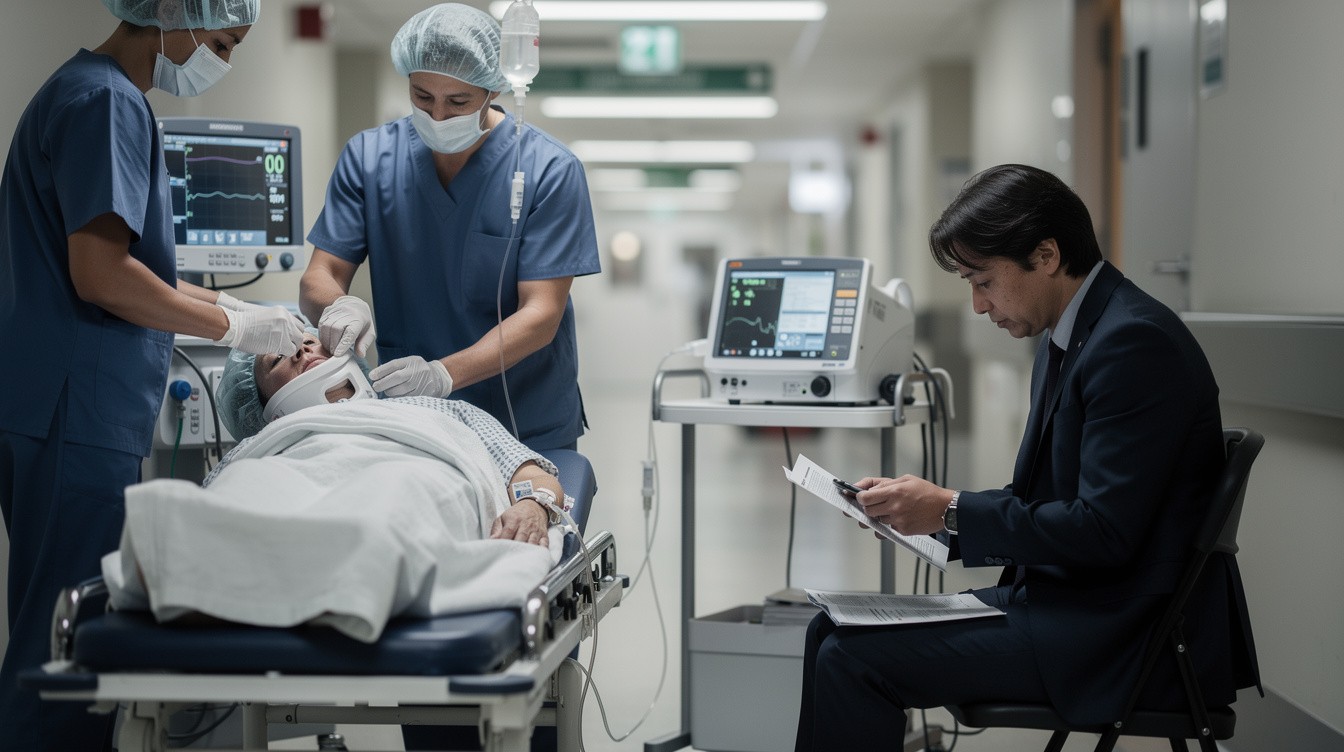
A brain injury from a car crash can change your life in seconds. The physical, emotional, and financial impact often extends far beyond the initial accident.
We at Schaar & Silva LLP help people in Santa Cruz, Sacramento, and Oakland navigate recovery and fight for the compensation they deserve. This guide walks you through what you need to know about brain injuries, medical care, and your legal options.
What Brain Injuries Actually Look Like After a Car Crash
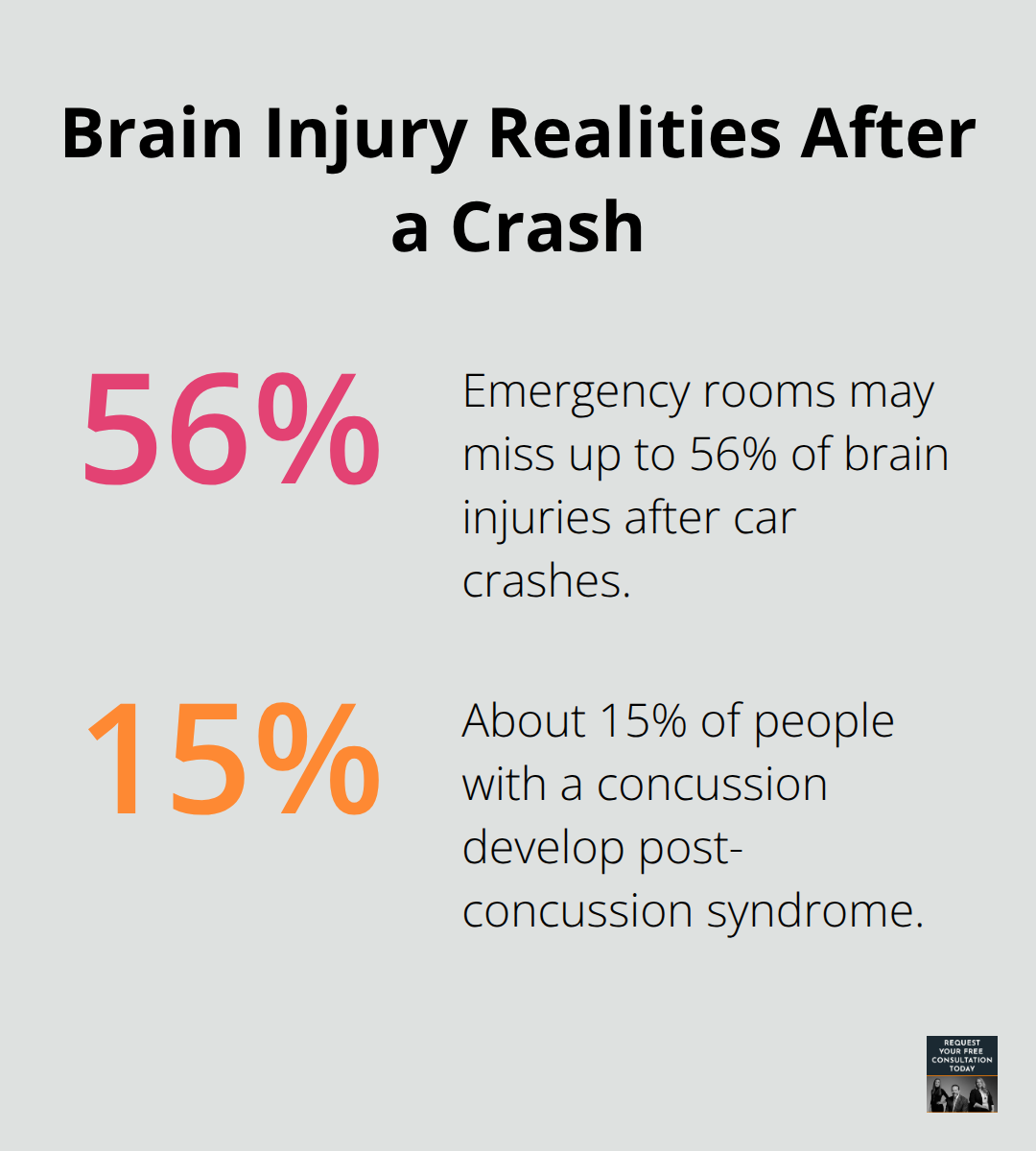
Car crashes produce different types of brain injuries depending on how the impact occurs and where the head makes contact. Concussions, the most common form, happen when the brain moves rapidly inside the skull from sudden acceleration or deceleration. A concussion is classified as a mild traumatic brain injury, yet research shows that roughly 15 percent of people who suffer a concussion develop post-concussion syndrome, where symptoms persist for months or even years. Brain contusions are bruises on the brain tissue itself, often caused by a direct blow to the head. These can cause swelling and increased pressure inside the skull, sometimes requiring monitoring or emergency intervention. Diffuse axonal injury occurs when the force of impact tears the brain’s nerve fibers, often resulting in prolonged unconsciousness or coma. Coup-contrecoup injuries happen when the initial impact damages brain tissue at the point of contact, and then the brain bounces backward inside the skull, causing damage on the opposite side as well. Understanding which type of injury you sustained matters because each type follows a different recovery path and carries different long-term risks.
Recognizing Symptoms Before They Worsen
The challenge with brain injuries after car crashes is that symptoms often appear hours or even days after the accident, and emergency rooms miss a substantial share of them-up to 56 percent according to research from the Brain Injury Association of America. This happens because other injuries mask brain injury symptoms, and the brain’s hyper-metabolic state immediately after injury can temporarily hide problems during an emergency room exam. Physical symptoms include headaches, dizziness, balance problems, nausea, and sensitivity to light or noise. Cognitive symptoms are equally important: memory loss around the crash itself, confusion, difficulty concentrating, and slurred speech all indicate a brain injury that needs attention.
Behavioral changes matter too-drowsiness, mood swings, or irritability in the hours after a crash warrant medical evaluation. Monitor yourself or your family member closely for the first 72 hours after any head impact, because delayed diagnosis directly worsens recovery outcomes and complicates your legal claim for compensation. If symptoms persist after a negative CT scan, additional testing like advanced imaging or neuropsychological evaluation becomes necessary.
Long-Term Consequences That Impact Your Life
Mild traumatic brain injuries often resolve within weeks to months with proper rest and follow-up care, but the minority who develop post-concussion syndrome face months or years of cognitive difficulties, headaches, and sensitivity issues. Moderate and severe brain injuries carry substantially higher risks: seizures can develop after severe TBI and require ongoing medication management, while some patients experience permanent cognitive deficits affecting memory, attention, and processing speed. The CDC reports that over 69,000 TBI-related deaths occurred in the United States in 2021, with motor vehicle crashes being the leading cause of death for people ages 15 to 44. Beyond death, survivors often face disrupted employment, strained relationships, and the financial burden of rehabilitation services including physical therapy, occupational therapy, and neuropsychological treatment. Early, thorough evaluation in the emergency room directly influences whether you receive timely treatment and better long-term outcomes. This is why advocating for comprehensive TBI assessment immediately after your crash protects both your health and your ability to recover full compensation later.
What Happens Next in Your Medical Journey
Once you understand the type and severity of your brain injury, the next critical step involves navigating emergency care and diagnosis. The decisions you make in the hours and days following your crash-from which hospital you visit to how thoroughly doctors assess your symptoms-directly shape your recovery trajectory and your legal position. Medical documentation from this phase becomes the foundation for any compensation claim you pursue.
Medical Care and Treatment Options
Emergency Room Assessment: The Critical First Hours
The first 24 to 48 hours after a car crash determine whether your brain injury gets caught or missed. Emergency room staff must ask about all TBI symptoms, not just loss of consciousness, because the brain’s hyper-metabolic state immediately after impact can temporarily mask problems during initial examination. If you lost consciousness for even brief periods under 30 minutes, that matters-do not let an ER doctor dismiss a short loss of consciousness as insignificant. Insist on a thorough symptom review that covers physical signs like headaches and balance problems, cognitive changes such as memory gaps or confusion, and behavioral shifts including drowsiness or irritability. Request that doctors gather information about your pre-crash behavior and compare it to your condition after the accident, since family members or witnesses often notice changes that you might miss yourself.
Imaging and Diagnostic Testing
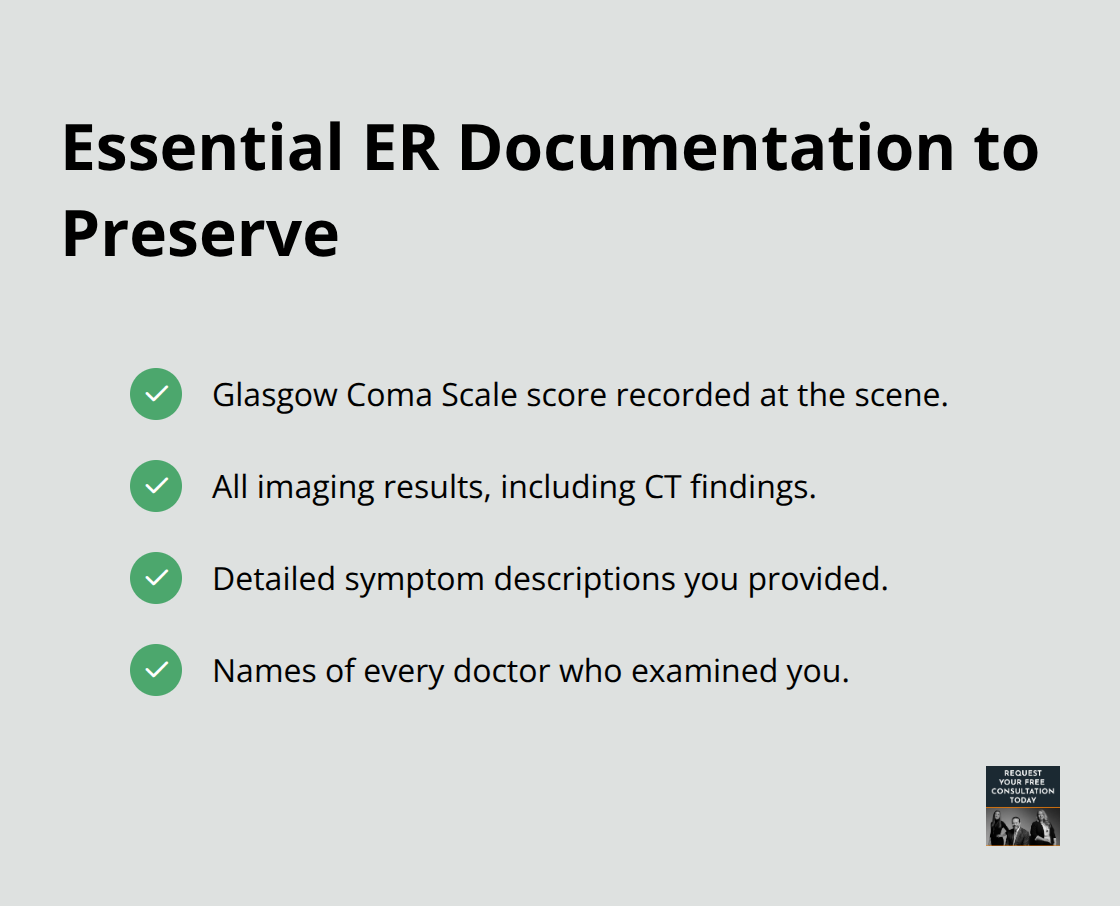
If your CT scan comes back negative but symptoms persist, push for additional testing like advanced imaging or neuropsychological evaluation, because standard imaging misses microscopic diffuse axonal injury in many cases. Document everything from your ER visit-the Glasgow Coma Scale score recorded at the scene, all imaging results, symptom descriptions you provided, and the names of doctors who examined you. This documentation becomes the foundation for both your medical recovery and any future compensation claim.
The medical records you collect in these early hours will shape how insurance companies evaluate your injury and what settlement amount they offer.
Rehabilitation Programs Based on Injury Severity
Mild TBI typically improves with physical and cognitive rest over weeks to months, though about 15 percent of people develop post-concussion syndrome requiring months or years of treatment. Moderate and severe injuries demand structured rehabilitation programs that address physical therapy for balance and coordination, occupational therapy to rebuild daily living skills, and speech therapy if swallowing or communication is affected. Neuropsychological testing should occur early to establish a baseline of cognitive function and identify specific deficits affecting memory, attention, or processing speed-this testing includes validity measures that counter future claims of malingering from insurance companies.
Ongoing Medical Management and Monitoring
Ongoing medical management focuses on monitoring for complications like seizures, which can develop after severe TBI and require anti-seizure medications. Many brain injury patients benefit from mental health support to address depression, anxiety, or mood swings that commonly follow TBI. Tracking your progress through each rehabilitation phase matters because gaps in treatment or failure to follow medical recommendations will be used against you in settlement negotiations. Insurance companies scrutinize whether you attended therapy sessions and complied with medical advice, so consistency in your treatment schedule directly impacts the compensation you receive. As your medical team stabilizes your condition and rehabilitation progresses, your attention must shift toward understanding what damages you can claim and how to pursue fair compensation for your losses.
Compensation and Legal Rights After a Brain Injury
Economic Damages: Calculating Your Financial Losses
California law recognizes two categories of damages after a car crash brain injury: economic damages that have a clear dollar amount, and non-economic damages that compensate for pain, suffering, and lost quality of life. Economic damages include all past and future medical expenses from emergency care through rehabilitation, lost wages from time away from work, and future earning capacity if your injury prevents you from returning to your previous job. The Brain Injury Association of America emphasizes that missed or delayed diagnoses directly reduce compensation because insurance companies use gaps in medical documentation to argue your injury was less severe than you claim.
Non-Economic Damages and Quality of Life
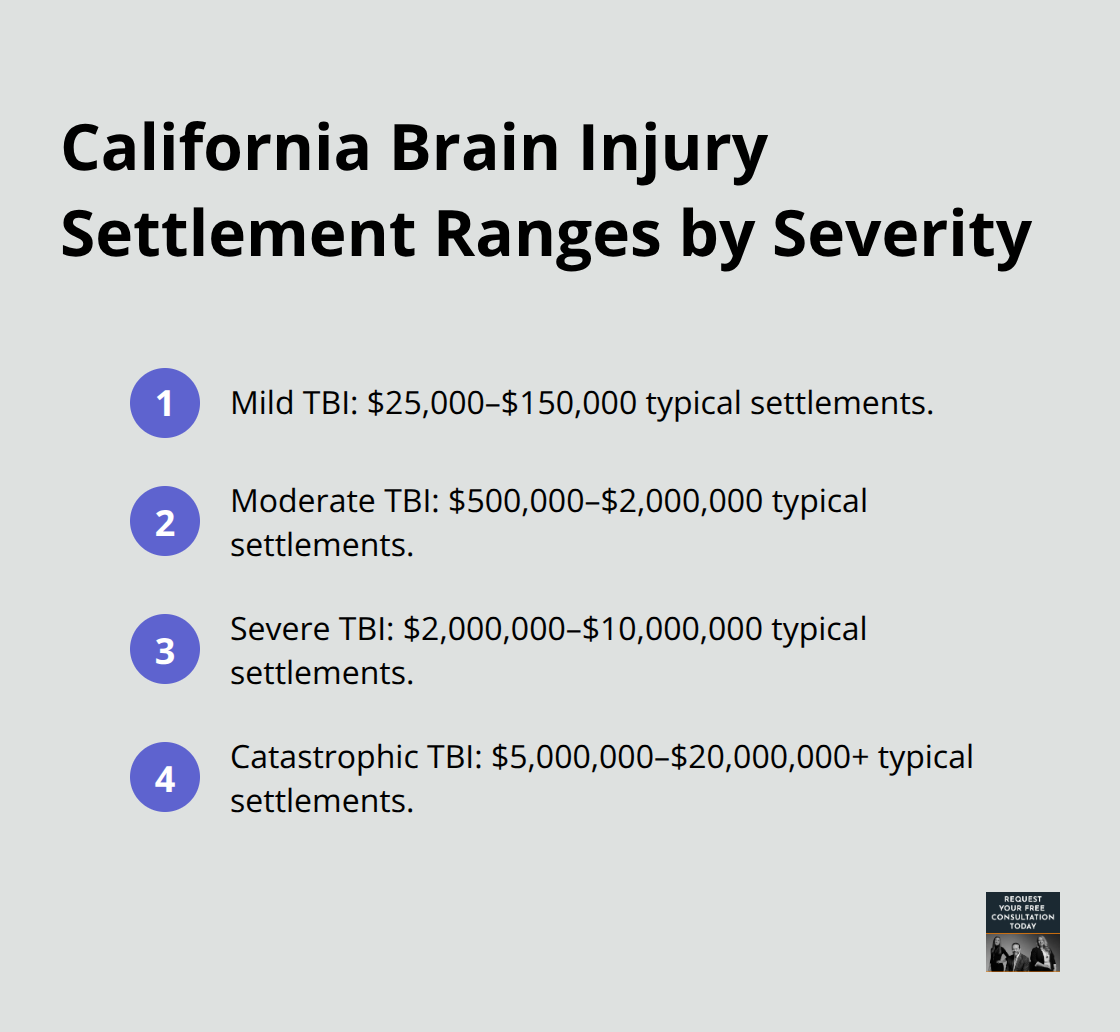
Non-economic damages cover pain and suffering, emotional distress, loss of enjoyment of life, and loss of consortium if your injury affects your relationships. California does not cap non-economic damages in standard personal injury cases, which means your settlement can reflect the full scope of your suffering. Case values vary dramatically by severity: mild brain injuries typically settle between $25,000 and $150,000, moderate injuries between $500,000 and $2,000,000, severe injuries between $2,000,000 and $10,000,000, and catastrophic injuries between $5,000,000 and $20,000,000 or higher. These ranges reflect the California market for brain injury settlements, though your specific case depends on liability strength, medical evidence quality, and how aggressively the insurance company fights your claim.
How Insurance Companies Minimize Your Claim
Insurance companies employ predictable tactics to minimize what they pay you after a brain injury claim. They argue that a normal CT or MRI scan means you have no real injury, they blame pre-existing conditions for your current symptoms, they allege you are exaggerating or malingering, and they point to any return-to-work activity as proof you have recovered. These tactics fail when you have solid medical documentation, neuropsychological testing that establishes cognitive deficits with built-in validity measures, and lay witness testimony from family members or coworkers describing how your behavior and abilities changed after the crash.
Building Your Damages Case With Professional Evidence
Life care plans created by qualified professionals quantify your future medical needs and translate them into dollar amounts, while vocational assessments document lost earning capacity if your injury prevents you from working in your previous field. These expert evaluations transform abstract suffering into concrete financial projections that insurance companies cannot easily dispute. The two-year statute of limitations in California means you must file a claim within two years of your accident, though symptoms that appear later may toll this deadline under California’s discovery rule.
Protecting Your Claim From Day One
Early consultation with a brain injury attorney matters because coordinating with your medical team from day one, preserving accident-scene evidence, and developing your damages case while your medical treatment is still ongoing prevents nothing from getting lost or overlooked. The decisions you make immediately after your crash-which doctors you see, what symptoms you report, and how thoroughly you document your injuries-directly shape the compensation you ultimately receive.
Final Thoughts
A brain injury from a car crash demands immediate medical attention and careful legal strategy. The window for diagnosis is narrow, the stakes for your recovery are high, and insurance companies fighting your claim are well-organized and aggressive. You now understand that emergency room assessment within the first 24 to 48 hours can mean the difference between catching your injury or having it missed entirely, and that neuropsychological testing builds the foundation for fair compensation.
Your immediate priorities are straightforward: seek medical evaluation even if you feel fine after your crash, report all symptoms to your doctors, preserve accident-scene evidence, and track every medical appointment and expense. Avoid discussing your injury on social media, and do not accept any settlement offer without legal guidance. These actions protect both your health and your ability to recover full compensation for a brain injury car crash.
We at Schaar & Silva LLP help people in Santa Cruz, Sacramento, and Oakland recover from brain injury car crashes and fight for the compensation they deserve. Contact us for a free case review to learn what your claim is worth and what steps come next.
