

A concussion from a car accident can change everything in an instant. You might feel fine at first, then experience headaches, dizziness, or memory problems days later.
Concussion claims in Santa Cruz require solid medical evidence and legal knowledge to win fair compensation. We at Schaar & Silva LLP help accident victims understand their rights and recover the damages they deserve.
Understanding Concussions After a Santa Cruz Car Accident
A concussion is a type of traumatic brain injury caused by a blow to the head or violent shaking. When your brain moves inside your skull during a crash, it bruises tissue and damages nerve fibers, disrupting how your brain normally functions. California courts recognize concussions as legitimate injuries worthy of compensation, but only if you have medical documentation proving the connection between your accident and the injury.
The CDC reports more than 214,000 Americans are hospitalized annually for traumatic brain injuries, yet many concussions go undiagnosed because victims delay seeking care. This is a critical mistake. If you hit your head in a Santa Cruz car crash, go to a hospital or urgent care immediately, even if you feel fine. Symptoms like headaches, dizziness, memory problems, or difficulty concentrating often appear hours or days later, not right away.
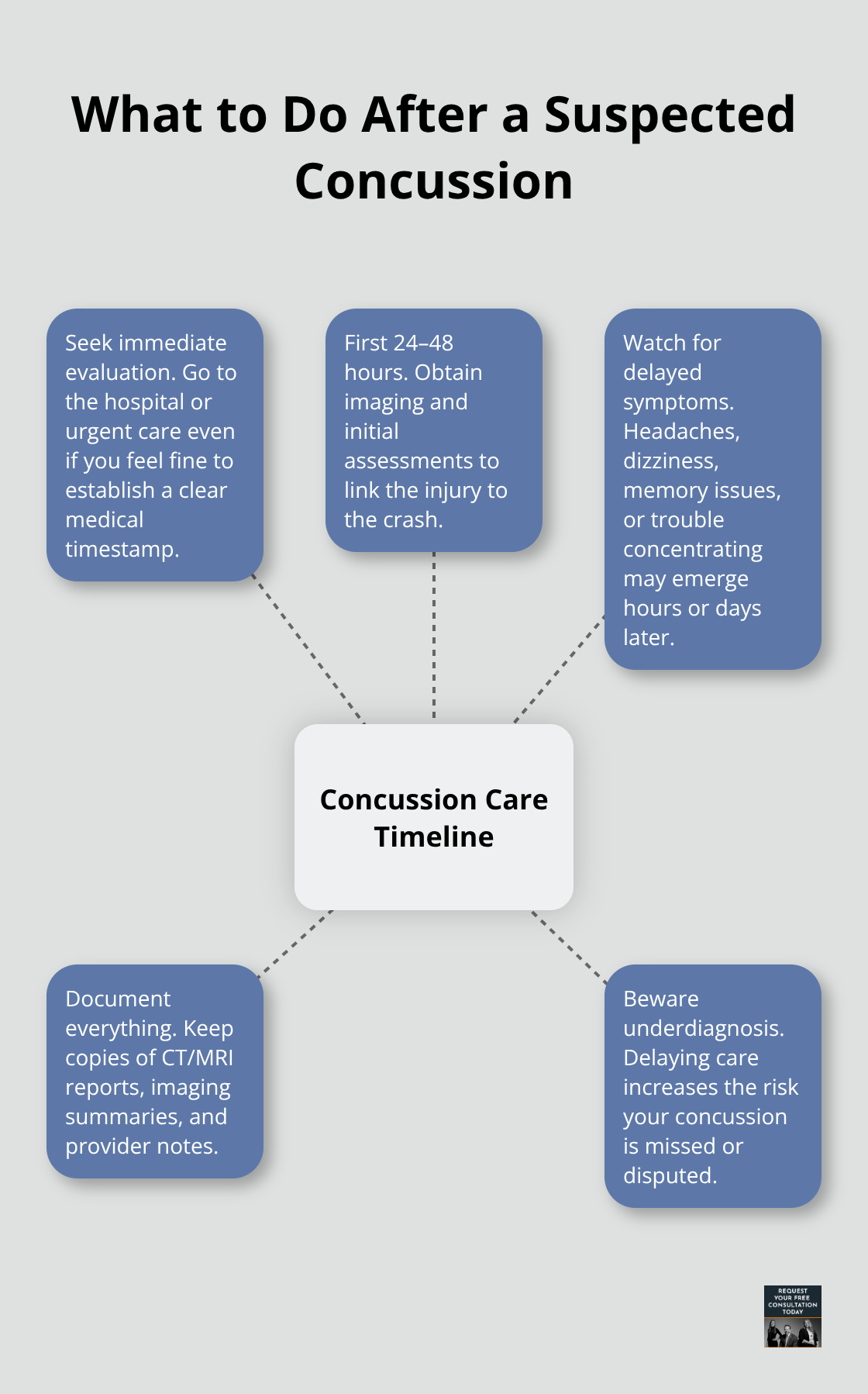
NHTSA data shows about 1 in 61 car occupants in tow-away crashes sustains a mild traumatic brain injury, though underdiagnosis may raise the actual rate to 1 in 26. The first 24 to 48 hours after your accident are critical for obtaining clear imaging and establishing a medical timestamp that ties your injury directly to the crash.
Why Speed and Nighttime Crashes Matter for Your Concussion
Speed-related crashes are a major driver of brain injuries, with higher crash speeds producing more severe concussions and longer recovery periods. Nighttime crashes between 9 pm and 3 am carry elevated injury risk in Santa Cruz, according to data from the California Office of Traffic Safety. If your accident involved a high-speed impact or occurred late at night, document these details in your claim because they strengthen your argument that the crash severity caused your concussion.
Request and preserve copies of all imaging reports, CT scans, MRI results, and initial medical assessments before you leave the hospital. These documents form the foundation of your claim and prove you sought immediate care.
Following Up Correctly to Prove Your Injury
Schedule a follow-up appointment with a neurologist or concussion clinic within one to two weeks of your accident. Research from the 2014 Archives of Physical Medicine and Rehabilitation shows that mild traumatic brain injury recovery often involves lingering symptoms for up to a year. Document your specific symptoms daily: headaches, sleep disruption, concentration problems, difficulty driving, and any other changes.
Ask your employer to provide written notes about work absences and lost hours. Neuropsychological testing provides objective evidence of cognitive changes in memory, attention, processing speed, and executive function, giving your claim measurable proof of injury rather than subjective complaints alone. This medical evidence becomes essential when you calculate your total damages and present your case to the insurance company.
What Your Concussion Claim Is Actually Worth
Medical expenses from a concussion typically drive the settlement value, so you need to understand exactly what costs you can recover. Hospital visits, emergency room charges, neurologist consultations, imaging scans, and neuropsychological testing all add up quickly.
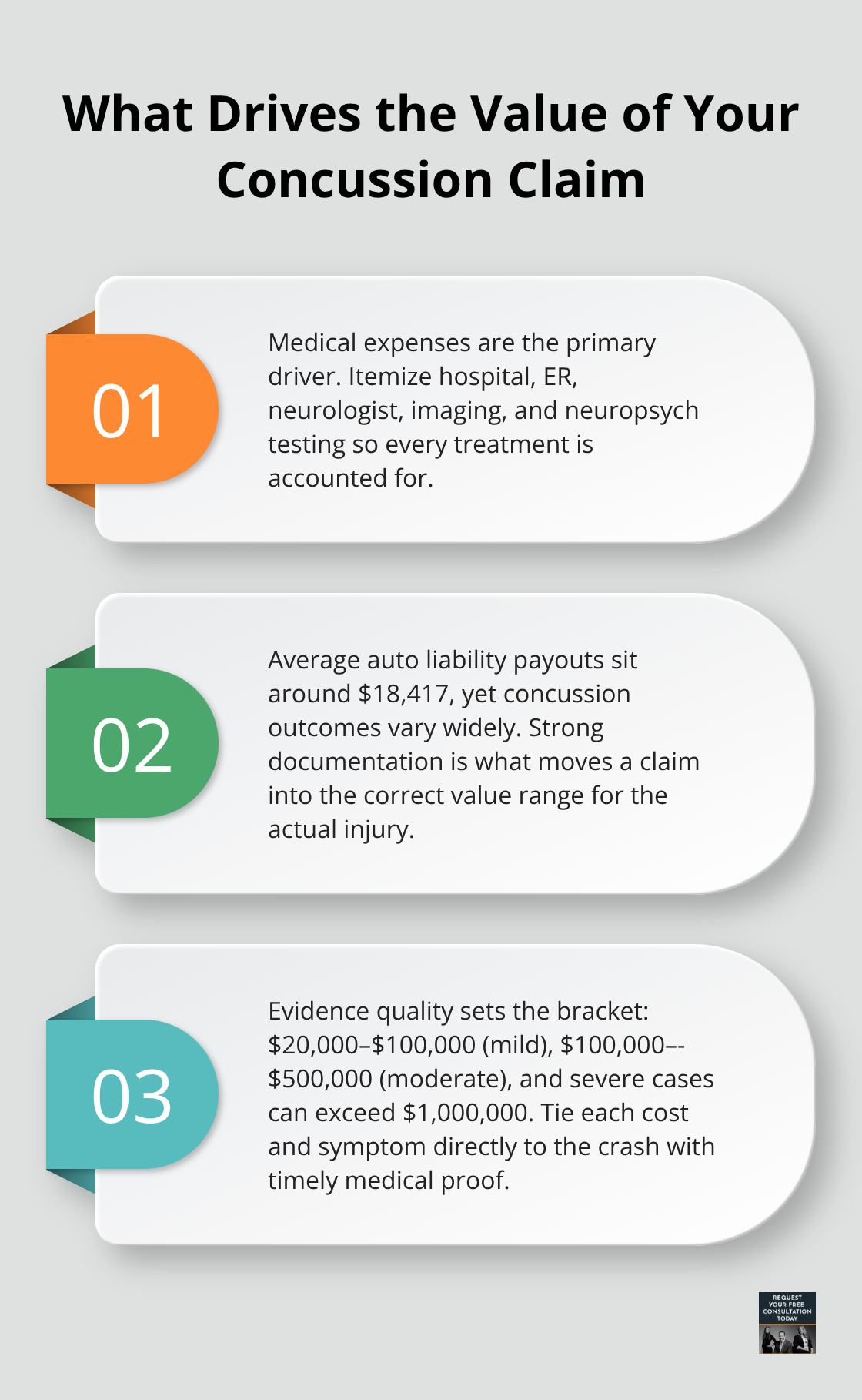
The Insurance Services Office reports that average auto liability payouts sit around $18,417, but concussion claims vary widely based on how thoroughly you document your injuries. Mild concussion settlements typically range from $20,000 to $100,000, moderate injuries from $100,000 to $500,000, and severe cases can exceed $1,000,000. The difference between these ranges comes down to one thing: how much medical evidence you gather and how clearly you connect those expenses to your accident.
Collecting Medical Expenses and Treatment Costs
Start collecting receipts and bills immediately after your crash. Request itemized statements from your hospital, urgent care facility, imaging center, and every doctor who treats you. Many victims overlook ongoing treatment costs, but that neurologist visit six months after your accident counts just as much as your emergency room bill. Some clinics offer medical liens, allowing treatment to be billed from your settlement proceeds if money is tight right now.
Documenting Lost Wages and Future Earning Capacity
Lost wages strengthen your claim significantly because they represent concrete financial harm. Get written documentation from your employer showing exactly which days you missed work and your hourly rate or salary. If your concussion prevents you from returning to your previous job or reduces your earning capacity long-term, a neuropsychologist can calculate your future income loss and include that in your damages.
Calculating Pain and Suffering Damages
Pain and suffering compensation is trickier because it has no receipt, but longer-lasting symptoms lead to higher compensation. Document how your concussion affects daily life: Can you drive safely? Do you sleep through the night? Can you concentrate at work? These details matter because insurance adjusters use them to calculate non-financial damages.
Organizing Your Evidence and Making Your Demand
Build a single, comprehensive damages file organized by category with medical receipts, wage loss statements, imaging results, symptom timelines, and provider bills. Present this complete package in a formal demand letter rather than accepting early, lowball offers. California Fair Claims Settlement Practices Regulations require insurers to acknowledge your claim within 15 days and respond within 15 days, so document any delays that occur.
Insurance adjusters often deny claims by claiming no injury or pre-existing conditions. When settlement discussions stall or offers remain too low, legal representation becomes essential to push back against these tactics and pursue the full value of your case.
Why You Need Legal Representation for Your Concussion Case
Insurance adjusters count on you making mistakes when filing a concussion claim alone. They deny legitimate injuries by claiming no medical link to the crash, questioning your symptom timeline, or suggesting pre-existing conditions caused your problems. Without legal representation, you face an opponent trained to minimize payouts, and the odds shift heavily against you.
Proving Liability Requires More Than Fault
Liability in Santa Cruz County car crashes requires more than saying the other driver caused the accident. You need documented evidence showing negligence: police reports establishing fault, witness statements, traffic camera footage if available, vehicle damage photos proving impact severity, and medical records tying your specific concussion symptoms to the crash date.
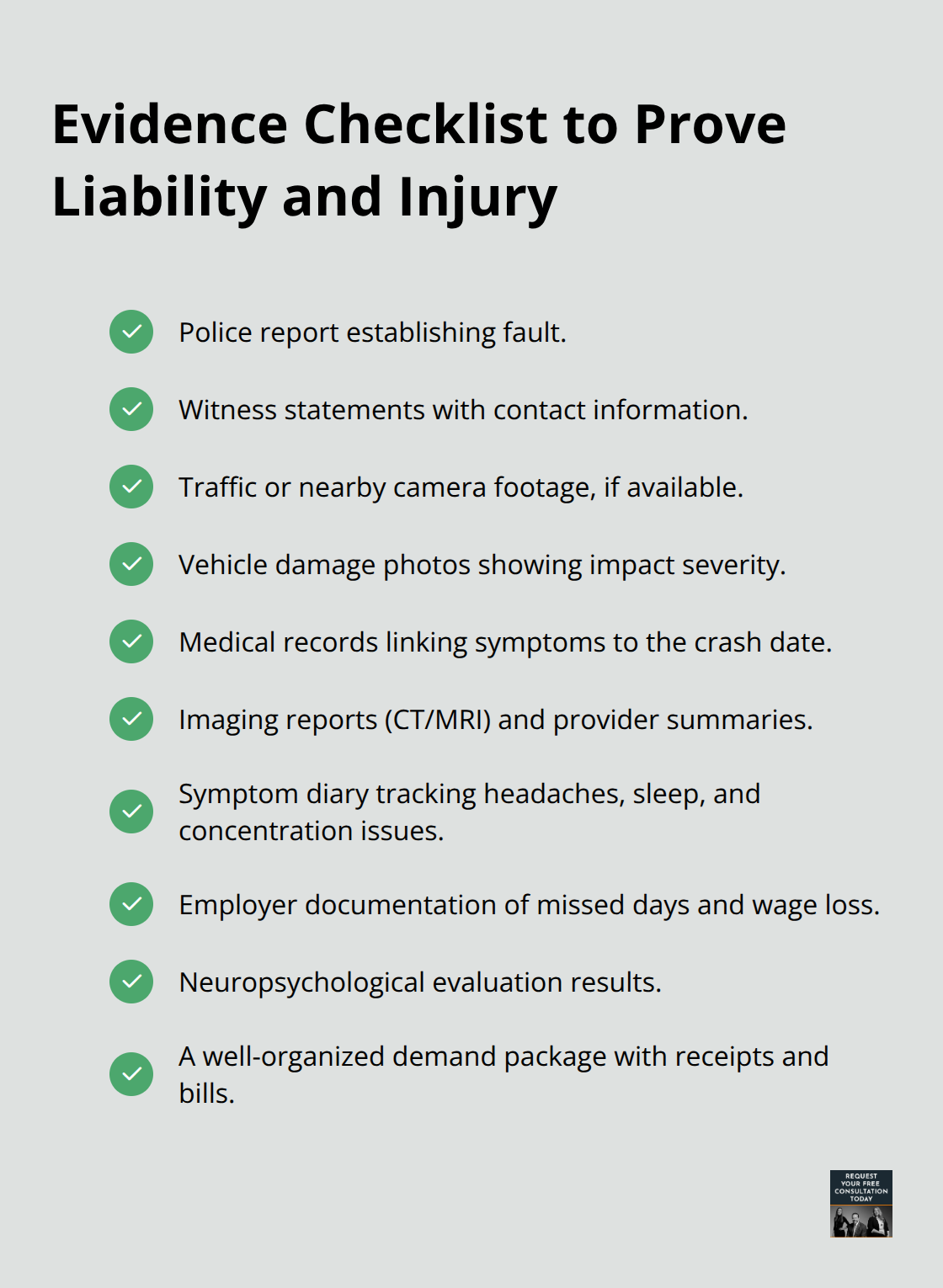
Insurance companies exploit gaps in this chain. If you waited three days before seeking medical care, they argue your concussion came from something else. If your initial ER visit mentioned only headache without brain imaging, they claim no serious injury occurred.
The California Office of Traffic Safety data shows speed-related crashes produce the most severe brain injuries, and nighttime crashes between 9 pm and 3 am carry elevated injury risk. These factors matter legally because they demonstrate how the crash mechanics created your specific injury. An adjuster reviewing your file alone will miss these connections, but legal representation ensures your claim includes this critical context.
Building Your Evidence Record Prevents Exploitation
You need a neuropsychological evaluation showing measurable cognitive changes, employer documentation of missed work with exact dates and wage loss amounts, imaging reports with clear medical language describing brain injury, and a detailed symptom diary covering the entire recovery period. Many Santa Cruz residents overlook how insurance companies weaponize incomplete records. If you have an ER visit but no follow-up neurologist appointment within two weeks, adjusters claim you weren’t seriously injured. If you missed documenting symptoms for three months, they argue your injury resolved and pain and suffering damages should be minimal.
Medical Liens Remove Financial Pressure
When financial strain forces you to accept a lowball settlement, your case suffers. The legal team at Schaar & Silva LLP helps direct you to medical lien services that facilitate treatment payment until your case resolves, removing the financial pressure that forces victims into accepting inadequate offers.
Insurance Timelines and Settlement Leverage
When settlement negotiations begin, California Fair Claims Settlement Practices Regulations require insurers to acknowledge your claim within 15 days and respond within 15 days. Adjusters frequently ignore these timelines, hoping you’ll accept their first offer out of frustration or financial desperation. Legal representation documents these delays and creates leverage for negotiation. Insurance companies know that represented claimants receive substantially higher settlements than unrepresented ones because attorneys understand exactly how much your case is worth and refuse to settle for less.
Final Thoughts
A concussion from a Santa Cruz car accident demands immediate medical attention and thorough documentation from day one. The difference between a strong claim and a weak one comes down to how quickly you seek care, how consistently you follow up with medical providers, and how completely you preserve medical records, wage loss statements, and symptom timelines. Insurance adjusters exploit gaps in this evidence, so building a comprehensive file protects your right to fair compensation.
Concussion claims in Santa Cruz succeed when you connect three elements: clear medical proof of brain injury, documented financial losses, and evidence showing the crash caused your specific symptoms. Medical expenses typically drive settlement value, but lost wages and pain and suffering damages matter equally when calculated correctly (Mayo Clinic estimates show mild concussion settlements range from $20,000 to $100,000, moderate injuries from $100,000 to $500,000, and severe cases exceeding $1,000,000). The legal team at Schaar & Silva LLP helps Santa Cruz County residents navigate this process by connecting you with medical lien services that remove financial pressure during treatment, ensuring your claim includes critical context about crash severity and injury mechanisms, and pushing back against insurance company tactics that minimize legitimate injuries.
If you haven’t already, schedule an appointment with a neurologist or concussion clinic within one to two weeks of your accident. Gather all medical records, imaging reports, and bills in one organized file, document your symptoms daily, and request written confirmation from your employer about missed work. Then contact Schaar & Silva LLP to discuss your case and learn how we can help you recover the compensation you deserve.
