

Car accidents in Santa Cruz County, Sacramento, and Oakland leave victims facing medical bills, lost income, and vehicle damage. We at Schaar & Silva LLP understand that navigating insurance claims and settlement negotiations feels overwhelming when you’re injured.
This auto accident compensation guide walks you through the types of damages you can claim, how California’s insurance system works, and the mistakes that cost people thousands in lost recovery.
What Damages Can You Actually Recover After an Auto Accident
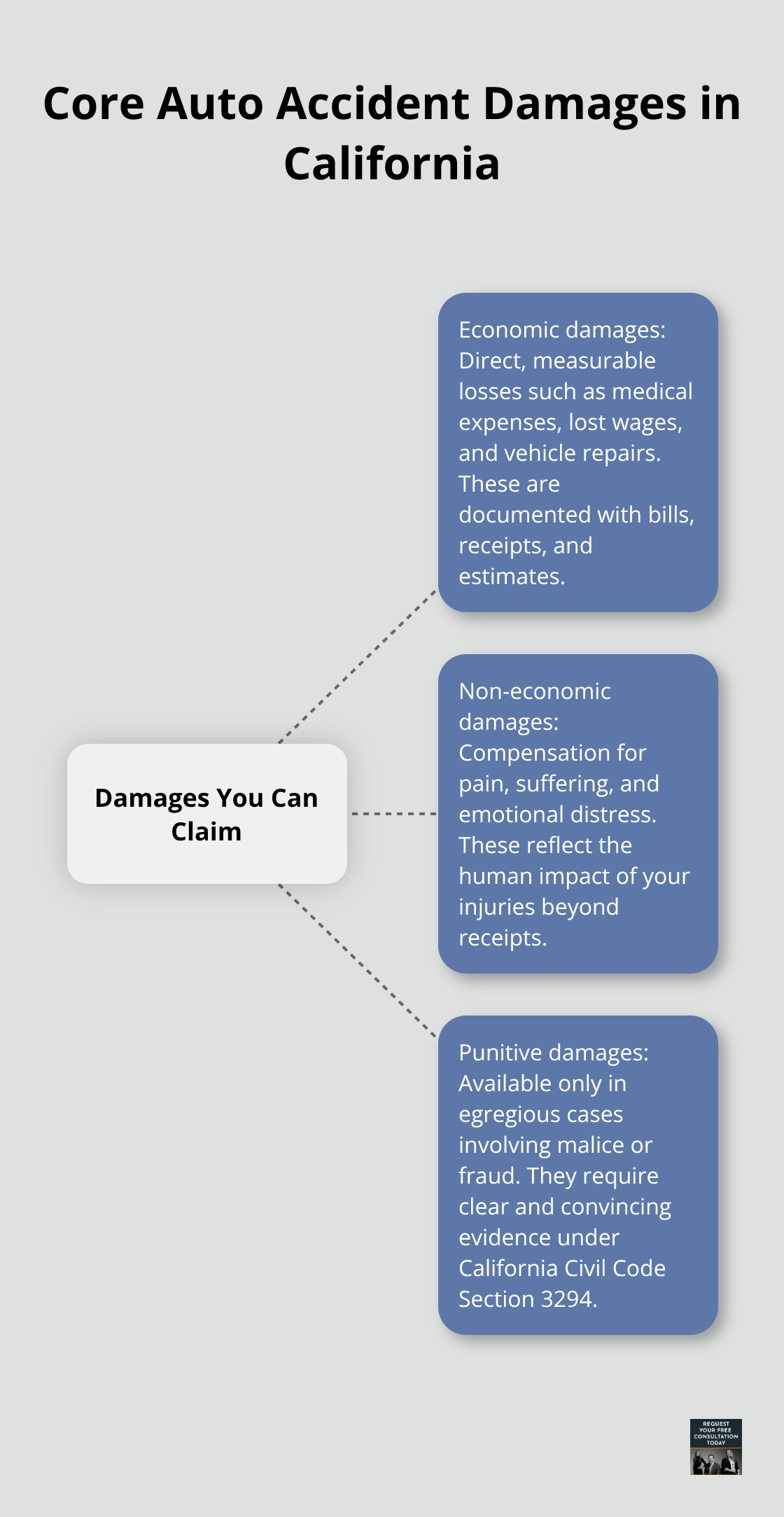
California’s fault-based system means the at-fault driver pays for your losses, but only if you understand what damages you can claim. Economic damages cover your direct, measurable losses: medical expenses, lost wages, and vehicle repairs. Non-economic damages address your pain, suffering, and emotional distress. Punitive damages apply only in egregious cases involving malice or fraud, requiring clear and convincing evidence under California Civil Code Section 3294. Most accident victims focus on the first two categories, which is where your recovery truly matters.
Medical Costs Add Up Faster Than You Think
Your medical expenses include immediate emergency care, ongoing treatment, future surgeries, physical therapy, and medications. California law allows you to claim both past medical costs and future medical needs, but future damages require proof of ongoing medical necessity and testimony about your prognosis. If you delay medical evaluation, insurers will argue your injuries weren’t serious-some injuries like whiplash don’t appear immediately, so seek medical care within days of your accident, not weeks later. Keep every receipt, medical record, and provider statement; this documentation directly supports your damages claim. Many victims underestimate future costs because they don’t account for long-term physical therapy or potential complications.
Lost Income Goes Beyond Your Paycheck
Your lost wages claim covers income you actually missed while recovering. If you’re self-employed, this gets more complex because you’ll need tax returns and business records to prove your earning capacity. California law also covers loss of earning capacity, meaning if your injury permanently reduces your ability to work or earn at previous levels, you can claim that difference. A construction worker with a spinal injury who can no longer perform physical labor has lost earning capacity even if they find desk work at lower pay. Document your work history, salary, benefits, and any reduced hours or job changes since the accident. If you’re still working but at reduced capacity, calculate that income difference monthly.
Property Damage and Vehicle Valuation
Your vehicle repair claim should reflect fair market value for repairs or, if totaled, the vehicle’s pre-accident value. Get multiple repair estimates from qualified shops in Santa Cruz County, Sacramento, or Oakland-don’t accept the insurance adjuster’s first valuation without comparison. If your vehicle is totaled, you can challenge the insurer’s valuation using Kelley Blue Book, NADA Guides, or local dealer listings for comparable vehicles. Many victims accept lowball offers because they need their car fixed immediately; this costs them hundreds or thousands. Rental car expenses while your vehicle is repaired are also recoverable damages, as are transportation costs if you need rideshare during recovery.
Understanding Your Full Claim Picture
These three damage categories form the foundation of your compensation claim, but calculating them accurately requires organization and documentation. The difference between a strong claim and a weak one often comes down to how thoroughly you gather evidence and present your losses. When you’re ready to move forward with your claim, understanding how California’s insurance system actually processes these damages becomes your next step.
How California Insurance Claims Actually Work
File Your Claim Promptly and Stick to Facts
File your claim with your insurance company within the required timeframe-this step is non-negotiable. California law requires you to report accidents to your insurer promptly, and most policies demand notification within 30 days, though many insurers expect calls within 24 to 48 hours. When you call, stick to factual information: date, time, location, vehicles involved, and injuries sustained. Do not admit fault or speculate about what happened; insurance companies record these calls and will use any statement against you later. Provide your policy number, the other driver’s information if available, and photos of the accident scene if you took them. This initial report creates your claim file, and everything documented here becomes part of the record that determines your compensation.
How Fault Determination Works in California
California follows a pure comparative negligence rule, which means you can recover damages even if you bear partial responsibility for the accident. Your award gets reduced by your percentage of fault. An insurance adjuster will investigate the accident by reviewing police reports, photos, witness statements, and sometimes hiring their own investigators. If the other driver violated traffic laws like speeding or running a red light, that strengthens your liability claim significantly.
Negotiating with Insurance Adjusters
The adjuster’s job is to minimize what the insurance company pays, not to be fair to you. Most initial settlement offers fall 20 to 40 percent below what cases actually settle for because adjusters test whether you’ll accept lowball numbers. Gather your medical records, repair estimates, wage documentation, and any evidence showing the other driver’s fault before you negotiate.

If the adjuster pressures you for a recorded statement, decline and suggest written communication instead. Calm, documented communication and refusal to accept their first offer will strengthen your position significantly.
Timeline and Statute of Limitations
The claims process typically takes 30 to 90 days for straightforward cases, but complex injuries or liability disputes extend timelines to six months or longer. California’s statute of limitations gives you two years from the accident date to file a personal injury lawsuit if settlement negotiations fail, so you have time to build your case properly rather than rush into accepting inadequate offers. This window allows you to gather comprehensive documentation and pursue fair compensation without pressure.
When settlement negotiations stall or the insurer’s offer falls short of your actual losses, understanding when to seek legal representation becomes your next critical decision.
Mistakes That Cost You Thousands in Your Settlement
Insurance adjusters count on your impatience and fear. They know that accident victims facing medical bills and lost income will accept the first offer that arrives in their inbox, even when that offer sits 30 to 40 percent below what your case actually warrants. The single biggest financial mistake you can make is accepting their initial settlement proposal without comparison or negotiation. When an adjuster calls with an offer, they test your knowledge and desperation, not present fair value. Your instinct to resolve this quickly works against you because settlement negotiations favor whoever walks away first.
Reject Initial Offers and Negotiate Aggressively
Reject the initial offer in writing and request itemized justification for their valuation. Most adjusters will increase their offer when you push back, sometimes substantially, because they hold settlement authority you don’t know about. The difference between accepting immediately and negotiating typically ranges from several thousand dollars to tens of thousands depending on your injuries and damages. Adjusters expect resistance and budget for higher payouts when victims demonstrate knowledge and persistence.
Recorded Statements Become Evidence Against You
Insurance companies record every call, and adjusters are trained to extract statements that minimize your claim. When they ask how you’re feeling or what happened, casual comments become ammunition in settlement negotiations. Saying you’re doing okay gets used to argue your injuries aren’t serious. Speculating about fault or admitting any responsibility, even minor, triggers comparative negligence arguments that reduce your payout.
Never give recorded statements without legal guidance first. Request written communication instead and respond through email where you control your words and maintain documentation. If an adjuster pressures you for a recorded statement by claiming it’s routine or required, it’s not-it’s optional and benefits only the insurance company. Document the date and time they request this, as aggressive tactics sometimes indicate a weak liability position on their end.
Social Media Posts Destroy Your Credibility and Damages Claim
Anything you post about your accident, injuries, or recovery becomes evidence the insurance company will weaponize against you. Photos showing you at a restaurant get used to argue your injuries aren’t disabling. Comments about feeling better undermine your pain and suffering claim. Even private messages and deleted posts can be retrieved through discovery if your case reaches litigation (adjusters and defense attorneys specifically search social media for contradictions between your claimed injuries and your online activity).
The safest approach is complete silence on social platforms until your case closes. If you must post, keep all content strictly positive and injury-neutral. Avoid discussing medical treatment, pain levels, or any details about your accident. This restriction applies to family members too-their posts about visiting you or your recovery create the same evidentiary problems. One careless photo or comment can cost you thousands in reduced settlement value.
Deadlines Pass Faster Than You Realize
California gives you two years to file a personal injury lawsuit from your accident date, but this timeline creates a false sense of security. Insurance companies exploit this window by delaying negotiations, knowing you can’t afford to wait until month 23 to act. Missing administrative deadlines costs you immediately and permanently.
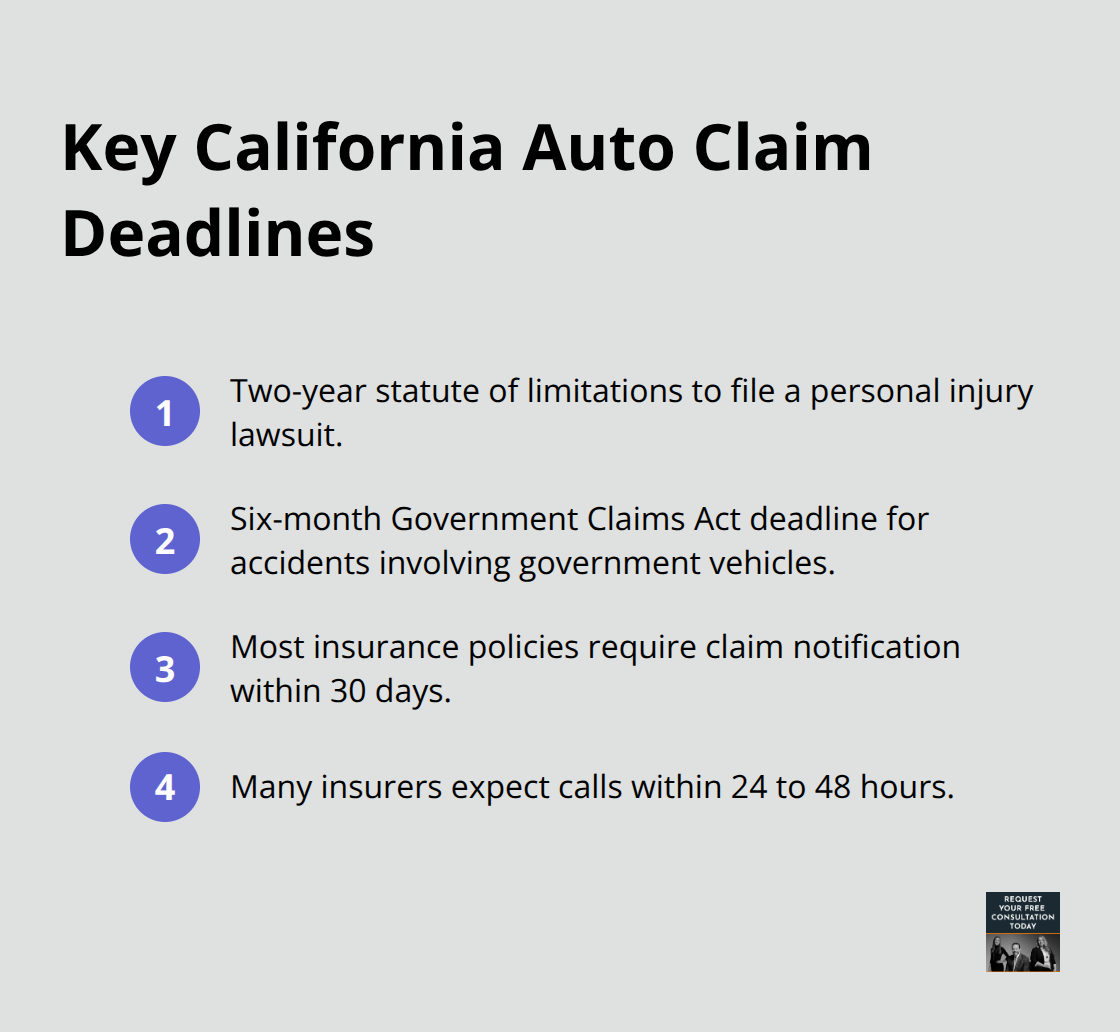
If a government vehicle caused your accident, you must file an administrative claim within six months through the Government Claims Act before you can sue the agency-miss this and your case disappears entirely. Your insurance company’s own policy likely requires claim notification within 30 days, and most demand written notice within that window. Document everything with dates: when you reported your accident, when you received medical treatment, when you submitted documentation to the insurance company. These dates become your protection against claims that you delayed or failed to cooperate (maintaining a timeline also strengthens your negotiating position with adjusters who test whether you track deadlines carefully).
Final Thoughts
Your auto accident compensation guide now covers the damages you can claim, how California’s insurance system processes those claims, and the costly mistakes that derail settlements. Document everything with dates and receipts, reject initial settlement offers and negotiate aggressively, and avoid social media posts that contradict your injury claims. Most accident victims leave money on the table because they accept the first offer or miss critical deadlines.
The two-year statute of limitations feels distant until month 18 arrives and settlement negotiations stall. Administrative claims for government vehicle accidents demand action within six months or your case vanishes entirely. These timelines aren’t suggestions; they’re hard boundaries that determine whether you recover fairly or lose your claim permanently.
When settlement negotiations stall or the insurer’s offer falls significantly short of your documented losses, legal representation becomes necessary. We at Schaar & Silva LLP help accident victims in Santa Cruz County, Sacramento, and Oakland navigate the claims process and fight for fair compensation. Contact Schaar & Silva LLP for a free consultation if you’re facing pressure from an adjuster or uncertain whether their offer reflects your actual damages.
