
Hit and run accidents leave victims with serious injuries, mounting medical bills, and unanswered questions about who caused the damage. Police use multiple investigative techniques to track down the responsible driver, from surveillance footage to vehicle database searches.
At Schaar & Silva LLP, we understand how frustrating it is when a hit and run investigation moves slowly. This guide walks you through how detectives build cases and what you can do to protect your rights.
How Detectives Track Down Hit and Run Drivers
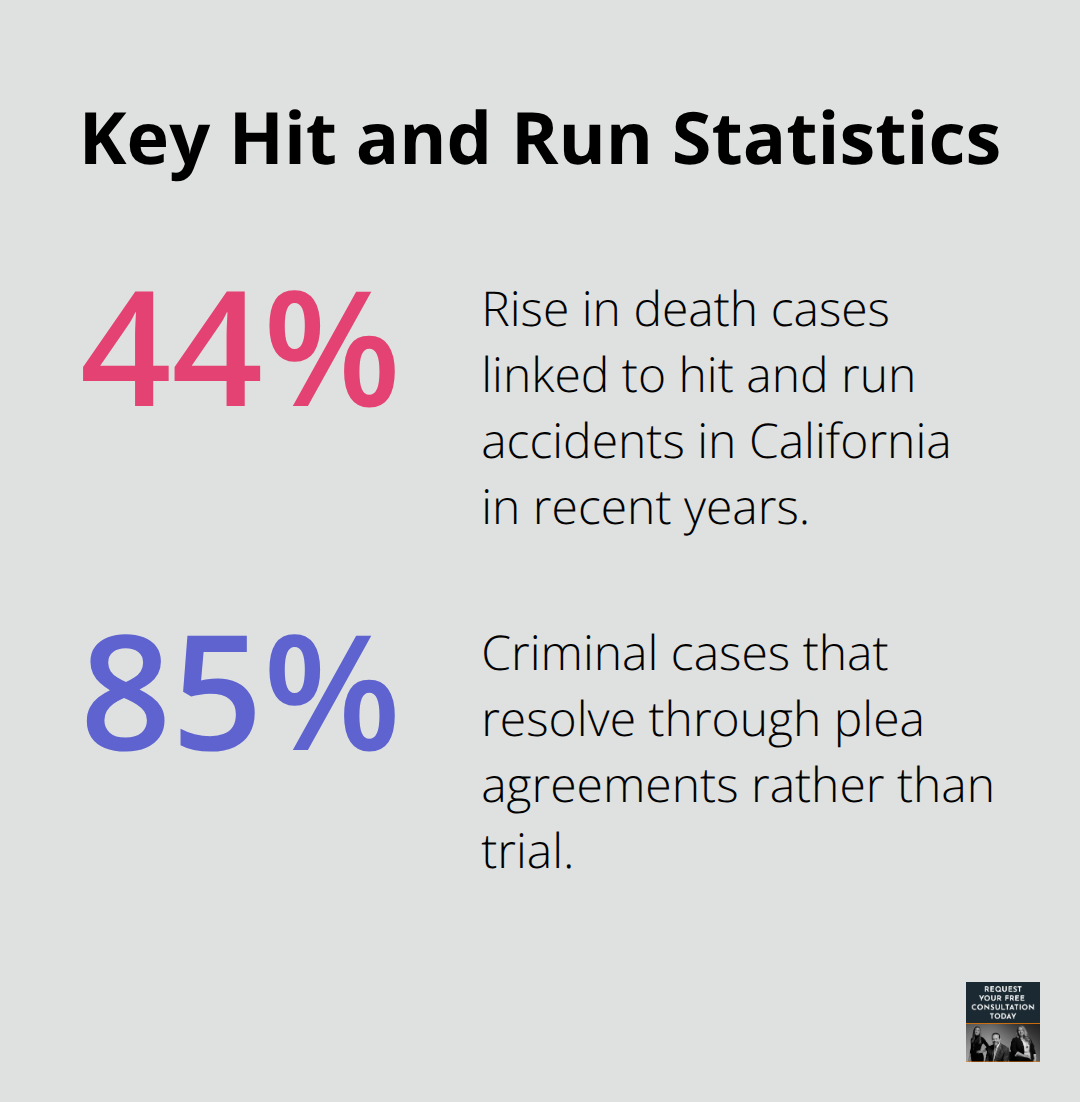
Detectives investigating hit and run accidents rely on three critical tools to identify suspects: surveillance systems, witness accounts, and physical evidence from the vehicles involved. California has experienced a 44% rise in death cases linked to hit and run accidents in recent years, making rapid identification essential. Surveillance footage from traffic cameras and nearby businesses often captures the fleeing vehicle’s make, model, color, and license plate. When a readable plate appears on video, investigators can cross-reference it with California DMV records within hours to obtain the driver’s identity and contact information.
License plate recognition technology accelerates this process significantly, allowing officers to scan footage automatically rather than watching hours of video manually.
Surveillance Systems Capture Critical Details
Traffic cameras and business security systems provide the fastest path to suspect identification. When the plate is partially obscured or unreadable, detectives focus on distinctive vehicle features like unique damage, custom paint, or specific trim details that narrow the suspect pool. Officers examine footage from multiple angles to establish the vehicle’s direction of travel and identify additional camera locations along that route. This systematic approach often reveals the suspect vehicle at intersections, parking lots, or residential areas miles from the accident scene. Advanced license plate recognition software processes footage in real time, flagging vehicles that match the description and alerting officers to their location.
What Witnesses Actually Remember
Eyewitness accounts provide the second layer of identification, though their reliability varies considerably. Witnesses at the scene supply license plate fragments, vehicle descriptions, and details about the driver’s appearance or behavior. The most valuable witness information includes the direction the vehicle traveled after impact, which helps investigators determine where to search for footage and additional witnesses. When multiple witnesses provide consistent details about the vehicle’s color, size, and direction, the case strengthens considerably. Detectives typically collect witness contact information on scene and follow up within 24 to 48 hours while memories remain fresh. Some witnesses hesitate to provide statements initially, so officers return to nearby homes and businesses later to canvass the area thoroughly. The combination of several partial descriptions often proves more reliable than a single detailed account, as witnesses under stress may misremember specifics.
Physical Evidence Linking Vehicles
Paint transfer and vehicle damage analysis provide forensic connections between the hit and run car and the victim’s vehicle. When two vehicles collide, microscopic paint fragments transfer between them, and forensic analysis matches these samples to specific vehicle manufacturers and model years. Damage patterns on the victim’s car reveal the height and angle of impact, which helps narrow the suspect vehicle’s profile. Accident reconstruction experts examine tire marks, gouge patterns, and deformation to understand how the collision occurred and what type of vehicle caused the damage. This information allows investigators to exclude vehicles that couldn’t physically produce the observed damage pattern. A vehicle with a low front bumper cannot cause damage at chest height on a standing victim, for example. Physical evidence becomes especially valuable when surveillance footage is unavailable or unclear, providing an independent verification method for identifying the responsible vehicle.
Once detectives identify a suspect through these three investigative channels, they move into the evidence collection phase, where documentation and database searches transform initial leads into prosecutable cases.
Building Your Case Through Proper Evidence Documentation
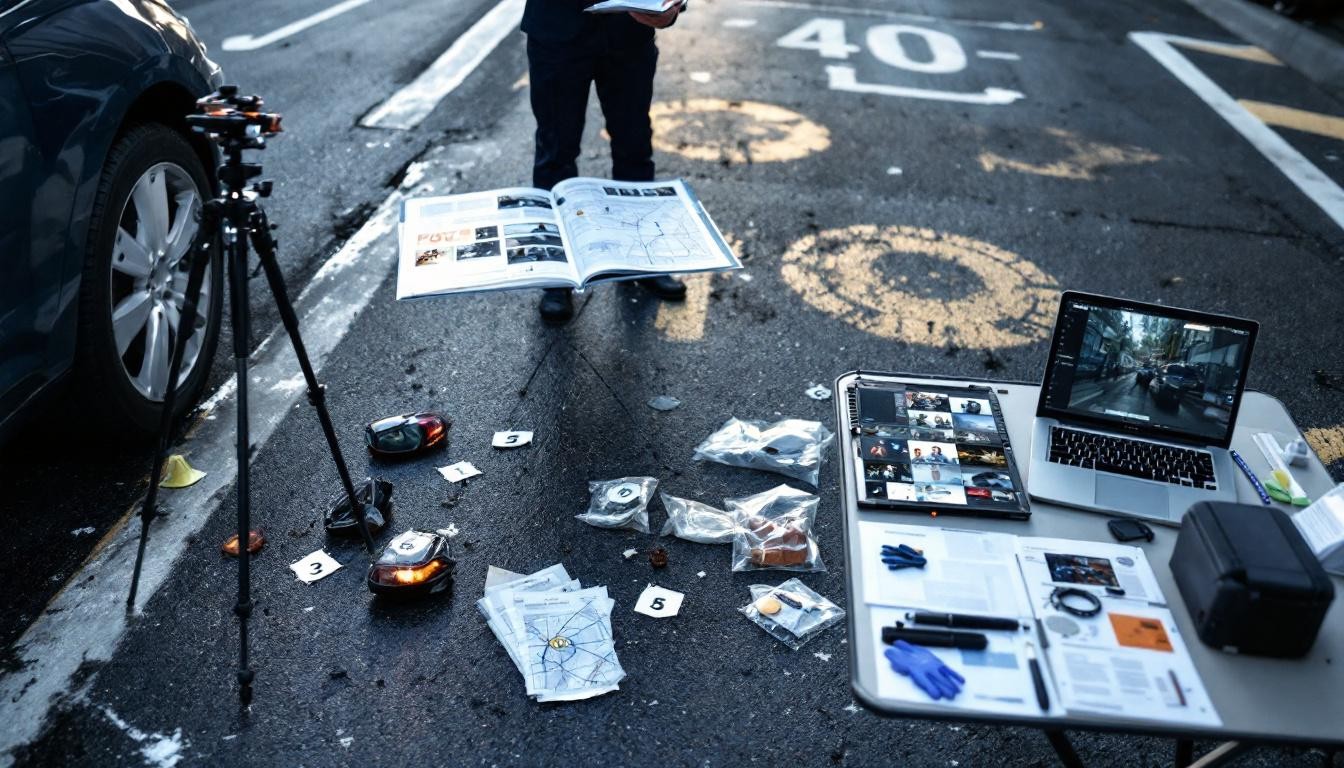
When detectives arrive at a hit and run scene, the first 24 hours determine whether the case becomes prosecutable or goes cold. Officers photograph damage patterns, debris fields, and skid marks from multiple angles and distances immediately. These photos establish the point of impact, vehicle trajectory, and force of collision-information that accident reconstruction experts later use to narrow vehicle type and size. Detectives measure distances between the accident location and nearby surveillance cameras, then request footage from businesses, traffic systems, and residential properties within a three-block radius. In urban areas like Sacramento and Oakland, this systematic approach identifies multiple camera angles within hours. Scene documentation also includes collecting debris for forensic analysis, noting weather conditions that affect visibility and tire marks, and recording precise GPS coordinates. Officers photograph the victim’s injuries and vehicle damage while memories and conditions remain unchanged, creating a visual record that prosecutors present to juries months or years later.
Vehicle Registration and Database Matching
Once investigators identify vehicle characteristics from surveillance or physical evidence, they cross-reference California DMV registration records to build a suspect pool. When paint analysis reveals a 2019 Honda Civic in silver with specific damage patterns, detectives query the DMV database for all registered vehicles matching those specifications within the county. This narrows hundreds of thousands of registered vehicles to a manageable list of 50 to 200 potential matches. Detectives then prioritize suspects based on proximity to the accident scene, driving history, and vehicle condition visible in photos or surveillance footage.
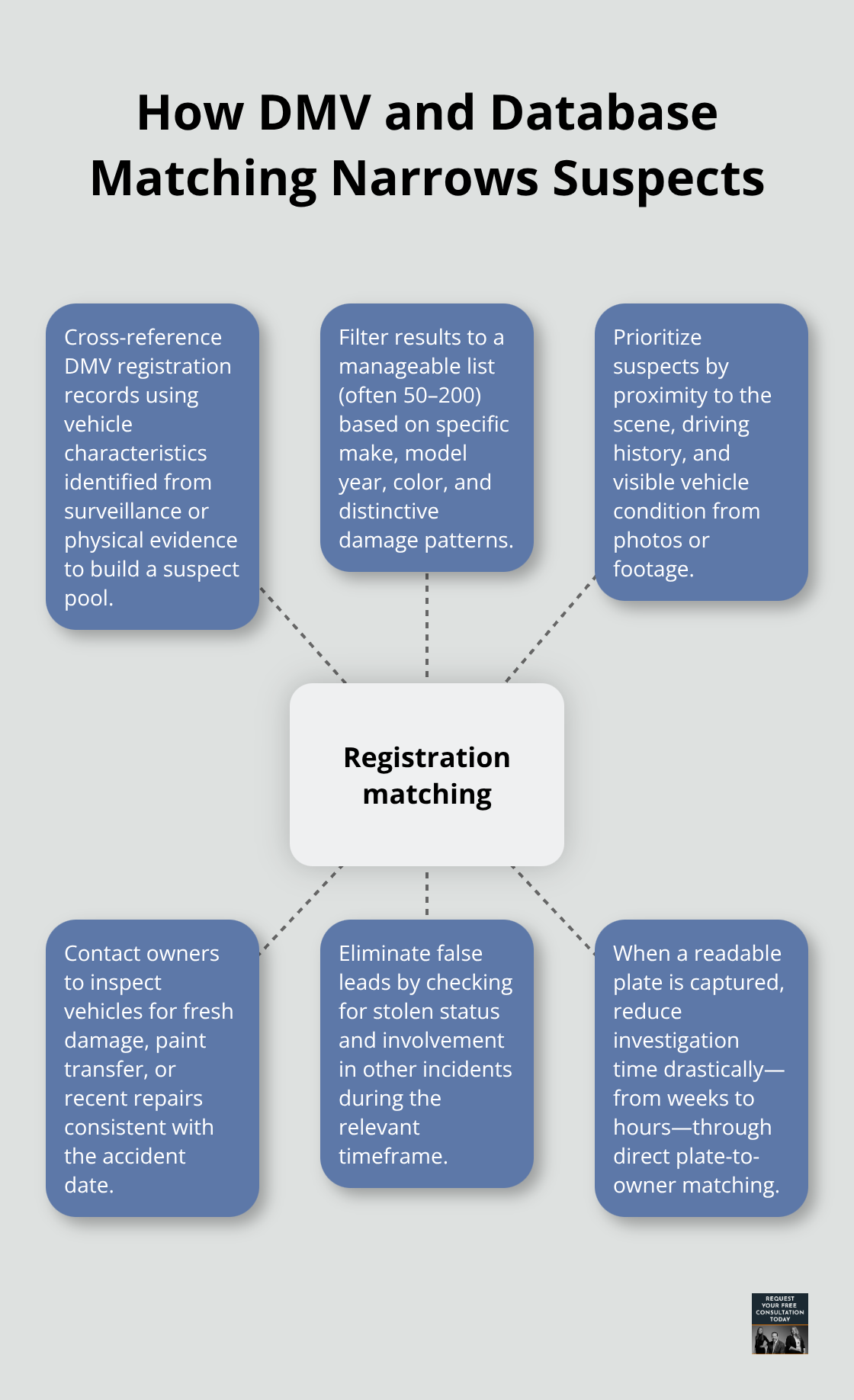
A vehicle with prior damage matching the accident pattern moves to the top of the investigative priority. Detectives contact vehicle owners to request inspection of their cars, looking for fresh damage, paint transfer, or repair work that occurred immediately after the accident date. Many drivers refuse inspection or claim damage from separate incidents, but inconsistent explanations raise investigative suspicion. Database searches also reveal whether a vehicle was reported stolen or involved in other accidents during the relevant timeframe, eliminating false leads quickly. Registration tracking becomes significantly faster when surveillance captures a readable license plate, reducing investigation time from weeks to hours.
Digital Footprints and Location Data
Mobile devices and vehicle GPS systems create involuntary location records that corroborate or contradict driver statements. With proper warrants, detectives access cell phone location data showing whether a suspect’s phone was near the accident scene at the time of impact. GPS data from vehicles with built-in navigation systems provides even more precise location history, often accurate to within feet. Insurance companies investigating hit and run claims review telematics data from vehicles equipped with devices that record speed, acceleration, braking patterns, and location. This data reveals whether a vehicle was traveling at speeds consistent with fleeing a scene or shows sudden deceleration patterns matching impact. Detectives also subpoena toll records, traffic camera citations, and parking lot access logs to establish movement patterns before and after the accident. A driver claiming to be across town at the time of the hit and run faces difficult questions when phone records place them at the accident location. These digital records eliminate reasonable doubt more effectively than eyewitness testimony alone, making them invaluable during prosecution.
Preserving Evidence Before It Disappears
Obtaining digital data requires specific legal authorization, and service providers delete records according to standard retention policies (typically 90 to 180 days for cell phone location data). Early case development becomes essential to preserve evidence before these records vanish permanently. Detectives file preservation notices with cell phone carriers and vehicle manufacturers immediately after identifying a suspect, instructing them to retain all data related to the case. Without these notices, critical location records disappear, and prosecutors lose the ability to prove the suspect’s whereabouts at the time of the accident. This preservation step separates cases that move forward from investigations that stall due to missing evidence. The legal process for obtaining warrants and preservation orders moves quickly in hit and run cases, particularly when injuries or deaths occur, allowing investigators to secure digital evidence before it becomes unavailable.
How Hit and Run Cases Move Through the Criminal and Civil Court System
Once detectives assemble a solid investigative file with surveillance footage, witness statements, vehicle registration matches, and digital evidence, the case enters the charging phase. California Vehicle Code sections 20001 and 20002 define hit and run offenses, with section 20002 covering property damage only (misdemeanor with up to 6 months jail, $1,000 fine, and 2 driving-record points) and section 20001 covering injury or death (felony or misdemeanor wobbler with 2 to 4 years prison for serious injury or death). Prosecutors review the investigative file and decide whether sufficient evidence exists to charge the suspect. The charging decision hinges on proving four critical elements: the driver was involved in an accident, damage or injury occurred, the driver knew about the damage, and the driver willfully failed to stop or provide identification.
How Prosecutors Evaluate Evidence and File Charges
A weak surveillance video showing only a partial license plate might result in a misdemeanor filing, while clear footage with readable plates, multiple witness statements, and paint transfer evidence typically leads to felony charges if injuries occurred. Once charged, the suspect appears before a judge for an arraignment hearing within 72 hours, where bail is set and preliminary hearings are scheduled. In many Sacramento and Oakland cases, prosecutors negotiate plea agreements during this phase, offering reduced charges in exchange for guilty pleas. Approximately 85% of criminal cases resolve through plea agreements rather than trial, making early negotiations a realistic outcome for most hit and run prosecutions.
Evidence Presentation in Court Requires Careful Strategy
When a hit and run case proceeds to trial, prosecutors present evidence in a specific order designed to build a compelling narrative. Surveillance video footage appears first, allowing jurors to see the actual collision and fleeing vehicle with their own eyes. Expert testimony from accident reconstruction specialists follows, explaining how damage patterns, impact angles, and vehicle specifications prove which type of vehicle caused the collision. Paint transfer analysis testimony establishes the forensic link between the suspect’s vehicle and the victim’s car, with experts explaining how microscopic paint fragments match specific manufacturers and model years.
Witness testimony provides human corroboration of the video evidence, with multiple witnesses describing the vehicle’s color, direction of travel, and driver behavior. Digital evidence including cell phone location data and GPS records places the suspect at the accident scene at the time of impact, eliminating reasonable doubt about the driver’s whereabouts. Defense attorneys challenge each piece of evidence, questioning witness reliability, suggesting alternative explanations for paint transfer, or arguing that surveillance footage shows a different vehicle.
Meeting the Burden of Proof
The prosecution must overcome these challenges by presenting evidence that proves guilt beyond a reasonable doubt, a standard that requires jurors to be convinced the defendant committed the crime to a moral certainty. Juries in Sacramento and Oakland counties have convicted hit and run drivers based on circumstantial evidence when multiple investigative elements point consistently toward the defendant. The strength of your case depends entirely on how thoroughly detectives collected evidence in those first 24 hours after the accident and how effectively prosecutors present that evidence to a jury. If you suffered injuries or property damage in a hit and run, an attorney can review the investigative file to verify that evidence was preserved, properly analyzed, and presented persuasively if the case reaches trial or settlement negotiations.
Final Thoughts
Hit and run investigations succeed when detectives act quickly and victims preserve evidence immediately. The first 24 hours determine whether a case becomes prosecutable or disappears into cold files. Photograph the accident scene from multiple angles, collect witness contact information, note the vehicle’s direction of travel, and call police immediately.
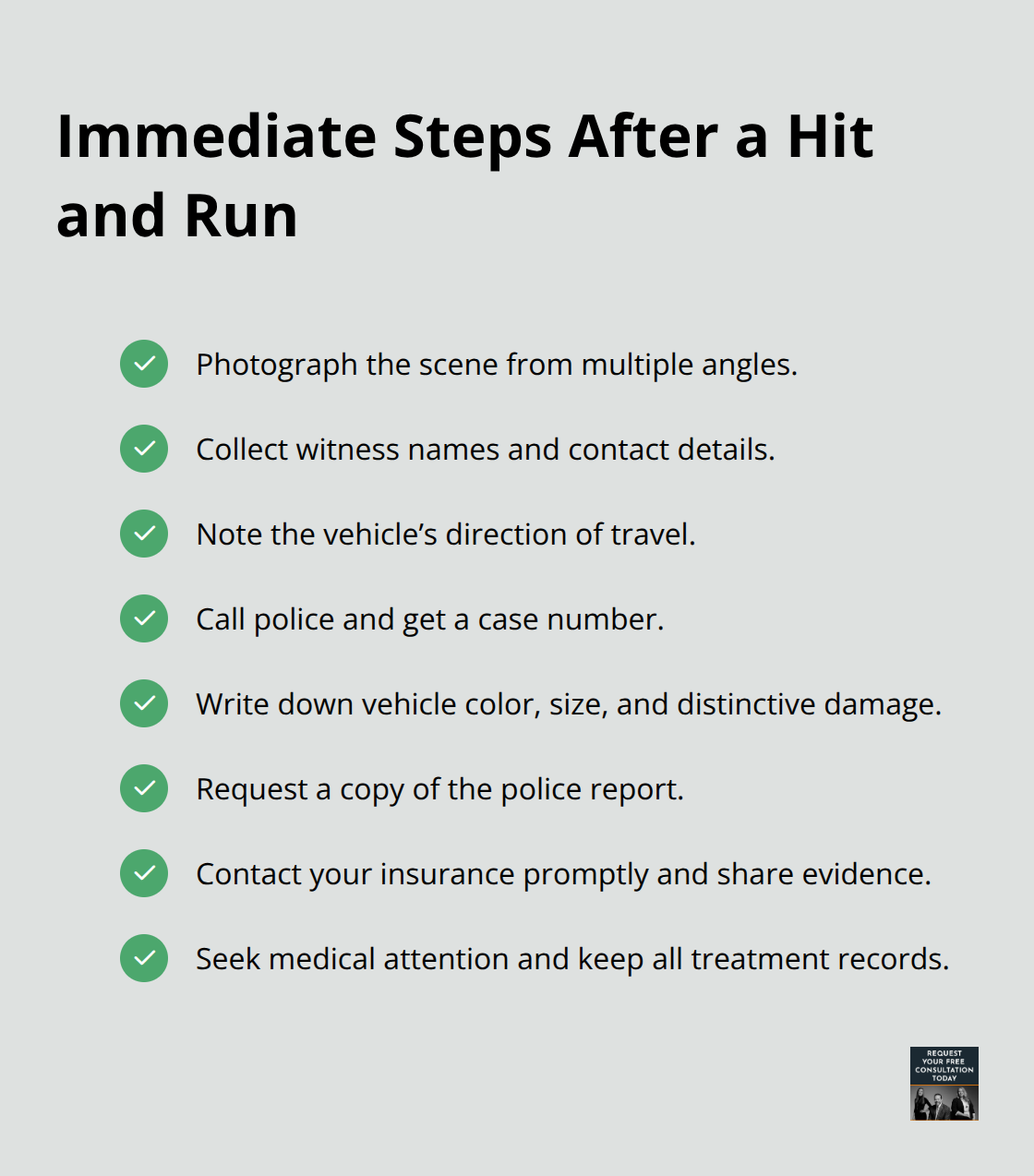
Write down everything you remember about the vehicle’s appearance, color, size, and any visible damage or distinctive features, then request a copy of the police report and note the case number for future reference.
Contact your insurance company promptly and provide them with photos, witness statements, and police report details. Avoid sharing unnecessary information that could weaken your claim or complicate the hit and run investigation. If you suffered injuries, seek medical attention immediately and maintain detailed records of all treatment, medications, and follow-up appointments, as medical documentation becomes critical evidence in both criminal prosecution and civil compensation claims.
We at Schaar & Silva LLP help hit and run victims navigate the legal process while focusing on recovery. Our team reviews investigative files to verify that evidence was properly collected and preserved, then works with prosecutors or pursues civil claims to secure compensation for your losses. Contact us for a free case evaluation to discuss your hit and run situation and learn how we can help you move forward.
