
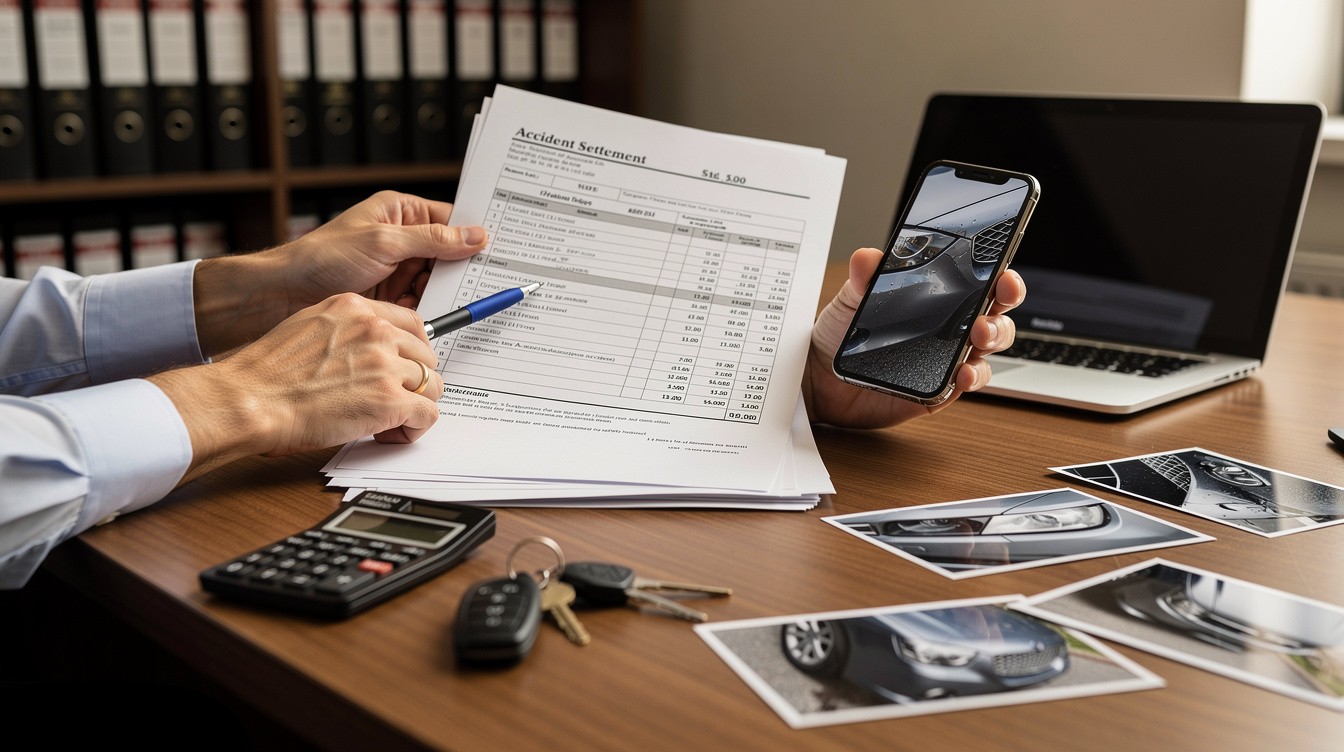
Car accident settlements rarely favor the unprepared. Insurance companies count on injured people making mistakes that cost them thousands in lost compensation.
We at Schaar & Silva LLP have helped accident victims in Santa Cruz County, Sacramento, and Oakland recover fair payouts by following proven car accident settlement tips. This guide walks you through the exact steps that maximize what you receive.
Document Everything at the Accident Scene
The first hours after a car accident determine whether you receive full compensation or accept a fraction of what your claim is worth. Insurance adjusters build their defense on gaps in your documentation, so capturing evidence at the scene is non-negotiable.
Photograph Vehicle Damage From Multiple Angles
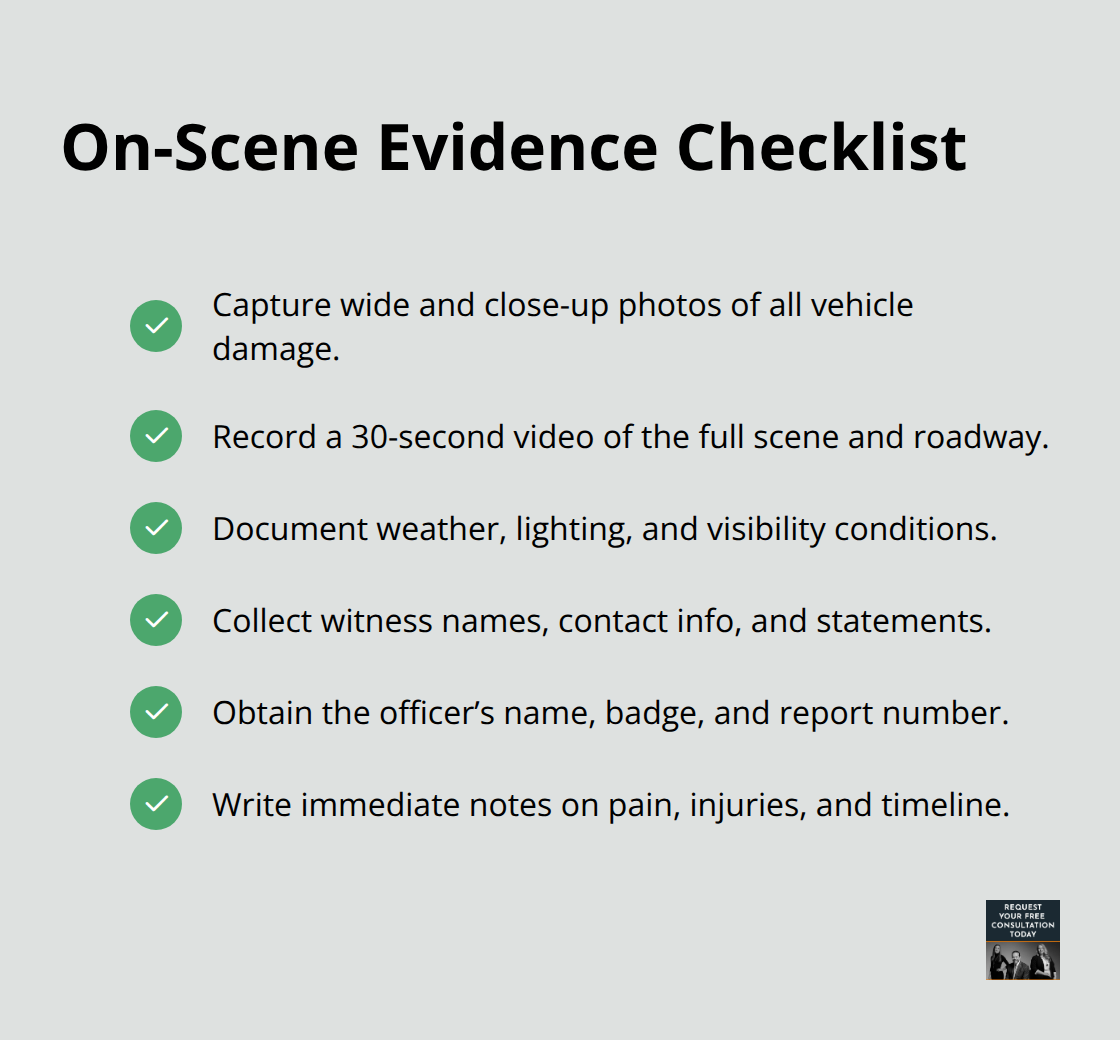
Photograph vehicle damage from multiple angles, including close-ups of dents, broken glass, and contact points between vehicles. Take wide shots showing the accident location, road conditions, traffic signals, and any debris scattered across the pavement. Video footage adds credibility-a 30-second clip showing the overall scene and damage speaks louder than a single photo. Weather conditions matter too; if it was raining, foggy, or dark, document that. Insurance companies will later argue visibility was fine if you don’t prove otherwise.
Collect Witness Information Before They Leave
Witnesses vanish within minutes of an accident, and tracking them down later proves nearly impossible. Approach anyone who saw the crash and ask for their full name, phone number, email address, and home address. Write down their vehicle information and parking location. Ask what they saw-did they see the other driver run a red light, check their phone, or fail to brake? Have them describe the other driver’s actions in their own words and note the time they witnessed the accident. Take a photo of their driver’s license if they permit it. Exchanging information with the other driver is standard, but their account will always favor themselves. Neutral witnesses carry weight that no insurance adjuster can dismiss.
Secure the Police Report and Officer Details
If police arrive at the scene, ask the officer for their name, badge number, and the report number-you’ll need this to retrieve the official police report later, which typically costs between $10 and $30 depending on your county. After photographing the scene and collecting witness details, write down everything you remember while it remains fresh. Include the date, time, weather, road surface, lighting conditions, and how the accident happened from your perspective. Note any pain you felt immediately after impact and any visible injuries.
Protect Your Documentation From Loss
If you took photos or video, transfer them to cloud storage that same day so they cannot be lost or deleted. Insurance adjusters frequently claim evidence disappeared or became corrupted when files exist only on a damaged phone or computer. The police report provides an official record, but it may contain errors or omit important details you observed. Your contemporaneous notes and photographs create a backup that contradicts any later claims from the other driver or their insurer.
This documentation becomes your foundation for the next critical step: understanding exactly what your claim is worth and what your insurance policy actually covers.
Understand Your Claim Value and Insurance Coverage
Insurance companies bank on you underestimating your damages. Most accident victims accept their first offer without calculating what they actually lost, which means they leave thousands on the table.
Calculate Every Medical Expense From the Crash
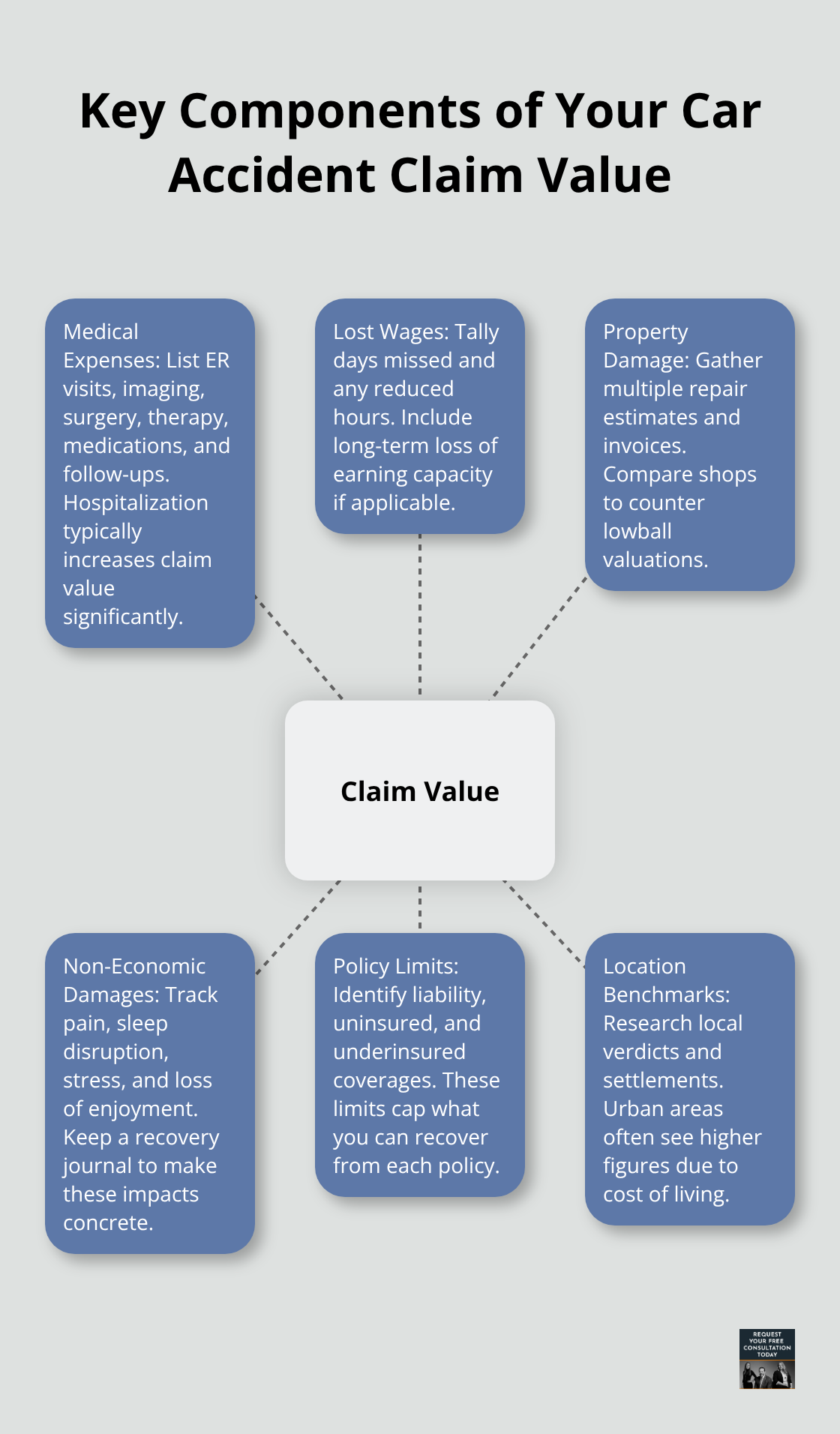
Start by listing every medical expense: emergency room bills, imaging scans, surgery costs, physical therapy sessions, medications, and follow-up appointments. If your injuries required hospitalization, that single factor pushes your claim value significantly higher. According to settlement data, California car accident claims with moderate injuries average around $50,054, while severe injuries commonly exceed $1,373,155. Your medical bills alone form the foundation of economic damages, but they represent only part of the picture.
Add your lost wages next. Calculate how many days you missed work, multiply by your daily rate, and include any reduced income if you returned to work before full recovery. If your injury prevents you from earning at your previous capacity long-term, lost earning potential becomes a major component of your claim. Property damage repairs matter too, so gather all repair estimates and invoices from your vehicle. Insurance companies often lowball repair costs, so obtain multiple estimates from reputable shops and compare them.
Review Your Insurance Policy Limits and Coverage Types
Your insurance policy limits determine the ceiling on what you can recover from the at-fault driver’s coverage. Pull out your policy documents and identify your liability limits, uninsured motorist coverage, and underinsured motorist protection-these details matter enormously if the other driver carries minimal coverage or none at all. California law allows you to pursue additional compensation through your own policy if the at-fault driver’s limits are insufficient.
Document Non-Economic Damages With a Recovery Journal
Document non-economic damages like pain and suffering, sleep disruption, emotional distress, and loss of enjoyment in daily activities. Keep a recovery journal recording your symptoms, medication side effects, how the injury affects your work performance, and what activities you can no longer do. This documentation transforms abstract pain into concrete evidence that adjusters cannot dismiss.
Organize All Documentation in One Central Location
Organize all receipts, invoices, wage stubs, and medical records in one folder-digital and physical copies-because disorganized claimants appear less credible and settle for less. When you present your claim value calculation to an insurance adjuster backed by organized documentation and real numbers, you eliminate the guesswork that works in their favor. This preparation positions you to negotiate effectively in the next phase, where your evidence meets the adjuster’s resistance.
Negotiate Effectively With Insurance Adjusters
Recognize How Adjusters Build Low Opening Offers
Insurance adjusters open negotiations with deliberately low offers because they know most injured people will accept them without pushback. The initial proposal typically lands between 30 to 50 percent below what your claim actually warrants, banking on your desperation to cover medical bills and lost income. Your organized documentation from the previous section becomes your negotiating weapon here.
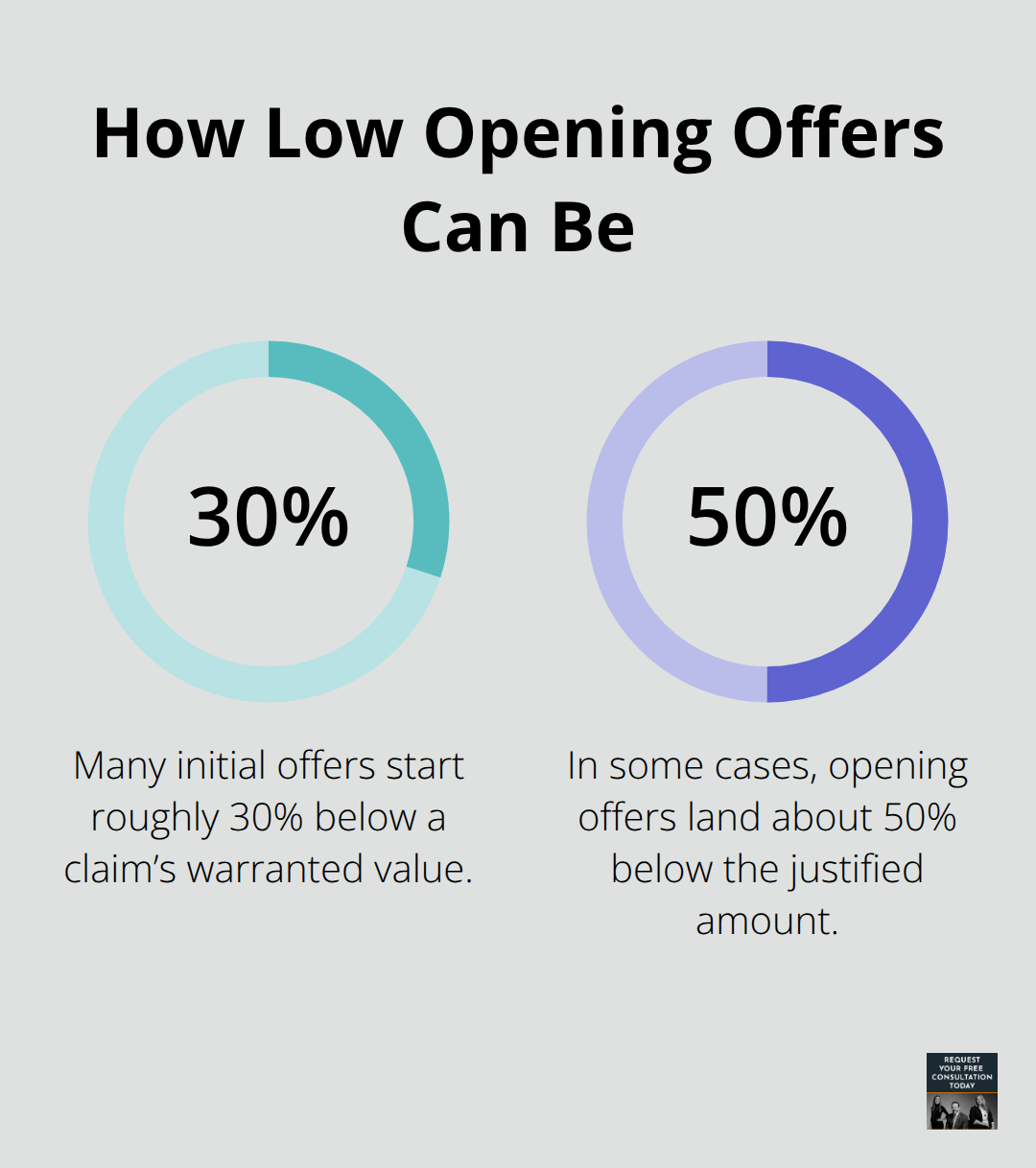
When you present repair estimates, medical invoices, wage records, and a detailed recovery journal, you shift power away from the adjuster’s assumptions and toward verifiable facts. California settlements for moderate injuries average around $50,054, yet many people accept first offers of $15,000 to $20,000 without understanding their claim’s true value. This gap exists because adjusters count on victims not knowing the benchmark figures for their injury type and location.
Research Settlement Benchmarks Before Negotiating
Before any negotiation, research what similar accidents in your county have settled for. Rear-end collisions in Santa Cruz County have ranged from several thousand dollars up to $5,750,000 depending on injury severity, while head-on crashes in Oakland commonly exceed $4,200,000 for serious injuries. These ranges help you recognize when an offer is insulting rather than reasonable. Location matters significantly-verdicts and settlements tend to be higher in major metropolitan areas due to higher cost of living. Knowing these benchmarks prevents you from accepting an offer that falls far below what your specific injury type and location typically command.
Present Evidence Systematically and Professionally
Present your evidence systematically by walking the adjuster through your organized documentation in a logical sequence: police report, medical records establishing injury severity, repair estimates, wage loss calculations, and your recovery journal showing ongoing impact. Adjusters respond to organized, methodical presentations far more than to emotional appeals or vague demands. State your settlement figure with confidence and explain exactly how you calculated it, referencing your documentation at each step. This approach transforms abstract negotiation into a fact-based discussion where numbers and evidence dominate rather than opinion.
Reject Low Counteroffers and Continue Negotiating
When the adjuster counters with a low figure, do not accept it immediately. Counteroffers signal that negotiation continues and that you understand your claim’s value. Most cases involve multiple rounds of negotiation before reaching settlement, so treat the first exchange as an opening position rather than a final decision. If the adjuster refuses to move significantly after three or four exchanges, or if they employ delay tactics by requesting the same documentation repeatedly, filing a lawsuit becomes necessary to preserve your rights. Many cases still settle after litigation begins because the lawsuit signals you will not accept lowball treatment. At this stage, consulting with a legal team becomes invaluable because represented claimants typically recover substantially more than unrepresented ones.
Final Thoughts
The car accident settlement tips outlined in this guide all rest on one foundation: preparation and documentation determine your outcome far more than negotiation skill alone. Insurance companies exploit unprepared claimants because they know most people accept whatever offer arrives first without understanding what their claim actually warrants. You now possess the knowledge to document the scene, calculate your true claim value, and negotiate from a position of strength backed by evidence rather than emotion.
When negotiations stall or the adjuster refuses to move significantly, legal representation becomes necessary to protect your rights. Represented claimants consistently recover substantially more than those handling claims alone, often recovering enough to offset attorney fees entirely. We at Schaar & Silva LLP serve Santa Cruz County, Sacramento, and Oakland with experience in personal injury law, handling legal complexities while you focus on recovery and connecting you with support when needed.
Contact Schaar & Silva LLP for a free consultation to evaluate your claim and understand what your case is actually worth. We work on a no-recovery, no-fee basis, meaning you pay nothing upfront and only if we win your case. After reaching a settlement agreement, funds typically arrive within weeks, and we verify that the amount covers all medical expenses, lost wages, ongoing treatment needs, and fair compensation for pain and suffering.