

After a car accident, understanding car insurance settlements can feel overwhelming. The process involves multiple steps, from filing your claim to negotiating the final amount you receive.
We at Schaar & Silva LLP help accident victims in Santa Cruz County, Sacramento, and Oakland navigate this process. This guide breaks down how settlements work and what you need to know to get fair compensation.
How Insurance Settlements Actually Work
What Happens When You File a Claim
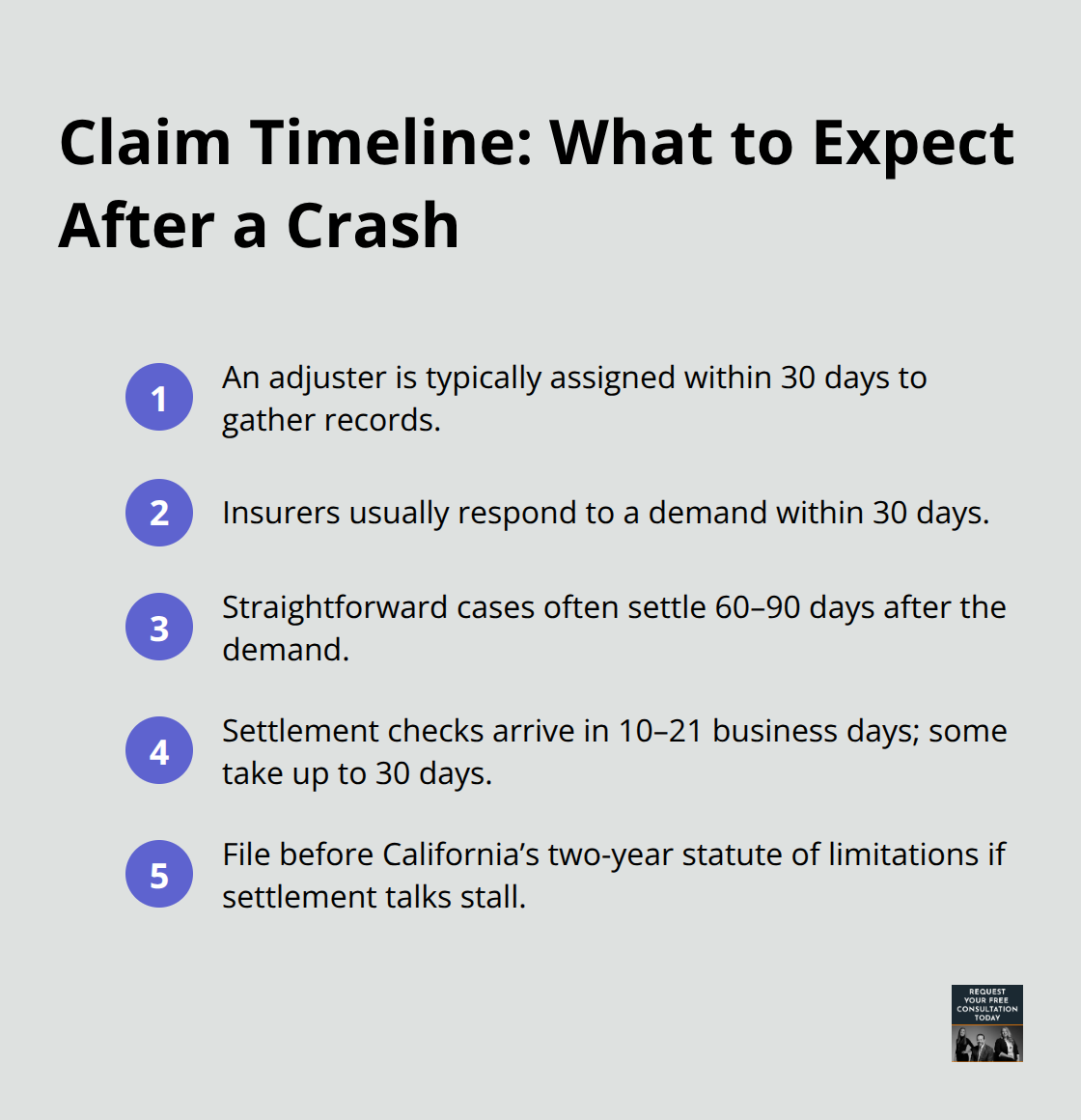
Filing a claim after a car accident sets off a predictable chain of events, though the speed depends entirely on your situation. Within the first 30 days, your insurance company assigns an adjuster who requests police reports, medical records, and witness statements. If liability is clear-you were hit by another driver at a red light, for example-the process moves faster. Disputed liability cases drag on because adjusters need more investigation.
The Insurance Research Council found that represented claimants recover 3.5 times more than unrepresented claimants, even after attorney fees. This matters because adjusters make their first offer knowing many accident victims will accept anything quickly. Your adjuster’s job is to minimize what the company pays, not to find you fair compensation.
Why You Should Never Give a Recorded Statement Alone
Adjusters will contact you directly if you don’t have a lawyer, pushing for a recorded statement. Never give one without legal guidance. A statement can lock you into a narrative that undervalues your injuries or contradicts medical evidence later. This single mistake costs accident victims thousands in reduced settlements.
Maximum Medical Improvement Controls Your Timeline
Maximum Medical Improvement (MMI) controls the timeline more than anything else. You shouldn’t settle before reaching MMI because you won’t know your true medical costs. Minor soft-tissue injuries stabilize in 2–4 months, but surgery or complex treatment extends this phase to 6–12 months or longer.
Once treatment stabilizes, your attorney sends a detailed demand package to the insurer, who typically responds within 30 days. Straightforward cases often settle 60–90 days after the demand; complex cases take longer. In California, you have two years from the accident date to file a personal injury lawsuit, so timing pressure exists, but rushing to settle before MMI is the biggest mistake.
What Happens After You Sign a Release
Settlement checks arrive 10–21 business days after you sign a release, though some carriers take up to 30 days. Your net amount gets reduced by medical liens, hospital subrogation, and case costs-your attorney negotiates these where possible.
Build Your Evidence Foundation Now
Start gathering evidence immediately: photos of the accident scene, vehicle damage, weather conditions, and witness contact information. Preserve dashcam or surveillance footage quickly because it disappears fast. Document all medical visits, receipts, lost wages, and repair invoices from day one. This foundation determines whether you settle fairly or leave thousands on the table.
Understanding what adjusters look for and how they value your claim helps you recognize when an offer falls short. The next section examines the specific factors that determine your settlement amount.
What Determines Your Settlement Amount
How Injury Severity Controls Your Payout
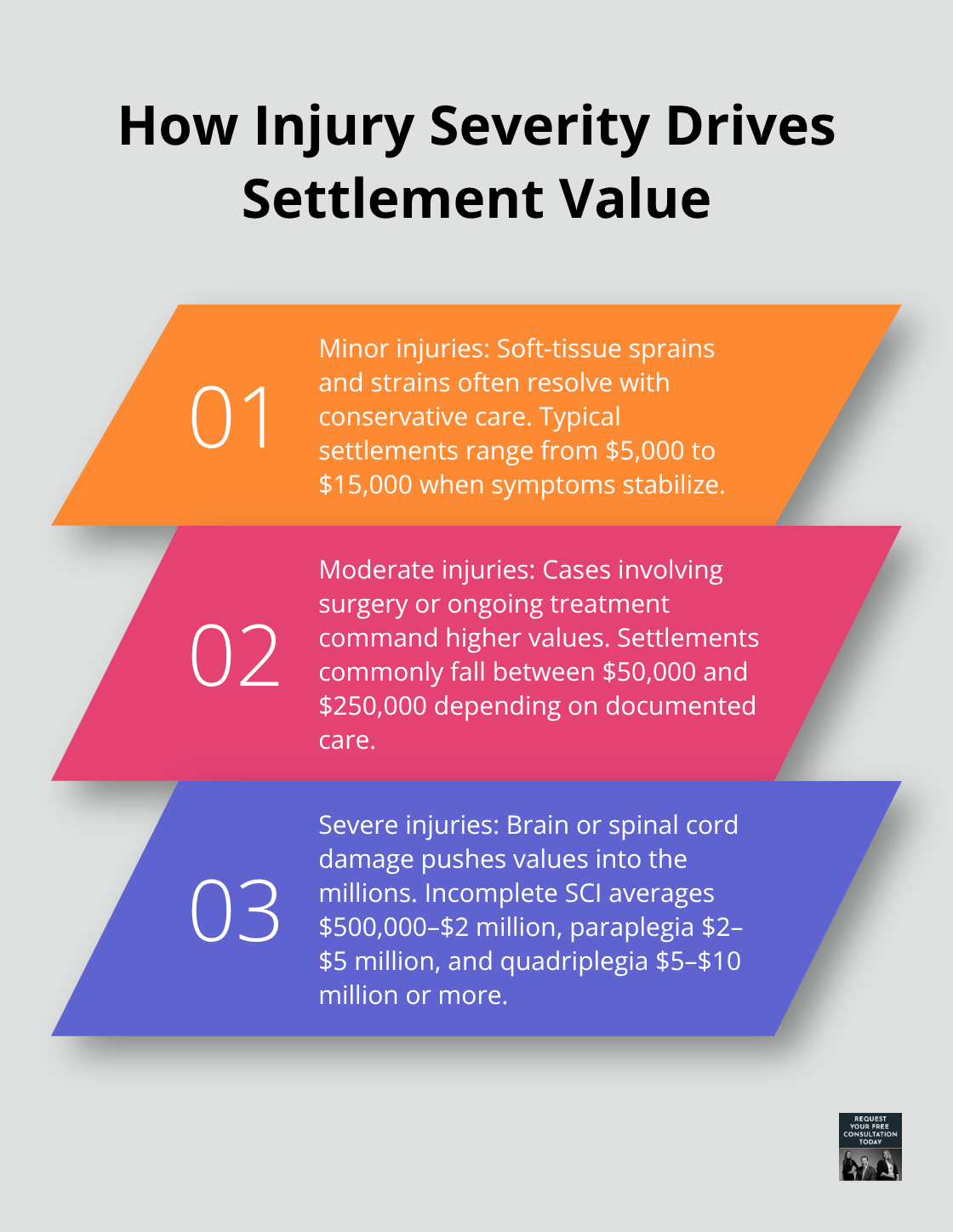
Injury severity drives settlement value more than any other factor, and the numbers prove it. A minor soft-tissue injury settles for $5,000–$15,000, while moderate injuries with surgery or ongoing treatment reach $50,000–$250,000. Severe injuries involving brain or spinal damage command settlements in the millions-incomplete spinal cord injuries average $500,000–$2 million, paraplegia $2–$5 million, and quadriplegia $5–$10 million or higher.
Medical expenses form the foundation of these calculations. Your settlement must cover all past treatment costs, future surgeries, rehabilitation, medications, and ongoing care. This is why reaching Maximum Medical Improvement before settling matters so much-you cannot accurately price future costs without knowing the full scope of treatment.
Why You Cannot Settle Before Treatment Ends
Adjusters will pressure you to settle before treatment ends because incomplete medical records mean lower payouts. Resist this pressure. Your medical records, imaging reports, surgeon recommendations, and treatment timelines create the evidence that justifies higher compensation.
If your case involves catastrophic injury, a life-care plan prepared by certified planners and treating physicians projects lifetime medical and support costs, often ranging from $2 million to $20 million. These plans convert future expenses to present-day value, which courts and insurers use to calculate fair settlements.
How Property Damage Valuations Work
Property damage valuations follow a straightforward market approach. If your vehicle is totaled, you receive fair market value based on age, mileage, condition, and comparable sales in your area before the accident. Request three independent appraisals if the insurer’s valuation seems low-most dealerships and certified appraisers provide free estimates.
Liability Determination and Comparative Negligence
Liability determination shapes the entire settlement landscape and often determines whether you recover anything at all. Clear liability cases settle faster and for higher amounts because fault is obvious. If another driver struck you while running a red light with multiple witnesses present, the insurer knows they will lose if sued, so they offer reasonable settlements quickly.
Disputed liability cases drag on because adjusters investigate thoroughly, requesting dashcam footage, police reports, witness statements, and sometimes accident reconstruction. California follows comparative negligence law, meaning you can recover even if partially at fault-but your settlement reduces by your percentage of fault. If you are 20% at fault and your damages total $100,000, you recover $80,000. This rule creates negotiation leverage if you believe the other driver shares fault.
Building Your Evidence Foundation for Liability
Document everything that supports your version of events: scene photos showing road conditions, vehicle positions, traffic signals, and weather. Preserve any dashcam or surveillance footage immediately because it often disappears within days. Witness statements matter tremendously-obtain names, phone numbers, and written accounts while memories are fresh.
The police report establishes an official account of fault, though it is not binding in civil claims. If the report contains errors or omissions, your attorney can challenge it with stronger evidence. When liability disputes arise, the quality of your documentation determines whether you negotiate from strength or weakness. This foundation becomes especially important when you move into the negotiation phase, where your evidence either supports your demands or undermines them.
Negotiating Your Settlement and Avoiding Costly Mistakes
The First Offer Is Almost Always Too Low
The gap between an insurer’s first offer and fair compensation is often massive. Adjusters know most accident victims lack documentation and legal guidance, so they lowball aggressively to close claims fast. Your first offer typically lands 30 to 50 percent below what your case actually merits, especially when injuries are moderate to severe. Building an organized evidence file before negotiations start transforms you from a desperate accident victim into someone with leverage.

What Documentation You Must Collect
Start collecting every medical record, bill, and receipt from day one. Insurance adjusters scrutinize medical consistency, so gaps in treatment or missing documentation give them ammunition to argue your injuries were minor. Photograph your vehicle damage from multiple angles, the accident scene showing road conditions and traffic signals, and any visible injuries. Obtain written statements from witnesses while their memories are fresh, including their contact information and exactly what they saw.
Police reports establish an official account, though they are not binding in negotiations. Dashcam footage, surveillance video from nearby businesses, and traffic camera recordings disappear fast-you must retrieve and preserve these within days of the accident. Medical imaging reports, surgeon recommendations, and treatment timelines matter far more than general statements about pain. When you reach Maximum Medical Improvement, you should compile a comprehensive demand package showing all past expenses, future treatment projections, lost wages with tax documents proving income, and non-economic damages like pain and emotional distress. This organized file signals to the insurer that you are serious and prepared.
Red Flags That Signal an Inadequate Offer
Recognizing red flags in settlement offers separates claimants who leave money on the table from those who secure fair compensation. If an insurer’s offer arrives before you finish treatment or before your medical team confirms MMI, you should reject it immediately-settling early systematically underestimates future costs and locks you into inadequate recovery. Low initial offers often include pressure language about time-sensitive deadlines or expiring settlement windows; these are negotiation tactics, not genuine constraints. California gives you two years to file a lawsuit, so artificial urgency serves only the insurer’s interests.
If your case involves any surgery, imaging showing structural damage, or ongoing care, settlements below $50,000 rarely reflect true value. You should push back hard on offers that ignore future medical costs, rehabilitation, lost earning capacity, or non-economic damages. An adjuster who refuses to increase an offer after you submit new medical evidence or contradictory witness statements is signaling they expect you to litigate-you should file a lawsuit to demonstrate you will pursue full value.
When to Push Back and Escalate
Many accident victims accept inadequate offers because they underestimate how much their injuries will cost long-term. A life-care plan prepared by certified planners and treating physicians projects lifetime expenses and strengthens your negotiating position dramatically, especially in catastrophic cases. When liability is clear and your documentation is thorough, the insurer knows settlement is cheaper than litigation, which gives you negotiating power. If the adjuster stonewalls or refuses reasonable increases, you should consider escalating negotiations and filing suit to protect your rights.
Final Thoughts
Car insurance settlements rarely reward accident victims who navigate the process alone. The gap between what insurers offer and what your case actually merits depends almost entirely on how thoroughly you document injuries, gather evidence, and understand your claim’s true value. Settlement amounts reflect injury severity, medical costs both current and future, lost wages, property damage, and the strength of your liability evidence-accepting the first offer costs you thousands because adjusters deliberately start low.
Legal representation transforms your recovery fundamentally. The Insurance Research Council documented that represented claimants recover 3.5 times more than unrepresented claimants, even after attorney fees. Lawyers handle insurer communications, prevent you from making costly mistakes like giving recorded statements, and file protective lawsuits when negotiations stall. Most personal injury attorneys work on contingency, meaning you pay nothing unless you win.
We at Schaar & Silva LLP help accident victims in Santa Cruz County, Sacramento, and Oakland secure fair compensation through thorough case evaluation and aggressive negotiation. Contact us for a free case review to understand your settlement value and next steps. Your recovery matters more than speed, and rushing to settle before you have complete information costs far more than waiting for fair compensation.
