
After a car accident, physical injuries get immediate attention. But the psychological wounds-anxiety, depression, PTSD-often go unaddressed and uncompensated.
At Schaar & Silva LLP, we see this pattern repeatedly in Santa Cruz County, Sacramento, and Oakland. Victims miss out on emotional trauma compensation because they don’t understand how mental health damages fit into their claims.
This guide shows you how to recognize psychological injuries, document them properly, and fight for the full compensation you deserve.
How Accidents Rewire Your Brain
The Biology Behind Trauma
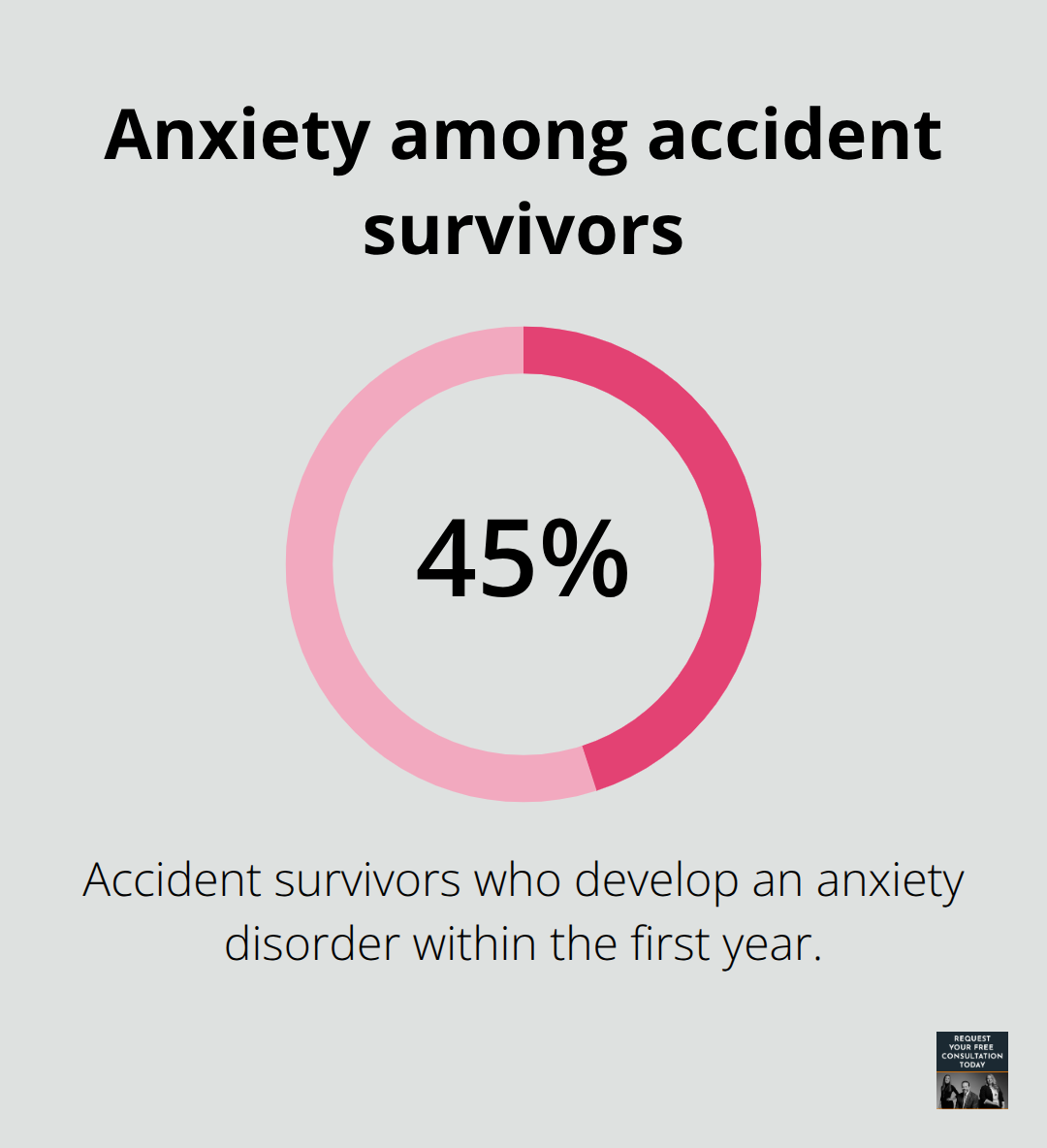
Car accidents don’t just break bones. They rewire how your nervous system responds to the world. When impact occurs, your brain floods with stress hormones like cortisol and adrenaline. This isn’t weakness or overreaction-it’s biology. Your amygdala, the brain’s alarm center, becomes hyperactive after trauma. Studies on accident survivors show that 45% develop anxiety disorders within the first year, and nearly 30% experience depression. The Judicial Council of California recognizes this reality in its Civil Jury Instructions, defining serious emotional distress as suffering that a reasonable person would find hard to cope with.
Why Your Brain Stays in Survival Mode
Your brain doesn’t distinguish between a threat that happened yesterday and one happening now. That’s why some accident survivors experience panic attacks while driving months later, even on safe roads. Insomnia after an accident affects your immune system and slows healing. Intrusive thoughts about the crash interrupt work performance, costing you wages. Depression drains your motivation to attend physical therapy, which then delays recovery from your injuries.
What Courts Recognize as Compensable Harm
The Judicial Council’s instructions acknowledge that emotional distress can include fright, horror, nervousness, grief, anxiety, worry, shock, humiliation, and shame. These aren’t minor feelings. They’re documented psychological responses that courts recognize as compensable harm. The gap between what happens physically and what happens mentally is where compensation gets lost. Many victims in Sacramento, Oakland, and Santa Cruz County focus on healing the visible injury-the broken arm, the whiplash-while their anxiety spirals unaddressed.
Building Your Documentation Now
Without proper documentation from a therapist or psychiatrist, courts won’t see the connection between your accident and your psychological suffering. Start tracking your symptoms now-sleep disruptions, mood changes, avoidance behaviors-because the gap between accident and documentation weakens your case. Medical records that explicitly connect your distress symptoms to the incident and document ongoing treatment create the foundation courts need to award full compensation. The stronger your paper trail from the moment symptoms appear, the clearer your claim becomes.
What Your Emotional Damages Are Actually Worth
How Courts Calculate Non-Economic Damages
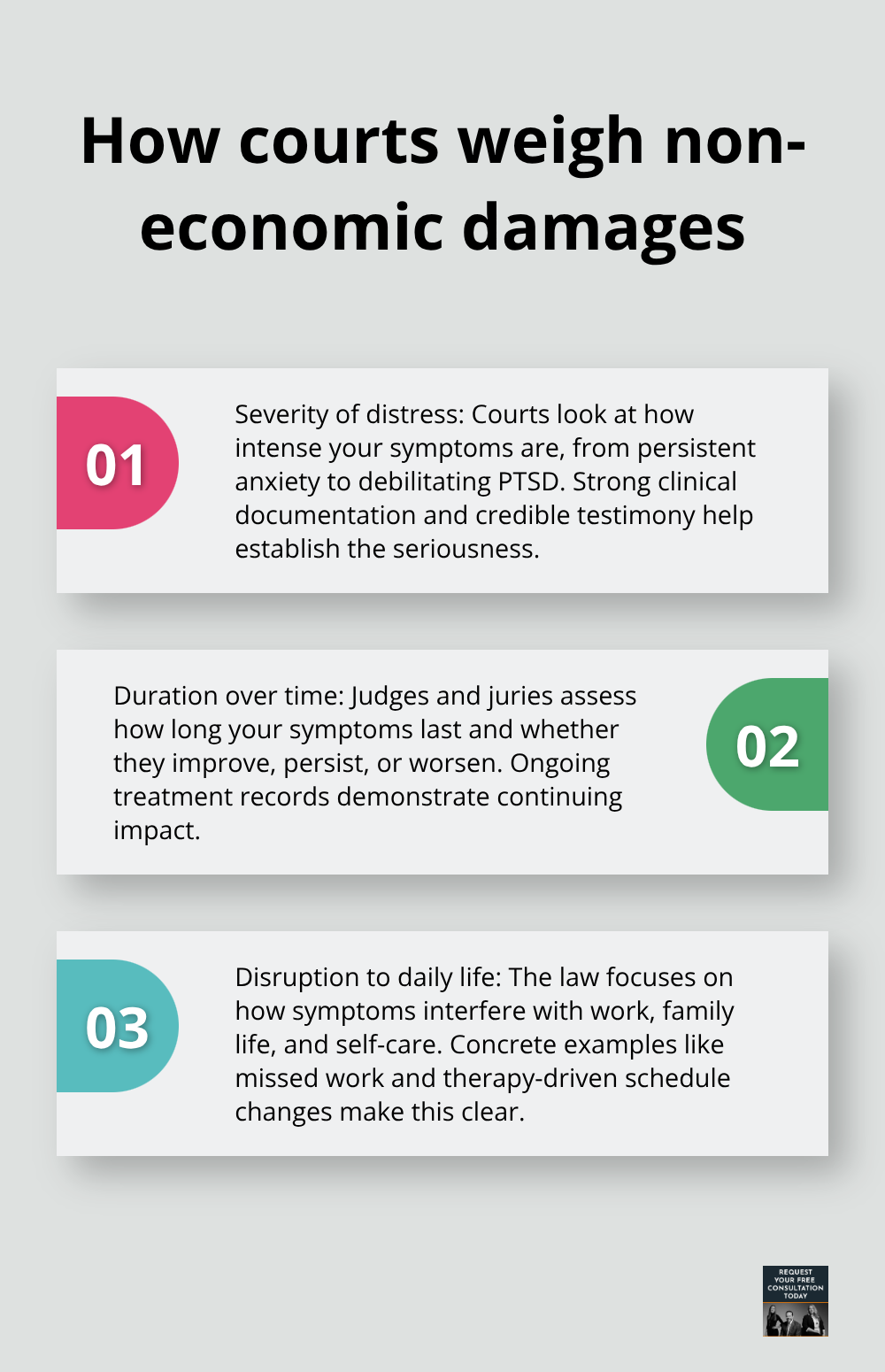
Putting a dollar amount on emotional trauma feels impossible until you understand how courts actually calculate it. California courts reject fixed formulas for non-economic damages like mental health harm. Instead, they examine the severity of your distress, how long it lasts, and how drastically it disrupts your daily life. The Judicial Council of California’s Civil Jury Instructions guide judges and juries to consider factors like your age, the nature of the incident, and your ability to cope.
A 65-year-old experiencing anxiety after a car accident receives different compensation than a 25-year-old with identical symptoms, because courts recognize that age affects psychological resilience.
The Impact on Your Daily Life Matters Most
Courts look closely at whether your distress prevents you from working, attending family events, or performing basic self-care. If your depression causes you to miss three months of work, that lost income becomes economic damage you can claim separately from emotional pain and suffering. Medical records showing ongoing therapy, psychiatric treatment, or medication prescribed specifically for post-accident anxiety create the clearest path to substantial compensation. Without these records, jurors struggle to distinguish between normal stress and serious psychological injury that meets California’s legal threshold.
Documentation Determines Your Payout
Your documentation determines your compensation more than anything else. Courts award damages based on concrete evidence, not your testimony alone. A therapy journal with dated entries describing panic attacks, insomnia, and avoidance of driving provides the foundation. Medical bills from a therapist or psychiatrist prove ongoing treatment and its cost. Wage loss statements from your employer show the financial impact of your distress. Police reports and incident documentation link your symptoms directly to the accident, establishing causation that courts require.
The Judicial Council emphasizes that serious emotional distress must be something a reasonable person would find hard to cope with, meaning minor anxiety fails to meet the threshold. Gather bills from mental health treatment, pharmacy receipts for anxiety or depression medication, attendance records showing missed work days, and written statements from people who witnessed your behavioral changes after the accident (these observations carry significant weight with juries). Without systematic documentation from day one, even severe psychological injury becomes difficult to prove and compensate.
What Happens When You Build Your Evidence File
Organize your documentation into categories: incident records, medical records, symptom journal, workplace records, and witness statements. Create a chronological timeline that lists key events with dates, attached evidence, and resulting symptoms or impacts to illustrate causation clearly. Structure your evidence file to tell a coherent story from the incident to your current condition, making it easy for a judge or jury to follow the connection between the accident and your psychological suffering.
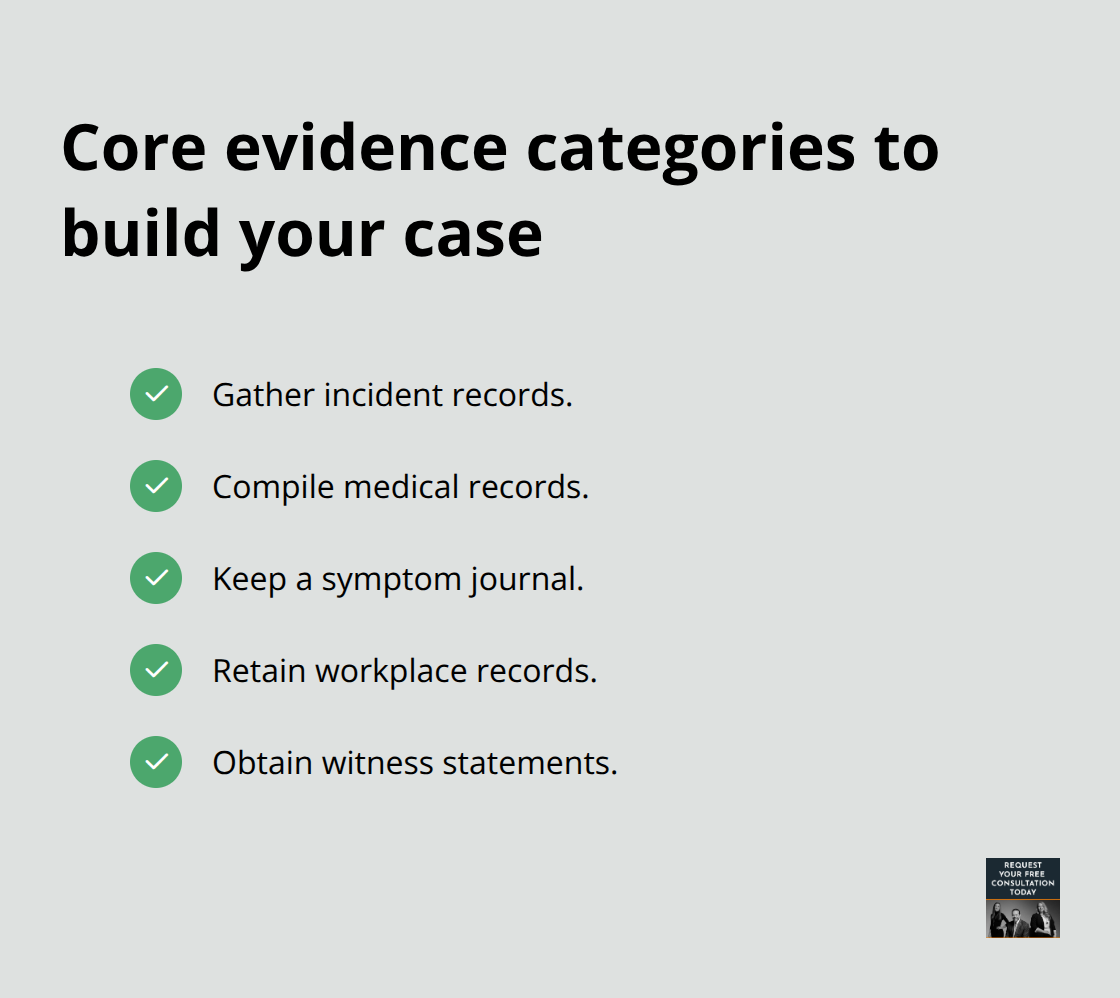
This organized approach transforms scattered documents into a compelling narrative that supports your claim for full compensation.
What California Law Says About Your Emotional Trauma Claim
California Recognizes Psychological Injuries as Compensable Harm
California law explicitly recognizes that psychological injuries deserve compensation equal to physical ones. The Judicial Council of California’s Civil Jury Instructions set the standard: serious emotional distress is suffering that a reasonable person would find hard to cope with. This means your anxiety, depression, or PTSD after a car accident isn’t just valid-it’s legally compensable. Your psychological suffering counts in court, and California courts award damages for it regularly.
Two Legal Paths for Emotional Trauma Claims
California courts recognize two distinct paths for claiming emotional trauma. Negligent infliction of emotional distress (NIED) applies when someone’s careless behavior unintentionally causes your psychological suffering, which covers most car accidents where the driver wasn’t deliberately trying to harm you. Intentional infliction of emotional distress (IIED) requires outrageous or extreme conduct deliberately designed to cause emotional harm, a higher bar that rarely applies to standard accidents. The critical difference matters because NIED requires you to prove the defendant had a duty of care, breached that duty, and caused your distress as a result. IIED demands proof of intentional or reckless disregard. For accident victims in Santa Cruz County, Sacramento, and Oakland, NIED is your stronger legal theory since every driver owes you a duty to operate their vehicle safely.
Your Two-Year Deadline to File
Your statute of limitations clock starts from the accident date, not when symptoms appear. California gives you two years to file an emotional distress claim. This deadline is absolute-missing it means losing your right to sue entirely, regardless of how severe your psychological injuries are. Some cases qualify for the discovery rule exception, which extends the deadline if you didn’t discover the injury until later, but this applies rarely and requires proof that you reasonably couldn’t have known about your emotional distress earlier. File your claim within this window or lose compensation permanently.
Economic and Non-Economic Damages Explained
Economic damages cover direct costs: therapy bills, psychiatric medication, lost wages from missed work, and medical treatment tied to your mental health. Non-economic damages compensate for pain and suffering-the emotional anguish itself. California imposes no damage cap on emotional distress claims except in medical malpractice cases, which max out at $250,000 for non-economic damages. This means your compensation depends entirely on how thoroughly you document your suffering and its impact. Courts calculate non-economic damages by examining severity, duration, and disruption to daily life rather than applying a fixed multiplier.
What Evidence Courts Actually Require
A therapist’s diagnosis of post-traumatic stress disorder carries far more weight than your statement that you feel anxious. Medical records showing ongoing treatment, psychiatric evaluations documenting your condition, and wage loss statements proving you missed work create the foundation courts need to award substantial compensation for emotional harm. Therapy bills, psychiatric medication receipts, and documented absences from work all strengthen your claim significantly. Without this evidence, even severe psychological injury becomes difficult to prove and compensate.
Final Thoughts
Emotional trauma compensation under California law recognizes that psychological injuries deserve the same recovery as physical ones. The documentation you gather now-therapy records, medical bills, symptom journals, wage loss statements-determines whether courts award you full compensation or you settle for far less. Without proper evidence linking your symptoms directly to the accident, even severe distress becomes difficult to prove in Santa Cruz County, Sacramento, and Oakland courtrooms.
We at Schaar & Silva LLP help accident victims recover the full emotional trauma compensation they’re entitled to, including damages for psychological harm. Our team understands that building a strong case requires systematic evidence and strategic presentation to courts and insurance companies. Contact us for a free case review to discuss your claim and understand what compensation you can realistically pursue.
The two-year statute of limitations clock runs from your accident date, and every day without proper documentation weakens your position. Reach out today to start your recovery and protect your right to compensation.
