

A spinal injury car crash can change your life in seconds. The physical pain, medical bills, and uncertainty about recovery weigh heavily on you and your family.
We at Schaar & Silva LLP understand what you’re facing. This guide walks you through immediate actions, treatment options, and the legal steps to get the compensation you deserve.
What to Do Immediately After Your Spinal Injury Crash
Call 911 and Protect Your Rights
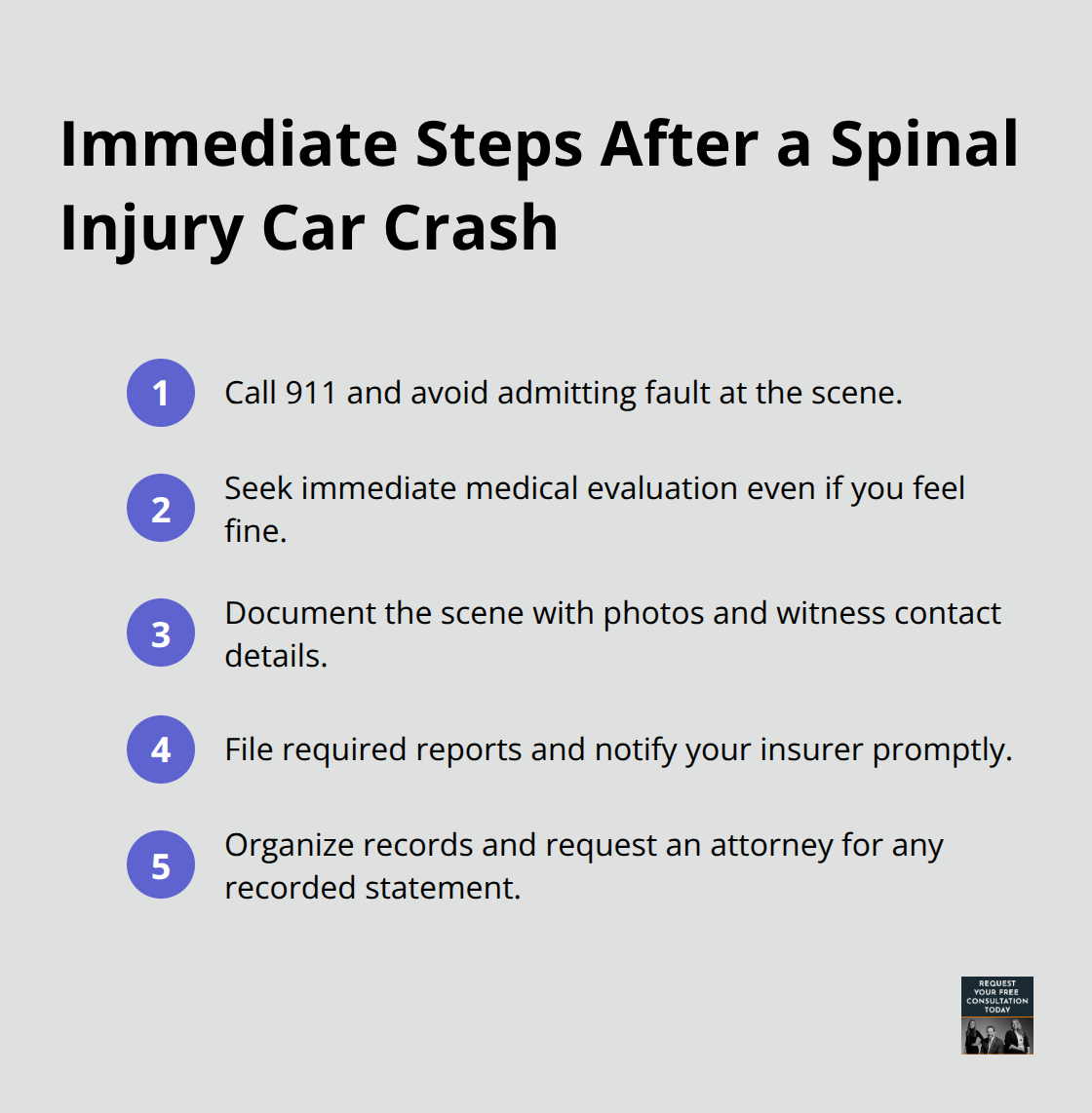
Call 911 if anyone is injured or damage is significant. Do not admit fault at the scene, even if you feel responsible. Anything you say can be used against you later, and fault determination belongs to insurance adjusters and the legal system, not to conversations at the roadside.
Seek Medical Attention Without Delay
Get medical attention immediately, even if you feel fine. Spinal injuries like whiplash, herniated discs, and internal injuries often develop hours or days after impact. The American Academy of Orthopaedic Surgeons reports that delayed symptom onset is common with spinal trauma, which means waiting to see if pain develops is dangerous. An emergency room or urgent care evaluation within hours of the crash can catch injuries before they worsen.
Document the Scene Thoroughly
Photograph the vehicle damage from multiple angles, the accident location, road conditions, traffic signs, and weather. Collect the other driver’s name, phone number, address, license plate, driver’s license number, and insurance information. Obtain contact details for at least two witnesses who saw the crash. If police respond, record the officer’s name and badge number and request the report number.
File Required Reports and Notify Insurance
File a police report if law enforcement comes to the scene. In California, you must file a DMV SR-1 form within 10 days if injuries or property damage exceed $1,000. Contact your insurance company within 24 hours and provide only factual details about what happened, not speculation about injuries or fault. The California Department of Insurance requires insurers to acknowledge your claim within 15 days and respond within 15 days, so document every call, email, and interaction with dates and names.
Organize Your Records and Protect Yourself
Keep all medical records, test results, repair estimates, and receipts organized in one place. Request that an attorney be present if the insurance company asks for a recorded statement. These steps protect your claim and strengthen your position as you move forward with recovery and potential legal action.
What Spinal Injuries Look Like After a Car Crash
Types of Spinal Injuries from Vehicle Collisions
Spinal injuries from car crashes fall into distinct categories based on where damage occurs and how severe it is. Cervical spine injuries affect the neck and can cause partial or complete paralysis depending on injury level. Thoracic injuries impact the mid-back and often result in loss of leg function. Lumbar injuries in the lower back frequently cause chronic pain and mobility issues.
Whiplash represents one of the most common cervical injuries. Sudden acceleration-deceleration forces snap the head backward then forward, straining ligaments and muscles. Herniated discs occur when the soft inner material of a spinal disc pushes through the outer layer, pressing on nerves and causing radiating pain down the arms or legs. Spinal cord contusions involve bruising of the cord itself, which can lead to swelling and temporary or permanent nerve damage.
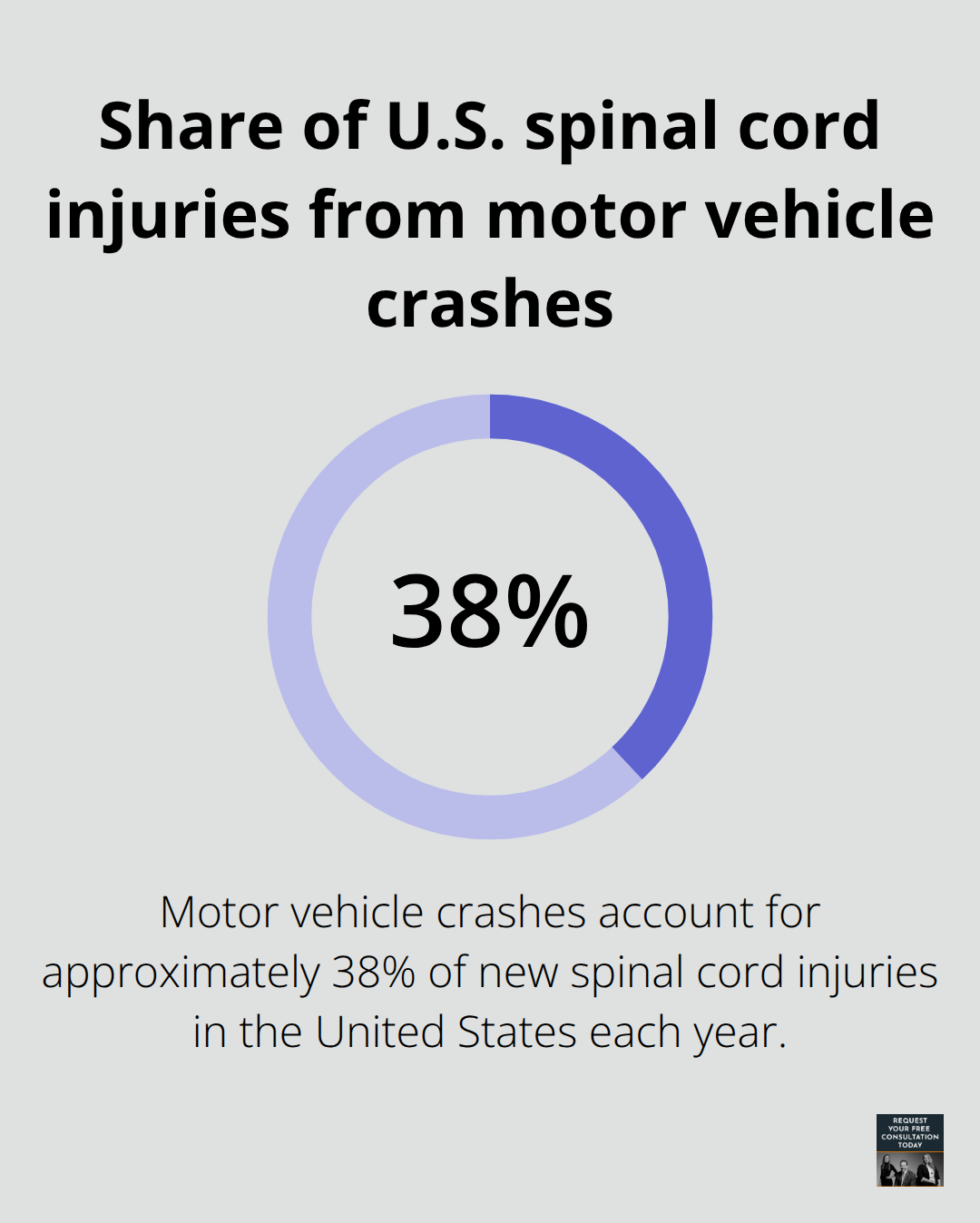
The National Institute of Neurological Disorders and Stroke reports that roughly 17,000 new spinal cord injuries occur annually in the United States, with motor vehicle crashes accounting for approximately 38% of those cases.
Short-Term Effects and Immediate Symptoms
The impact of spinal injuries extends far beyond the initial crash. Short-term effects typically include acute pain, muscle weakness, and difficulty with basic movements like turning your head or bending. Many people experience numbness, tingling, or burning sensations in their limbs within hours or days of the accident.
These early symptoms demand immediate attention. Ignoring them can allow injuries to progress unchecked, making recovery harder later.
Long-Term Consequences and Recovery Timelines
Long-term consequences are more serious: chronic pain lasting months or years, reduced range of motion, permanent nerve damage affecting sensation or motor control, and psychological effects like depression and anxiety from lifestyle changes.
Recovery timelines vary dramatically based on injury severity. Minor cervical strains may improve within 6 to 12 weeks with physical therapy, while herniated discs often require 8 to 12 weeks of conservative treatment before improvement shows. Spinal cord injuries present the longest recovery paths, sometimes spanning years, and may result in permanent disability.
Medical Treatment and Rehabilitation Approaches
Treatment typically starts with imaging such as X-rays, CT scans, or MRI to identify the exact injury location and severity. Immediate care focuses on immobilization to prevent further damage, followed by pain management through medication, physical therapy, and sometimes injections. More severe cases may require surgical intervention to stabilize vertebrae or relieve nerve pressure.
Aggressive rehabilitation early in recovery significantly improves long-term outcomes and prevents complications like muscle atrophy or stiffness. Physical therapy within the first weeks after injury makes a measurable difference in how well patients regain function and mobility.
Understanding your injury type and treatment options positions you to make informed decisions about your recovery path and your legal claim. The next section addresses how California’s legal system values these injuries and what compensation you can pursue.
What Compensation Can You Actually Recover
Economic Damages: Medical Bills and Lost Income
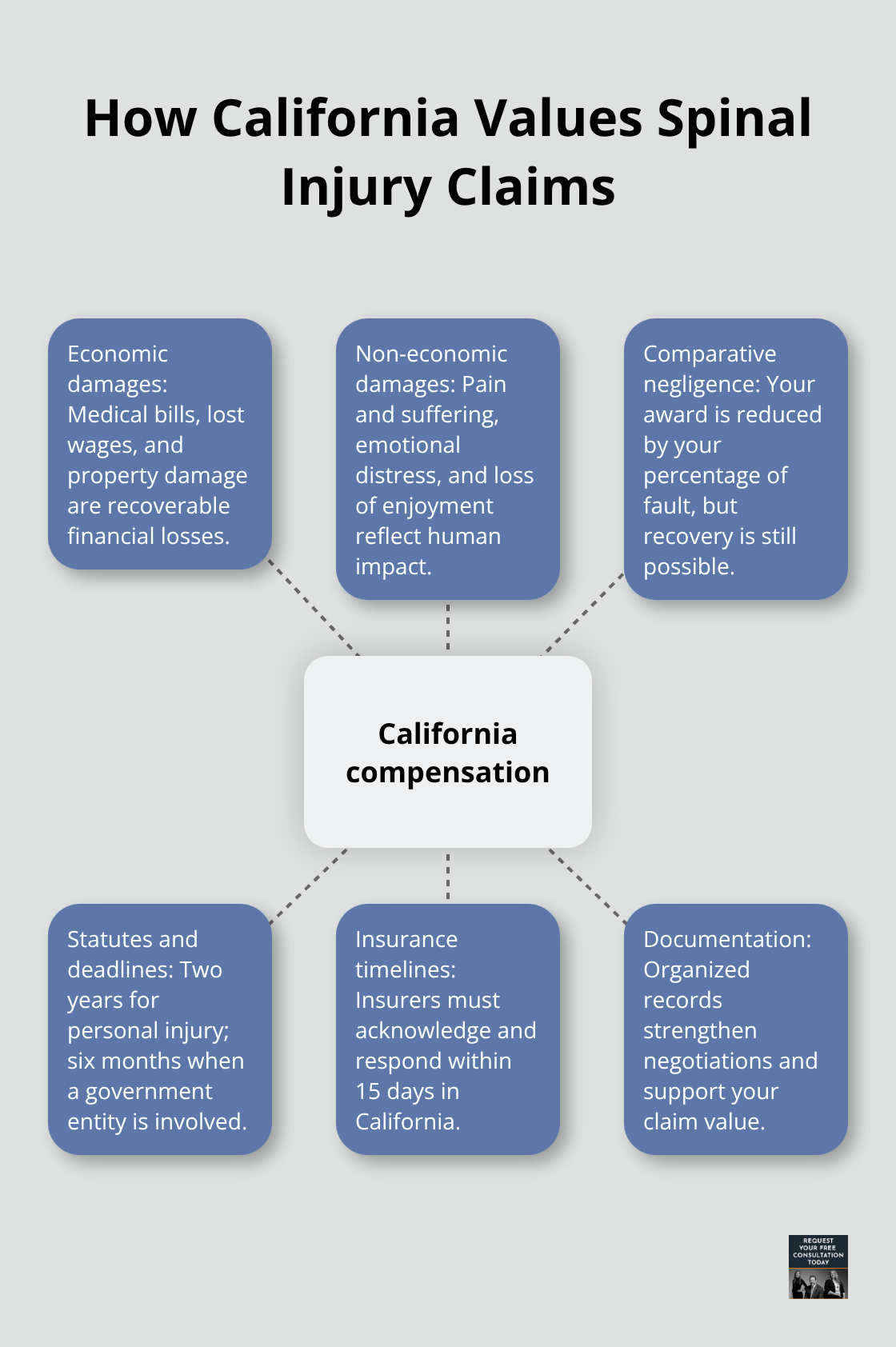
California’s fault-based system holds the at-fault driver responsible for your damages. Economic damages cover concrete costs: medical expenses, lost wages from time off work, vehicle repair or replacement, and rental car fees while yours is being fixed. Spinal imaging, surgery, physical therapy, and ongoing pain management create substantial economic claims that accumulate quickly. Keep every receipt, medical record, and repair estimate organized in one place-this documentation becomes your strongest negotiating tool if insurance delays payment or undervalues your claim.
Non-Economic Damages: Pain, Suffering, and Life Impact
Non-economic damages address the human cost of your injury: pain and suffering, emotional distress, and loss of enjoyment of life. Pain and suffering awards vary dramatically by injury severity. Minor injuries like uncomplicated whiplash typically yield $5,000 to $15,000, while permanent spinal cord injuries or disfigurement can reach six figures depending on how the injury affects your daily life and future earning capacity.
Comparative Negligence and Partial Fault
If you’re partially at fault, California’s comparative negligence rule still allows you to recover, though your award reduces by your percentage of fault. For example, if you’re 20% responsible and your total damages equal $100,000, you’d receive $80,000. The California Department of Insurance requires insurers to acknowledge your claim within 15 days and respond within 15 days, so track every interaction with dates and names.
Acting Within California’s Legal Deadlines
The two-year statute of limitations under California Code of Civil Procedure 335.1 applies to personal injury lawsuits, so waiting too long eliminates your right to sue. If your claim involves a government entity, that deadline shrinks to six months under Government Code 911.2. Your recovery deserves proper legal support, not rushed settlement offers that undervalue permanent injury. Acting quickly protects both your health and your legal options.
Final Thoughts
A spinal injury car crash disrupts your life physically, financially, and emotionally. Recovery demands immediate medical attention, thorough documentation, and strategic legal action to protect your rights and secure fair compensation. The steps you take in the first hours and days after your accident directly influence both your healing and your ability to recover damages.
Your spinal injury claim involves complex calculations of medical costs, lost wages, and pain and suffering damages that often reach substantial amounts. California’s fault-based system works in your favor if you were not at fault, but only if you meet critical deadlines and avoid settling too quickly for less than your claim is worth. The two-year statute of limitations sounds distant until months pass and your case becomes harder to prove.
We at Schaar & Silva LLP have handled spinal injury cases throughout Santa Cruz County and understand how insurance companies undervalue permanent injuries. Contact Schaar & Silva LLP for a free consultation to discuss your case, and our team will review your accident details, explain your legal options, and outline a clear path forward.
