
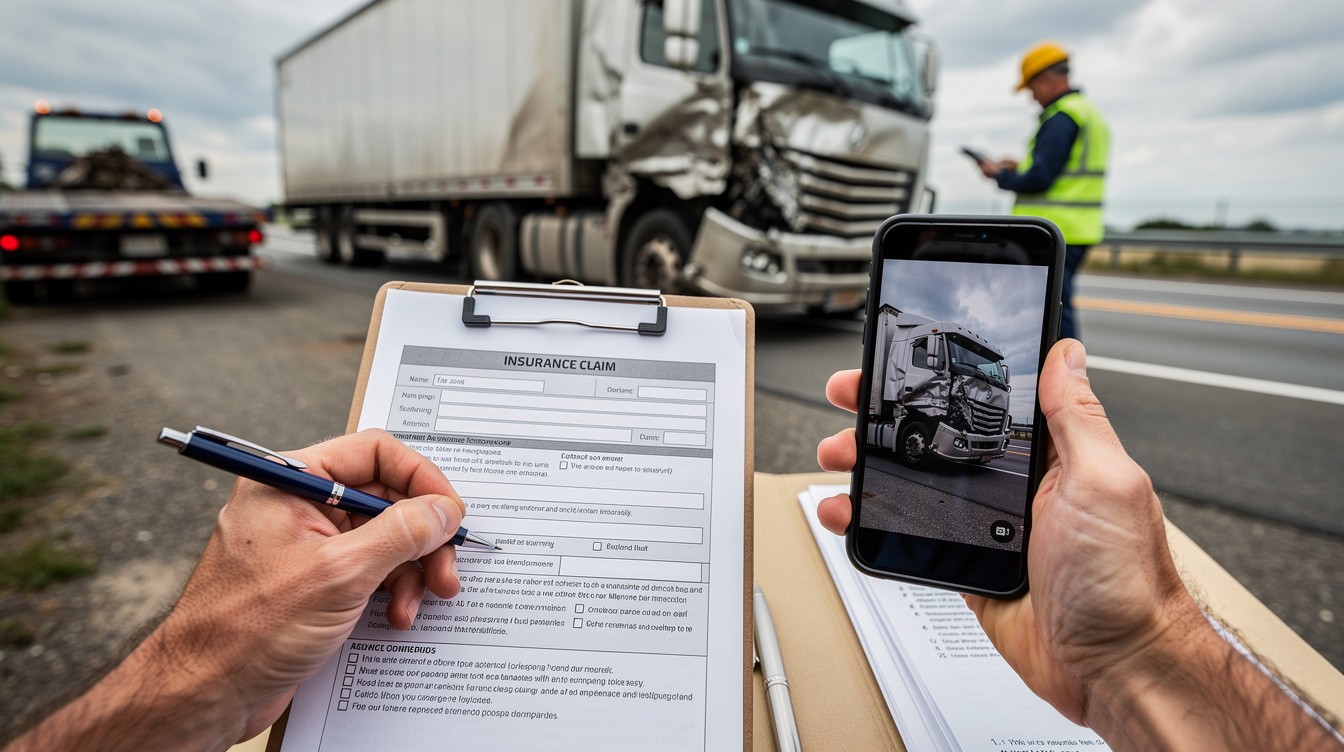
A truck accident can leave you overwhelmed, injured, and unsure about what comes next. The truck crash claim steps you take immediately after the collision directly impact your ability to recover fair compensation.
We at Schaar & Silva LLP have guided countless accident victims through this process. This guide walks you through each stage, from protecting evidence at the scene to resolving your claim.
What to Do Immediately at the Truck Accident Scene
The first minutes after a truck collision determine whether you have the evidence needed to prove liability and secure fair compensation. The Insurance Institute for Highway Safety reports that large-truck crashes killed 4,354 people in the latest year, up 38% since 2009, and about 65% of those fatalities are occupants of other vehicles. This severity means the other party’s insurance company will scrutinize every detail of your claim. You control the narrative from the start.
Photograph and Video Everything
Take photos and videos from multiple angles before anyone moves the vehicles. Capture the truck’s position relative to your vehicle, the road conditions, weather, traffic signals, and any skid marks or debris. Photograph close-ups of all vehicle damage, including undercarriage damage if the truck rode over your car. Record video of the surrounding area, including street names and any visible landmarks. Most phones now have high-quality cameras-there is no excuse for poor documentation. If you are injured, photograph visible injuries as well, even if they seem minor at the moment. Insurance adjusters often claim injuries are less severe than they are, and early photographic evidence counters that tactic. If you cannot take photos yourself due to injuries, ask a witness or a first responder to do it for you.
Collect Driver and Vehicle Information
Get the truck driver’s name, phone number, address, and driver’s license number. Write down the trucking company name from the truck itself and any visible signage. Request the driver’s insurance information and policy number. Ask for the vehicle identification number and license plate. Many truck drivers carry logbooks or electronic logs that record hours of service and driving patterns; note whether the driver appears fatigued or disoriented, as this may indicate Hours-of-Service violations.
File the Police Report
Call local law enforcement immediately and file an accident report. In California, you must report any crash involving injuries or property damage over $750 to the California Department of Motor Vehicles within 10 days, or face potential license suspension. Get the police report number and the names and badge numbers of the responding officers. Ask where the truck will be towed and obtain that information. The police report becomes official documentation that insurers cannot easily dispute.
With the scene documented and the police report filed, you now shift focus to gathering the medical and legal records that will support your claim.
Building Your Claim After a Truck Accident
Start Medical Treatment Immediately
Medical documentation forms the foundation for fair compensation, and timing matters. You must begin treatment within 24 hours of the accident, as delays signal to insurers that your injuries may be minor or unrelated to the crash. Request copies of all medical records, including emergency room reports, imaging studies, surgical notes, and physical therapy records. Maintain detailed receipts for every medical expense, even copayments and over-the-counter medications related to your treatment.
Create a separate file with dates, provider names, and costs for each visit. This organized approach prevents you from losing track of expenses and strengthens your claim when you demand compensation.
Obtain Your Official Police Report
The California Department of Motor Vehicles requires crash reports for incidents involving injuries or property damage exceeding $750, and you must file within 10 days or risk license suspension. Contact the agency that responded to your accident and request your official police report. The report number and officer names appear in your initial documentation from the scene.
Request this report directly from the police department or through their online portal. Having it first allows you to identify any inaccuracies before the insurer reviews it, since insurers will eventually obtain it anyway.
Document Property Damage with Multiple Estimates
Property damage evidence extends beyond vehicle photos. Obtain written repair estimates from at least two independent shops, not just the insurer’s preferred vendor. Photograph the repair facility’s inspection of your vehicle and request itemized invoices showing all parts and labor.
If your vehicle is declared a total loss, the insurer will calculate actual cash value based on comparable vehicles in your area. Challenge this valuation if it seems low by providing recent service records showing your vehicle was well-maintained. These records prove the vehicle’s condition before the crash.
Preserve Critical Evidence for Liability
For injuries, photograph visible damage to your body over time as healing progresses. Document lost wages by obtaining written statements from your employer showing dates missed and hourly rate. Preserve all communications with the other driver, their insurance company, and any witnesses-text messages, emails, and written statements become critical evidence if the claim becomes disputed.
The truck’s onboard data recorder, commonly called a black box, captures speed, braking patterns, and acceleration data that can prove or disprove fault. Your attorney can obtain this data through formal discovery, as trucking companies are unlikely to voluntarily hand it over. Hours-of-service logs reveal whether the truck driver exceeded federal driving limits, which constitutes negligence under federal transportation regulations. These documents often become the deciding factor in establishing liability against the trucking company itself.
With your medical records, police report, and property damage documentation in place, you now face the reality of negotiating with insurance companies that will test your resolve.
Settling Your Truck Accident Claim
Insurance companies treat truck accident claims differently than car accidents because the stakes are higher. Fully loaded semi-trucks weigh up to 80,000 pounds-roughly 20 times heavier than an average car-which means your injuries are likely more severe and damages more substantial. Insurers know this, and they will use aggressive tactics to minimize payouts.
Why Initial Settlement Offers Fall Short
The first settlement offer you receive is almost never fair, and accepting it quickly is one of the biggest mistakes accident victims make. Insurance adjusters are trained to make initial offers around 30 to 50 percent below what your claim is actually worth, banking on the fact that injured people need money fast and will accept less. Do not fall for this tactic.
The Fair Claims Settlement Practices Regulations require insurers to acknowledge your claim within 15 days, investigate promptly, and respond to your communications within 15 days, but these timelines do not mean the insurer is acting in your best interest. They are protecting their bottom line.
How to Counter Low Settlement Offers
When you receive a settlement offer, compare it against your documented losses: medical bills, lost wages, vehicle repair or replacement costs, and pain and suffering. If the offer does not cover these categories fully, reject it and provide a written counteroffer with itemized damages and supporting documentation.
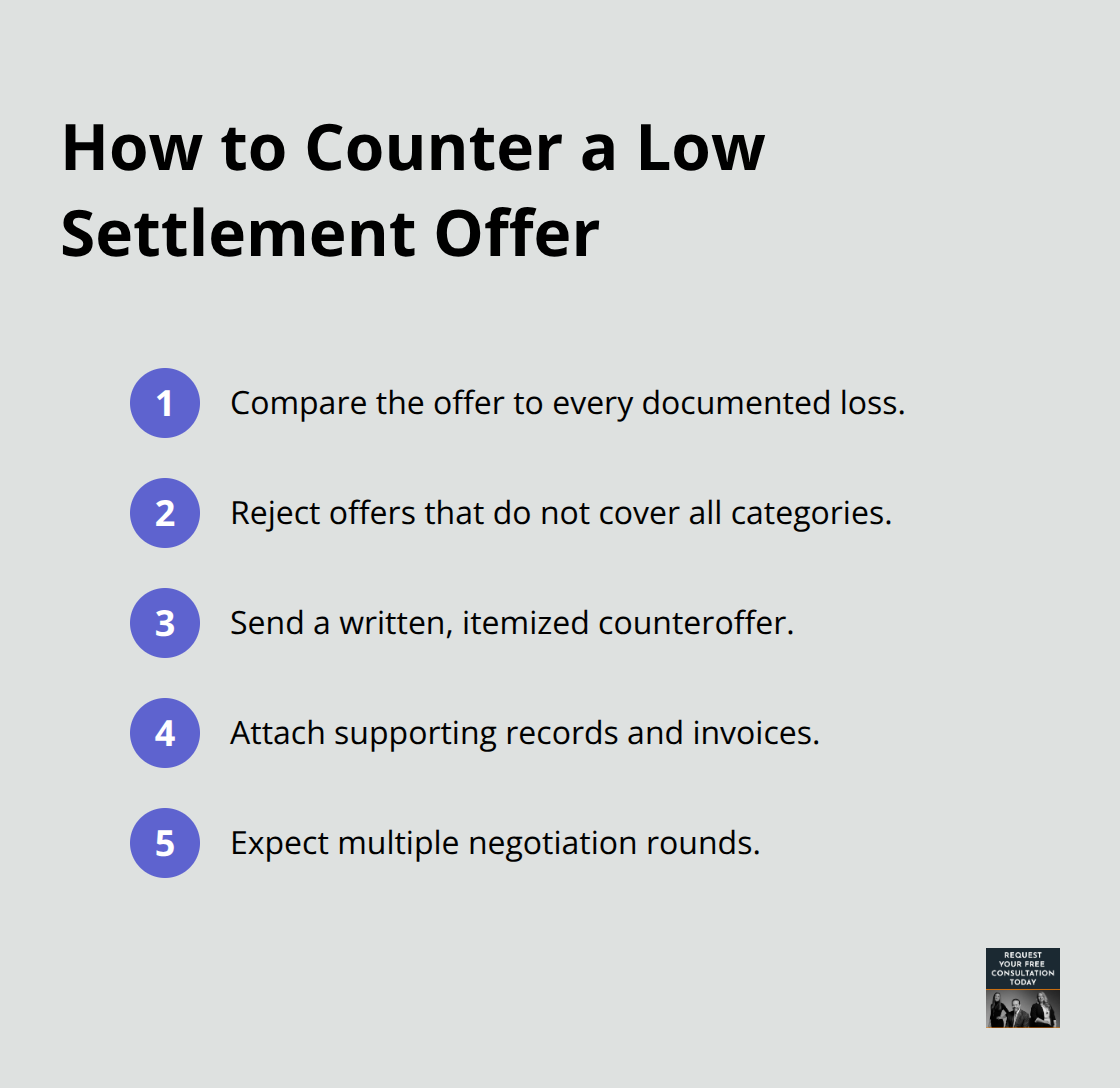
Most cases require multiple rounds of negotiation before reaching a fair settlement, and insurers expect this back-and-forth process.
When to Hire an Attorney
The question of whether to hire an attorney depends on the severity of your injuries and the complexity of liability. If your medical bills exceed $4,000 or you have suffered permanent disfigurement, permanent injury, disability lasting 60 days or more, or a serious injury threshold under California law, you have the right to pursue damages beyond your own insurance coverage and should strongly consider legal representation.
Trucking accident claims are inherently complex because multiple parties may share liability: the truck driver, the trucking company, the cargo loader, maintenance contractors, or other motorists. An attorney can identify these responsible parties and pursue recovery from all available sources, something you cannot do alone.
Timeline and Process Expectations
If you proceed without an attorney, expect the claims process to take 3 to 6 months for straightforward cases, longer if liability is disputed or injuries are severe. During this time, the insurer will request detailed information, may require a recorded statement, and will likely send an adjuster to inspect your vehicle and review medical records. Do not provide a recorded statement without legal advice, as insurers use these statements to build arguments against you.
If the insurer is slow to respond or denies your claim unfairly, you can file a complaint with the California Department of Insurance, though litigation remains your strongest option when settlement negotiations stall.
Final Thoughts
The truck crash claim steps you take from the accident scene through settlement directly determine whether you recover fair compensation or accept far less than you deserve. You now understand that immediate documentation, medical treatment within 24 hours, and preservation of critical evidence like black box data and hours-of-service logs form the foundation of a strong claim. Insurance companies will test your patience with low initial offers and aggressive tactics, but you have the tools to counter them: itemized documentation, multiple rounds of negotiation, and the knowledge that most cases settle only after sustained pressure.
The complexity of truck accident liability means identifying all responsible parties-the driver, trucking company, cargo loader, and maintenance contractors-requires thorough investigation. This is where many accident victims stumble without guidance. We at Schaar & Silva LLP help you navigate this process by evaluating property damage fairly, connecting you with medical lien services to manage bills during your case, and addressing the emotional trauma that often accompanies serious injuries.
If your medical bills exceed $4,000 or your injuries meet California’s serious-injury threshold, pursuing damages beyond your own insurance coverage becomes not just possible but necessary. Contact us today to discuss your case and learn how we can support your recovery.
