
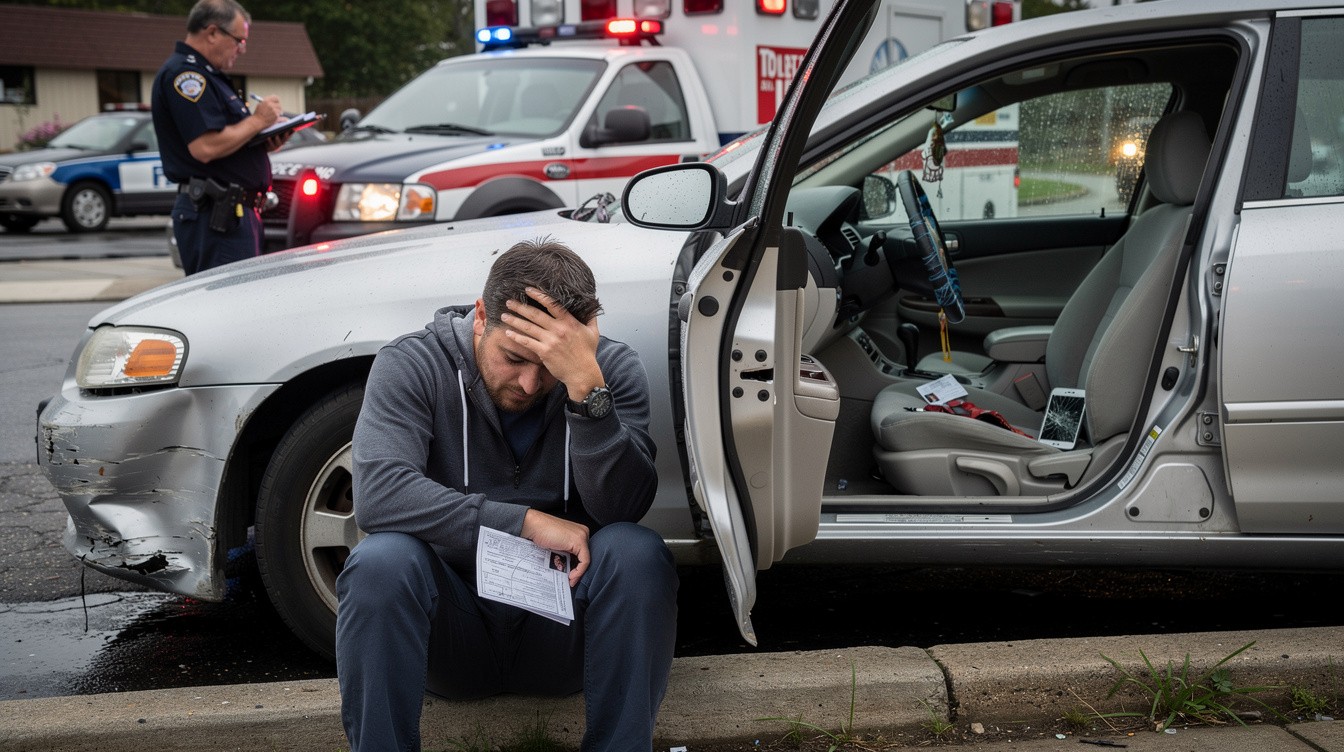
A car accident shakes more than just your body. The emotional aftermath-what we call car accident emotional distress-often goes unnoticed while you focus on physical recovery.
Many accident survivors in Santa Cruz County experience anxiety, sleep problems, and depression weeks or months after the collision. We at Schaar & Silva LLP understand that healing means addressing both your injuries and your mental health.
Why Your Mind Needs Care After a Crash
Your body’s stress response after a car accident doesn’t stop when the collision does. The National Institute of Mental Health reports that adrenaline and cortisol continue flooding your system long after impact, triggering psychological reactions that persist weeks or months later. Within the first week, roughly 46 percent of accident survivors experience panic attacks, according to the American Psychological Association. This isn’t weakness or overreaction-it’s physiology. Yet many people dismiss these mental health symptoms as temporary or insignificant compared to visible injuries. That mistake can derail your entire recovery.
Physical Injuries Hide the Real Damage
When you focus on broken bones, cuts, or whiplash, the emotional and psychological trauma quietly takes root. About 32.3 percent of car accident survivors develop post-traumatic stress disorder, with women facing roughly 2.5 times higher risk than men. Depression affects approximately 17.4 percent of survivors, often emerging within six months of the crash. These conditions don’t announce themselves loudly. Instead, they manifest as sleep disturbances, avoidance of driving, concentration problems, and persistent worry. Within the first month alone, about 70 percent of survivors report nightmares or sleep disruption. If you struggle to sleep or avoid highways, that’s not just inconvenience-it’s a clinical symptom that requires treatment.
What Untreated Stress Actually Does
Untreated emotional distress after a crash compounds your physical recovery and creates legal complications. Longer hospital stays (more than seven days) correlate with significantly higher depression levels at two months post-crash, according to the Journal of Clinical Medicine. When anxiety, depression, or PTSD goes untreated, your body remains in a heightened stress state, which impairs healing, weakens your immune response, and can worsen chronic pain from physical injuries. Starting treatment within four to six weeks of your accident dramatically improves outcomes and prevents chronic emotional distress from taking hold.
Why Documentation Matters Now
Documenting your mental health symptoms early-through therapy notes, diagnoses, and professional assessments-becomes essential both for your recovery and for any legal claim you pursue. Your emotional injuries deserve the same attention and documentation as your physical ones. Insurance adjusters often undervalue psychological trauma when no professional record exists to support it. The sooner you connect with a mental health professional, the sooner you build the evidence that protects both your health and your legal rights.
What Emotional Distress Actually Looks Like
Anxiety and Sleep Problems After a Crash
Anxiety after a car accident manifests differently than everyday worry. Your heart races when you approach a highway, or intrusive thoughts about the crash interrupt your workday. Within six months, roughly 39.2 percent of survivors develop anxiety disorders, according to the American Psychological Association. Sleep disturbances hit harder than most people expect. About 70 percent of survivors report nightmares or sleep problems within the first month, and this isn’t minor insomnia-it’s often severe enough to prevent you from functioning at work or caring for family members. These symptoms signal that your nervous system remains stuck in threat mode long after the collision ended.
Avoidance Behaviors That Limit Your Life
If you find yourself avoiding certain roads or refusing to drive at night, that’s avoidance behavior-a clinical symptom with real consequences. Avoidance affects approximately 39.2 percent of survivors within six months and tends to worsen without intervention. You might skip highway routes, decline social invitations that require driving, or ask others to handle transportation tasks you once managed independently. What starts as caution can transform into a pattern that isolates you from work, family, and activities that matter to you.
Depression and Loss of Function
The Journal of Clinical Medicine reports that depression emerges in about 17.4 percent of survivors, typically showing up as persistent sadness, loss of interest in activities you once enjoyed, concentration problems affecting roughly 70 percent of those with depression, and fatigue that no amount of sleep fixes. These aren’t character flaws or signs of weakness-they’re measurable responses to psychological trauma. Concentration difficulties can cost you your job or academic standing if left unaddressed.
PTSD Symptoms Require Immediate Attention
Post-traumatic stress disorder develops in about 32.3 percent of car accident survivors, with women facing approximately 2.5 times higher risk than men. PTSD symptoms include intrusive memories and flashbacks that feel as real as the original crash, hyperarousal (irritability, anger outbursts, constant scanning for danger), emotional numbness or detachment from loved ones, and avoidance of driving or triggering situations. The critical window for treatment is four to six weeks after your accident. Starting cognitive behavioral therapy or eye movement desensitization and reprocessing within this timeframe produces dramatically better outcomes than waiting months or years.
Getting Help in Santa Cruz County
If you’re experiencing sleep problems beyond two weeks, panic attacks, persistent avoidance of driving, concentration difficulties affecting your job, or emotional numbness that concerns family members, contact a mental health professional immediately. Santa Cruz County Behavioral Health operates a 24-Hour Access Line at 831-454-4170 and maintains locations at 1400 Emeline Ave in Santa Cruz and 1430 Freedom Blvd in Watsonville, with sliding-scale fees based on income. When you address these symptoms early, you protect both your recovery and your legal standing-documentation from mental health professionals becomes essential evidence if you pursue a claim for emotional damages.
Resources and Support Available in Santa Cruz County
Access Mental Health Care Immediately
Accessing mental health care after a car accident requires knowing exactly where to go and what to expect. Santa Cruz County Behavioral Health operates a 24-Hour Access Line at 831-454-4170, providing immediate guidance when you need it most. The agency maintains two physical locations: 1400 Emeline Ave in Santa Cruz and 1430 Freedom Blvd in Watsonville, both offering sliding-scale fees based on your income. When you call the access line, trained staff assess your symptoms and connect you directly to appropriate services rather than leaving you to navigate the system alone. This matters because early intervention within four to six weeks of your accident produces dramatically better outcomes.
Find Qualified Trauma Therapists
Santa Cruz County Behavioral Health has over 500 trauma and PTSD therapists available, filtered by credentials including Licensed Marriage and Family Therapists, psychologists with PsyD or PhD degrees, and Licensed Clinical Social Workers. Major insurers including Aetna, Cigna, Anthem, UnitedHealthcare, Blue Shield, and Medi-Cal participate in the county’s network, so your existing coverage likely connects you to available providers. If you’re deaf or hard of hearing, relay services through 711 ensure you can reach the Mobile Crisis Response Team, which responds within hours during acute episodes.
Evidence-Based Therapy Approaches
Therapy approaches with proven track records matter more than generic counseling. Cognitive Behavioral Therapy delivered over twelve sessions yields approximately 85 percent improvement for travel-related phobias, giving you a structured pathway to reclaim driving and independence.
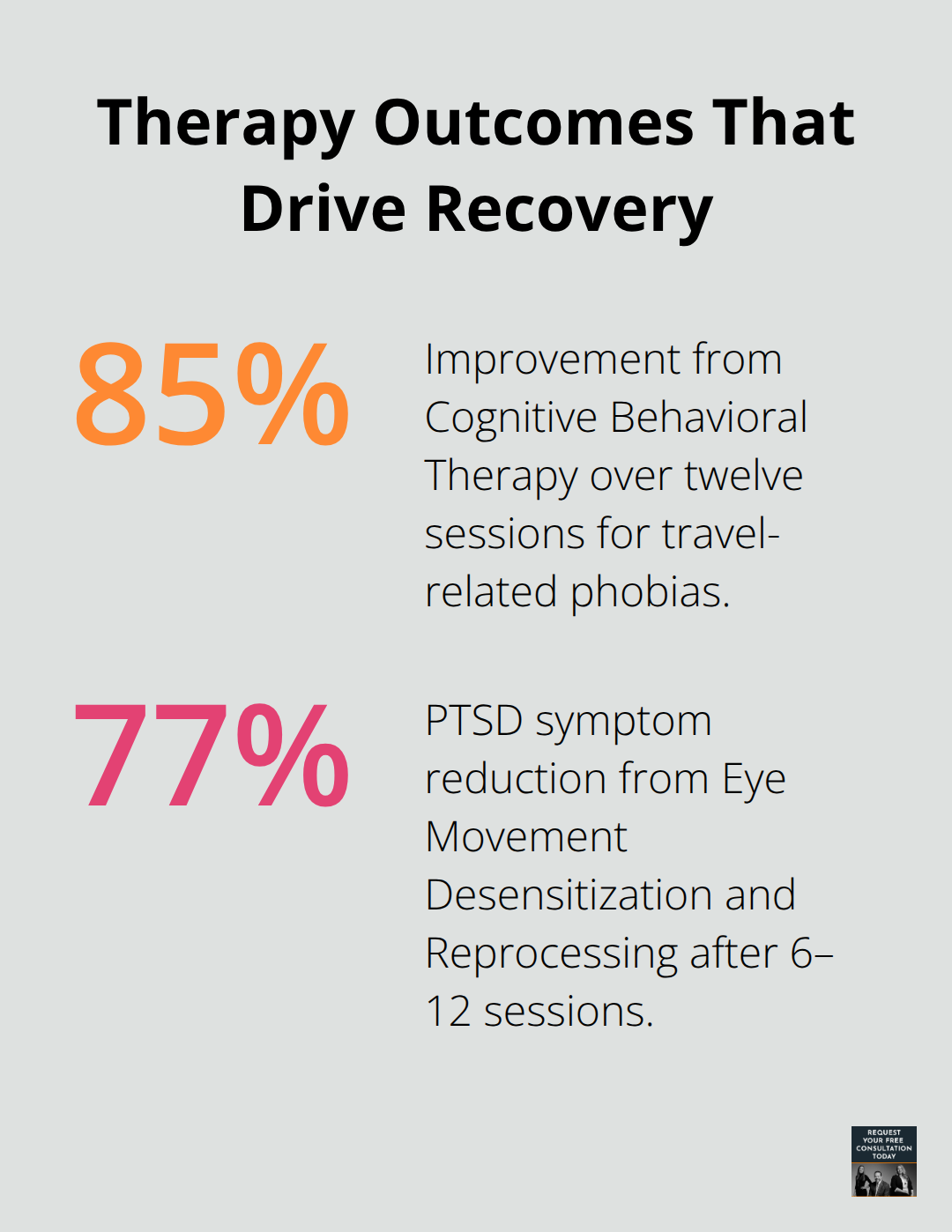
Eye Movement Desensitization and Reprocessing reduces PTSD symptoms in about 77 percent of accident survivors after six to twelve sessions according to trauma treatment research.
Connect With Support Groups
Support groups accelerate recovery when combined with individual therapy. Mothers Against Drunk Driving chapters in Santa Cruz County connect survivors with others who understand crash-related trauma. Kaiser Permanente survivor groups offer peer support within your health plan, and the Brain Injury Association of California serves those with concurrent head injuries. Hospital-hosted survivor groups provide community-based alternatives when cost or schedule create barriers.
Document Treatment and Explore Financial Options
Document every therapy session, diagnosis, and treatment expense immediately because these records become essential evidence if you pursue compensation for emotional damages. Medical lien services can cover therapy bills during your case, removing financial obstacles to getting care now rather than waiting for settlement. This approach protects your recovery timeline and strengthens your legal position simultaneously.
Moving Forward After Your Accident
Recovery after a car accident means treating your mental health with the same priority as your physical injuries. Start with a concrete recovery plan that includes weekly therapy appointments, consistent sleep schedules, and gradual exposure to driving situations that trigger anxiety. Set specific goals with deadlines-such as driving on a familiar highway with a trusted passenger within six weeks or achieving seven consecutive nights of six hours of sleep-and track your progress in a journal alongside your therapy notes.
Working with legal support while managing car accident emotional distress removes a significant burden from your shoulders. We at Schaar & Silva LLP understand that pursuing compensation for emotional injuries requires careful documentation and strategic advocacy. Our team helps gather and preserve evidence from mental health professionals, ensuring your psychological injuries receive the same weight as physical ones in settlement negotiations.
Rebuilding confidence after a crash happens gradually through structured steps. If driving anxiety limits your independence, cognitive behavioral therapy combined with exposure-based practice restores your ability to handle highways and unfamiliar routes. Contact Schaar & Silva LLP for a free injury consultation to discuss how your emotional distress claim fits within your overall case.
