

If you’ve been injured in an accident, understanding how a pain and suffering settlement works is essential to getting fair compensation. At Schaar & Silva LLP, we help clients throughout Santa Cruz County, Sacramento, and Oakland recover damages that reflect the true impact of their injuries.
Pain and suffering awards go beyond medical bills-they account for physical pain, emotional trauma, and lost quality of life. This guide breaks down how these damages are calculated and what mistakes to avoid when pursuing your claim.
What Counts as Pain and Suffering Damages
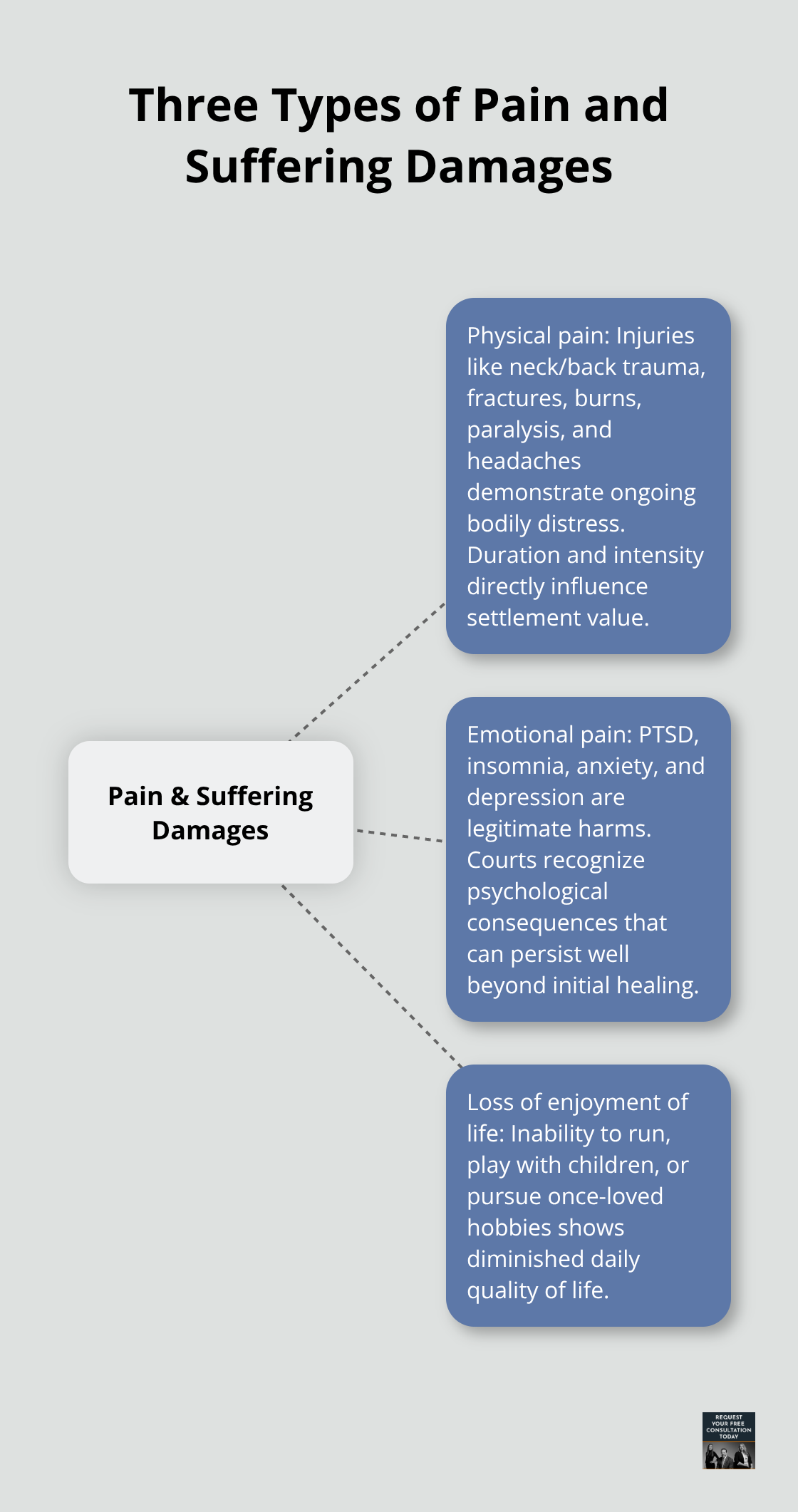
Pain and suffering damages fall into three distinct categories that California courts recognize as legitimate harms beyond your medical bills and lost wages. Physical pain includes neck or back injuries, broken bones, burns, paralysis, headaches, and any bodily distress that results from your accident. The duration and intensity of this pain matter significantly-a herniated disc requiring ongoing physical therapy for six months carries more weight than a minor strain that resolves in two weeks. Emotional pain holds equal validity and includes PTSD, insomnia, anxiety, depression, and diminished quality of life. Courts understand that a brain injury or spinal cord injury often brings psychological consequences that persist long after initial healing. Loss of enjoyment of life covers your inability to run, play with your children, pursue hobbies, or engage in activities that defined your daily routine before the accident.
Physical Pain Tells a Measurable Story
The severity and duration of your physical pain directly influence settlement value. A soft tissue injury typically settles between $5,000 and $25,000, while a herniated disc with ongoing conservative treatment often reaches $75,000 to $150,000 (with pain and suffering making up 60 to 70 percent of that total). More serious injuries like compound fractures or surgeries settle from $100,000 to $500,000 depending on recovery length and permanent effects. Traumatic brain injuries and spinal cord injuries command substantially higher awards-concussions often settle between $150,000 and $1,000,000, moderate traumatic brain injuries exceed $1,000,000, and paraplegia cases range from $3,000,000 to $8,000,000. Documentation matters enormously here. You should keep detailed records of your pain levels, medications, physical limitations, and how the injury affects your sleep, work, and daily activities.
Emotional and Psychological Harm Requires Evidence
Proving emotional distress without accompanying physical injury presents greater challenges, but it remains recoverable with proper evidence. Medical records showing treatment for anxiety or depression, clinical notes from therapists, and testimony from treating physicians strengthen your claim substantially. Neutral third-party witnesses-coworkers, family members, or medical professionals-carry more weight than your own statements alone. A wrongful death case involves not just your own suffering but the emotional impact on surviving family members (which courts take seriously). Insurance adjusters using software like Colossus often undervalue emotional damages initially, which is why documentation of your psychological treatment and its costs becomes critical during settlement negotiations.
How Calculation Methods Shape Your Award
Two primary approaches determine the dollar amount you receive for pain and suffering, and understanding each method helps you prepare for settlement discussions with insurance companies and defense counsel.
How Damages Get Calculated
Insurance adjusters apply two established methods to determine settlement figures, and understanding each approach helps you prepare for negotiations with them. The multiplier method takes your economic damages (medical bills, lost wages, property damage) and multiplies that total by a factor between 1.5 and 5, depending on injury severity. A soft tissue injury warrants a 1.5 multiplier, meaning $10,000 in medical bills becomes $15,000 in pain and suffering compensation. A moderate orthopedic injury justifies a 3 to 3.5 multiplier, so $50,000 in medical costs translates to $150,000 to $175,000 in non-economic damages. Catastrophic injuries like spinal cord damage or traumatic brain injury warrant multipliers of 4 to 5 or higher-a $100,000 medical total with a 5 multiplier yields $500,000 in pain and suffering alone.
The Per Diem Method Rewards Lengthy Recovery
The per diem method assigns a daily dollar value to your suffering and multiplies that by the number of days you experienced pain during recovery. If your case assigns $300 per day and your recovery lasted 200 days, you receive $60,000 in non-economic damages regardless of your actual medical bills. This approach often produces larger awards for injuries with lengthy recovery periods, making it particularly valuable in herniated disc cases or moderate brain injuries where healing stretches across months or years.
Injury Severity and Visibility Shape Your Multiplier
Injury severity, visibility, and documentation determine which multiplier or daily rate applies to your situation. A visible scar or permanent limp increases settlement value because adjusters and juries perceive tangible, ongoing harm. Conversely, a herniated disc causing severe pain but no visible disability requires robust medical records, imaging results, and physician testimony to justify high multipliers-many adjusters initially lowball these cases because the injury isn’t obvious.
Documentation Transforms Settlement Negotiations
Your pain journal documenting daily symptoms, sleep disruption, medication use, and activity limitations becomes your strongest negotiating tool. Medical records alone fall short; you need contemporaneous documentation showing how the injury affected your actual life. Insurance companies using software like Colossus generate settlement ranges based on case data, but these ranges systematically undervalue non-economic damages in your favor. That’s why many settlements see non-economic damages exceed economic damages by 2 to 5 times-proper evidence and aggressive negotiation push awards well beyond the initial algorithm output.
California’s Comparative Negligence Protects Partially At-Fault Claimants
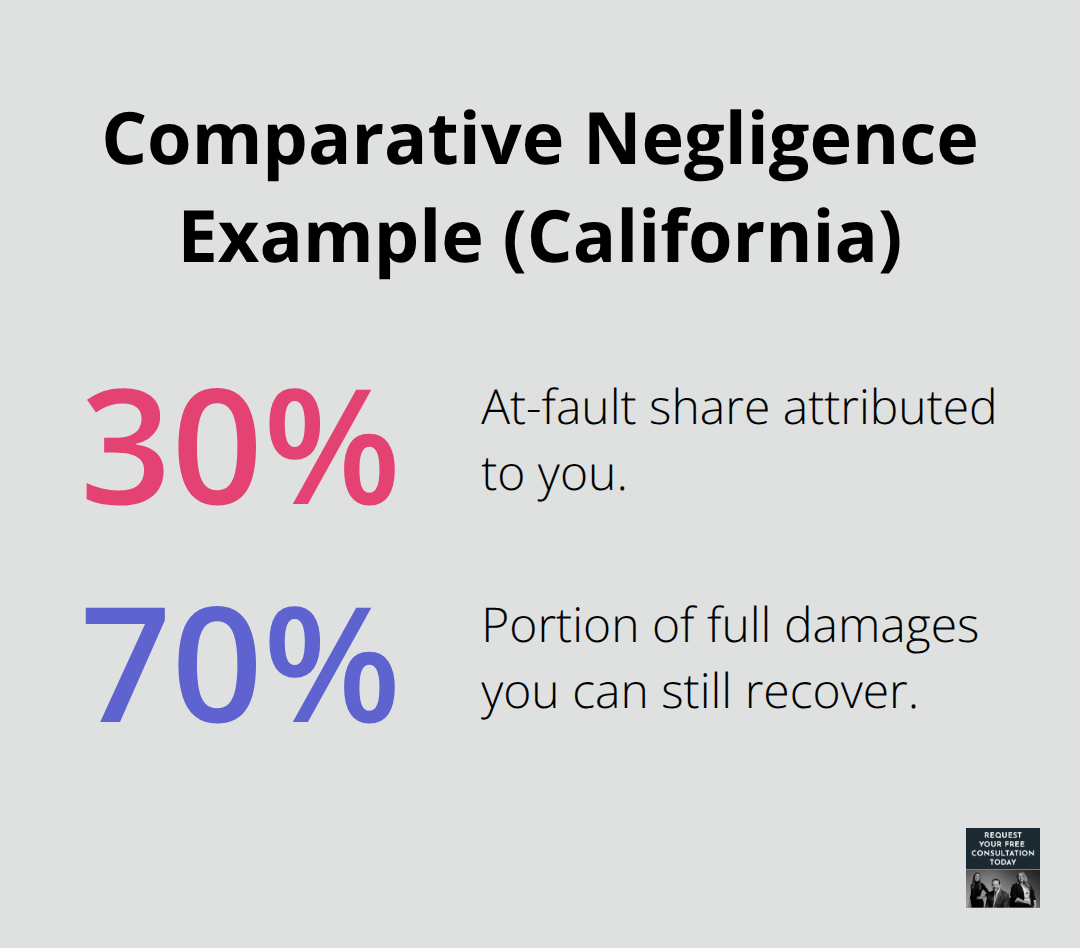
California’s pure comparative negligence rule also protects you: even if you were 30 percent at fault, you still recover 70 percent of your full damages rather than receiving nothing. The only significant cap applies to medical malpractice claims, where non-economic damages max out at $250,000, but car accidents, truck accidents, pedestrian injuries, and wrongful death cases have no such ceiling. Understanding these calculation methods positions you to challenge initial settlement offers and demand the compensation your injuries warrant.
The next section examines common mistakes that undermine claims and how to avoid them.
Mistakes That Slash Your Settlement Value
Underestimating Your Pain and Suffering Damages
Most injury claimants underestimate their pain and suffering damages by 40 to 60 percent, leaving substantial money on the table during settlement negotiations. This happens because people focus obsessively on medical bills and lost wages while treating non-economic damages as secondary or even optional. Insurance adjusters exploit this mindset aggressively, offering initial settlements that cover your economic losses but grossly undervalue your suffering. The reality is that non-economic damages frequently exceed economic damages by 2 to 5 times in legitimate cases, meaning a $50,000 medical bill injury could warrant $100,000 to $250,000 in pain and suffering alone.
You underestimate damages when you accept the first number an insurance company offers without challenging their multiplier or daily rate assumptions. Many claimants settle herniated disc cases for $75,000 when proper documentation and negotiation could yield $150,000 or more. This gap between what you accept and what you deserve represents lost compensation that you cannot recover later.
Building Documentation That Proves Your Suffering
Medical records alone carry minimal weight because they contain clinical observations, not your lived experience of pain. Insurance adjusters and juries need to see your pain journal documenting specific daily symptoms, sleep disruption from your injury, medications you took, and activities you abandoned.
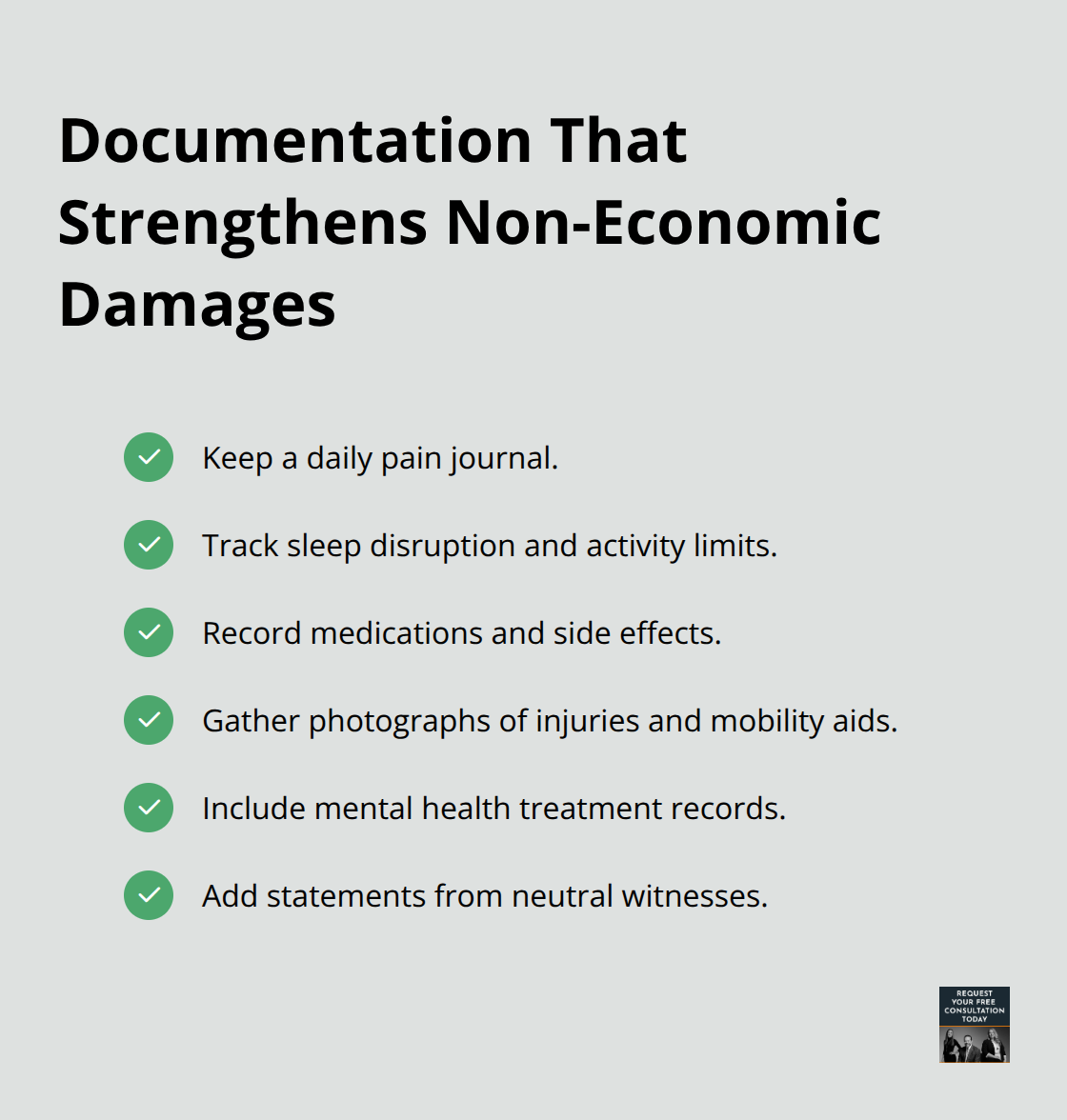
A journal entry stating you couldn’t play with your children for three months because of back pain matters far more than a doctor’s note saying you have a herniated disc.
Photographs of visible injuries, scars, or mobility aids strengthen your claim substantially. Treatment records from mental health professionals documenting anxiety, depression, or PTSD carry significant weight, especially when paired with your own testimony about how these conditions affected your work performance and relationships. Without this documentation, you’re asking a jury or insurance adjuster to imagine your suffering based on diagnosis codes, which they won’t do.
Rejecting Initial Settlement Offers and Negotiating Properly
Insurance adjusters often present initial offers as time-limited, claiming the settlement window closes if you don’t accept within days. This tactic works because injured people face mounting medical bills and want closure. You should reject initial settlement offers as a matter of principle and counter with documentation supporting higher demands.
Research comparable settlements in your county for similar injuries using court records and published verdicts. A compound fracture case in Sacramento County that settled for $250,000 becomes your baseline for negotiating your own compound fracture claim. Insurance companies use proprietary software like Colossus to generate settlement ranges, but these algorithms systematically undervalue non-economic damages in favor of insurers. Your counter-offer should exceed their initial range by 50 to 75 percent, forcing real negotiation rather than accepting their algorithmic output.
The negotiation process typically takes 60 to 120 days when handled properly, allowing time for your medical treatment to stabilize and your documentation to accumulate. Accepting offers in the first 30 days virtually guarantees you received less than fair value. Waiting until maximum medical improvement before finalizing any settlement prevents you from recovering future medical expenses or accounting for permanent disability that emerges later.
Final Thoughts
Pain and suffering settlement value depends entirely on how well you prove your case to insurance adjusters and juries. Medical records alone won’t convince anyone that your life changed fundamentally-you need pain journals, treatment records from mental health professionals, photographs of injuries, and testimony from neutral witnesses to transform abstract suffering into concrete evidence that justifies higher multipliers and daily rates. Catastrophic injuries like brain and spinal cord damage warrant multipliers of 4 to 5 or higher, but even moderate orthopedic injuries justify 3 to 3.5 multipliers when you document them properly.
Working with legal representation fundamentally changes settlement outcomes because we at Schaar & Silva LLP help clients throughout Santa Cruz County, Sacramento, and Oakland evaluate their claims accurately and build documentation packages that support aggressive negotiation. Our team challenges insurance company algorithms that systematically undervalue non-economic damages and can connect you with medical lien services to manage bills during your case. We also link you with psychological support when emotional trauma accompanies your physical injuries.
Your next step is straightforward: gather your medical records, start documenting your daily pain and limitations, and contact us for a free case review to discuss your pain and suffering settlement value. Don’t settle quickly or accept initial offers without understanding what comparable cases in your area have recovered. The difference between accepting an early settlement and negotiating properly often exceeds six figures.
