
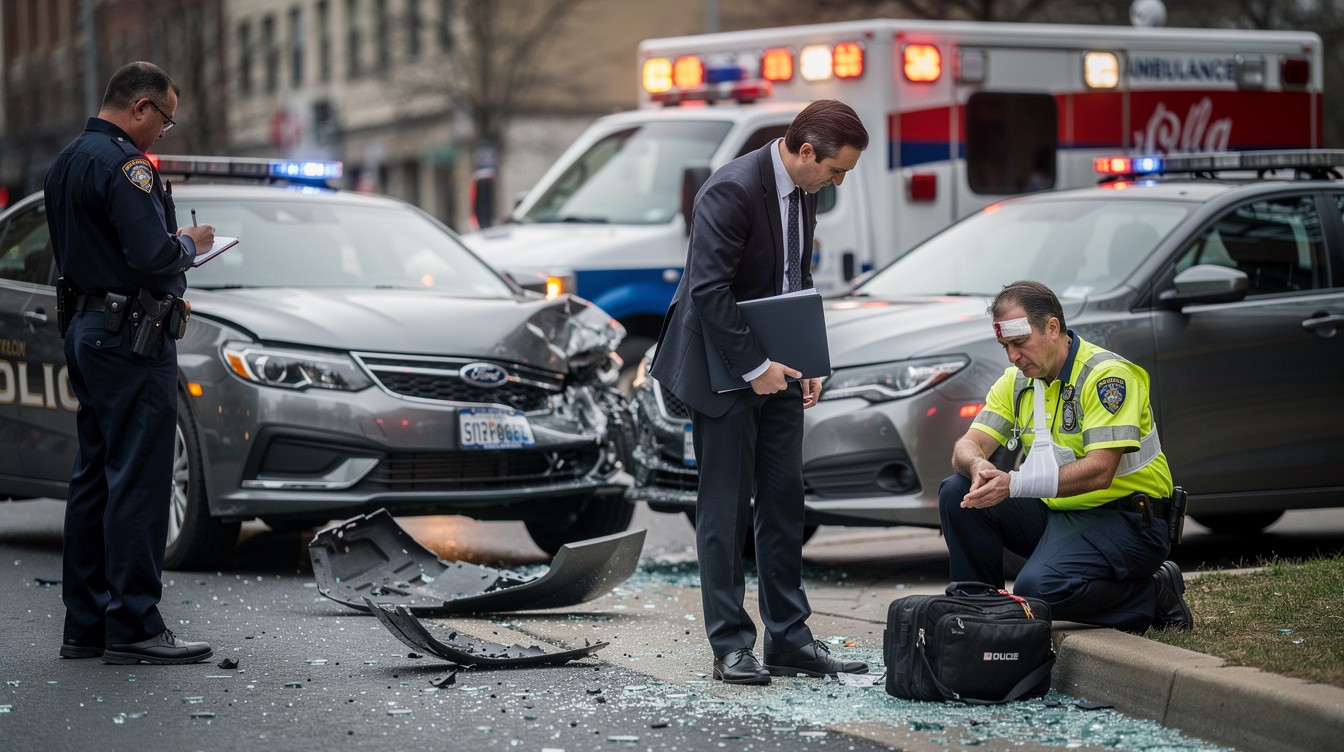
Car accidents happen fast, but their consequences can last for months or years. If you’ve suffered car accident injuries in Santa Cruz, knowing your legal rights is the first step toward recovery and fair compensation.
We at Schaar & Silva LLP help accident victims navigate the claims process and hold responsible parties accountable. This guide walks you through common injuries, your rights under California law, and the actions you need to take right now.
Injuries That Develop After Santa Cruz Car Accidents
Whiplash and Neck Injuries
Whiplash ranks as one of the most common injuries from car accidents, yet many victims underestimate its severity. When a vehicle stops suddenly, your head and neck snap forward and backward, stretching soft tissues beyond their normal range. The National Highway Traffic Safety Administration reports that neck injuries occur in roughly 20 percent of moderate to severe crashes. Symptoms often don’t appear immediately-a dangerous gap where victims feel fine at the accident scene but develop pain, stiffness, and reduced mobility within hours or days. You need medical evaluation right away, even if you feel okay, because delayed diagnosis weakens your injury claim. Doctors use imaging like MRI or CT scans to confirm soft tissue damage, and these medical records become essential when proving your injury to insurance companies or in court.
Back and Spinal Injuries
Back and spinal injuries carry far greater consequences than whiplash. The spine contains delicate nerves and discs that, once damaged, may cause chronic pain, numbness, or permanent disability. Some victims experience immediate pain while others develop symptoms gradually as inflammation increases. A herniated disc from a car crash can require months of physical therapy, injections, or surgery costing tens of thousands of dollars. Spinal cord injuries are particularly serious, potentially causing partial or complete paralysis that affects your ability to work and live independently. These injuries demand aggressive medical documentation and ongoing treatment records that demonstrate the full scope of your damages.
Head Injuries and Concussions
Head injuries and concussions deserve serious attention because accident scenes frequently overlook them. You don’t need to lose consciousness to suffer a concussion, and many victims experience cognitive symptoms like difficulty concentrating, memory problems, or mood changes weeks after impact. The Centers for Disease Control reports that car crashes are a leading cause of traumatic brain injury, with effects ranging from mild confusion to severe impairment. Concussions can worsen with repeated impacts, which matters if you’ve been in multiple accidents. Medical professionals should evaluate you through neurological exams and possibly brain imaging to establish a baseline for your recovery.
Document Your Symptoms and Medical Records
Document all symptoms you experience, including headaches, dizziness, sensitivity to light, and sleep disturbances, because these details strengthen your claim. Insurance adjusters often minimize head injuries since they’re invisible, making thorough medical records your strongest evidence. Gathering documentation immediately after your accident protects your rights and ensures you receive fair compensation for treatment costs, lost wages, and pain and suffering. With proper medical evidence in place, you’re ready to understand the legal framework that protects your right to compensation.
What Are Your Rights After a Santa Cruz Car Accident?
California law grants you the right to pursue compensation when someone else’s negligence causes your injuries. A personal injury claim begins the moment you report your accident to the police and notify your insurance company, but timing matters enormously. California Code of Civil Procedure Section 335.1 gives you exactly two years from the date of your injury to file a lawsuit for damages, while property damage claims have a three-year window under Section 338. These deadlines are absolute, not suggestions, and missing them bars your right to sue permanently. The discovery rule can shift when your clock starts if you didn’t immediately know about an injury, meaning the deadline begins when you discovered the harm or reasonably should have discovered it.
Understanding Your Deadlines
Medical malpractice claims tied to your accident treatment follow different rules with a one-year deadline and a mandatory 90-day notice to the healthcare provider before filing. Contact an attorney within weeks of your accident, not months, because calculating these deadlines correctly requires understanding your specific facts and circumstances. Each case presents unique timing issues, and an experienced attorney can help you identify which deadlines apply to your situation.
Gathering Evidence at the Scene
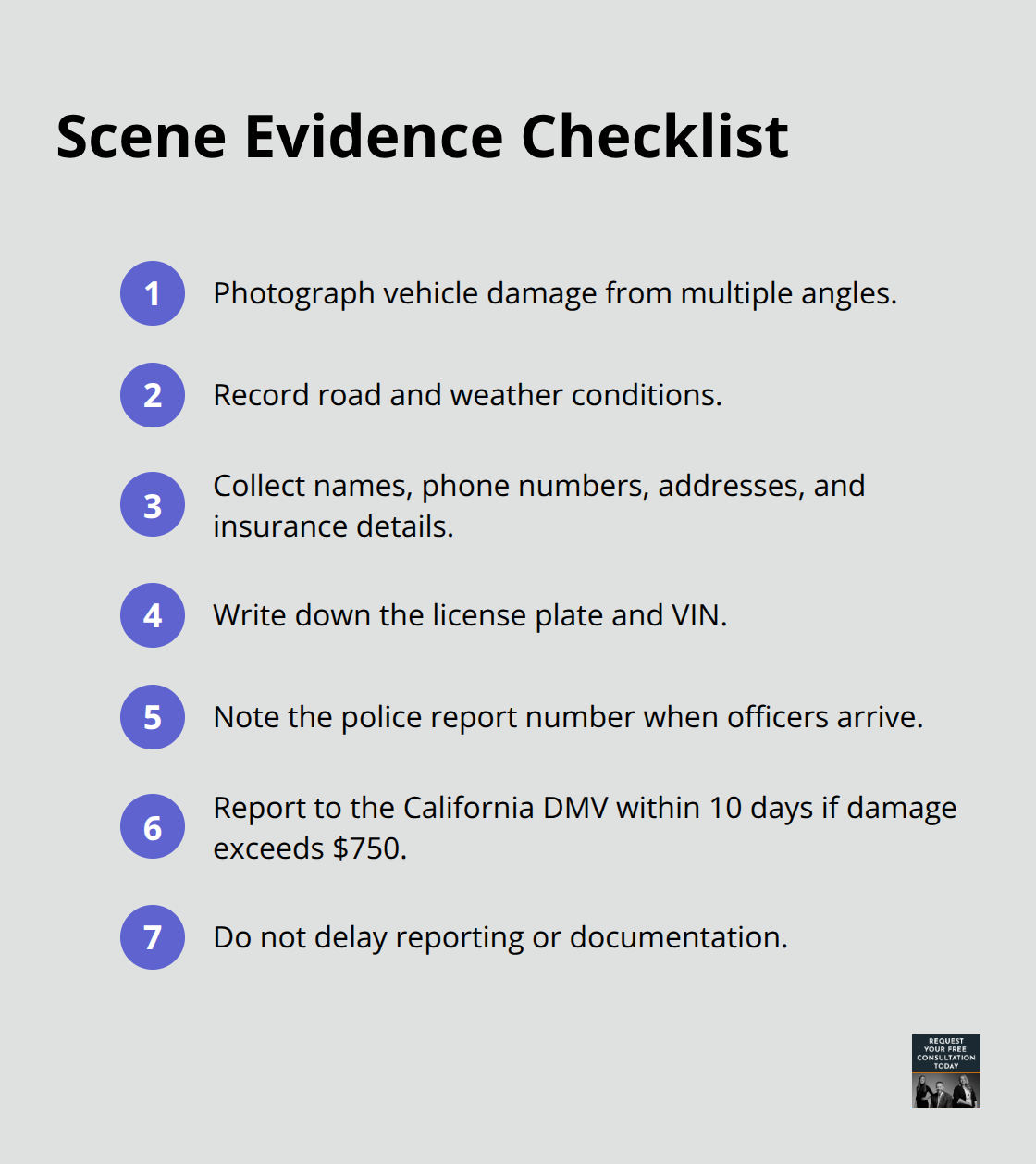
At the accident scene, photograph vehicle damage from multiple angles, capture the road conditions and weather, and collect the names, phone numbers, addresses, and insurance information from the other driver and any witnesses. Write down the other driver’s license plate number, vehicle identification number, and the police report number when officers arrive. California Department of Insurance data shows that accidents exceeding $750 in property damage must be reported to the California DMV within ten days or your license faces suspension, so don’t delay reporting.
Working with Insurance Companies
Your insurance company must acknowledge your claim within fifteen days and respond to your proof of loss within fifteen days as well, per Fair Claims Settlement Practices Regulations. Medical records become your strongest evidence, so obtain copies of every emergency room visit, diagnostic test, physical therapy session, and doctor’s note immediately. Insurance adjusters will scrutinize your documentation, so the more thorough your medical records and scene evidence, the stronger your position when negotiating compensation or preparing for litigation. With your evidence organized and your deadlines understood, the next step involves taking immediate action to protect your health and your claim.
What to Do in the First Hours After Your Accident
The decisions you make in the first few hours after a Santa Cruz car accident directly determine whether you receive fair compensation or lose your claim entirely. Start by moving to safety if possible, then call 911 immediately if anyone shows signs of injury, even minor ones. The California Department of Insurance emphasizes that this first step creates an official record and gets medical professionals involved right away. Do not leave the scene or admit fault to the other driver, as anything you say can be used against you later. Turn on your hazard lights, set up warning triangles if you have them, and stay calm while waiting for police to arrive. Your physical safety comes first, but your legal protection depends on what happens next.
Seek Medical Attention Without Delay
Medical attention cannot wait, and this is where most accident victims make a critical mistake. Even if you feel fine at the scene, visit an emergency room or urgent care within hours of the crash. The California Department of Insurance data shows that symptoms from serious injuries like whiplash and concussions emerge 24 to 72 hours after impact, meaning your window to establish a medical baseline is extremely narrow. Request written documentation of every symptom you report, every test performed, and every diagnosis made. Ask specifically for copies of your medical records on the spot rather than waiting days for them to arrive by mail. These records become your strongest evidence when dealing with insurance companies, and delays in obtaining them weaken your position significantly.
Report the Accident to Police
Call the police non-emergency line if officers haven’t arrived within a reasonable timeframe, as California Department of Insurance guidelines require formal accident reporting for crashes exceeding $750 in property damage. When police arrive, provide a clear, factual account of what happened without speculation or emotion. Request the officer’s name, badge number, and the police report number before they leave the scene. The police report creates an official incident record that insurance companies and courts rely on heavily.
Collect Information from the Other Driver and Witnesses
Gather the other driver’s full name, phone number, home address, driver’s license number, vehicle identification number, license plate number, insurance company name, and policy number. Photograph their driver’s license and insurance card with your phone rather than relying on memory. Get names and phone numbers from every witness present, including passengers in both vehicles, pedestrians, and nearby business owners. Ask witnesses to remain until police finish interviewing them, and provide your contact information to anyone who offers to help. Photograph the accident scene from multiple angles, capturing vehicle damage, road conditions, traffic signals, weather, skid marks, and any debris. These images preserve evidence that fades or disappears within days. If you sustained injuries, photograph any visible marks or bruises before you shower or change clothes.
Notify Your Insurance Company Promptly
Contact your insurance company within 24 hours of the accident, as most policies require prompt notification. The Fair Claims Settlement Practices Regulations require insurers to acknowledge your claim within 15 days, so document the date and time you report the accident. Provide your insurer with the police report number, the other driver’s information, and a factual description of what happened. Do not accept a settlement offer immediately, and do not sign any documents without reviewing them carefully. Insurance adjusters often contact accident victims within days, hoping to settle quickly before victims understand the full extent of their injuries. Consult with a lawyer before accepting any offer, as early settlements frequently undercompensate victims whose injuries develop over weeks or months.
Final Thoughts
Car accident injuries in Santa Cruz demand immediate action and clear understanding of your rights. You now know the common injuries that develop after crashes, the California deadlines that govern your claim, and the specific steps to take in the first hours after impact. The two-year window to file a personal injury lawsuit is absolute, and missing it eliminates your right to compensation permanently.
Medical documentation, police reports, and witness statements form the foundation of a strong claim, so you must gather this evidence at the scene to protect your future recovery. We at Schaar & Silva LLP understand that navigating insurance companies and legal deadlines while recovering from car accident injuries in Santa Cruz feels overwhelming. Our team handles the legal complexities so you can focus on healing, and we connect you with medical lien services that cover your treatment costs until your case resolves.
Contact a lawyer within weeks of your accident, not months, because early consultation prevents missed deadlines and ensures your claim receives proper attention from the start. Reach out to Schaar & Silva LLP to discuss your situation with someone who understands Santa Cruz car accidents and California law. We serve Santa Cruz County and stand ready to help you recover the compensation you deserve.
