

After a car accident, the physical injuries are obvious. But the pain and suffering that follows-the sleepless nights, the anxiety, the inability to do what you loved-these damages are real and deserve compensation.
At Schaar & Silva LLP, we’ve seen how insurance companies undervalue these non-economic damages. This guide shows you exactly how California courts calculate pain and suffering, what mistakes can tank your claim, and how to protect your rights.
What Actually Counts as Pain and Suffering
Pain and suffering in a car accident claim covers far more than just the medical bills you rack up. In California, non-economic damages represent the intangible harm your body and mind experience after impact. The physical pain from broken bones or whiplash matters, but so does the anxiety that hits when you sit in a car months later, the insomnia that keeps you awake at night, and the fact that you can no longer play soccer with your kids or work the overtime shifts you need. California courts recognize that these losses have real monetary value, and in many cases, non-economic damages exceed the economic losses themselves. Non-economic damages can comprise more than half the total compensation, which is why documenting everything from day one makes an enormous difference.
The Physical Injuries That Drive Compensation
Neck and back pain, broken bones, road rash, burns, and paralysis generate substantial pain and suffering awards. What matters most to a court is not just the injury itself, but how long you suffer from it and how severely it restricts your daily function. A broken arm that heals in six weeks generates different compensation than a spinal injury that causes chronic pain for years. Medical records showing your treatment timeline, the medications you took, and your doctor’s notes about your pain levels and functional limitations become critical evidence. If your doctor documented that you experienced significant pain or that the injury prevented you from working or moving normally, that strengthens your claim considerably. The longer your recovery period, the higher your potential damages, because the law compensates you for each day you endured discomfort and limitation.
Emotional and Psychological Harm Requires Concrete Evidence
Depression, anxiety, post-traumatic stress disorder, insomnia, and grief are legitimate forms of suffering that courts award compensation for, yet they’re substantially harder to prove than a fracture visible on an X-ray. Insurance adjusters scrutinize emotional distress claims heavily because they cannot see trauma the way they see a cast. You need concrete evidence: a therapist’s diagnosis and treatment notes, prescription records for anxiety or depression medication, and testimony from people who witnessed your behavioral changes. If you withdrew from social activities, stopped attending family events, or could not concentrate at work due to psychological effects, those observations from friends, family members, or coworkers carry weight. The absence of medical documentation for emotional injuries is precisely why insurance companies push back, so if you experience psychological symptoms after your accident, seek professional help immediately and maintain detailed records of your symptoms and treatment.
Why Documentation Determines Your Claim’s Value
Insurance adjusters review pain and suffering using medical records, treatment timelines, any gaps in care, provider notes on pain and function, prescriptions, personal diaries, witness statements, photos, and even social media activity. A pain journal that tracks your daily discomfort, sleep disruption, and functional limitations provides the observational evidence that medical charts alone cannot supply. Photographs showing injuries and healing progress, combined with statements from household members or coworkers about how your condition affected your daily life, strengthen your position significantly.
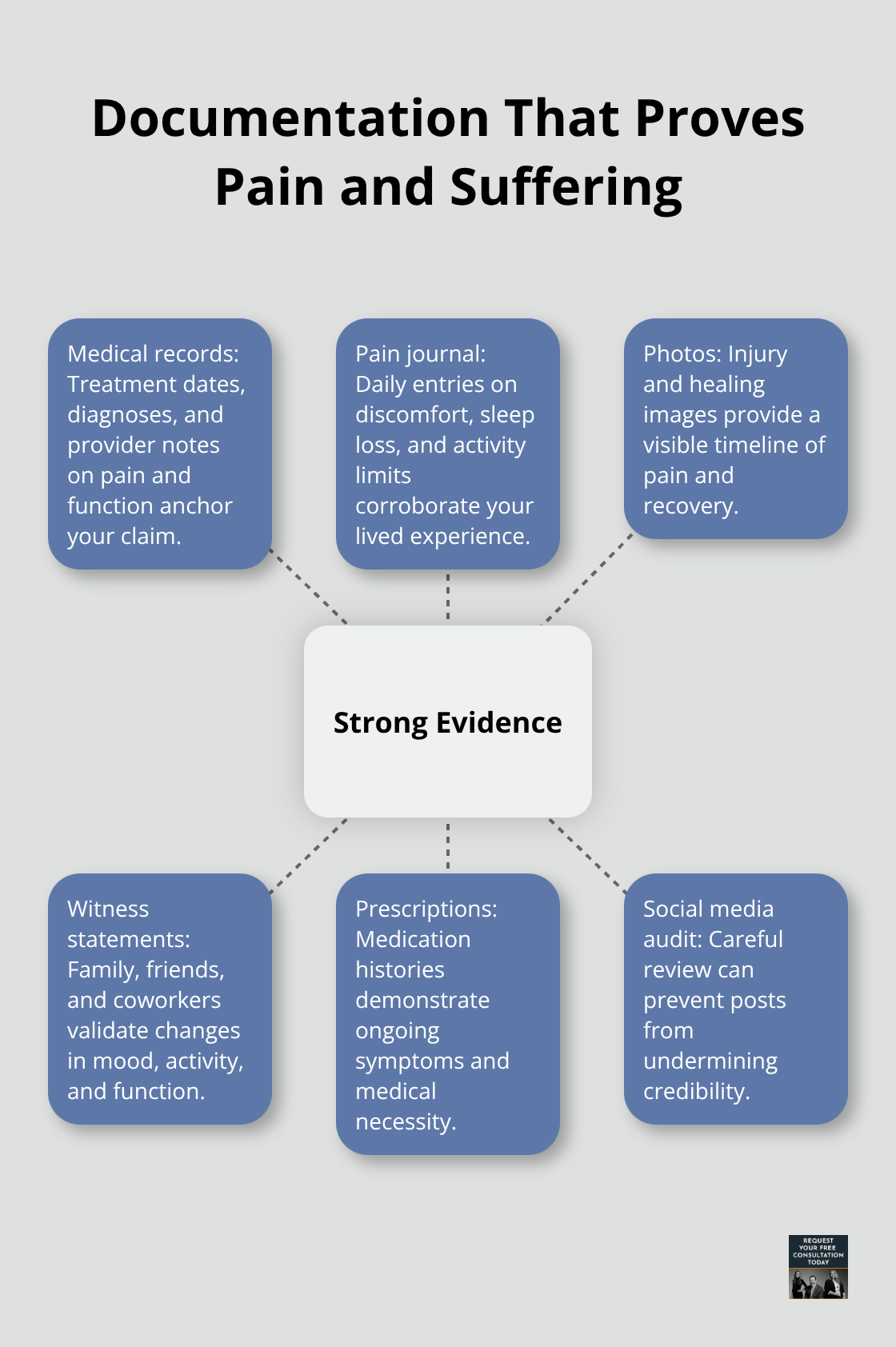
The multiplier method and per diem approach (which we’ll examine in the next section) both rely heavily on this documentation to justify higher damage awards. Without solid evidence, insurance companies will lowball your claim, knowing that emotional distress is harder to quantify than a medical bill.
How California Courts Value Your Pain and Suffering
California courts apply two primary methods to calculate non-economic damages, and understanding which one applies to your case matters enormously for your final compensation. The multiplier method takes your economic damages-medical bills, lost wages, out-of-pocket costs-and multiplies that total by a number between 1.5 and 5, depending on injury severity. If your economic damages total $20,000 and the court applies a 3.5 multiplier due to significant pain and lasting functional loss, your non-economic damages reach $70,000. The per diem method assigns a daily dollar value to your suffering and multiplies it by the number of days you experienced pain during recovery. Assigning $200 per day across 180 days of recovery generates $36,000 in non-economic damages.
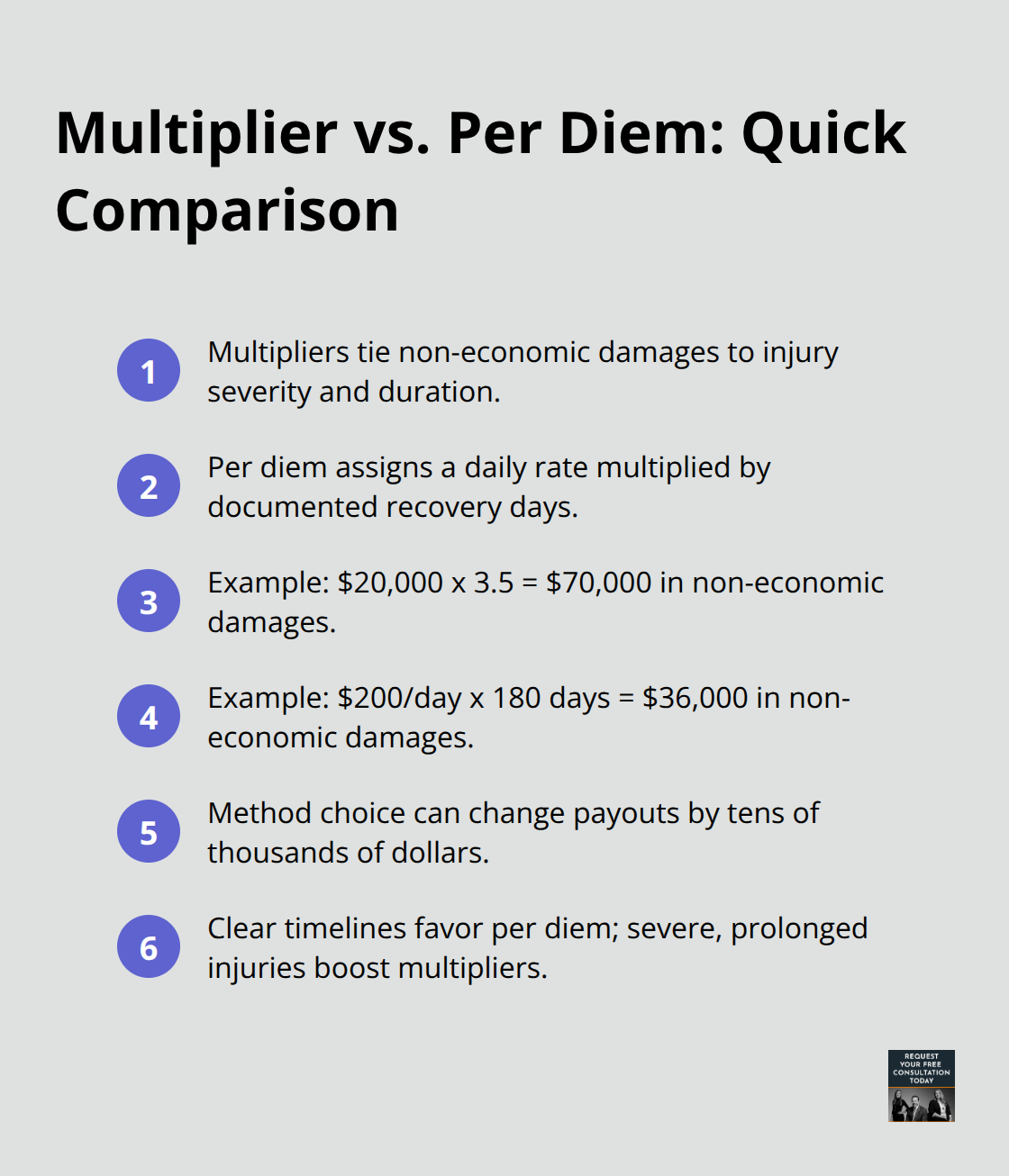
Neither method is mathematically perfect, which is why insurance adjusters fight hard over which approach to use-they know the choice directly impacts what you receive.
Why Courts Favor the Multiplier Method
Courts prefer the multiplier method in most cases because it ties suffering to documented injury severity, making it harder for adjusters to argue your pain was exaggerated. This approach forces insurance companies to justify their damage calculations based on the actual medical evidence you present. The multiplier itself reflects how serious your injury was and how long you suffered from it. Severe injuries with long recovery periods typically generate higher multipliers, sometimes reaching 4 or 5, while minor injuries might warrant only 1.5 to 2. The strength of your documentation directly influences which multiplier the court selects.
When the Per Diem Approach Works Better
The per diem method works better when your recovery timeline is clearly defined and your daily suffering is well documented, such as when medical records show specific treatment dates and your pain journal tracks daily impact. Insurance companies will push this method for serious injuries because the daily rate seems lower on its face, but if you suffered for two years, even $100 per day totals $73,000. This approach rewards thorough daily documentation and works particularly well when your injury caused consistent, measurable pain throughout a defined recovery period.
How Documentation Drives Your Multiplier or Daily Rate
The critical factor courts examine when selecting a multiplier or daily rate is how thoroughly you documented your pain and suffering, functional limitations, and psychological effects throughout your recovery. Medical records showing your treatment timeline, provider notes on pain levels, and prescription documentation all strengthen your position. A pain journal that tracks your daily discomfort, sleep disruption, and functional limitations provides the observational evidence that medical charts alone cannot supply. Photographs showing injuries and healing progress, combined with statements from household members or coworkers about how your condition affected your daily life, strengthen your claim substantially. Insurance adjusters review pain and suffering using all these materials-medical records, treatment timelines, any gaps in care, provider notes, prescriptions, personal diaries, witness statements, photos, and even social media activity. Without solid evidence, insurance companies will lowball your claim, knowing that emotional distress is harder to quantify than a medical bill.
What Happens When You Face Settlement Pressure
Insurance companies often push quick settlements to minimize non-economic losses, which can prevent you from pursuing full compensation later. They may present a settlement offer based on their preferred calculation method, hoping you’ll accept without understanding how much more you might recover. The choice between multiplier and per diem methods can shift your final award by tens of thousands of dollars, so accepting an initial offer without legal guidance frequently costs you substantially. Understanding which method benefits your specific injury and recovery timeline positions you to negotiate from strength rather than desperation.
Mistakes That Tank Your Pain and Suffering Claim
The gap between what your claim is worth and what you actually receive often comes down to preventable errors made in the weeks and months after your accident. Insurance adjusters exploit documentation gaps ruthlessly, and once you accept a settlement, you cannot go back for more.
Treatment Gaps Destroy Your Credibility
The first mistake is treating your medical care like a checkbox rather than a foundation for compensation. If you skip follow-up appointments, wait weeks between treatments, or stop seeing your doctor before you’ve fully recovered, adjusters will argue your injuries were minor or that you’ve already healed. They will point to those gaps in your medical records as evidence that your pain and suffering claims are exaggerated. You need consistent treatment documentation showing your pain levels, functional limitations, and recovery timeline. Every appointment, every prescription, every therapist session becomes evidence that strengthens your claim’s value. Insurance adjusters scrutinize these timelines intensely because gaps suggest your injuries caused less suffering than you claim.
Social Media Posts Become Evidence Against You
Social media activity creates another critical vulnerability that many accident victims overlook completely. A photograph of you hiking or playing with your kids, posted weeks after your accident, will be used against you in settlement negotiations and courtroom proceedings. Insurance adjusters actively review social media profiles, and they will present that hiking photo directly to a judge while arguing your pain and suffering claims lack credibility.
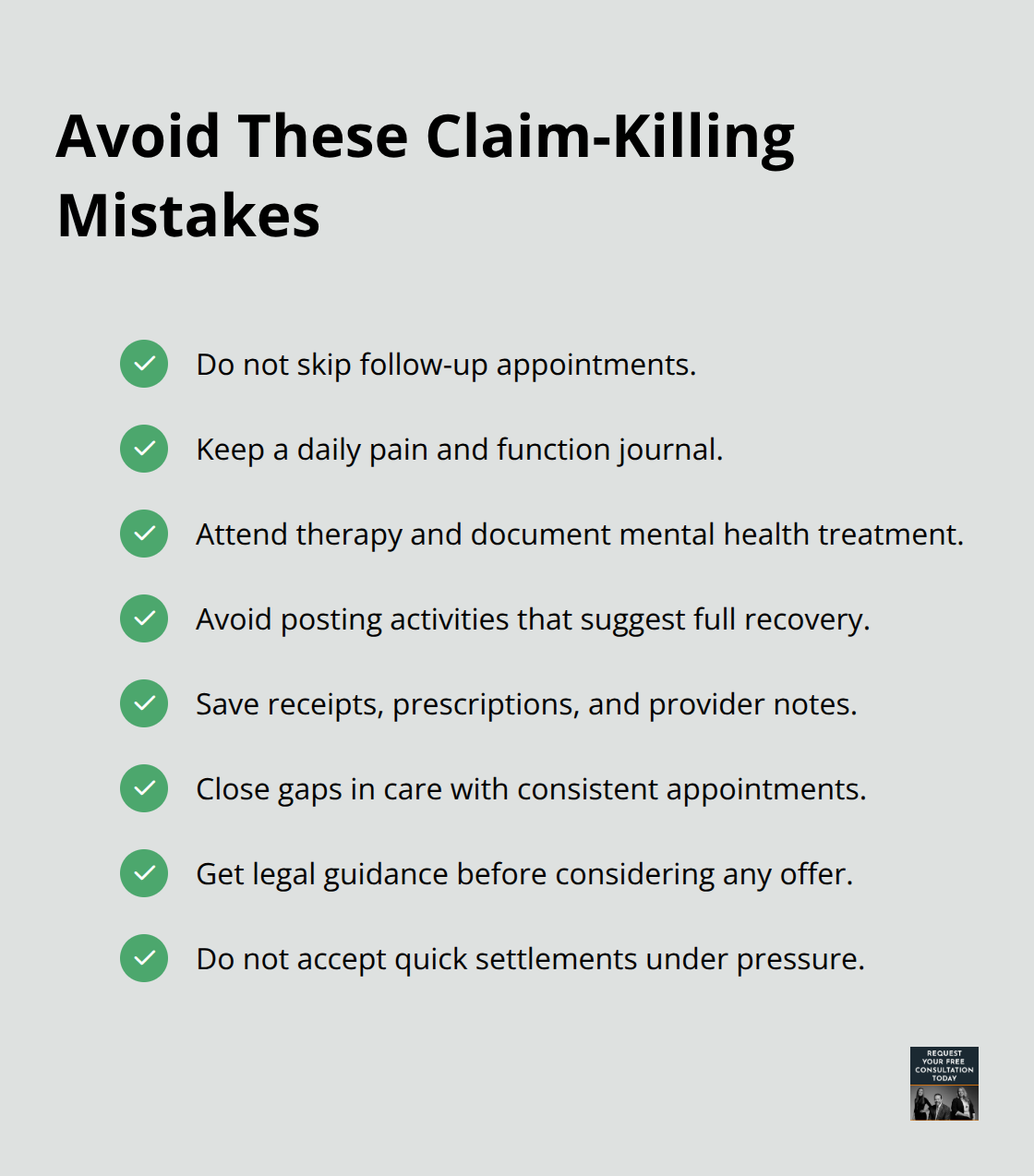
You do not need to announce your recovery progress to the world, and anything you post can be weaponized by the other side. Even innocent posts about activities you thought you could handle become ammunition for insurance companies trying to minimize your damages.
Initial Settlement Offers Hide the Real Value of Your Claim
The final and most costly mistake is accepting an initial settlement offer without understanding how California courts actually calculate non-economic damages. Insurance companies present their first offer knowing most accident victims will accept it out of financial pressure or exhaustion. That initial offer typically reflects their preferred calculation method, not the method that maximizes your compensation. The difference between a multiplier method and a per diem approach can shift your final award by $30,000 to $50,000 or more, depending on your injury severity and recovery timeline. Accepting without legal guidance means you are leaving substantial money on the table permanently. Insurance companies often push quick settlements to minimize non-economic losses, which prevents you from pursuing full compensation later.
How Legal Representation Protects Your Rights
At Schaar & Silva LLP, we handle the documentation process and manage your medical records while you focus on recovery. Our team negotiates from the calculation method that actually benefits your specific injury, and we work to prevent insurance companies from exploiting gaps in your case. With our support, you can focus on your recovery while we handle the legal intricacies of your situation.
Final Thoughts
The value of your pain and suffering auto accident claim rests entirely on how thoroughly you document your injuries, recovery timeline, and functional limitations from day one. California courts recognize that non-economic damages often exceed your medical bills and lost wages combined, yet insurance companies will systematically undervalue these intangible harms unless you present concrete evidence. The multiplier method and per diem approach both require solid documentation to justify higher awards, and the calculation method itself can shift your final compensation by tens of thousands of dollars.
Legal representation changes everything in your favor. We at Schaar & Silva LLP handle the documentation process while you recover, manage your medical records, and negotiate using the calculation method that actually benefits your specific injury. Our team prevents insurance companies from exploiting gaps in your case and connects you with medical lien services, property damage assistance, and psychological support when emotional trauma requires professional care.
Contact Schaar & Silva LLP for a free case evaluation and protect your right to fair compensation. Do not negotiate with insurance adjusters alone, do not accept settlement offers without legal guidance, and do not let treatment gaps undermine your claim’s credibility.
