

A car crash changes your life in ways that go far beyond broken bones or bruises. Emotional trauma after a crash is real, and it deserves the same attention as any physical injury.
Many accident victims in Santa Cruz County, Sacramento, and Oakland push through the psychological pain without realizing they have legal rights. We at Schaar & Silva LLP know that healing requires both mental health support and fair compensation for what you’ve endured.
Why Emotional Injuries Last Longer Than You Think
The Statistics Behind Invisible Wounds
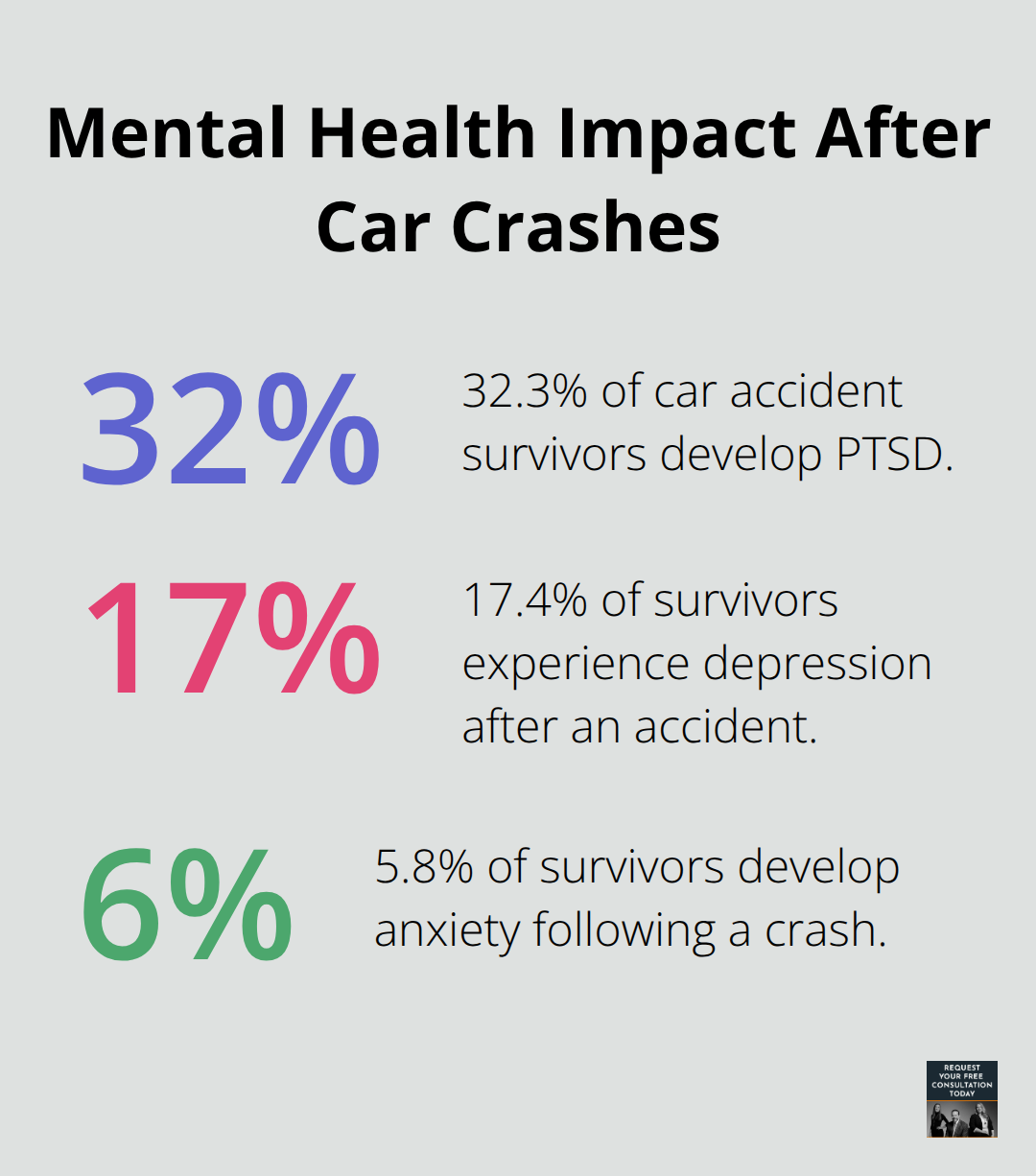
Approximately 32.3% of car accident survivors develop PTSD, according to the Journal of Clinical Medicine, yet most victims focus entirely on healing broken bones and lacerations. The psychological aftermath of a crash often emerges months after the physical wounds have closed. About 1 in 6 traffic accident survivors experience moderate mental health symptoms regardless of how minor their physical injuries appear. This disconnect between visible damage and invisible suffering creates a dangerous gap where victims minimize their own recovery needs.
Depression and Anxiety Compound Your Recovery
Depression affects roughly 17.4% of accident survivors and frequently coexists with PTSD, making the emotional burden significantly heavier than any single condition. Anxiety develops in approximately 5.8% of survivors, and both conditions can persist for years without proper treatment. Motor vehicle accidents represent the leading cause of PTSD in the general population, which means your emotional trauma is not unusual or weak-it’s a documented medical consequence of what happened to you.
Head Injuries Amplify Psychological Risk
If you experienced even a mild concussion, your risk of developing PTSD within one year doubles compared to those without head injuries, according to research on traumatic brain injuries. This connection between physical and psychological injury means that even “minor” crashes can trigger serious mental health conditions that demand immediate attention.
Symptoms Require Professional Treatment
Intrusive memories, flashbacks, and avoidance of driving are not character flaws; they are recognized symptoms that respond to specific therapies like Cognitive Behavioral Therapy, Cognitive Processing Therapy, or EMDR. Early intervention matters tremendously. Symptoms that persist beyond four to six weeks warrant professional attention, and waiting longer only extends your recovery timeline. The longer you delay treatment, the more deeply these patterns embed themselves into your daily life, affecting your work performance, relationships, and your ability to function.
Building Your Case Through Documentation
Your psychological injuries deserve immediate care through a trauma-informed therapist, and that care becomes part of your documented claim for damages. Treatment records, therapy notes, and medication documentation all strengthen your legal position. When you seek help now, you simultaneously invest in your recovery and protect your right to compensation. Understanding what damages you can claim for this emotional suffering requires knowledge of California law-something we at Schaar & Silva LLP address directly in the next section.
What Emotional Damages Can You Actually Recover
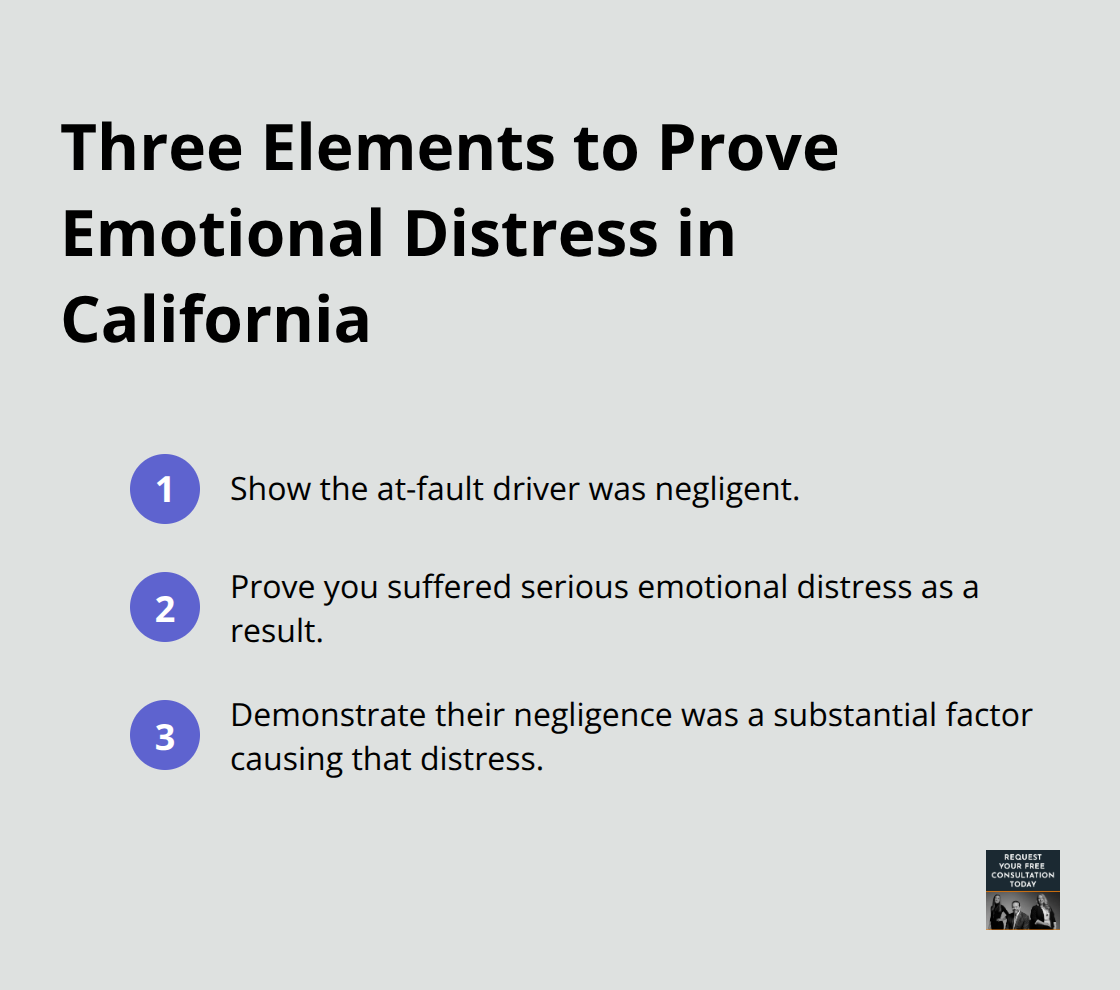
California law treats emotional distress as a legitimate injury category, meaning you can recover compensation for psychological suffering caused by someone else’s negligence. The state recognizes three types of emotional damage claims: general pain and suffering from the accident itself, specific conditions like anxiety or PTSD that developed afterward, and negligent infliction of emotional distress when the defendant’s careless behavior directly caused your mental health decline. To succeed, you must prove three elements: the at-fault driver was negligent, you suffered serious emotional distress as a result, and their negligence was a substantial factor in causing that distress. Serious emotional distress means an ordinary, reasonable person would be unable to cope with the suffering caused by what happened to you-this is not about mild discomfort or temporary worry. California courts have consistently upheld these claims, and judges or juries determine the dollar amount based on the severity of your condition, the length of your recovery, and how much the trauma has disrupted your work and relationships.
Economic Damages Cover Your Treatment Costs
Your medical bills, therapy sessions, medications, and rehabilitation expenses are all recoverable as economic damages. If you attend 12 sessions of Cognitive Processing Therapy at roughly $150 to $300 per session, that amounts to $1,800 to $3,600 in documented costs. Prescription medications for anxiety or depression, psychiatric evaluations, and any assistive devices recommended by your treatment provider all count. The key is documentation: keep every receipt, invoice, and explanation of benefits from your mental health providers. Insurance records showing what you paid out of pocket matter just as much as what insurance covered. Lost wages during your recovery period-time missed from work due to therapy appointments, inability to concentrate, or symptom severity-also fall under economic damages.
Non-Economic Damages Reflect Your Suffering
Pain and suffering damages have no fixed formula; instead, judges and juries assess them based on how severely your emotional condition has impacted your daily life. If PTSD symptoms prevent you from driving, you lose independence or miss work opportunities, and that loss of enjoyment of life becomes compensable. If anxiety disrupts your sleep, damages your relationships, or forces you to withdraw from activities you once enjoyed, those changes matter legally. The strength of your claim depends directly on how thoroughly you document these impacts. A detailed symptom diary (recording intrusive memories, flashbacks, sleep disturbances, and mood swings over three to six months) provides concrete evidence of suffering. Statements from family members, friends, or coworkers describing changes they’ve witnessed in your behavior and functioning carry significant weight. Medical records from your therapist describing your condition and progress reinforce the severity.
How Negligence Affects Your Damages Award
California courts typically award higher non-economic damages when the at-fault driver was clearly negligent-such as driving under the influence, texting while driving, or reckless speeding-because juries view intentional or grossly careless behavior as more blameworthy. The circumstances surrounding your crash directly influence what a judge or jury believes you deserve. A driver who caused your accident through deliberate recklessness faces harsher judgment than one involved in a momentary lapse of attention. This distinction matters tremendously when you calculate your potential recovery. We at Schaar & Silva LLP connect you with specialists who can offer the psychological support you may require while we handle the legal intricacies of your situation, ensuring your emotional damages receive proper valuation. Understanding what you can recover is only part of the equation-finding qualified mental health support in your area determines whether you actually heal and build the documented evidence your claim requires.
Finding the Right Mental Health Support in Santa Cruz County
Trauma-Informed Therapy Approaches That Work
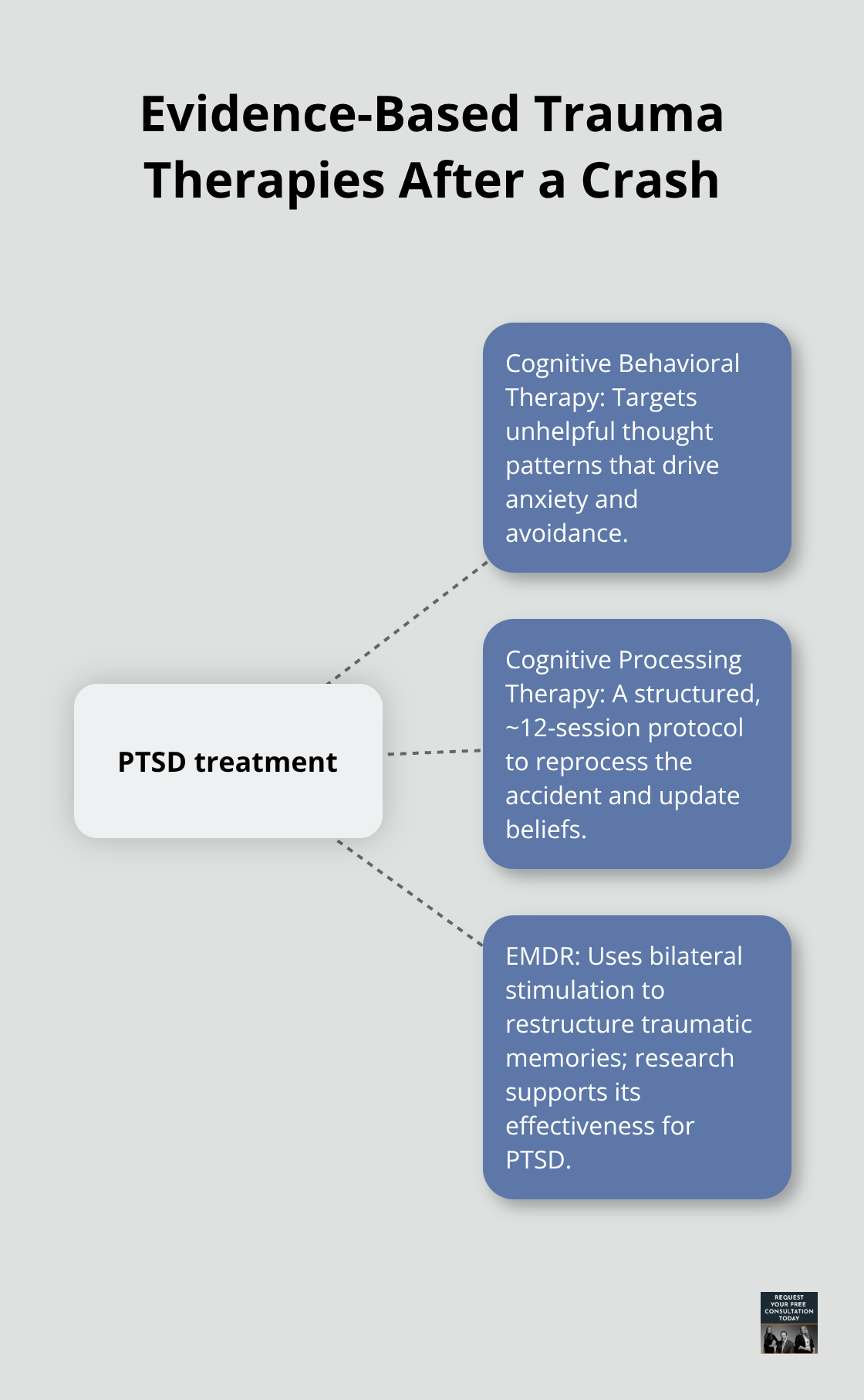
Trauma-informed therapists understand that emotional injuries from car accidents require specialized approaches beyond standard counseling. After a crash, you need a provider who recognizes how accident-specific trauma manifests differently than other mental health conditions. Cognitive Behavioral Therapy addresses the thought patterns that fuel anxiety and avoidance, while Cognitive Processing Therapy, typically delivered over 12 sessions, helps you reprocess the accident and modify beliefs about what happened. Eye Movement Desensitization and Reprocessing uses bilateral stimulation to restructure traumatic memories, and research shows it works effectively for PTSD.
Finding a Qualified Provider in Your Area
When searching for a therapist in Santa Cruz County, Sacramento, or Oakland, filter by trauma or PTSD specialization and prioritize providers with at least 10 years of experience in accident recovery. Many therapists offer online sessions, which eliminates travel barriers during your recovery. The 988 Suicide and Crisis Lifeline offers 24/7 support by call or text if you experience severe symptoms or suicidal thoughts. Expect to pay around $15 per session with insurance, though your actual cost depends on your deductible and plan specifics. A quality provider should give you a personalized cost estimate before your first appointment so you understand the financial commitment upfront. If the first therapist doesn’t feel like the right fit, switch providers without guilt; therapeutic relationships matter intensely for healing.
Building Your Legal Case Through Treatment Records
Your therapy records become critical documentation for your damages claim, which is why starting treatment immediately serves dual purposes: your recovery and your legal case. Every therapy note, diagnosis, and treatment plan demonstrates the severity of your emotional injury to an insurance adjuster or jury. Prescription records for anxiety or depression medications show medical providers recognized your condition as serious enough to warrant pharmacological intervention. A symptom diary maintained during your first three to six months of treatment creates concrete evidence of how PTSD, depression, or anxiety affected your daily functioning. Ask your therapist to document specific impacts: missed work days, sleep disturbances, relationship strain, and avoidance behaviors. When you compile treatment records alongside statements from family members describing behavioral changes they witnessed, you create a compelling narrative about your suffering that strengthens your compensation claim substantially.
Final Thoughts
Emotional trauma after a crash demands both compassionate mental health treatment and aggressive legal advocacy to address your suffering. California law explicitly protects your right to recover damages for the psychological injuries you experience, and pursuing that compensation represents a legitimate part of your healing journey. Your recovery requires two parallel paths: obtaining proper treatment from a trauma-informed provider and securing fair compensation that reflects what you’ve endured.
Treatment records, therapy notes, and your detailed accounts of how the accident disrupted your life all strengthen your legal claim when you work with an attorney who understands emotional injury valuation. We at Schaar & Silva LLP connect you with qualified mental health providers in Santa Cruz County, Sacramento, and Oakland while we handle the complex legal work of documenting your psychological suffering and negotiating with insurance companies. Contact Schaar & Silva LLP to discuss your case and learn what damages you can pursue for emotional trauma after crash.
