
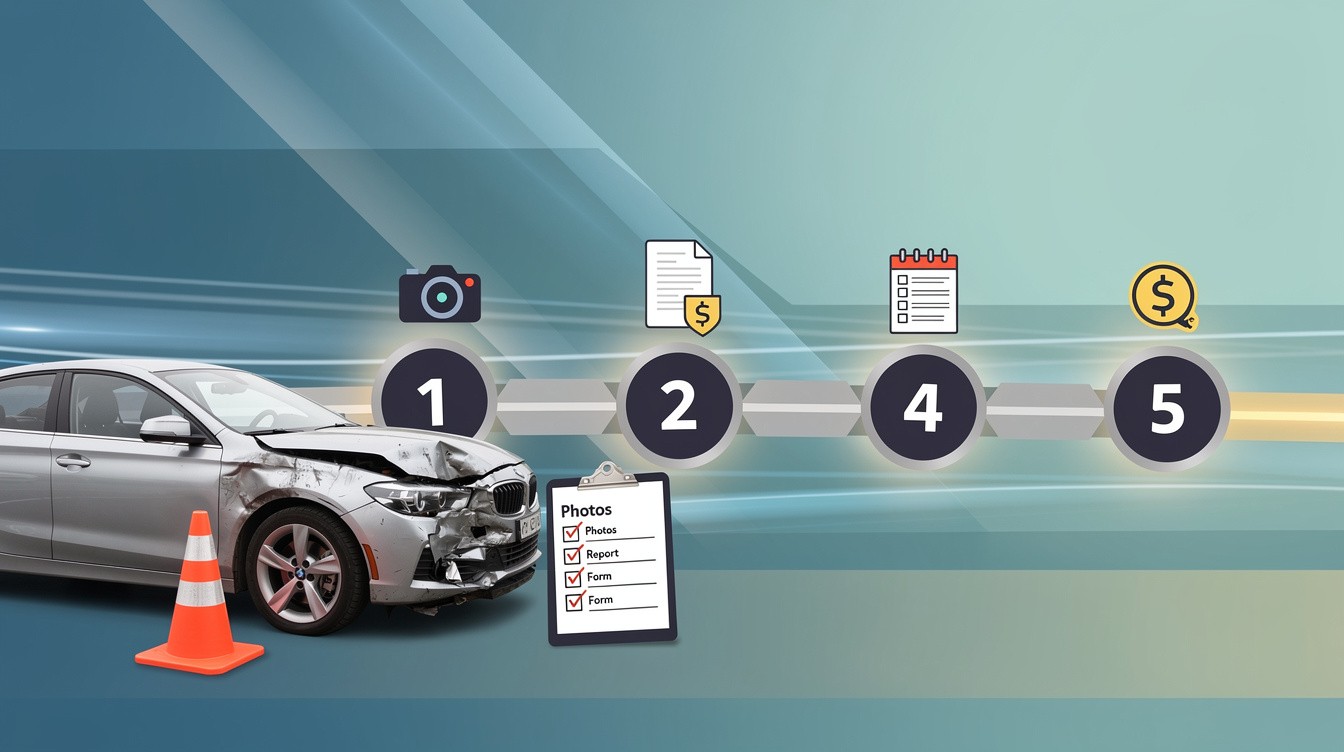
A car crash turns your life upside down in seconds. Between injuries, vehicle damage, and insurance calls, the process feels overwhelming.
We at Schaar & Silva LLP have guided thousands of accident victims through car crash claim steps in Santa Cruz County, Sacramento, and Oakland. This guide breaks down exactly what you need to do to get the compensation you deserve.
What to Do Immediately After Your Crash
The first hour after a crash determines how strong your claim becomes. Police reports, photos, and witness statements gathered at the scene carry far more weight than anything collected days later. Start by moving to safety if possible, then call 911 to report the accident. The police report creates an official record of what happened, and in California, this document becomes central to your claim. Once officers arrive, provide factual information about what occurred without admitting fault or speculating about injuries. Many people say they’re fine at the scene, only to discover serious injuries later. Instead, tell the officer you need medical evaluation and stick to the facts of the collision.
Photograph the Accident Location from Multiple Angles
Capture vehicle damage, road conditions, traffic signals, skid marks, and the overall scene before vehicles move. If it’s safe, record a short video showing the street layout and how vehicles came together. Your phone’s timestamp on photos provides documentation of when you took the images, which strengthens your credibility later. These visual records become essential evidence when you file your claim with the insurance company.
Collect Information from Everyone at the Scene
Get the names, phone numbers, addresses, and insurance information from the other driver and any passengers. Write down their license plate number and vehicle details. Ask witnesses for their contact information and what they saw. Witnesses disappear if you don’t collect their details immediately, and their statements often prove invaluable when disputes arise about fault or injuries.
Contact Your Insurance Company and Seek Medical Care
Contact your insurance company within 24 hours and provide a straightforward account of the accident. Do not post about the crash on social media, as insurance companies monitor these posts and can use them against you. Do not discuss the accident with the other driver’s insurance company without legal guidance. When you call your own insurer, stick to facts and avoid statements like “I’m sorry” or “It was my fault.”
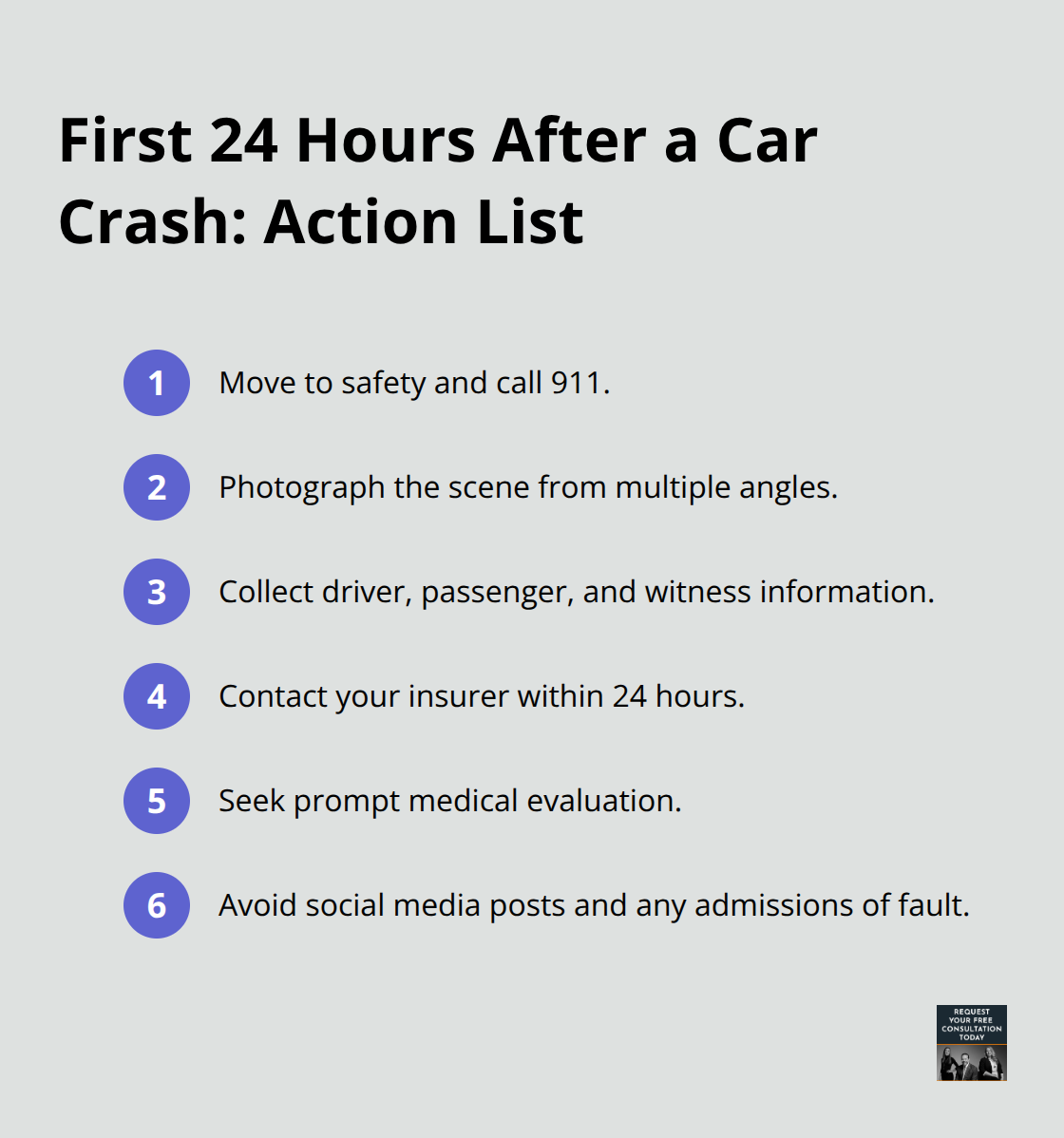
Medical treatment should begin promptly, even for injuries that seem minor. Delayed medical care weakens injury claims because insurers argue the injuries weren’t serious. Visit an urgent care clinic or emergency room the same day if possible. Keep all medical records, receipts, and bills organized in one folder or digital file from the start. This documentation becomes critical when you move forward with your claim and begin gathering evidence to support your compensation request.
Building Your Claim With Evidence
The period between your crash and settlement is when you build the foundation of your case. Medical records, repair estimates, and documentation transform scattered information into a compelling claim that insurers take seriously.
Collect Medical Records and Repair Estimates
Start collecting medical records immediately from every healthcare provider who treats you, including urgent care facilities, emergency rooms, physical therapists, and specialists. Request these records in writing rather than relying on phone calls, as written requests create a paper trail. Each medical record strengthens your claim by establishing the connection between the crash and your injuries. Insurance companies scrutinize medical gaps, so consistent treatment demonstrates the severity of your condition.
Obtain repair estimates from at least two auto body shops for vehicle damage. These estimates provide concrete evidence of property damage and help prevent insurers from undervaluing your vehicle. Keep original receipts for all accident-related expenses, including rental car costs, medical copayments, and transportation to appointments. The more documentation you gather, the less room an insurance adjuster has to dispute your claim.
Organize Your Documentation Strategically
Organization determines whether your claim moves forward efficiently or stalls in confusion. Create a single digital folder or physical binder containing medical records, repair estimates, receipts, the police report, photos from the scene, insurance policy information, and correspondence with the insurance company. Label each document clearly with dates.
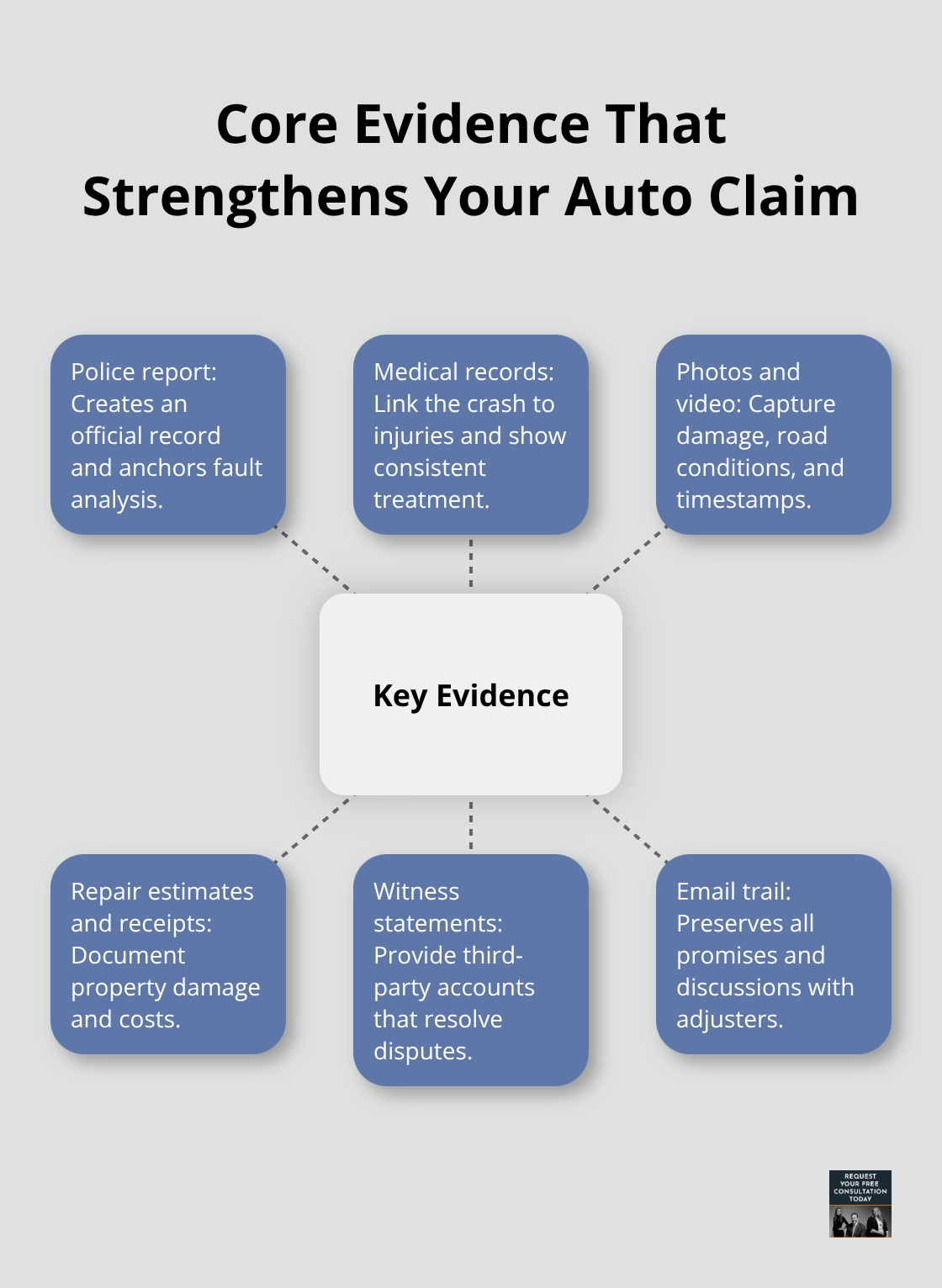
When communicating with your insurance adjuster, request all written communication through email rather than phone calls. Email creates a permanent record of what was promised and discussed. This written trail protects you if disputes arise later about what the adjuster promised or discussed.
Respond to Settlement Offers With Confidence
Respond to settlement offers within the timeframe specified by the insurer, typically 30 days, but do not rush into acceptance. If an adjuster pressures you to settle before your medical treatment is complete, decline. Settlement before your healthcare plan is established locks you into compensation that may not cover future medical needs.
Insurance adjusters often present initial offers significantly below actual claim value. The National Highway Traffic Safety Administration reports that medical expenses from car crashes totaled billions annually, yet many victims accept settlements far below their documented costs. Stand firm on your evidence. If the adjuster’s offer does not match your documented losses and future care needs, you have the right to reject it and pursue further action.
When an insurer’s offer falls short of what your evidence supports, you face a critical decision about whether to negotiate further or seek legal guidance to protect your interests.
What Your Settlement Should Actually Cover
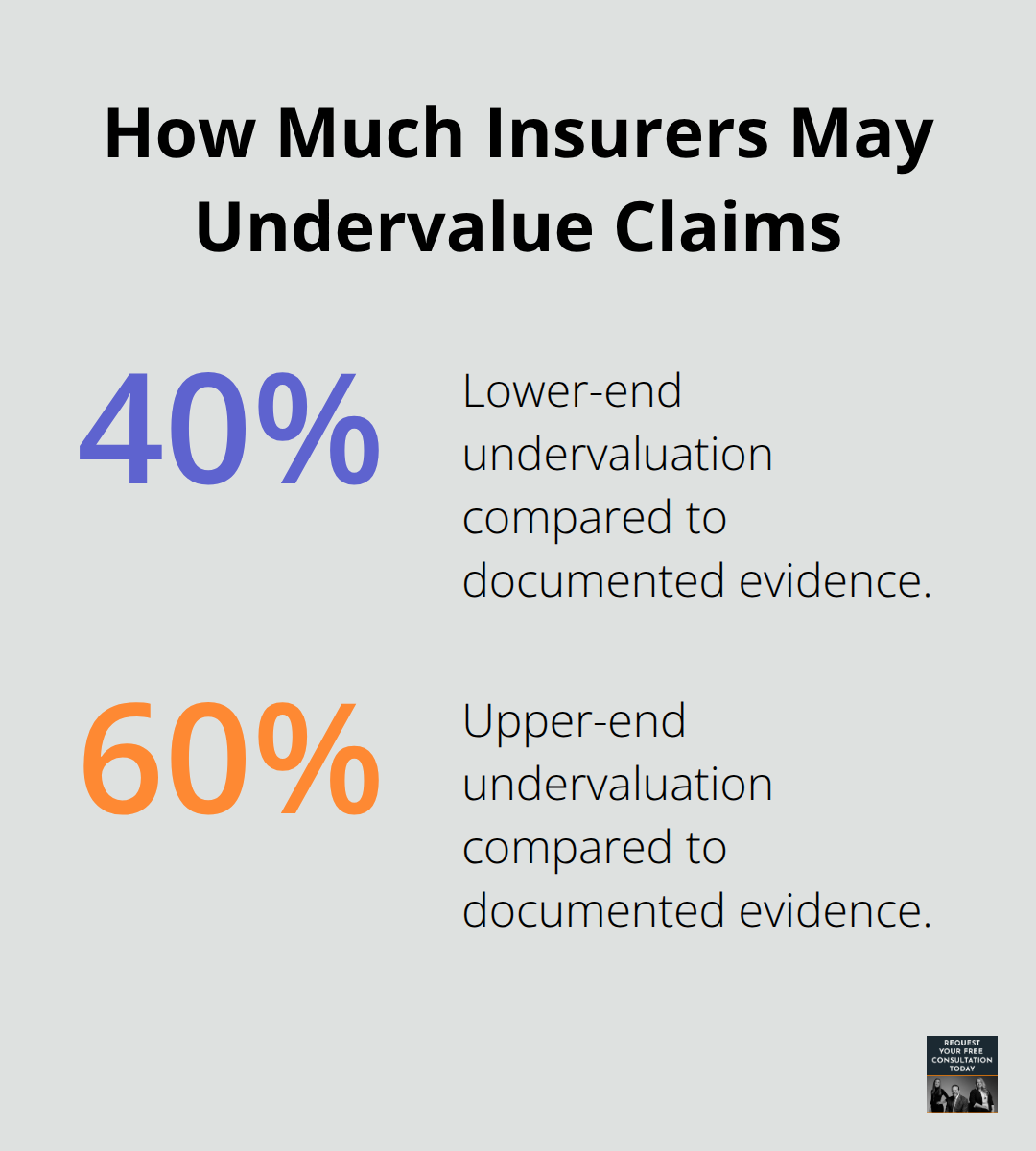
Insurance adjusters count on victims accepting their first offer without understanding what compensation truly covers. Your settlement needs to account for every expense the crash created, both immediate and long-term. Medical bills represent only part of your losses. Lost wages during recovery, future medical treatment, vehicle repairs, and transportation costs all belong in your claim’s value. Calculate your total losses before any negotiation starts. Add up every medical bill, every day of missed work multiplied by your daily wage, repair estimates, and transportation costs. This number becomes your baseline. Insurance companies use formulas that often undervalue claims by 40 to 60 percent compared to what documented evidence supports, so knowing your actual losses prevents you from accepting inadequate compensation.
How to Value Pain and Suffering Realistically
Pain and suffering compensation extends beyond medical expenses and lost income. California courts recognize that injuries create lasting physical pain, emotional distress, and reduced quality of life. Adjusters sometimes multiply medical bills by two or three to estimate pain and suffering, but this formula often underestimates actual damages. Severe injuries warrant higher multipliers. A back injury requiring ongoing physical therapy and limiting your ability to work carries different weight than a minor soft tissue injury. Document your daily struggles: difficulty sleeping, inability to exercise, lost recreational activities, and impact on family relationships. These details support higher pain and suffering awards. When negotiating, present this documentation alongside medical records. An adjuster who sees both your medical evidence and your detailed account of how injuries affected your life cannot easily dismiss your valuation.
When Settlement Offers Fall Short of Your Needs
Rejecting a settlement offer requires confidence that your evidence justifies holding firm. If the adjuster’s offer falls short by thousands of dollars compared to your documented losses, rejection becomes the right choice. Insurers expect pushback and often increase initial offers when claimants present strong evidence and refuse lowball amounts. Respond to inadequate offers in writing, referencing your organized documentation. State clearly that the offer does not reflect your medical expenses, lost wages, and future care needs. Provide the specific gap between their offer and your documented losses. Many claims settle after this second round of negotiation when adjusters see you will not accept inadequate compensation. If negotiation stalls and the insurer remains unreasonable, legal guidance helps you determine whether pursuing a claim through the courts makes financial sense for your situation.
Final Thoughts
Many accident victims navigate car crash claim steps alone and accept settlements far below what their injuries and expenses warrant. Insurance adjusters count on this, knowing that most people lack the time, knowledge, or emotional energy to push back against lowball offers. The difference between accepting a first offer and negotiating properly often amounts to thousands of dollars.
We at Schaar & Silva LLP help you navigate each stage of your claim while you focus on recovery. If you have not yet reported your accident to police or sought medical care, do that immediately. If you are currently negotiating with an insurance adjuster and their offer feels inadequate, contact us for a free case review to understand whether your claim’s true value justifies further negotiation or legal action.
Recovery from a car crash takes time, and compensation should reflect every cost that crash created. You deserve support through this process, and we stand ready to provide it.
