

A car accident changes everything in an instant. Beyond the physical injuries, many people in California struggle with emotional trauma that lingers long after the crash.
At Schaar & Silva LLP, we understand that emotional trauma recovery in California requires more than time-it requires real support and a clear path forward. This guide walks you through the steps to heal, manage your mental health, and handle the legal side of your recovery.
What Emotional Trauma After a Car Crash Really Looks Like
PTSD and Immediate Trauma Responses
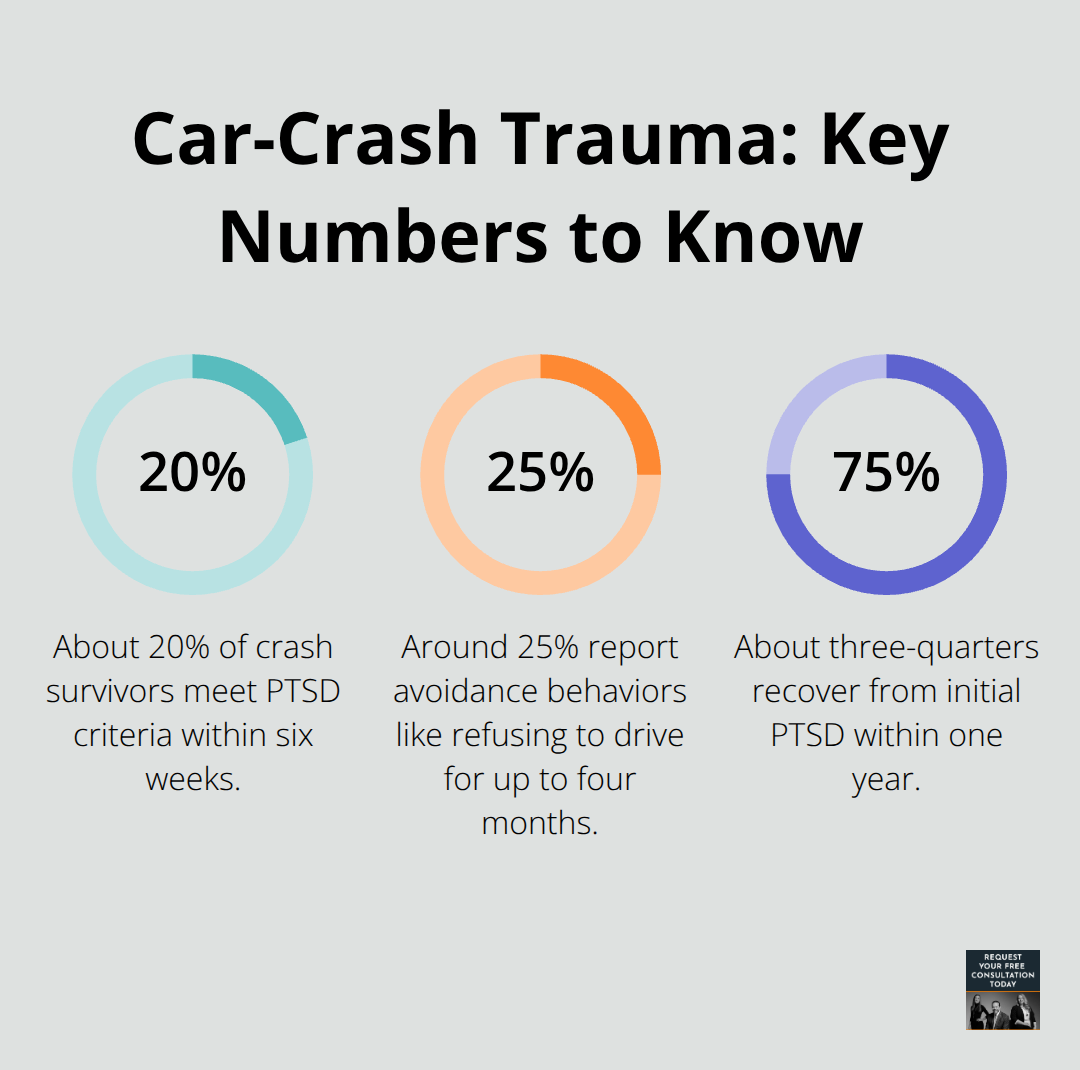
Emotional trauma after a car crash doesn’t fade with time alone. About 20 percent of crash survivors meet PTSD criteria within six weeks, according to DSM-5 diagnostic standards used by mental health providers. Some experience even higher rates depending on how PTSD is measured.
Your brain and body respond to the threat of a crash with fear responses that can persist for months or years if left unaddressed. You might feel sudden panic when sitting in a car, experience intrusive memories of the crash at random moments, or notice that you’re avoiding driving altogether.
Avoidance and Behavioral Changes
Around 25 percent of crash survivors report avoidance behaviors like refusing to drive or ride in vehicles for up to four months. These aren’t signs of weakness or overreaction-they’re documented neurological responses to trauma that affect your quality of life across work, relationships, and daily functioning. Your brain essentially gets stuck in threat-detection mode, making it difficult to feel safe even in normal situations.
The Physical-Emotional Connection
The connection between your physical injuries and emotional trauma matters more than many people realize. Research shows that the severity of physical injuries sustained in a crash directly correlates with higher PTSD symptoms early in recovery. Beyond PTSD, crash survivors commonly experience anxiety, depression, and sleep disruption that compound healing. This is why waiting to see if symptoms resolve on their own is a risky strategy.
Recovery Rates and Treatment Options
About three-quarters of people who initially meet PTSD criteria recover within one year, but that means one-quarter don’t, and their symptoms can worsen without proper treatment. Evidence-based approaches like Cognitive Behavioral Therapy and Prolonged Exposure Therapy have strong track records reducing PTSD symptoms in crash survivors, with some brief CBT formats proving just as effective as longer programs. These treatments typically take about three months, though individual timelines vary based on symptom severity and personal circumstances.
Moving Toward Professional Care
The path forward requires connecting with mental health providers who understand trauma from crashes specifically. This removes the burden of finding appropriate care while you focus on healing. Your next step involves identifying the right treatment approach and building the support network that sustains recovery.
Taking Action on Your Mental Health
Finding Evidence-Based Treatment in California
Finding the right mental health provider in California requires knowing what treatment actually works. Cognitive Behavioral Therapy and Prolonged Exposure Therapy stand out as the most effective approaches for crash-related PTSD, with research showing that brief CBT formats prove just as powerful as extended programs. When you search for a provider, look specifically for someone trained in trauma-focused methods rather than general counseling. Many therapists in Santa Cruz County, Sacramento, and Oakland now offer telehealth options, which matters because transportation anxiety after a crash makes in-person appointments difficult for some survivors.
Call ahead and ask directly whether a provider uses evidence-based trauma treatment and how many crash survivors they’ve treated. Insurance coverage varies significantly, so verify your mental health benefits before your first appointment. California timelines for processing mental health claims typically follow the same 40-day approval window as medical claims, meaning you won’t wait weeks wondering if your sessions are covered.
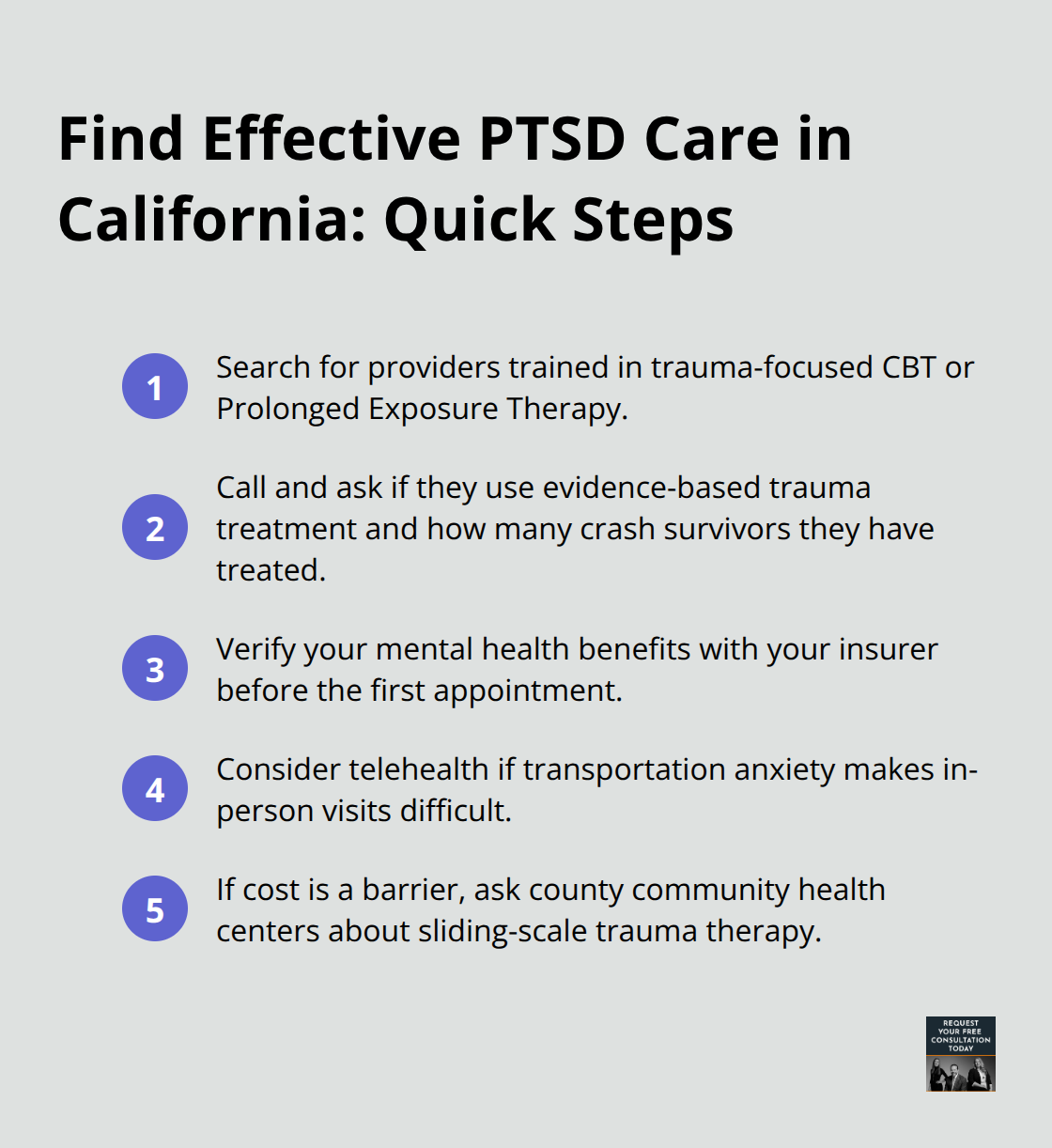
If cost becomes a barrier, community health centers in your county often provide sliding-scale trauma therapy.
What to Expect in Your First Appointment
The first appointment should include a thorough trauma assessment that identifies your specific symptoms, whether you meet PTSD criteria, and what treatment timeline makes sense for your situation. Avoid providers who claim they can resolve your trauma in a handful of sessions or who dismiss your symptoms as normal stress. Roughly three-quarters of crash survivors who start evidence-based treatment see significant improvement within three months, but starting treatment matters more than finding the perfect provider.
Building Your Support Network
Your support network directly influences how quickly you recover. People in your life need to understand that emotional trauma isn’t weakness or attention-seeking, and they benefit from learning what PTSD symptoms actually look like so they recognize when you’re struggling. Research shows that family involvement in your recovery process strengthens outcomes, particularly when family members attend education sessions about trauma responses.
Managing Sleep and Anxiety Symptoms
Sleep disruption and anxiety feed each other in a difficult cycle. Try a consistent sleep schedule with no screens one hour before bed, keep your bedroom cool and dark, and avoid caffeine after early afternoon. Managing anxiety requires practical tools you can use when panic strikes: controlled breathing exercises, grounding techniques that anchor you to the present moment, and gradual exposure to driving situations as your therapist guides you.
Many survivors find that light exercise like walking or swimming reduces anxiety symptoms within days, though intense exercise sometimes triggers flashbacks if done without proper support. Document how your anxiety and sleep patterns change week to week so you have concrete evidence of progress to share with your provider. If nightmares or intrusive thoughts worsen rather than improve after six weeks of treatment, contact your provider immediately rather than waiting longer.
Connecting Mental Health Care to Your Legal Recovery
The emotional healing you pursue directly affects your ability to document damages and move forward with your claim. When you work with a legal team that understands how trauma impacts recovery, they can help coordinate your mental health treatment with the compensation process. At Schaar & Silva LLP, we connect you with specialists who can offer the psychological support you may require while we handle the legal side of your case. This coordination removes barriers to your healing and strengthens your path toward full recovery.
How Legal Support Strengthens Your Healing
Medical Bills and Your Path to Treatment
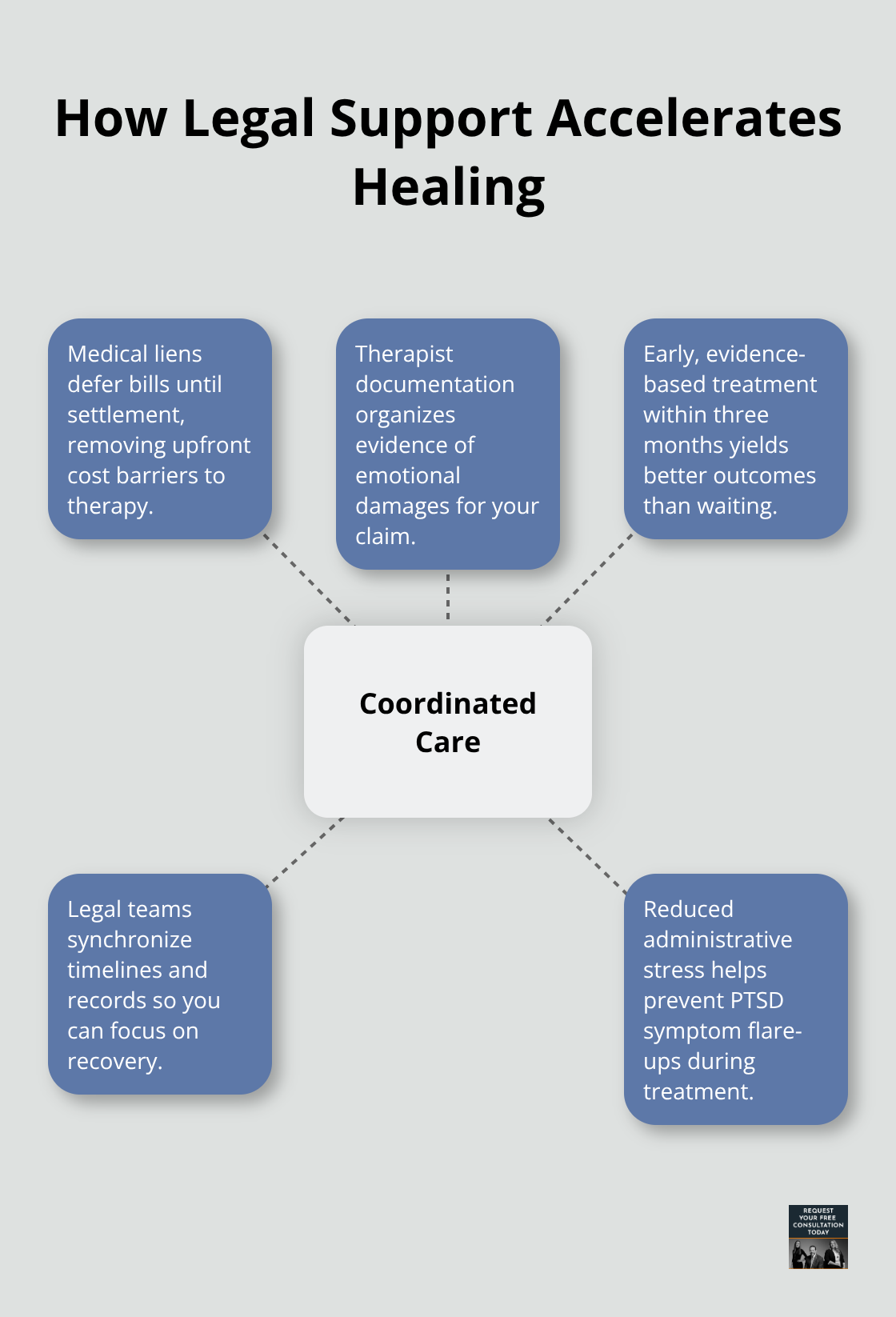
Medical bills pile up fast after a crash, and fighting with insurance companies while managing PTSD symptoms exhausts you. The reality is that your medical expenses and emotional recovery connect legally, and handling them separately creates unnecessary stress that slows your healing. When you work with a legal team that understands this connection, they coordinate your care so you’re not juggling conflicting timelines or missing documentation deadlines. At Schaar & Silva LLP, we help direct you to medical lien services that handle your bills until your case resolves, which removes a major barrier to accessing the mental health treatment you need. California law allows medical providers to place liens on your settlement, meaning you can receive treatment now without worrying about immediate payment. This matters because delays in starting trauma therapy directly reduce your recovery odds. Research shows that people who begin evidence-based treatment within the first three months after a crash see significantly better outcomes than those who wait.
Documentation That Strengthens Your Claim
Your legal case and mental health recovery intersect in practical ways that most people miss. Documentation from your therapist strengthens your claim by establishing the severity of your emotional damages, which California courts recognize as compensable losses alongside physical injuries. When you work with legal professionals who have experience coordinating with mental health providers, they ensure your treatment records stay properly organized for your claim rather than scattered across different providers. This coordination also reduces the stress of managing multiple systems at once, which is critical because high stress levels can trigger PTSD symptoms and interrupt your healing progress.
Connecting Treatment to Compensation
At Schaar & Silva LLP, we connect you with specialists who can offer the psychological support you may require while we handle the legal side of your case. This means your therapist focuses on your healing while your legal team handles the administrative burden of connecting your treatment to your compensation. The result is faster access to the care you need and a stronger path toward recovering damages that reflect the full impact of your emotional trauma.
Final Thoughts
Emotional trauma recovery in California after a car crash requires professional support and a coordinated approach that addresses both your healing and your legal situation. About three-quarters of crash survivors who start evidence-based treatment see meaningful improvement within three months, which means taking action now directly impacts your recovery timeline. Your next step involves contacting a trauma-informed mental health provider in your area and scheduling an assessment-look for someone trained in Cognitive Behavioral Therapy or Prolonged Exposure Therapy, the approaches with the strongest research backing for crash-related PTSD.
Connect with a legal team that understands how emotional trauma and compensation claims intersect. At Schaar & Silva LLP, we handle the administrative burden of your case while you focus on healing, and we direct you to medical lien services so you can access mental health treatment now without waiting for your settlement. This coordination removes the stress of managing multiple systems at once, which matters because high stress levels interrupt your healing progress.
California recognizes emotional trauma as a compensable loss alongside physical injuries. Your therapist’s documentation establishes the severity of your damages, and your legal team ensures this evidence supports your claim. Contact Schaar & Silva LLP today to discuss how we can support your healing journey while protecting your legal rights.
