
A car accident can turn your life upside down in seconds. Medical bills pile up, your vehicle needs repairs, and you’re left wondering how to cover lost wages while you recover.
At Schaar & Silva LLP, we’ve helped countless residents across Santa Cruz County, Sacramento, and Oakland navigate the aftermath of auto accidents. A California auto injury attorney can handle the paperwork, fight with insurance companies, and protect your right to fair compensation so you can focus on healing.
What Damages Can You Recover After an Auto Accident
California’s Fault-Based System and Your Right to Compensation
California operates under a fault-based insurance system, which means the driver who caused the accident bears responsibility for compensating the injured party. This differs fundamentally from no-fault states where each driver’s own insurance covers their losses regardless of who caused the crash. Under California law, you hold the right to pursue damages from the at-fault driver’s insurance company or through a lawsuit. The California Department of Insurance reports that property damage claims must be valued at the vehicle’s actual cash value, defined as the fair market value before the accident. If repairs cost less than this value, you receive the repair cost; if repairs exceed the value, the vehicle becomes a total loss and you receive the actual cash value minus your deductible. For total loss settlements, the insurer must account for taxes, license, and transfer fees to give you an accurate picture of what you’ll receive.
Economic Damages: Quantifiable Losses
Economic damages cover all measurable financial losses tied directly to your injury. Medical expenses, lost wages, rehabilitation costs, property damage, and future medical care all fall into this category. The California Department of Insurance defines actual cash value as the fair market value of your vehicle before the accident, which forms the basis for property damage payouts. You can recover repair costs if they fall below the vehicle’s value, or the full actual cash value if the vehicle is declared a total loss. These damages accumulate quickly after an accident, and documenting each expense strengthens your claim significantly.
Non-Economic Damages and Wrongful Death Claims
Non-economic damages cover pain and suffering, loss of enjoyment of life, emotional distress, and loss of household services. If you’ve experienced a wrongful death, eligible survivors (including spouses, children, and registered domestic partners) can recover funeral and burial costs, loss of future income and financial support, and loss of love and affection. Wrongful death cases can reach into the millions depending on the victim’s age, number of dependents, and income level; California SB 447 may affect damages calculations through 2026. You should also pursue a survival action alongside a wrongful death claim to recover the deceased’s pain and suffering and medical expenses, as these are governed separately under California Code of Civil Procedure Section 377.30.
Filing Deadlines and Preserving Your Claim
You have two years from the date of injury to file a claim under California Code of Civil Procedure Section 377.60, so acting quickly to preserve evidence and document your losses protects your rights. The window closes fast, and delays can result in lost evidence or weakened claims. Gathering medical records, accident reports, photos, and witness statements immediately after the crash strengthens your position significantly.
Understanding the full scope of damages available to you sets the foundation for building a strong claim. The next step involves knowing how an attorney can help you navigate the insurance process and fight for the compensation you deserve.
What an Attorney Does for Your Auto Injury Case
Investigation and Evidence Gathering
An attorney transforms how your claim unfolds from the moment you hire them. Investigators photograph the accident scene, identify traffic camera footage, pull vehicle black box data that reveals speed and braking details, and locate witnesses before their memories fade. Digital evidence matters enormously in 2026. Dashcam footage, telematics data from your vehicle, and autonomous vehicle sensors increasingly establish facts that insurers cannot dispute. Your attorney coordinates with accident reconstruction specialists when necessary, compiling a factual record so strong that insurers recognize the weakness in their position.
Negotiation and Settlement Strategy
Insurance companies count on you handling this alone and accepting their low initial offer. When an attorney enters the case, the dynamic shifts immediately. The California Department of Insurance reports that claim resolution times average around 108 days in 2026, but this timeline extends significantly without proper negotiation. An experienced attorney accelerates this through structured demand letters backed by medical evidence, wage loss documentation, and repair estimates. Attorneys present valuations that reflect the true cost of your injuries, not the bare minimum the insurer wants to pay.
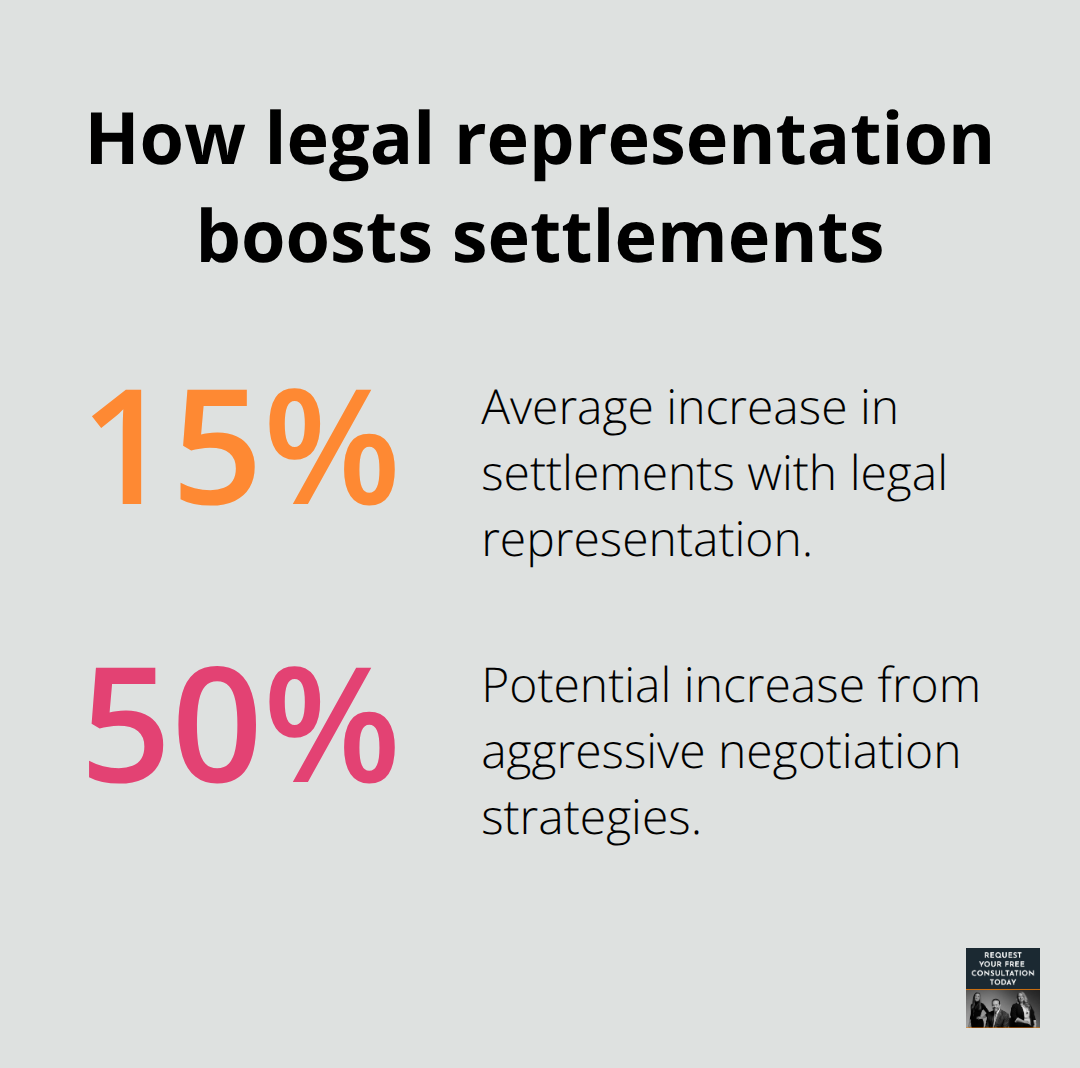
Settlements with legal representation tend to run about 15% higher on average than those without, and aggressive negotiation can yield increases of 50% or more. This happens because attorneys know the settlement patterns in your county, understand which injuries command higher values, and recognize when an insurer acts in bad faith.
Court Representation and Trial Preparation
Court representation becomes necessary when negotiation fails, and this is where preparation matters most. An attorney files all motions on time, manages discovery to extract critical documents from the other side, and builds your trial narrative months in advance. If your case reaches trial, the attorney presents evidence in a way that resonates with jurors, handles cross-examination of opposing witnesses, and protects your record for any appeal. Most cases settle before trial, but the insurer knows you have an attorney willing to litigate, which shifts their calculation entirely.
Managing Procedural Requirements and Medical Coordination
An attorney handles the procedural requirements that trip up unrepresented claimants. You must file within the statute of limitations, serve documents correctly, respond to discovery requests, and comply with California Code of Civil Procedure rules. Missing deadlines costs you the case entirely. Your attorney manages medical provider liens, ensures bills are paid from settlement proceeds in the correct order, and coordinates with your doctors so medical records arrive complete and persuasive.
Wrongful Death and Survival Actions
If your case involves a wrongful death or survival action, the procedural complexity multiplies significantly. An attorney knows which family members have standing to sue, how to calculate damages for lost income and companionship, and whether punitive damages apply under your circumstances. This level of coordination and legal knowledge turns a claim into meaningful recovery. Understanding what an attorney handles behind the scenes reveals why the next step-avoiding common mistakes after your accident-protects your claim from the very beginning.
Common Mistakes to Avoid After an Auto Accident
The moments immediately following an accident determine whether your claim succeeds or fails. What you say at the scene, how you respond to the insurance company, and what documentation you gather all shape the outcome months later. The California Department of Insurance warns that staged accidents, inflated claims, and misleading statements to insurers constitute fraud, yet many accident victims inadvertently create problems through careless words or incomplete documentation.
Never Admit Fault at the Scene
Do not admit fault or apologize at the accident scene, even if you think you caused the crash. Statements like “I’m sorry” or “It was my fault” get reported to insurance companies and used against you in settlement negotiations. The at-fault determination belongs to investigators and insurers, not to you speaking under stress while injured. Insurance adjusters document every word you say, and those statements become permanent parts of your claim file.
Photograph and Document Everything Immediately
Photograph the entire scene from multiple angles, capture vehicle damage, road conditions, traffic signals, and weather. Take pictures of the other driver’s license, registration, and insurance card. Gather names and contact information from every witness, not just one. The California Department of Insurance confirms that insurance companies must acknowledge claims within 15 days and respond to accept or deny within 40 days, but this timeline assumes you provide complete documentation upfront. Missing photos or witness statements force delays and give insurers room to dispute liability.
Reject Initial Settlement Offers
Accepting the first settlement offer from an insurance company is financially damaging. That initial number reflects what the insurer hopes you’ll accept, not what your claim is worth. Digital claims management expanded from 45% in 2024 to 83% in 2026, meaning you receive settlement offers faster than ever, often before your medical treatment finishes. Do not sign anything until your injuries stabilize and you understand the full scope of damages. Medical expenses continue accruing, and settlement figures must account for future treatment, not just current bills.
Maintain Complete Medical Documentation
Failing to document medical treatment systematically undermines your damages claim. Keep every receipt, medical report, and wage loss statement. Follow your doctor’s treatment recommendations completely; gaps in medical care give insurers ammunition to argue your injuries were minor or that you failed to mitigate damages. The California Department of Insurance requires repair invoices to identify each part as OEM, aftermarket, rebuilt, or reconditioned, so review invoices carefully and challenge any use of substandard parts. If you disagree with a settlement or suspect unfair treatment, you can file a complaint with the California Department of Insurance and check your insurer’s license status.
Final Thoughts
An auto accident creates immediate pressure to settle quickly and move forward, but rushing this decision costs you thousands in lost compensation. A California auto injury attorney handles the complexity you face alone, from gathering evidence that insurers cannot dispute to negotiating settlements that reflect your actual losses. We at Schaar & Silva LLP understand that medical bills, vehicle repairs, and lost wages accumulate while you’re still recovering, and the insurance company’s initial offer rarely covers these costs fully.
Victims with legal help receive settlements approximately 15% higher on average, and strategic negotiation can yield increases of 50% or more. Your attorney manages the procedural requirements that trip up unrepresented claimants, coordinates with medical providers to ensure complete documentation, and handles the statute of limitations so your claim doesn’t expire. If your case involves wrongful death or a survival action, the legal complexity multiplies, making experienced guidance essential to protect your family’s rights.
Gather your accident report, medical records, and photos immediately, then contact Schaar & Silva LLP for a free case evaluation. We serve Santa Cruz County, Sacramento, and Oakland, and we offer medical bill assistance, property damage claim evaluation, and connections to psychological support when trauma affects your recovery. Your focus belongs on healing, not on fighting with insurance companies or navigating California’s fault-based system alone.
