

A car accident can leave you facing unexpected medical bills that pile up fast. Between emergency room visits, follow-up appointments, and ongoing treatment, the costs add up before you even know what you owe.
At Schaar & Silva LLP, we help people in Santa Cruz County, Sacramento, and Oakland navigate these financial challenges after an accident. This guide shows you how to manage your medical expenses and recover the compensation you deserve.
What Actually Costs Money After a Car Accident
Emergency and Immediate Care Expenses
Emergency room visits, ambulance rides, imaging scans, surgery, and rehabilitation create medical expenses that span far more territory than most accident victims realize. A single ambulance ride costs between $400 and $1,200 depending on distance and level of care. An emergency room visit averages $1,000 to $3,000 before any imaging or treatment. If you need a CT scan or MRI to diagnose internal injuries, add another $1,000 to $3,000 to your bill.
The Staggered Billing Problem
Different providers bill at different times, which creates a frustrating reality: you cannot calculate your true financial damage until long after the accident occurred. A hospital sends its bill within 30 days, but a specialist’s office might take 60 or 90 days. Physical therapy clinics bill monthly, and imaging centers sometimes send bills after insurance processes claims. This staggered approach means medical bills arrive in waves across several months.
High-Cost Injury Types
Head injuries and neck injuries carry particularly high expenses, with hospitalization costs reaching substantial amounts according to insurance data. Mental health care related to your accident-therapy for PTSD, anxiety, or depression triggered by the crash-absolutely counts as a recoverable medical expense and should never be excluded from your calculations.
Length of Hospital Stay and Total Costs
Length of hospital stay dramatically affects total costs, with extended stays creating exponentially higher medical debt. Beyond direct medical treatment, you can claim compensation for home or vehicle modifications needed because of your injuries, damaged personal belongings in the vehicle, and lost wages if the injury prevented you from working.
Beyond Hospital Bills
The financial burden extends far beyond what appears on a hospital bill. Understanding these various cost categories helps you prepare for the full scope of expenses you may face. Once you grasp what you owe, the next step involves exploring how medical expenses and payment options can help you access treatment without bearing the entire financial weight yourself.
How to Cover Medical Bills While Your Case Proceeds
Medical Liens Remove the Payment Barrier
A medical lien allows you to receive treatment immediately without paying out of pocket, with the understanding that your medical provider gets paid from your settlement or court award once your case concludes. This arrangement exists because many healthcare providers recognize that accident victims often lack immediate funds to cover treatment costs. When you sign a medical lien agreement, the provider bills your case rather than your personal health insurance or your own wallet. The provider then waits for compensation from the at-fault driver’s insurance settlement or your personal injury judgment. This system removes the barrier between you and necessary medical care during your recovery period.
Finding Providers Who Accept Medical Liens
Not all providers accept medical liens, and those who do typically require documentation that you have a legitimate personal injury claim. Hospitals and imaging centers in California accept medical liens more readily than smaller practices, though many orthopedic clinics, physical therapy facilities, and neurological specialists have established relationships with personal injury attorneys and understand the process. When searching for providers who accept medical liens, call ahead and ask directly rather than assuming they will. Tell them you have an active personal injury case from a car accident and ask whether they work with medical liens. Providers who frequently serve accident victims maintain streamlined processes for lien documentation.
Tracking Your Medical Expenses
Managing multiple medical bills simultaneously creates stress beyond the physical recovery you are already enduring. Bills from your hospital stay, specialist appointments, imaging centers, and rehabilitation facilities arrive on different schedules, making it difficult to track what you owe and what remains outstanding. Create a dedicated folder (digital or physical) where you place every medical bill you receive. Write the date received, the provider name, the amount owed, and whether a medical lien covers it. This single document becomes invaluable when settling your case because it provides a complete accounting of all medical expenses related to your accident.
Negotiating Payment Holds and Protecting Your Credit
Some providers will agree to hold bills unpaid while your case proceeds, but you must request this explicitly and get confirmation in writing. Never ignore bills or assume they will disappear. Unpaid medical debt can damage your credit score and lead to collection agency involvement, complications you do not need during recovery. If a provider demands immediate payment despite your medical lien arrangement, contact the attorney handling your case immediately. Disputes over medical lien priority and payment terms happen frequently enough that your legal representation should intervene on your behalf to protect your rights and preserve the lien arrangement you negotiated.
Moving Forward With Your Claim
Your organized medical records and secured medical liens position you to move forward with confidence. The next step involves taking action to recover compensation for these expenses from the at-fault driver’s insurance company, which requires careful documentation and strategic negotiation to maximize what you receive.
Getting Paid for Your Medical Bills
Establishing Clear Causation for Your Claim
Filing a claim against the at-fault driver’s insurance requires more than submitting a bill. You must establish clear causation between the accident and your injuries, which means gathering medical records that explicitly link your treatment to the crash. Request complete medical records from every provider who treated you, including emergency room notes, imaging reports, surgical records, and follow-up appointment summaries. These documents form the foundation of your claim because insurance adjusters scrutinize whether each expense directly resulted from the accident or pre-existed.
Organizing Your Documentation for Maximum Impact
When you submit your claim, include a cover letter that walks the adjuster through your medical timeline: the accident date, the date of your first medical visit, and how your treatment progressed. Insurance companies process thousands of claims annually and respond better to organized, chronological presentations than to scattered documents. Your organized folder from tracking bills becomes invaluable here because it demonstrates you took the recovery process seriously and maintained meticulous records.
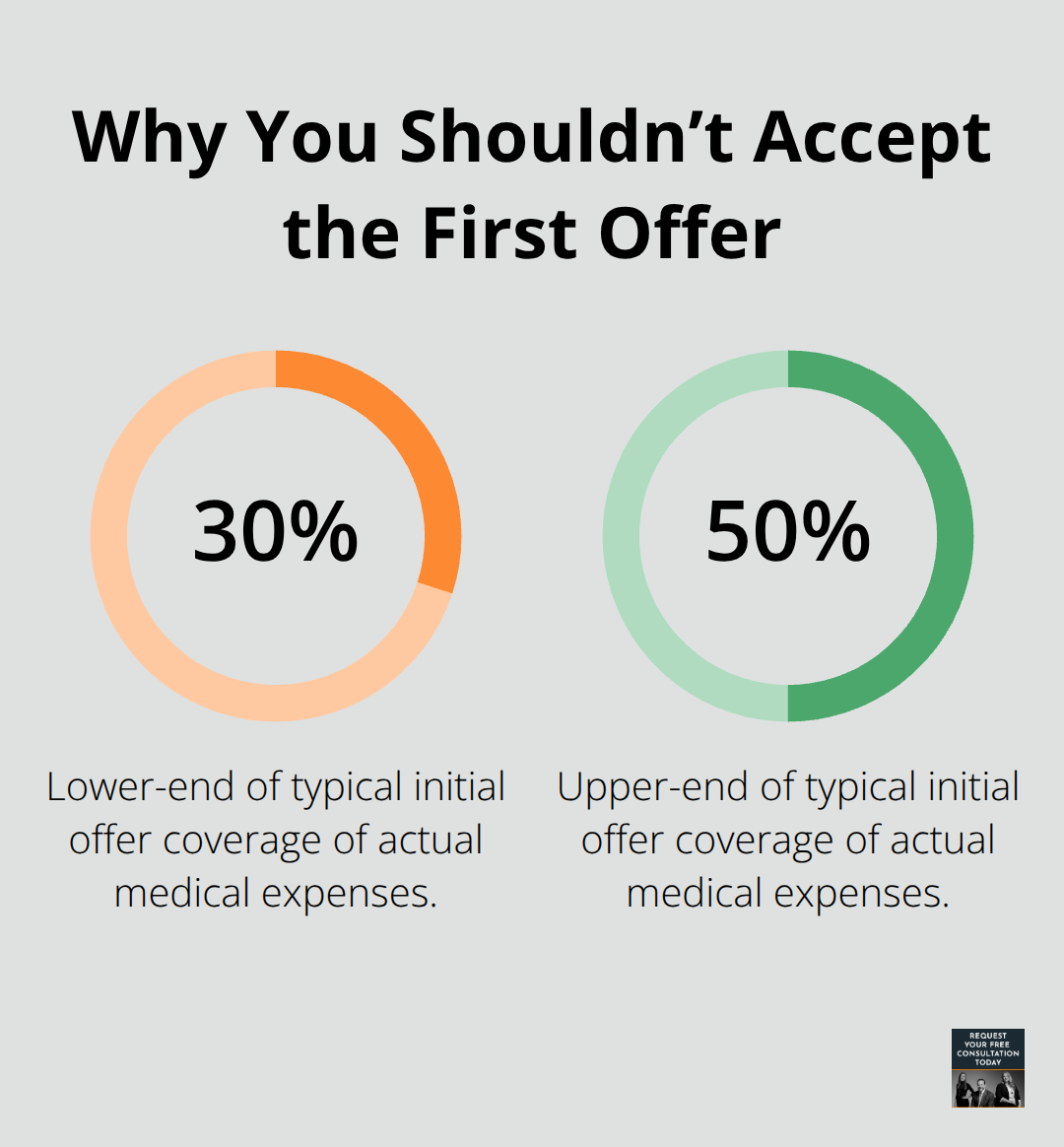
Insurance adjusters deliberately lowball initial offers knowing many accident victims lack legal representation and will accept inadequate compensation out of desperation or fatigue. Never accept an initial settlement offer without consulting an attorney, as early offers from insurance companies typically cover only 30 to 50 percent of actual medical expenses.
Understanding California’s Full Liability Standard
Negotiating fair settlement requires understanding what the at-fault driver’s insurance company actually owes you under California law. Under California law, a negligent driver is responsible for paying the full medical bills, regardless of whether your health insurance has already paid part of them. This means you can pursue the at-fault driver’s insurance for the complete amount, even if your health plan covered some costs. If you settle too early, you forfeit your ability to recover future medical expenses related to the accident, which matters significantly for injuries requiring ongoing treatment like physical therapy or mental health care.
Capturing All Recoverable Expenses Beyond Medical Bills
Document everything that extends beyond direct medical bills: lost wages if you missed work during recovery, home modifications needed because of your injuries, damaged personal belongings in your vehicle, and transportation costs if you could not drive yourself to appointments. Many accident victims overlook these categories and leave money on the table during settlement. When you receive a settlement offer, compare it against your complete expense list plus a reasonable estimate for pain and suffering damages. California courts recognize non-economic damages like emotional distress, physical pain, and loss of consortium as compensable injuries separate from medical bills.
Pursuing Maximum Recovery Through Negotiation or Litigation
An initial settlement offer that fails to account for non-economic damages undervalues your claim substantially. If the insurance company refuses to negotiate reasonably, litigation becomes necessary, and having comprehensive documentation positions you to pursue maximum recovery through the court system. Schaar & Silva LLP can help direct you to medical lien services and assist with evaluating your claim’s full value, allowing you to understand what fair compensation actually looks like before accepting any offer.
Final Thoughts
Managing car accident medical bills requires organization, persistence, and strategic action to protect yourself from financial devastation. You now understand how costs accumulate across emergency care, specialist visits, imaging, and ongoing treatment, and you know that medical liens remove the barrier to immediate care while your case proceeds. Documenting every expense and organizing your records positions you to negotiate fair compensation rather than accept inadequate settlement offers from insurance companies.
California law holds the at-fault driver responsible for your complete medical bills, not just the portion your health insurance covered, which means you have leverage in negotiations if you document your case thoroughly and understand your claim’s actual value. Insurance adjusters count on accident victims accepting lowball offers out of desperation or confusion about what they deserve, but you now have the knowledge to avoid that trap. Refuse any settlement offer until you have consulted with legal representation who can evaluate whether the amount covers your full car accident medical bills plus non-economic damages like pain and suffering.
We at Schaar & Silva LLP help people in Santa Cruz County, Sacramento, and Oakland navigate these exact challenges after a crash. Contact us to discuss your case and understand what fair compensation actually looks like for your situation.
