

A car crash can leave you facing medical bills, lost income, and mounting expenses while you recover. Personal injury protection is designed to cover these costs, but many drivers in Santa Cruz County don’t fully understand what their policy actually pays for.
In the event of a crash, personal injury protection can be the difference between financial stability and serious hardship. We at Schaar & Silva LLP want to walk you through exactly how this coverage works and what it means for your situation.
What Personal Injury Protection Actually Covers
Medical Expenses and Treatment Costs
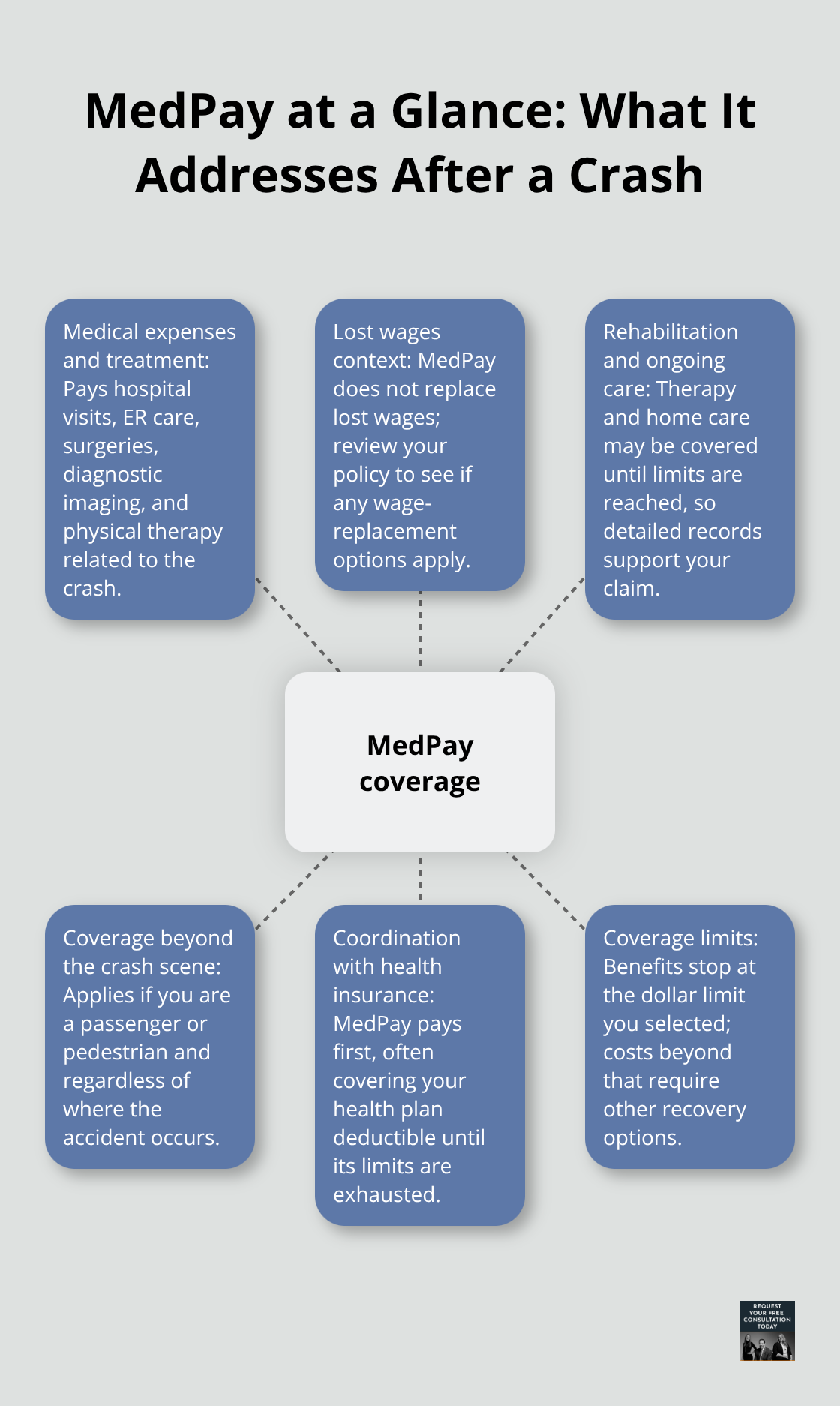
Personal Injury Protection in California comes through Medical Payments coverage, and it addresses three major categories of accident-related costs that hit your wallet immediately after a crash. Medical expenses and treatment costs form the foundation of this coverage, paying for hospital visits, emergency room treatment, surgeries, diagnostic imaging, physical therapy, and ongoing medical care related to your injuries. If you’re in a crash in Santa Cruz County, your MedPay coverage typically pays these bills directly to healthcare providers, which means you don’t wait for a settlement to access treatment.
Lost Wages During Recovery
Lost Wages During Recovery represents income you lose while healing, and this is where many drivers underestimate their needs. If you work in Santa Cruz County and can’t return to your job for weeks or months, that lost income compounds quickly. MedPay doesn’t cover lost wages the way no-fault states do, but if your policy includes Medical Payments coverage, you should verify what wage-replacement options exist through your specific plan.
Rehabilitation and Ongoing Care Expenses
Rehabilitation and Ongoing Care Expenses extend beyond initial treatment and include physical therapy, occupational therapy, mental health counseling, and home care services that support your recovery. After a crash, these continuing costs often exceed the initial medical bills, yet drivers frequently overlook them when selecting coverage limits. The California Department of Insurance requires that you provide documentation of injuries, medical expenses, and lost wages to support your claim, so you must keep detailed records from day one.
Coverage Limits and Protection Gaps
Your coverage limits determine how much protection you actually receive, and many Santa Cruz drivers carry limits far too low for serious injuries. If you’re injured as a passenger in someone else’s vehicle or hit as a pedestrian in Santa Cruz County, you can still file a Medical Payments claim under your own policy, which offers protection regardless of where the accident occurs. When your damages exceed what MedPay covers, other options may exist, and understanding your full policy becomes essential for your recovery and financial security.
Getting Your Medical Payments Claim Processed
File Your Claim Immediately After the Crash
After a crash in Santa Cruz County, the speed at which you file your claim directly impacts when you receive benefits. Contact your insurance agent or company immediately-the California Department of Insurance requires acknowledgment within 15 days of your claim submission, and insurers must respond to communications within that same window. Waiting days or weeks to report your accident weakens your position and delays access to funds you need for medical treatment. When you call, have your policy number ready, document the date and time of the accident, and provide the names and contact information of any witnesses.
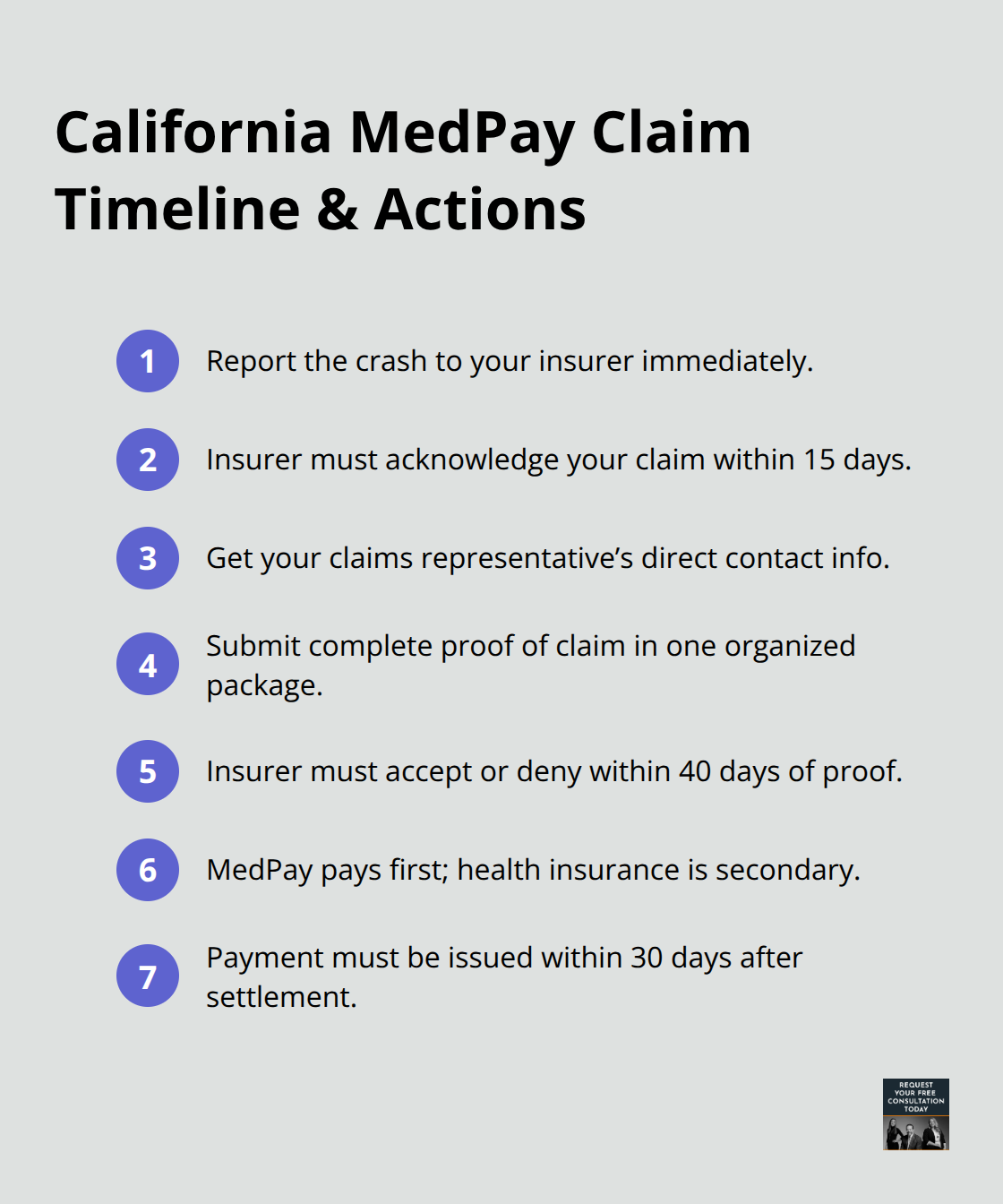
Your insurer will assign a claims representative, and you should ask for their direct contact information and expected timeline for processing.
Submit Complete Documentation Within 40 Days
Within 40 days of submitting proof of your claim-medical bills, receipts, treatment records, and documentation of lost wages-your insurer must either accept or deny the claim. This 40-day window matters because delays in medical care often mean worse outcomes, and you shouldn’t wait for a settlement to receive treatment. The California Department of Insurance requires that you provide documentation of injuries, medical expenses, and lost wages to support your claim, so you must keep detailed records from day one. Organize these documents carefully and submit them all at once rather than in pieces, which can restart the clock on your insurer’s response deadline.
Understand How Your Coverage Coordinates with Other Insurance
In California, Medical Payments coverage typically pays first for accident-related medical expenses, and your health insurance pays secondary, meaning it covers costs only after MedPay reaches its limit. This coordination protects you because you avoid paying your health insurance deductible out of pocket-MedPay handles it. Some insurers may request an examination under oath as part of their investigation, and you must provide truthful information during this process.
Know Your Options if Your Claim Is Denied or Undervalued
If your claim is undervalued or denied, you have options: the California Department of Insurance can help if your insurer fails to respond within required timeframes, and many policies include an appraisal provision where two appraisers and a neutral umpire resolve disputes over claim amounts. Payment arrives within 30 days after settlement is reached, though some medical providers may work directly with your insurer on billing arrangements. If damages exceed your MedPay limits-which happen frequently in serious crashes-a personal injury claim against the at-fault driver may recover additional damages for pain and suffering or permanent injuries.
What Medical Payments Actually Covers and Doesn’t
Medical Payments Covers All Injury Severities
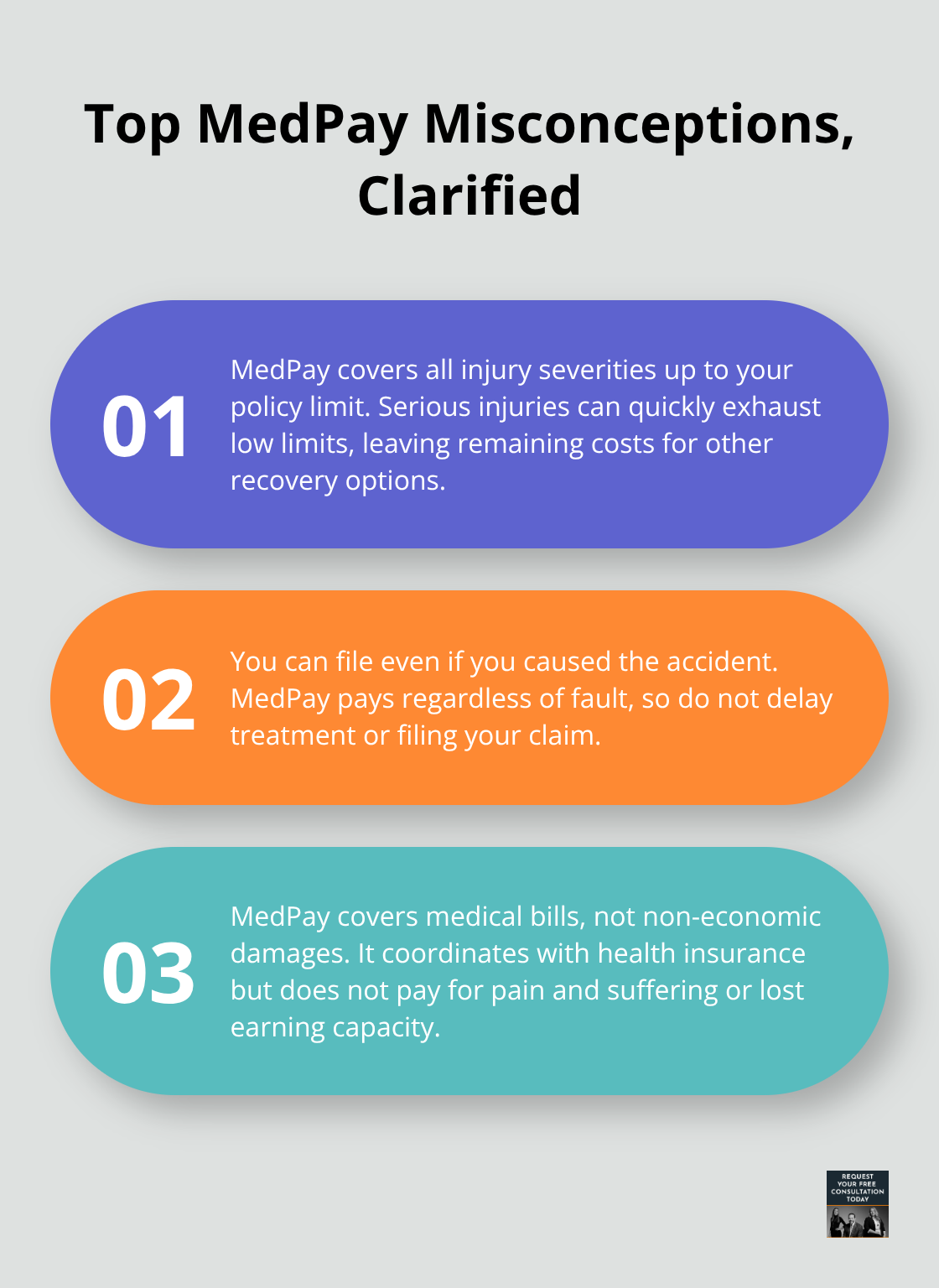
Many drivers in Santa Cruz County believe Medical Payments coverage only applies to minor injuries, but this misunderstanding costs them thousands in uncovered expenses. The truth is that MedPay covers serious injuries that require extended hospitalization, multiple surgeries, and months of rehabilitation, regardless of severity. Medical Payments coverage pays for catastrophic injuries just as readily as minor ones, up to your policy limit. The real limit isn’t injury severity but rather the dollar amount you selected when you purchased your policy. If you chose a $5,000 limit and your injuries cost $50,000 in medical care, you’re responsible for the difference. This is why Santa Cruz drivers with serious injuries often find their MedPay exhausted within weeks, forcing them to explore additional recovery options through personal injury claims against the at-fault driver.
You Can File a Claim Even If You Caused the Accident
A widespread misconception holds that you cannot file a Medical Payments claim if you caused the accident. This is completely false and represents a fundamental misunderstanding of how no-fault coverage works in California. MedPay pays for your medical expenses regardless of fault, meaning even if you were 100 percent responsible for the crash, your own policy still covers your treatment costs.
The California Department of Insurance confirms that Medical Payments coverage applies to your own injuries without regard to who caused the accident. This distinction matters enormously because many injured drivers delay treatment or avoid filing claims out of guilt or shame, leaving themselves financially exposed. If you caused the crash, file your claim immediately and receive the medical care you need. Your insurer will not deny your claim based on fault.
MedPay Covers Medical Bills, Not All Damages
The third misconception involves whether MedPay replaces all your medical costs, and the answer depends entirely on your coverage limits and what other insurance you carry. MedPay typically pays after your health insurance in the coordination of benefits, meaning your health plan covers costs first up to your deductible, then MedPay covers remaining accident-related expenses. If you have a $2,000 health insurance deductible and $10,000 in medical bills, your health plan might cover $8,000 and MedPay covers your $2,000 deductible. However, MedPay never covers pain and suffering, permanent disfigurement, lost earning capacity, or other non-economic damages that a personal injury lawsuit can recover. Santa Cruz drivers frequently assume MedPay is their only option, when in reality it simply covers immediate medical expenses while a separate claim against the at-fault driver can recover additional compensation for your suffering and long-term impacts.
Final Thoughts
In the event of a crash, personal injury protection through Medical Payments coverage becomes your financial lifeline during recovery. Your MedPay covers hospital visits, emergency treatment, surgeries, diagnostic imaging, physical therapy, and rehabilitation services regardless of who caused the accident. Check your declarations page now to confirm your limit, and if it falls below $5,000, you likely carry insufficient protection for serious injuries.
When your Medical Payments coverage reaches its limit, additional recovery options exist through personal injury claims against the at-fault driver. These claims recover damages for pain and suffering, permanent injuries, lost earning capacity, and other costs that MedPay cannot address. Navigating insurance coordination, claim deadlines, and settlement negotiations requires knowledge of California law that protects your rights.
We at Schaar & Silva LLP help Santa Cruz County accident victims understand their full recovery options and handle the legal complexities while you focus on healing. Contact us to review your situation and learn what compensation you may be entitled to receive.
