
Teenage drivers face crash rates nearly three times higher than adult drivers, with 2,800 teens dying in motor vehicle accidents annually according to the CDC.
The causes of teenage car accidents often stem from inexperience, distraction, and risky behaviors that parents can help prevent through awareness and action.
We at Schaar & Silva LLP see these preventable tragedies impact Santa Cruz County families regularly, making education about teen driving risks more important than ever.
What Really Causes Teen Car Crashes
Cell Phone Distraction Takes Control Behind the Wheel
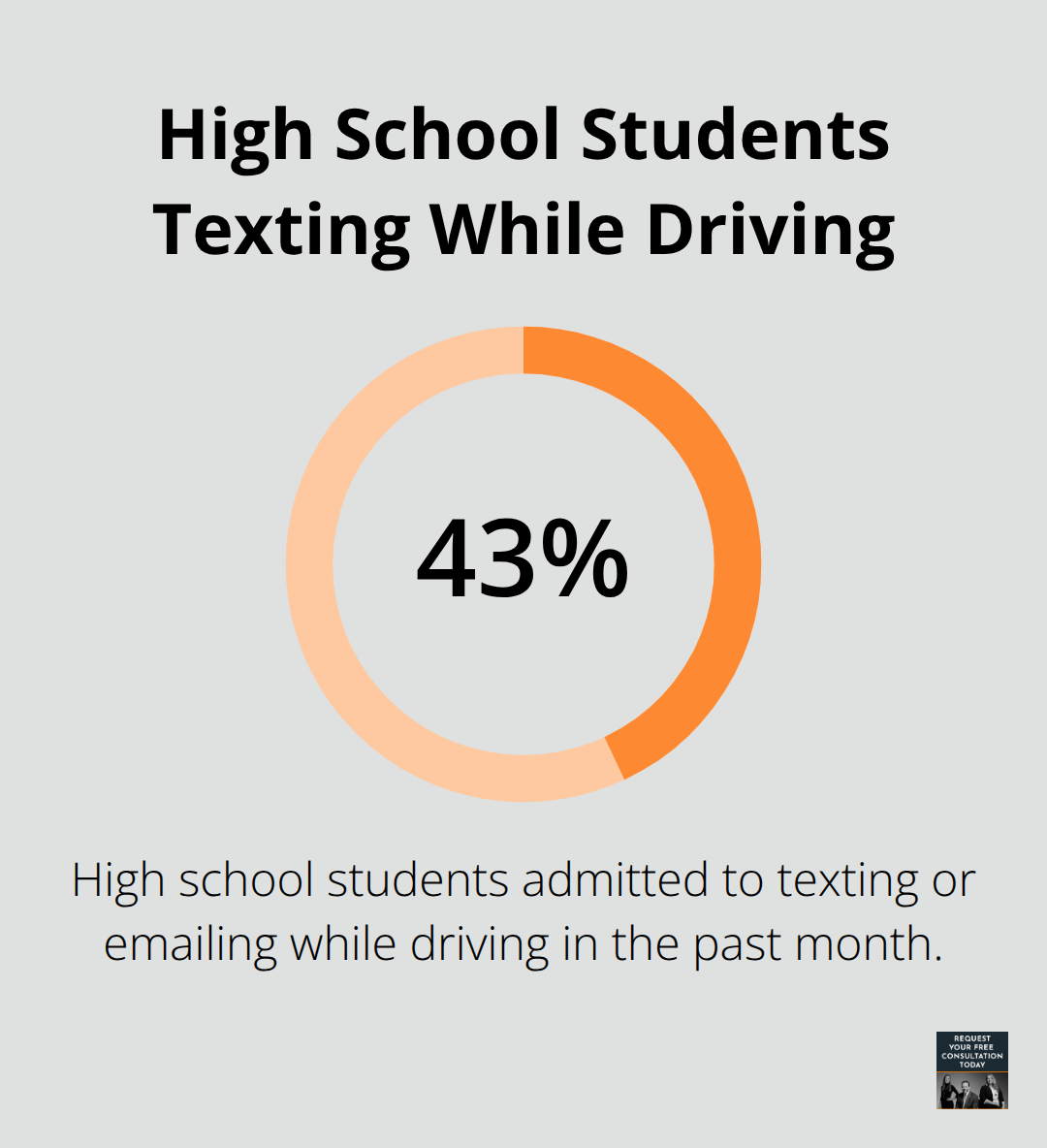
The National Highway Traffic Safety Administration reports that 9% of fatal crashes involve drivers under 20 who were distracted, with cell phones serving as the primary culprit. Texting while driving increases crash risk by 23 times, yet 43% of high school students admitted to texting or emailing while driving in the past month according to the Youth Risk Behavior Survey. Teen brains seek immediate gratification, making the ping of a notification nearly irresistible even while driving. Visual distractions that last just two seconds double the crash risk, and the average text takes a driver’s eyes off the road for five seconds.
Speed and Risk-Taking Define Teen Driving Culture
Teen drivers speed twice as often compared to adult drivers, with 31% of male teen drivers involved in fatal crashes speeding at the time of impact according to NHTSA data. The Insurance Institute for Highway Safety found that teens drive too fast for conditions, follow too closely, and make critical errors that lead to serious crashes. Poor judgment peaks during evening hours when 40% of teen crash deaths occur between 9 PM and 6 AM. Night driving combined with inexperience creates a deadly combination, as depth perception and peripheral vision decrease significantly in darkness. Teen passengers increase crash risk by 44% with one passenger and 182% with three or more passengers (turning peer pressure into a life-threatening factor).
Inexperience Amplifies Every Mistake
The first 1,000 miles of driving represent the highest crash risk period for new drivers, with crash rates dropping significantly after 18 months of licensed driving experience. Teen drivers need 5-8 seconds to recognize hazards that experienced drivers spot in 1-2 seconds, according to research from the National Institutes of Health. Weather conditions, construction zones, and complex intersections overwhelm inexperienced drivers who lack the automatic responses that come with years of practice (making every situation potentially dangerous).
These risk factors create patterns that parents can learn to identify before accidents happen.
How Can Parents Spot Risky Teen Driving Patterns
Physical Evidence Points to Dangerous Habits
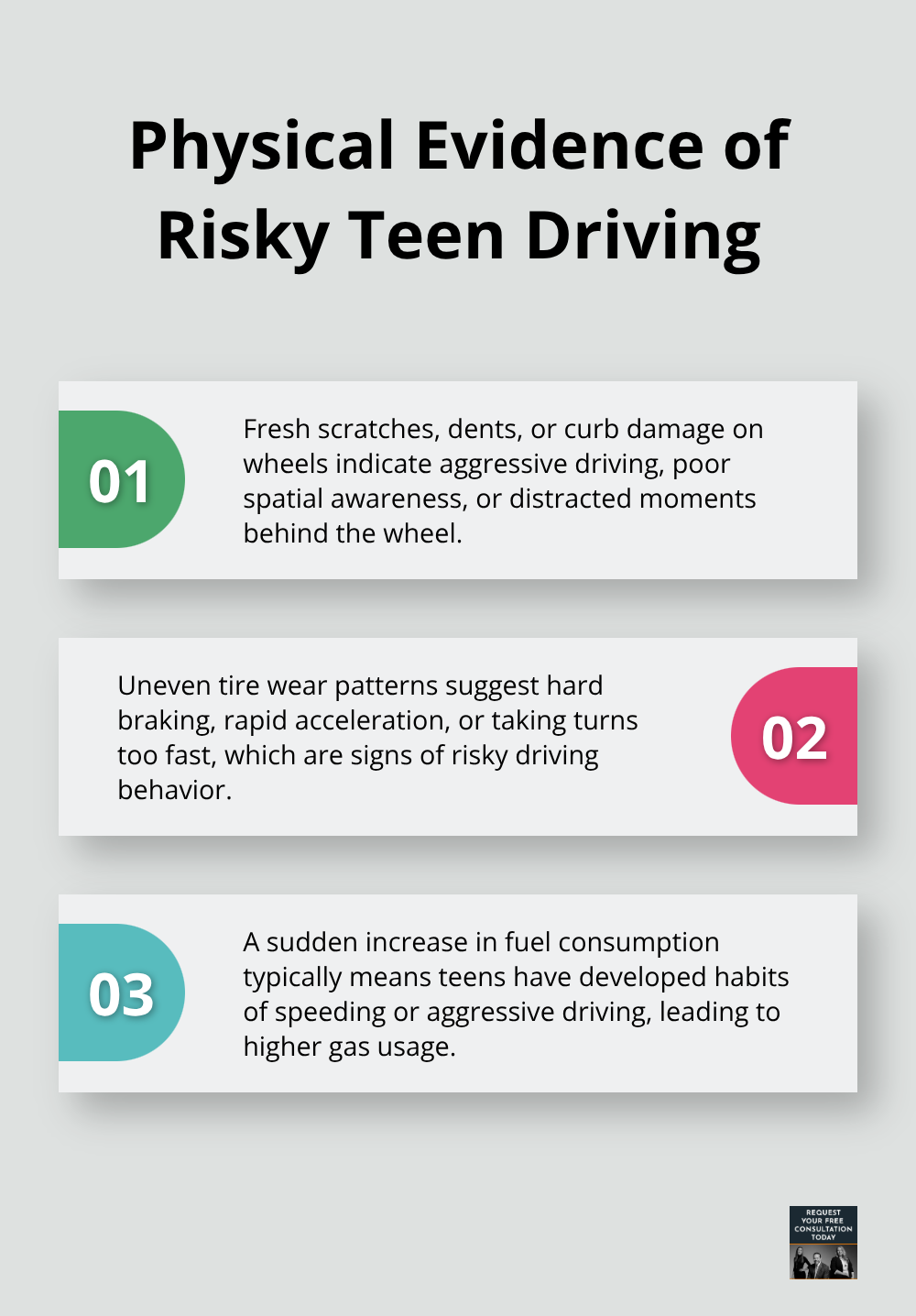
Vehicle inspection reveals the most concrete warning signs of risky teen driving behavior. Fresh scratches, dents, or curb damage on wheels indicate aggressive driving, poor spatial awareness, or distracted moments behind the wheel. The Insurance Institute for Highway Safety found that teens involved in crashes often show prior evidence of minor vehicle damage that parents overlooked. Check tire wear patterns monthly, as uneven wear suggests hard braking, rapid acceleration, or taking turns too fast. Monitor fuel consumption closely since a sudden increase in gas usage typically means teens have developed habits of speeding or aggressive driving.
Digital Footprints Expose Distracted Driving
Phone records provide undeniable proof of dangerous driving behavior that teens often deny. Request detailed usage reports from your cellular provider to identify calls, texts, and app activity during known drive times. The Virginia Tech Transportation Institute research shows that teens who use phones while driving crash at rates 400% higher than those who avoid phone use completely. Social media timestamps reveal another layer of risk, as teens who post photos or updates during typical commute hours demonstrate active phone engagement while driving.
Technology Tools Track Real-Time Behavior
Set up parental controls that block certain apps during drive times, and use family tracking apps that send alerts when phones are used while the vehicle is in motion. These digital monitoring tools remove guesswork and provide concrete evidence of risky behavior patterns that require immediate intervention. GPS tracking systems show speed violations, harsh braking events, and route deviations that indicate reckless driving (making dangerous patterns visible to parents in real-time).
Once you identify these warning signs, the next step involves implementing proven prevention strategies that actually change teen driving behavior.
How Can Parents Prevent Teen Driving Accidents
Establish Non-Negotiable Driving Rules
Create a written driving contract that specifies exact consequences for violations, not vague threats that teens dismiss easily. The American Academy of Pediatrics recommends zero-tolerance policies for phone use while driving, with immediate license suspension for any violation. Set specific curfew times based on crash statistics that show 56% of teen driving deaths occur between 6 PM and 6 AM according to NHTSA data. Include passenger restrictions that limit teen drivers to one non-family passenger for the first six months, as the Insurance Institute for Highway Safety found that crash risk increases 44% with one teen passenger and 182% with three or more passengers. Document speed limits for different road types and weather conditions, which makes expectations crystal clear rather than assuming teens understand safe driving practices.
Deploy Technology That Actually Works
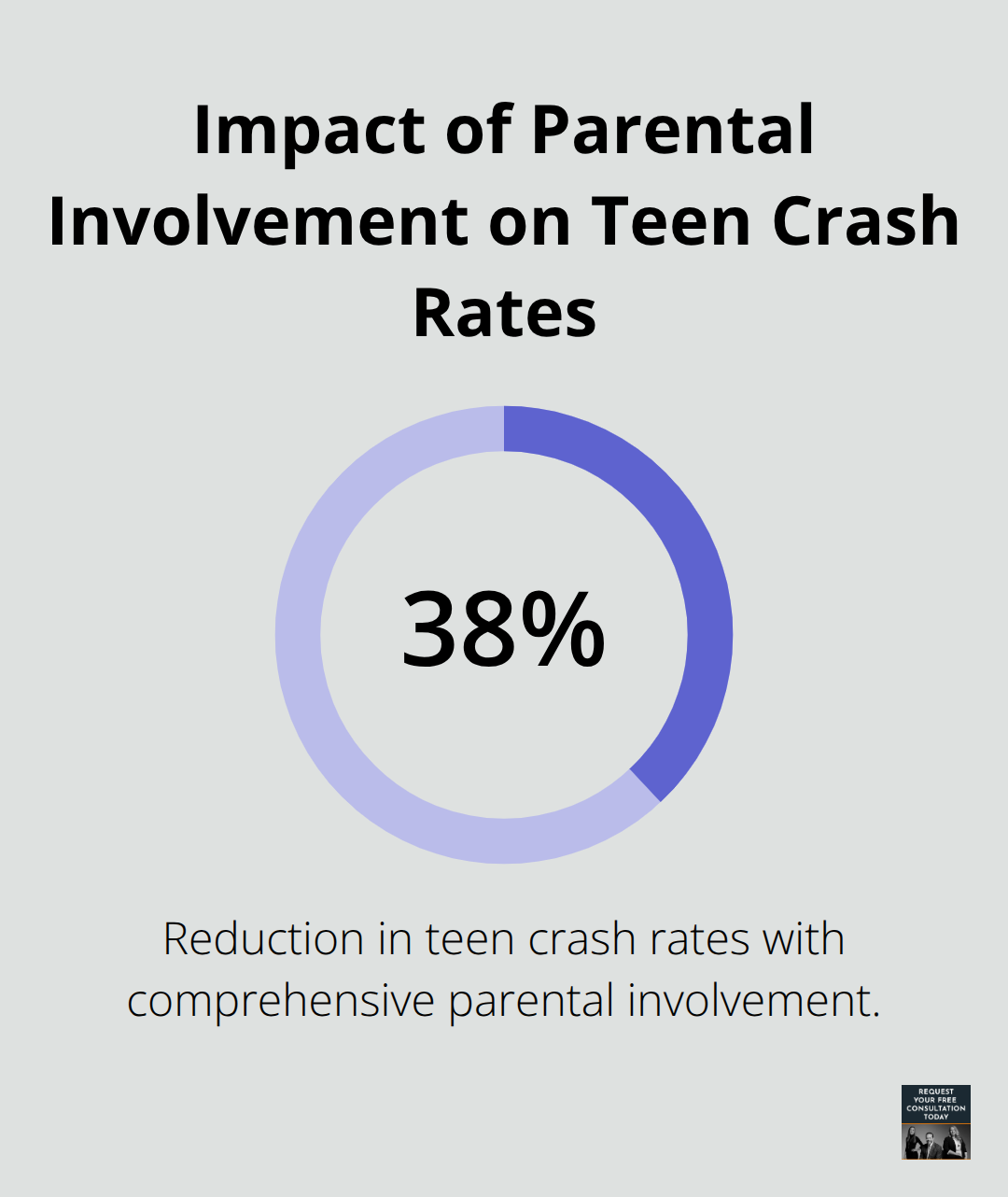
Install smartphone apps like Life360 or DriveMode that automatically disable texting capabilities when the vehicle reaches 10 mph, which removes temptation entirely rather than relying on willpower. Use telematics devices such as those offered by Progressive Snapshot or State Farm Drive Safe & Save that monitor speed, hard braking, and rapid acceleration while they provide detailed reports to parents. Set up geofencing alerts that notify you immediately when teens drive outside approved areas or exceed speed limits by more than 5 mph. The National Safety Council reports that teens whose parents actively monitor their driving through technology show 38% fewer risky driving behaviors compared to unmonitored teens.
Model Safe Driving Behavior Consistently
Your own driving behavior directly influences teen safety habits more than lectures or rules ever will. Teens copy what they observe, making consistent modeling of safe practices the most powerful prevention tool available. Put your phone away completely when you drive, follow speed limits precisely, and use turn signals for every lane change (even in empty parking lots). Parents can prevent many accidents through active involvement, clear rules, and smart technology use. GPS tracking systems provide real-time location data and driving behavior analysis, which gives parents concrete evidence to address dangerous habits before they cause accidents.
Final Thoughts
The causes of teenage car accidents remain consistent across Santa Cruz County: distracted cell phone use, excessive speed with poor judgment, and inexperience that turns minor mistakes into major crashes. Parents who spot warning signs like vehicle damage, phone use during drive times, and behavioral changes can act before tragedies strike. Prevention demands three active approaches: clear rules with specific consequences, technology that monitors and restricts dangerous behaviors, and consistent safe driving habits that teens observe daily.
The CDC data shows that comprehensive parental involvement reduces teen crash rates by up to 38%. Open communication about driving risks must continue throughout the teen years, not just during initial driver education. Regular conversations about near-misses, challenging situations, and peer pressure help teens develop better decision-making skills behind the wheel (making these discussions as important as the initial driving lessons).
When accidents happen despite prevention efforts, families need immediate legal support to navigate medical bills, property damage claims, and emotional trauma. Schaar & Silva LLP provides dedicated legal assistance for auto accident victims throughout Santa Cruz County. We help families focus on recovery while we handle complex legal matters that arise after serious crashes.